Commercial Food Dehydrators
Dry jerky, fruit, herbs, and bar garnishes in cabinets built for daily commercial kitchen use
Brand
Application
Air Flow
Shelves
Width
Depth
Height
Features


Best Food Dehydrators for Commercial Kitchens
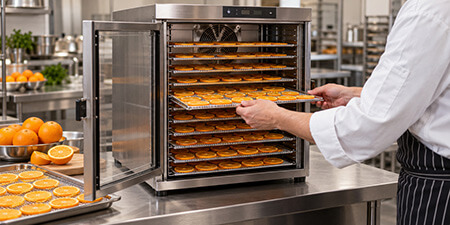
A food dehydrator moves warm air across trays until the moisture is gone, concentrating flavor and extending shelf life without additives. They run from a countertop dryer a cafe keeps on a back bench to roll-in units loaded by the trolley.
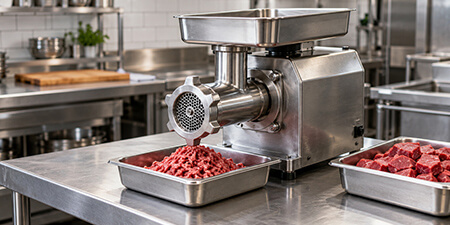
What operators dry is a short, profitable list: jerky, fruit for garnish, vegetable chips, herbs, citrus wheels for the bar. Kitchens already running a jerky shooter or sausage stuffer usually add drying next.
We feature top-quality brands such as BenchFoods, Omcan USA, Waring, and Weston, and strive to provide the most competitive prices available.
Benefits of Commercial Food Dehydrators
Drying turns trim and surplus produce into something sellable, and a house-dried garnish costs a fraction of the fresh item. It also shifts labor off the busy hours: a load started at close is shelf stable by the next service. For cured product alongside dried, meat curing chambers cover the humidity-controlled stage drying alone does not.
What to Look for in Commercial Food Dehydrators
Size the cabinet around your weekly batch, then check it takes the hours and cleaning a commercial kitchen gives it.
- Tray capacity: Six-tray countertop dryers suit a bar or cafe, thirty- and sixty-tray cabinets carry daily production, and roll-in models load whole trolleys.
- Airflow direction: Horizontal airflow dries every tray evenly without rotating them, while vertical airflow appears on the smallest units.
- Temperature range: Commercial cabinets here cover roughly 85 to 195 degrees Fahrenheit, low enough for herbs and high enough for meat.
- Cabinet material: Food-grade stainless steel with dishwasher-safe trays handles daily service, while thermoplastic suits light-duty work.
- Controls: Long-run timers, memory settings and completion cooling cycles let a cook repeat a result exactly.
- Zones: Dual and triple zone cabinets run more than one recipe at a time in independent compartments.
Power matters too: countertop dryers run off a standard outlet, while the largest roll-in systems are three-phase. Dried product holds best sealed, so a dehydrator often sits beside the vacuum packaging machines.
Shop Commercial Food Dehydrators Today
A house jerky program, a dried citrus garnish for the bar and a line drying fruit by the trolley are three different machines. Start from the weight you dry each week and work back to tray area; if the plan is smoked and dried, a smoker oven handles the first half.