Instagram Marketing Tips for Restaurants
Table of Contents
Build a repeatable posting system that turns scrolling into visits, without spending all day creating content
If your Instagram feels like a random stream of photos, it will produce random results. This post gives you a practical system: what to post, how often, and how to turn engagement into reservations and repeat visits.
Your restaurant already has what most brands spend years trying to manufacture: a product people want to look at. The challenge is consistency. Many restaurants post when they remember, post what they have, and hope it turns into business.
The goal is not to become an influencer. The goal is to build a simple Instagram system you can run every week - one that keeps your dining room top of mind, makes your food look worth the trip, and gives customers an easy next step when they are ready to eat.
In 2026, Instagram is not just "social." It is part of how people research where to eat. SevenRooms' 2025 U.S. Restaurant Trends Report (survey of 1,000 U.S. consumers) found that 94% of diners use online resources like Google, social media and media sites to discover new restaurants, and 69% of Gen Z rely on social media for discovery (SevenRooms, 2025).
The audience is also broad. Pew Research Center's 2025 report found that half of U.S. adults say they use Instagram, and younger adults use it at much higher rates (Pew Research Center, 2025).
What Instagram Is Actually Doing for Restaurants
When someone finds your restaurant on Instagram, they are usually doing one of three things:
- Vibe-checking (Does this place look like what I'm in the mood for?)
- Menu-checking (Is there something I want? Can I see what the food looks like?)
- Logistics-checking (Where is it? When is it open? Do I need a reservation?)
That means your content should not just look good. It should reduce uncertainty.
One shift worth adopting is treating messages as part of the guest journey. Meta's Restaurant Summit recap (2024) notes that 74% of online adults say they want to be able to communicate with businesses in the same way they communicate with friends and family through messaging (Meta for Business, 2024).
Start With a Clear Goal (So You Know What to Post)
Before you plan content, decide what Instagram is supposed to do for you. The content for a brand-new restaurant is different than the content for a busy place trying to increase repeat visits.
Pick one primary goal for the next 30 days:
- Increase local awareness - reach people in your area who have never heard of you
- Drive visits this week - promote a specific menu item, event, or time window
- Increase repeat visits - stay top of mind and give regulars reasons to come back
Once you have a goal, define a simple success signal you can actually track:
- Awareness: profile visits, follower growth, saves, shares
- Visits: direct messages asking questions, reservation clicks, calls, "we saw this on Instagram" at the host stand
- Repeat visits: engagement from known regulars, response to limited-time specials, story poll participation
If you want a broader restaurant marketing framework (beyond social), the Restaurant Marketing Guide is a good reference.
Build a Content Mix You Can Repeat Every Week
Most restaurants struggle because they try to "think of something to post" every day. A repeatable mix solves that. Use the table below to create a weekly rhythm, then rotate topics.
| Content Type: | What to Show: | Why It Works: | How Often: |
| Signature dish spotlight | One dish, close-up, plated and ready | Makes the decision easy: "That looks good" | 1x per week |
| Short-form kitchen video | A simple prep moment (sizzle, chop, pour, garnish) | Movement grabs attention and keeps people watching | 2x per week |
| Behind-the-scenes | Prep, staff, opening routine, seasonal change | Builds trust and personality without needing perfection | 1x per week |
| Social proof | A guest reaction, review screenshot, or UGC repost | Reduces risk for new customers | 1x per week |
| Offer or event | Limited-time special, tasting, live music, happy hour | Gives people a reason to choose you now | 1x per week |
This is not a hard rule. The point is to stop guessing. When you have a mix, you can batch-capture content during service and schedule it. For a deeper strategy by format and audience, see the Restaurant Social Media Guide.
If you are unsure what format to prioritize, start with short video. It tends to carry more reach than static photos, and it makes food feel real.
Make Food Look Great on a Phone (Without a Photoshoot)
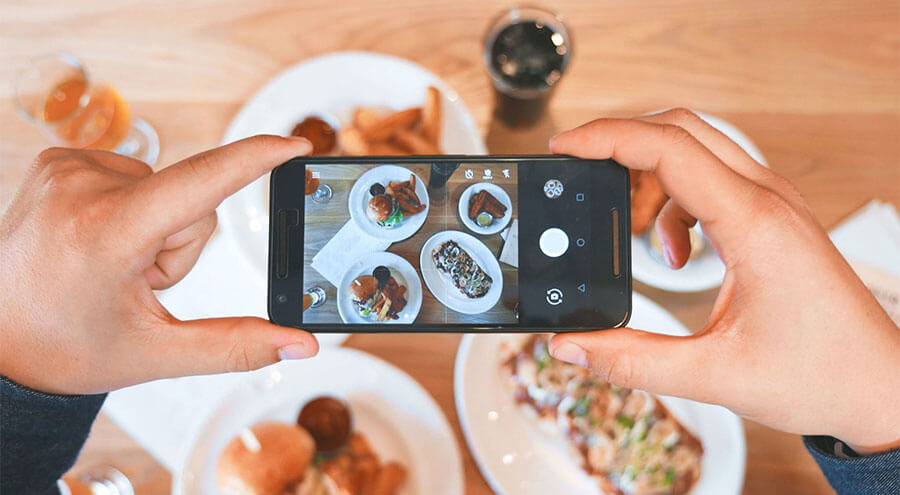
Your content does not need to look like an ad. It does need to look appetizing and clear on a small screen.
Lighting beats camera quality. Natural light near a window usually looks better than overhead dining room lights. If the food looks flat or yellow, move locations instead of adding filters.
Pick one angle and get consistent. A few repeatable angles are enough:
- Overhead for bowls, boards, and tablescapes
- Slightly above plate level for entrees and burgers
- Close-up for texture (steam, crisp edges, sauces)
Show context, not just the plate. A quick shot of the dining room, bar, or patio helps a new customer imagine the experience. It also signals what kind of restaurant you are.
Write Captions That Move People Toward a Visit
If the photo makes them stop scrolling, the caption should answer the next questions:
What is this? Why should I care? What do I do next?
Practical caption structure that works for most posts:
- Hook (one line): what makes it craveable or interesting
- Details (two to four lines): ingredients, flavor, or a quick story
- Next step (one line): a simple prompt: "Reservations in bio" or "Walk-ins welcome"
Avoid generic lines like "So yummy!" or "Come try this." Be specific. Specificity is what builds trust.
If you are promoting something time-sensitive, say so plainly. People do not act without urgency.
Turn Engagement Into Foot Traffic (The "Next Step" Problem)
Many restaurants post great content and still do not see results because they never give customers a clear next step.
Make it easy to reserve or call. If you take reservations, ensure your booking link is obvious and functional. If you do not, make your hours and location easy to find. Your Instagram should reduce friction, not create it.
Use Stories for quick decision nudges. Stories are ideal for daily specials, limited items, and reminders. They do not need to be polished. A simple phone video of a dish leaving the pass can be enough.
Save your best Stories to Highlights. Highlights are your permanent "new customer" section:
- Menu favorites
- Hours and parking
- Events
- Behind-the-scenes
For operators tying social media back to local discovery, the Local Listings Guide helps you make sure search and social are working together.
A Simple Table for Measuring What Is Working
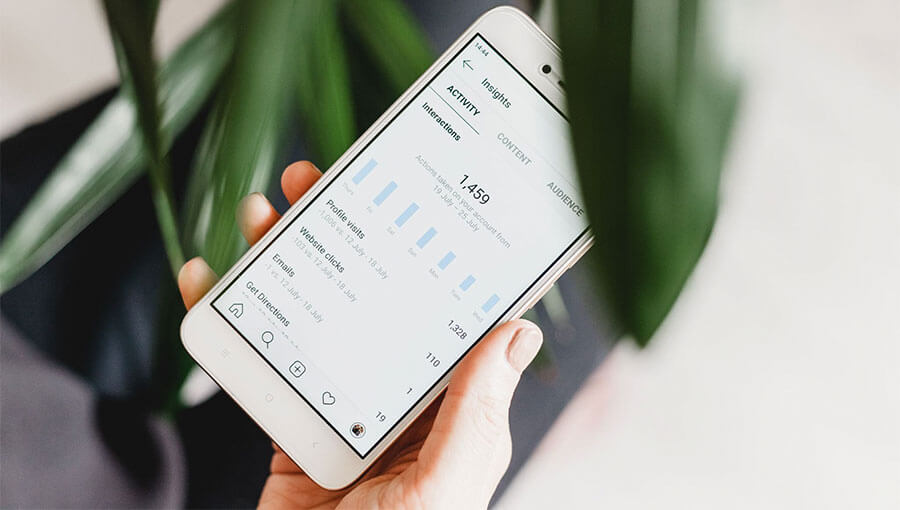
If you only track likes, you will make the wrong decisions. Track signals that connect to visits.
| Goal: | The Signal to Watch: | Why It Matters: |
| Awareness | Shares and saves | Indicates the post was useful enough to keep or send |
| Consideration | Profile visits and website clicks | Shows people are moving from content to logistics |
| Visits | Direct messages about hours, reservations, or availability | High-intent behavior close to a real visit |
| Retention | Repeat engagement from regulars | Signals your content is staying relevant |
Encourage Guest Content (and Make It Easy to Share)
User-generated content works because it does what your own posts cannot: it proves real people enjoyed the experience.
Give guests something to photograph. This does not mean building a "photo wall." It can be:
- A dish with a recognizable signature look
- A consistent plating moment (a pour, a garnish, a finishing touch)
- A well-lit corner in the dining room
Ask for tags the right way. The easiest approach is a small line on menus or table tents that says something like: "Tag us in your photos - we love sharing guest posts." Keep it low pressure.
Repost with gratitude. When a guest tags you, repost it and thank them. This trains more guests to do the same.
A Simple 30-Minute Daily Routine (So You Stay Consistent)
You do not need to live on Instagram. You need a short routine you can actually keep.
10 minutes: reply to comments and messages (speed matters)
10 minutes: post one Story (special, behind-the-scenes, or a quick menu highlight)
10 minutes: capture two short clips during service for your next posts
Consistency compounds. If you do this most days, you build an account that looks alive, trustworthy, and worth visiting.
To convert that attention into repeat business off-platform, pair your social with email. The Restaurant Email Marketing Guide covers how to collect emails and what to send.
If your main goal is to turn first-time guests into regulars, the retention tactics in How to Create Repeat Customers pair well with a consistent social presence.
Frequently Asked Questions
How often should a restaurant post on Instagram?
Pick a cadence you can sustain. For most restaurants, three to five feed posts per week plus Stories on most open days is a strong starting point. The real requirement is consistency. A realistic schedule that you follow beats an aggressive schedule you abandon.
What should a restaurant post if the dining room is not busy yet?
Post what you can control: food close-ups, short prep moments in the kitchen, staff introductions, and behind-the-scenes routines. New restaurants can also show progress and momentum - new menu items, seasonal updates, or a "this week" special - to create a reason to visit.
Do hashtags still matter for restaurant Instagram marketing?
They can help discovery, but they are not a magic lever. Use a small set of relevant hashtags that reflect your cuisine and your location (for example, your city, neighborhood, and menu category). Prioritize clear captions and strong visuals first.
Should restaurants run Instagram ads?
Ads can help when you have a clear offer and a specific audience in mind, but they will not fix weak content. Get your profile basics right, build a repeatable posting system, and then test small paid boosts for time-sensitive events or limited specials.
How do I handle negative comments on Instagram?
Respond quickly, stay calm, and avoid arguing in public. A simple approach is: acknowledge the issue, invite the customer to message you with details, and focus on resolution. Future customers are watching how you handle feedback.
How can I tell whether Instagram is actually driving visits?
Track signals that connect to real behavior: reservation link clicks, calls, direct messages asking about hours or availability, and in-person mentions like "we saw this on Instagram." You can also test a simple call-to-action such as "mention this post" for a limited item, not as a discount, but as a way to attribute demand.
Related Resources
- Restaurant Social Media Guide - Platform strategy and content planning for restaurant operators
- Restaurant Marketing Guide - Full marketing playbook covering search, reviews, and retention
- Local Listings Guide - Improve how customers find you and verify your key info
- Restaurant Email Marketing Guide - Build repeat visits with a channel you control
- Restaurant Marketing Strategies - Practical tactics across multiple channels
Share This!