How to Create Repeat Customers for Your Restaurant
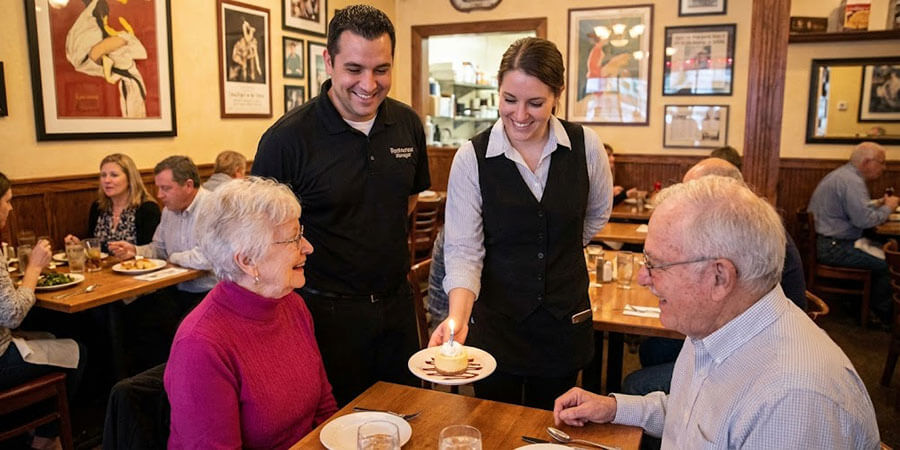
Table of Contents
Why Retention Matters More Than Acquisition for Long-Term Restaurant Success
Seventy-seven percent of first-time restaurant guests never return, yet returning guests average nearly seven visits and are worth twenty-six times more than one-time visitors. With repeat customers generating sixty percent of restaurant revenue, retention has become the most critical driver of profitability. This post covers the five essential strategies for building repeat business: delivering consistent food and service, making guests feel recognized, implementing effective rewards programs, using reviews as retention tools, and staying connected between visits.
The restaurant industry has a retention problem. According to Bloom Intelligence research from 2026, seventy-seven percent of first-time guests never come back. That's three out of every four new customers walking through your door once and never returning.
The economics are stark. Those rare guests who do return average 6.93 visits over their lifetime and generate twenty-six times more revenue than one-time visitors. Olo's 2024 data shows that repeat guests account for sixty percent of total restaurant revenue, despite representing a smaller portion of total customer counts. Classic research from Bain and Company demonstrates that just a five percent increase in customer retention can boost profits by twenty-five percent or more.
Every dollar you spend acquiring new customers through advertising, promotions, or third-party platforms is wasted if those customers don't come back. The real profit in restaurant operations comes from guests who return again and again, who know your menu, who trust your quality, and who choose you over competitors week after week.
Building a base of repeat customers isn't about gimmicks or complicated loyalty schemes. It's about executing the fundamentals consistently and making every guest feel valued. The strategies below focus on practical, proven approaches that work for operations of any size.
Why Repeat Guests Drive Your Revenue
The financial case for prioritizing retention over acquisition is overwhelming. Understanding these economics changes how you allocate resources and measure success.
Returning guests spend more per visit. They're familiar with your menu, comfortable with your pricing, and more likely to try higher-margin items or add-ons. They don't need to be convinced of your value - they already know it.
Returning guests cost less to serve. They know how your operation works, what to expect, and how to order efficiently. They're less likely to have complaints or require extensive staff attention. They don't need the same level of hand-holding as first-time visitors.
Returning guests provide predictable revenue. When you have a strong base of regulars, you can forecast sales more accurately, manage inventory more efficiently, and staff more appropriately. This predictability reduces waste and improves profitability.
Returning guests become advocates. Toast's 2026 research identifies word of mouth as the number one restaurant discovery channel. Your regulars tell friends, post on social media, and leave positive reviews. Each repeat customer becomes a marketing channel.
| Metric: | Finding: | Source: |
| First-time guest return rate | 23% (77% never return) | Bloom Intelligence, 2026 |
| Average visits by returning guests | 6.93 visits | Bloom Intelligence, 2026 |
| Lifetime value multiplier | 26x more than one-time visitors | Bloom Intelligence, 2026 |
| Revenue from repeat guests | 60% of total restaurant revenue | Olo, 2024 |
| Profit impact of 5% retention increase | 25%+ profit boost | Bain and Company |
The data is clear: retention isn't just important - it's the primary driver of restaurant profitability. Every operational decision should be evaluated through the lens of whether it encourages guests to return.
Deliver Consistent Food and Service
Consistency is the foundation of repeat business. Guests return when they know exactly what to expect and trust you'll deliver it every single time.
Morning Consult research from August 2024 identified consistency and taste as the top drivers of restaurant loyalty, outweighing price, convenience, and other factors. Tillster's 2025 survey of 1,500 diners reinforced the point - while price (fifty-nine percent) and food quality (fifty-six percent) topped the list of factors when evaluating dining value, thirty-three percent of respondents said they changed their favorite restaurant in the past year, citing better food and better value as the leading reasons.
Standardize recipes down to the gram. Every dish should have a detailed recipe card specifying exact measurements, cooking temperatures, timing, and plating. Include photos of properly executed dishes. When your Tuesday lunch burger tastes identical to your Saturday dinner burger, guests develop trust.
Train staff relentlessly on execution standards. New hires should shadow experienced team members, practice recipes during slow periods, and demonstrate competency before working independently. Regular refresher training prevents standards from drifting over time. Our guide on customer service training for restaurant staff covers effective training frameworks.
Monitor quality systematically. Taste food throughout service. Observe plating and presentation. Check ticket times and temperature. Some operators use mystery shopping programs to evaluate consistency from a customer's perspective.
Service Consistency Matters Just as Much
Food quality gets guests in the door, but service quality determines whether they return. The American Customer Satisfaction Index (ACSI) 2024 report showed full-service restaurants scoring 84 out of 100 for overall satisfaction, with accuracy scoring 92 and courtesy scoring 90. These high benchmarks mean guests notice when you fall short.
- Establish service standards for greeting times, check-backs, and table maintenance
- Empower staff to resolve issues immediately without manager approval
- Create systems for handling common situations (dietary restrictions, special occasions, complaints)
- Maintain consistency across shifts, days, and seasons
Consistency doesn't mean robotic or impersonal. It means reliably delivering the experience guests expect while allowing for genuine human connection.
Make Every Guest Feel Recognized
Personal recognition creates emotional connections that transcend transactional relationships. When guests feel known and valued, they become loyal advocates.
The National Restaurant Association's 2025 research found that sixty-four percent of consumers say the overall experience matters more than price when choosing where to dine. That experience includes how staff interact with them, whether they're remembered, and whether they feel like valued individuals rather than table numbers.
Train staff to remember names and preferences. When a server greets a returning guest by name or remembers they prefer their burger medium-rare, it creates a moment of genuine connection. This doesn't require sophisticated technology - just attentive staff and good communication systems.
Recognize special occasions without being asked. When you notice a birthday, anniversary, or celebration, acknowledge it. A simple "Happy birthday!" or complimentary dessert creates memorable moments that guests associate with your restaurant.
Personalize interactions based on visit history. If a guest always orders the same appetizer, a server might say, "Would you like to start with your usual calamari?" This demonstrates attentiveness and makes guests feel valued.
Quick recognition tactics that work:
- Greet regulars by name when they arrive
- Remember dietary restrictions and preferences
- Acknowledge when someone hasn't visited in a while ("Great to see you again!")
- Note special occasions in your reservation system
- Train hosts to recognize repeat guests and alert servers
- Create a simple system for sharing guest preferences between shifts
Recognition doesn't require expensive technology. A simple notebook where staff record guest preferences, a quick pre-shift briefing about regulars expected that day, or a reservation system with notes fields can all support personalized service.
The goal is making guests feel like individuals, not transactions. When someone feels genuinely welcomed and remembered, they're far more likely to return.
Build a Rewards Program That Drives Return Visits
Loyalty programs provide a structured incentive for repeat visits when designed and executed well. They work best as one component of a broader retention strategy, not as a substitute for quality and service.
Paytronix data from 2024 shows that top-performing restaurant operators drive thirty to thirty-seven percent of transactions from loyalty program members. These programs work because they provide tangible rewards for behavior you want to encourage - repeat visits and higher spending.
Keep the program simple and transparent. Guests should understand how to earn rewards and what they receive without reading fine print or doing math. Complicated point systems, confusing redemption rules, and unclear value propositions reduce participation.
Reward frequency, not just spending. A program that gives points for visits encourages guests to return more often, even for smaller purchases. This builds the habit of choosing your restaurant over competitors.
Make rewards attainable quickly. If earning a reward requires months of regular visits, many guests will lose interest. Quick wins - like a reward after the third visit - create momentum and demonstrate value.
Use the program to gather data. Loyalty programs provide valuable insights into visit frequency, favorite menu items, and spending patterns. Use this data to personalize offers and improve operations.
For a comprehensive deep dive into loyalty program mechanics, types, and implementation strategies, see our detailed guide on restaurant loyalty programs. For broader promotional strategies, our restaurant coupons and promotions guide covers additional retention tactics.
The key is viewing loyalty programs as tools for reinforcing the behavior you want - repeat visits - rather than as standalone solutions. They work best when combined with excellent food, consistent service, and genuine personal recognition.
Use Reviews and Feedback to Keep Guests Coming Back
Online reviews aren't just marketing tools for attracting new customers - they're powerful retention mechanisms when used strategically.
BrightLocal's 2026 research reveals critical review dynamics: sixty-eight percent of consumers require a restaurant to have four stars or higher before they'll visit, seventy-four percent only care about reviews from the last three months, and eighty percent are more likely to use a business that responds to reviews. These statistics show that review management directly impacts both acquisition and retention.
Monitor reviews across all platforms daily. Set up alerts for new reviews on major platforms. Respond quickly - ideally within twenty-four hours. Speed demonstrates that you're paying attention and care about guest feedback.
Respond to negative reviews constructively. Acknowledge the issue, apologize sincerely, explain what you're doing to prevent recurrence, and invite the guest back. This public response shows other potential guests that you take feedback seriously. More importantly, it often converts unhappy one-time visitors into loyal repeat customers when handled well.
Use feedback operationally, not just for marketing. When multiple reviews mention slow service, inconsistent food quality, or specific menu items, treat that as actionable intelligence. Address the underlying operational issues, not just the public relations problem.
Turn Feedback Into Retention Opportunities
- Thank guests who leave positive reviews with a personal response and perhaps a small incentive to return
- Create a recovery protocol for negative experiences that includes follow-up contact and a compelling reason to give you another chance
- Share positive feedback with staff to reinforce what's working and build morale
- Track recurring themes in reviews to identify systemic issues before they drive guests away
- Close the loop by letting guests know when you've addressed their concerns
Reviews provide direct insight into why guests return or don't return. Treating them as retention data rather than just reputation management transforms how you use this feedback.
Stay Connected Between Visits
The time between visits is when you lose customers to competitors. Strategic outreach keeps your restaurant top-of-mind and provides reasons to return sooner.
Toast's 2026 research identifying word of mouth as the number one discovery channel underscores the importance of maintaining relationships with existing guests. When you stay connected, you remain part of their consideration set and increase the likelihood they'll recommend you to others.
Email marketing remains highly effective for restaurants. Regular newsletters featuring new menu items, special events, or exclusive offers keep you visible without being intrusive. Our comprehensive restaurant email marketing guide covers strategy, frequency, and content approaches.
Social media builds community and engagement. Platforms like Instagram and Facebook allow you to showcase food, share behind-the-scenes content, and interact with guests between visits. The key is consistency and authenticity, not perfection. See our restaurant social media guide for platform-specific strategies.
Segment your outreach based on guest behavior. First-time visitors need different messaging than regulars. Guests who haven't visited in sixty days might respond to a "we miss you" offer. Recent visitors might appreciate early access to new menu items.
Effective outreach tactics:
- Send birthday or anniversary offers to loyalty program members
- Alert guests when their favorite seasonal items return
- Provide advance notice of special events or limited-time menus
- Share exclusive offers for email subscribers or social media followers
- Re-engage lapsed customers with targeted win-back campaigns
- Highlight new menu items or chef specials weekly
The goal isn't to spam guests with constant promotions. It's to maintain a relationship that makes them think of you when they're deciding where to eat. For comprehensive marketing strategies that support retention, see our restaurant marketing guide.
Staying connected between visits transforms occasional customers into regulars by keeping your restaurant present in their lives even when they're not dining with you.
Frequently Asked Questions
What percentage of restaurant revenue comes from repeat customers?
Repeat customers generate approximately sixty percent of total restaurant revenue according to Olo's 2024 research, despite representing a smaller portion of total customer counts. Bloom Intelligence data from 2026 shows that returning guests average 6.93 visits and are worth twenty-six times more than one-time visitors. This makes retention the single most important driver of restaurant profitability.
How do I get customers to come back to my restaurant after their first visit?
Focus on three immediate priorities: deliver a consistently excellent experience that matches or exceeds expectations, make guests feel personally welcomed and valued during their visit, and give them a compelling reason to return soon (like a loyalty program reward or upcoming special event). The first visit is your only chance to convert a new guest into a repeat customer - make it count.
What is the most effective type of restaurant loyalty program?
The most effective loyalty programs are simple to understand, reward visit frequency (not just spending), provide attainable rewards quickly, and integrate with your point-of-sale system for seamless tracking. Programs that offer a reward after the third or fifth visit tend to perform better than complex point systems. For detailed program types and implementation strategies, see our comprehensive guide on restaurant loyalty programs.
How important are online reviews for getting repeat customers?
Online reviews significantly impact both acquisition and retention. BrightLocal's 2026 research shows that eighty percent of consumers are more likely to use a business that responds to reviews, and seventy-four percent only care about reviews from the last three months. Responding to reviews - especially negative ones - demonstrates that you value feedback and are committed to improvement, which encourages guests to give you another chance.
Should I focus more on getting new customers or keeping existing ones?
Prioritize retention over acquisition. Bain and Company research shows that a five percent increase in customer retention can boost profits by twenty-five percent or more. With seventy-seven percent of first-time restaurant guests never returning (Bloom Intelligence, 2026), acquiring new customers is expensive and inefficient if you can't convert them into repeat visitors. Build systems that turn first-time guests into regulars before investing heavily in acquisition.
How often should I contact customers between visits?
Email frequency depends on your restaurant type and guest preferences, but most successful operators send one to four emails per month. Weekly emails work for quick-service concepts with frequent visit patterns, while monthly newsletters suit fine dining or special occasion restaurants. Always provide value (new menu items, exclusive offers, useful content) rather than just promotional messages. Monitor unsubscribe rates and engagement metrics to find your optimal frequency.
What's the best way to handle a customer who had a bad experience?
Respond immediately with a sincere apology, acknowledge the specific issue without making excuses, explain what you're doing to prevent recurrence, and provide a compelling reason to return (like a complimentary meal or significant discount). Follow up personally - a phone call or handwritten note is more effective than an email. Many operators find that guests who had a problem that was resolved well become more loyal than guests who never had an issue, because the recovery demonstrates your commitment to their satisfaction.
Related Resources
- Restaurant Marketing Guide - Comprehensive strategies for attracting and retaining customers through integrated marketing
- Restaurant Coupons and Promotions Guide - Detailed approaches to promotional strategies that drive repeat visits
- Restaurant Loyalty Programs - Do Loyalty Cards Work? - Deep dive into loyalty program types, mechanics, and implementation
- Customer Service Training for Restaurant Staff - Training frameworks for delivering consistent, excellent service
- Restaurant Email Marketing Guide - Email strategy, content, and frequency for staying connected with guests
Share This!