Restaurant Glassware Types Guide
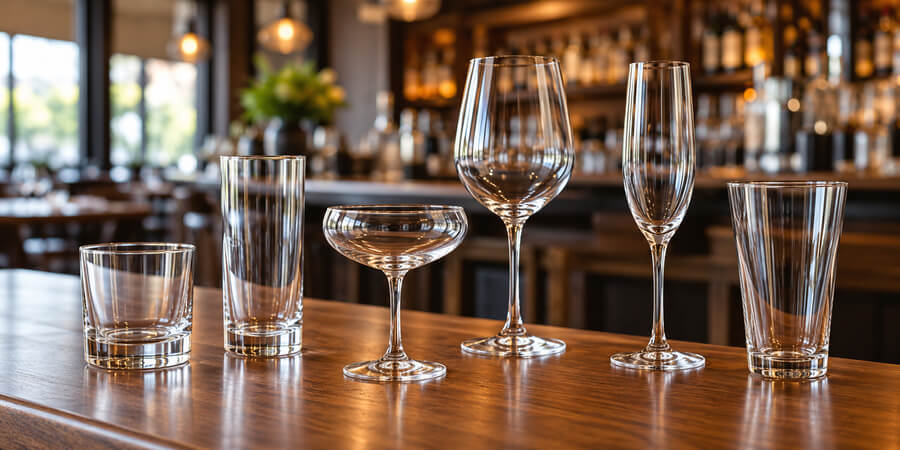
Table of Contents
Every glass a bar or dining room pours into, sorted by family, with the ounces each one holds and the drinks it is built for
Restaurant glassware sorts into four families: beverage tumblers for water and soft drinks, cocktail glasses for anything with spirits in it, stemware for wine and sparkling wine, and the specialty pieces for beer, coffee and casual service. Each glass is named for its shape and sized for a pour, and the ounce figure on a listing is the brim-full capacity, not the serving. This chart covers every glass on our listings by name, capacity and the drinks it serves; beer glasses have their own beer glass sizes chart.
Restaurant Glassware Types Chart
Capacities are the spread across our listings, with the most common size in parentheses where one stands out.
| Glass: | Capacity: | Shape: | What it serves: |
| Juice glass | 5 to 8.5 oz | Short, narrow tumbler | Juice, side water, kids' drinks |
| Water glass | 5.5 to 13.5 oz | Small tumbler, often a heavy base | Water at the table |
| Beverage glass | 10 to 18 oz (12 and 14) | Straight or flared tumbler | Soda, iced drinks, house water |
| Cooler or iced tea glass | 12 to 22 oz (16) | Tall tumbler | Iced tea, lemonade, large sodas |
| Goblet | 8 to 16 oz | Short stem, wide bowl | Water at a set table, banquet service |
| Shot glass | 1 to 4 oz (1.5 and 2) | Small, thick-walled | Shots, measuring |
| Cordial or liqueur glass | 2 to 3.5 oz | Tiny bowl on a stem | After-dinner liqueurs, grappa |
| Rocks or old fashioned glass | 4.5 to 14 oz (8 to 12) | Short, wide, heavy base | Spirits over ice, old fashioned, whiskey neat |
| Double old fashioned | 12 to 13.5 oz | Taller rocks glass | Double pours, large-cube drinks, negroni |
| Highball glass | 8 to 17 oz (12 to 13.5) | Tall, narrow tumbler | Gin and tonic, whiskey soda, rum and cola |
| Collins or long drink glass | 13 to 16 oz | Taller and narrower than a highball | Tom Collins, mojito, tall mixed drinks |
| Martini or cocktail glass | 2.5 to 11.5 oz (8 to 10) | V-shaped bowl on a stem | Martini, manhattan, anything served up |
| Coupe | 7 to 12 oz | Shallow, rounded bowl on a stem | Daiquiri, sidecar, sparkling cocktails |
| Nick and Nora | About 6 oz | Small bell-shaped bowl on a stem | Stirred drinks served up, smaller pours |
| Margarita glass | 9 to 17 oz | Stepped bowl with a wide rim | Margaritas, frozen drinks |
| Hurricane or poco grande | 12 to 23 oz | Tall curved bowl on a short stem | Hurricanes, piña coladas, tiki drinks |
| Snifter or brandy glass | 6.5 to 15 oz | Wide bowl, short stem | Brandy, cognac, spirits neat |
| Red wine glass | 7 to 31 oz (16 to 24) | Large bowl on a stem | Red wine |
| White wine glass | 6 to 16 oz | Narrower bowl on a stem | White and rosé wine |
| All-purpose wine glass | 9 to 16 oz | Mid-size bowl on a stem | House wine by the glass |
| Stemless wine glass | 9 to 21 oz | Wine bowl without the stem | Casual wine service, patios |
| Champagne flute | 5 to 9 oz | Tall, narrow bowl on a stem | Sparkling wine, mimosas |
| Wine tasting glass | 2 to 8.5 oz | Small stemmed bowl | Flights and tastings |
| Pint or mixing glass | 14 to 25 oz (16) | Tapered tumbler | Draft beer, mixing at the bar |
| Pilsner glass | 10 to 23 oz | Tall, tapered, often footed | Lagers and pilsners |
| Beer mug, stein or tankard | 10 to 34 oz | Handled, thick-walled | Draft beer |
| Irish coffee mug | 6 to 10.5 oz | Footed glass mug with a handle | Hot cocktails, coffee drinks |
| Glass coffee mug | 8.5 to 16 oz | Handled clear mug | Coffee, tea, hot chocolate |
| Espresso and cappuccino cup | 2.5 to 8.25 oz | Small glass cup with a saucer | Espresso drinks |
| Drinking jar or mason jar | 8.5 to 22 oz (16) | Jar, with or without a handle | Casual cocktails, lemonade, sweet tea |
| Milk bottle | 3 to 32 oz | Bottle shape | Shakes, mini desserts, cream on the table |
| Beaker or flask | 2 to 68 oz | Laboratory shapes | Showpiece cocktails and shared drinks |
Capacity is the brim, not the pour. A 16-ounce wine glass is built for a 5-ounce pour, and a 12-ounce rocks glass holds a 2-ounce pour plus ice. Read the capacity as room to work in, and size the glass to the drink plus its ice, foam or headspace.
Names overlap between makers. One maker's beverage glass is another's tumbler, "cocktail glass" can mean a martini glass or a stemmed 20-ounce gin glass, and several highball lines on our listings are titled "Collins / Hi-Ball". When two names conflict, trust the ounces and the height on the listing.
The Four Families and How They Differ
Beverage tumblers are the workhorses of the dining room: flat-bottomed, stackable in many lines, and sized in steps from the juice glass up to the cooler. They are bought by the case and replaced often, so they are the family where durability features matter most.
Cocktail glasses split into two groups. Glasses for drinks over ice are heavy tumblers: rocks, double old fashioned, highball and collins. Glasses for drinks served up, with no ice, are stemmed: martini, coupe, Nick and Nora, and the wider margarita and hurricane bowls. The stem keeps a warm hand off a cold drink.
Stemware is the wine family, plus the goblet that serves water at a set table. Bowl size and shape vary more here than anywhere else, and the bigger bowls are meant to stay mostly empty.
Specialty glassware covers beer, hot drinks and casual service: pints, pilsners and mugs; Irish coffee mugs and glass coffee cups; drinking jars, milk bottles and the beakers and flasks used for showpiece drinks.
Beverage Glasses: Juice, Water, Beverage, Cooler and Iced Tea
The beverage family is sized in steps, and most lines on our listings are sold in two or three of them so a dining room can match the glass to the drink without changing the look of the table.
Juice and water glasses are the small end. Juice glasses run 5 to 8.5 ounces; water glasses from a 5.5-ounce side water glass up to about 13.5 ounces. A side water glass is the small tumbler set at a place setting or next to a coffee, and the heavy-base versions are the ones that survive the bus tub.
The beverage glass is the house tumbler. The 12- and 14-ounce sizes are the most common on our listings, and they serve soda, iced drinks and water in the same glass. Straight-sided and flared shapes hold the same ounces; the flared glass looks fuller with the same pour.
Coolers and iced tea glasses are the tall end. They run 12 to 22 ounces with 16 the standard, and the extra height is for ice: an iced tea or lemonade poured over a full glass of ice needs the room. The tallest iced tea glasses on our listings reach 22 ounces and about 7-1/2 inches.
Goblets are the water glass for a set table. A goblet is a short-stemmed bowl of 8 to 16 ounces, sold as a water goblet or a banquet goblet, and the banquet lines on our listings are described for weddings, parties and heavy use, with a wide foot and thick stem for balance. It serves water where a tumbler would look casual, and it doubles as a house wine glass in a pinch.
Stackable lines save shelf space. More than 40 glasses on our listings are stackable, mostly beverage and cooler glasses shaped to stack without wedging. A stackable line lets the bus station keep clean glasses in a column rather than a rack, and it takes less space in the underbar.
Cocktail Glasses: Rocks, Highball, Collins and the Stemmed Set
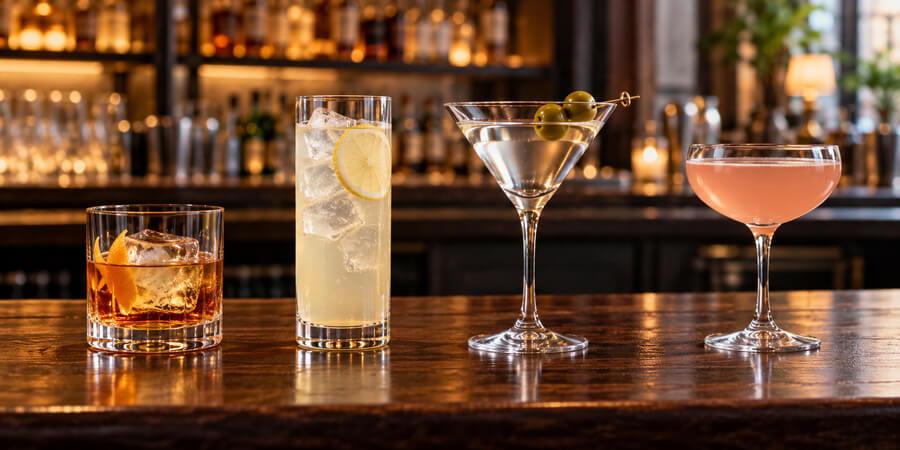
Rocks and old fashioned are the same glass. A rocks glass, also sold as an old fashioned or whiskey glass, is short and wide with a heavy base, and it runs from 4.5 to 14 ounces on our listings with the bulk between 8 and 12. It serves any spirit over ice, the old fashioned it is named for, and whiskey neat. The double old fashioned is the taller version at 12 to 13.5 ounces, built for a double pour, a large ice cube or a drink with more mixer, and several lines make both sizes so a bar can pair them.
Highball vs collins: height and width, not ounces. The two hold similar amounts. A highball glass is shorter and wider, about 4-1/2 to 6-1/4 inches tall on our listings, and serves the two-part drinks: gin and tonic, whiskey soda, rum and cola. A collins glass is taller and narrower, sold on our listings as a collins or a long drink glass at 13 to 16 ounces, and serves the built drinks with more mixer and more ice: the Tom Collins, the mojito, the zombie. Several makers title one glass "Collins / Hi-Ball" and let the bar decide, so buy by the height that suits the drink and the ice you use.
Martini and cocktail glasses serve drinks up. The martini glass is the V-shaped bowl on a stem, 8 to 10 ounces in most lines and as small as 2.5 ounces in the mini martini used for desserts and tasting portions. A stemmed drink served without ice sits at the top of the bowl, so a 9-ounce martini glass takes a 3-ounce cocktail with room to carry it. Some makers sell the same shape as a cocktail glass; a few cocktail glasses on our listings are 20 ounces and larger, made for gin drinks served in a large bowl.
Coupe and Nick and Nora are the smaller stemmed bowls. The coupe is the shallow, rounded bowl that once served champagne and now serves the daiquiri, the sidecar and sparkling cocktails, at 7 to 12 ounces on our listings. The Nick and Nora is the small bell-shaped bowl, about 6 ounces, for stirred drinks served up in a smaller pour; it spills less than a martini glass on the way to the table.
Margarita and hurricane glasses carry the frozen and tropical drinks. The margarita glass has a stepped bowl and a wide rim, 9 to 17 ounces, and the wide rim is what takes the salt. The hurricane, also sold as a poco grande, is the tall curved bowl on a short stem at 12 to 23 ounces, and it serves the hurricane, the piña colada and the tiki drinks that come with a lot of ice and garnish.
Shot and cordial glasses are the small end of the bar. Shot glasses run 1 to 4 ounces with 1.5 and 2 ounces the standard sizes, and the thick walls take the knock of a shot set down hard. Cordial and liqueur glasses hold 2 to 3.5 ounces on a short stem for after-dinner pours, and the same size serves grappa and tequila for sipping.
Snifters serve spirits neat. The brandy or cognac snifter is a wide bowl on a short stem, 6.5 to 15 ounces on our listings, and the bowl is meant to be mostly empty so the spirit can be warmed in the hand and nosed. A whiskey tasting glass does the same job in a smaller bowl.
Wine Glass Sizes: The Bowl and the Pour
| Wine glass: | Bowl capacity on our listings: | Most common sizes: | What it serves: |
| Red wine, cabernet, bordeaux | 7 to 31 oz | 16 to 24 oz | Full-bodied reds |
| Burgundy or balloon | 12 to 24 oz | 18 oz | Pinot noir and other lighter reds |
| White wine, chardonnay | 6 to 16 oz | 8 to 12 oz | Whites and rosé |
| All-purpose or universal | 9 to 16 oz | 12 to 14 oz | House wine by the glass |
| Tall wine | 8.5 to 20 oz | 12 and 16 oz | A taller bowl on a longer stem for the same pour |
| Stemless | 9 to 21 oz | 15 oz | Casual and outdoor service |
| Champagne flute | 5 to 9 oz | 6 to 7 oz | Sparkling wine and mimosas |
| Coupe | 7 to 12 oz | 8.5 to 10 oz | Sparkling wine and cocktails |
| Tasting and sampler | 2 to 8.5 oz | 5 to 7 oz | Flights and tastings |
| Goblet | 8 to 16 oz | 11 to 14 oz | Water, or house wine at a banquet |
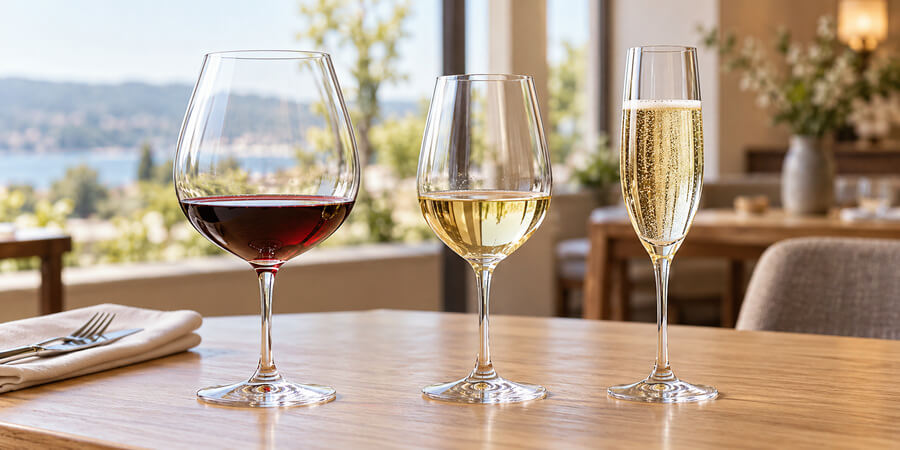
A standard pour is 5 ounces. The National Institute on Alcohol Abuse and Alcoholism counts a standard drink as 5 ounces of wine at 12 percent alcohol, 1.5 ounces of spirits at 40 percent, or 12 ounces of beer at 5 percent. A 5-ounce pour fills a 12-ounce bowl to about its widest point and sits low in a 20-ounce bowl, which is why the same pour looks generous in one glass and stingy in the next.
Big bowls are for aroma, not volume. The oversized red wine bowls on our listings are described as increasing the surface area of the wine so swirling releases the aromas. A 24-ounce cabernet glass and a 12-ounce all-purpose glass hold the same 5-ounce pour; the difference is how much air sits above it.
Whites get the narrower bowl. A narrower bowl holds a chilled white closer to its serving temperature and concentrates its lighter aromas, so the same lines run 6 to 16 ounces for whites against 16 to 24 for reds.
The all-purpose glass is the house glass. A 12- to 14-ounce universal bowl serves red, white and rosé without a second rack in the dish room, and it is the glass to start with where the wine list is short. Reds and whites get their own bowls when the list is long enough to make the difference visible at the table.
Flutes and coupes both serve sparkling wine. The flute holds 5 to 9 ounces, keeps the bubbles longer and stands tall on the table; the coupe is wider, shallower and shows the wine off but lets the sparkle go faster. Many bars now keep the coupe for sparkling cocktails and the flute for wine by the glass.
Stemless glasses trade the stem for the dish room. A stemless bowl is shorter, stacks in a standard rack with fewer extenders and does not snap at the stem, which is where most stemware breaks. The trade is a warm hand on the bowl and fingerprints on the glass, so it suits patios, casual dining and by-the-glass volume more than a fine dining list.
Pour lines take the guesswork out of a pour. One wine glass on our listings is sold with pour lines marked on the bowl so every server pours the same measure; where the line is absent, a jigger or a marked carafe does the job. The bar jiggers that measure spirits measure wine as well.
Beer Glasses: The Short Version
Beer has its own guide, so the chart above carries three rows for the glasses that live on every bar. The pint or mixing glass runs 14 to 25 ounces on our listings with the 16-ounce American pint the standard, and the same glass mixes drinks when a shaker tin needs a partner. The pilsner is the tall tapered glass at 10 to 23 ounces, and the mug, stein or tankard is the handled glass from 10 to 34 ounces. Belgian, wheat and specialty beer glasses run 5 to 23 ounces and are covered, style by style, in the beer glass sizes chart, along with the difference between an American pint, an imperial pint and a 14-ounce glass that looks like one.
Coffee, Tea and Casual Glassware
Irish coffee mugs are the hot-drink stemware. A footed glass mug with a handle, 6 to 10.5 ounces on our listings, serves the Irish coffee it is named for and any hot cocktail or dessert coffee that needs to be seen. The foot lifts the hot glass off the tablecloth.
Glass coffee mugs and cups show the drink. Clear coffee mugs run 8.5 to 16 ounces and the glass espresso and cappuccino cups on our listings run 2.5 to 8.25 ounces with matching saucers, described for showing off the crema of an espresso and the colors of a latte. Cafés use them where the drink is the display; a ceramic mug holds heat longer.
Drinking jars and milk bottles serve the casual concept. The handled mason jar at 16 ounces is the standard, with sizes from an 8.5-ounce jar to a 22-ounce handled jar, and a 4-ounce jar sold as a shot glass. Glass milk bottles run 3 to 32 ounces, with the small sizes used for shakes, mini desserts and cream service.
Beakers and flasks are showpiece glassware. The chemistry-style glassware on our listings runs from a 2-ounce beaker to a 68-ounce flask, and bars use it for a signature cocktail, a shared punch or a tableside pour. They are drinking glasses, sized in ounces like the rest, and they rack and wash like a tumbler.
Glass Construction: Soda-Lime, Crystal and Tempered
| Construction: | What the listing means: | Where it fits: | The trade-off: |
| Soda-lime glass | The standard glass; most lines on our listings are described as durable soda-lime glass for busy service | Every family, every price point | Thicker walls and rims than crystal |
| Lead-free crystal or crystalline | A harder, clearer glass with a thinner, laser-cut or fine rim; described on our listings for fine dining and elevated bars | Wine, cocktail and long drink lines | Thinner rims chip more easily and cost more to replace |
| Rim-tempered | The rim is heat-treated so the edge, where glasses knock together, resists chipping | Beverage, cooler, rocks and mixing glasses | The body is untreated |
| Fully tempered | The whole glass is heat-treated for strength from rim to base | Stackable beverage and cooler lines, some crystalline cocktail lines | Costs more than rim-tempered |
| Heat-treated upper glass | The top of the glass is treated against thermal and mechanical shock where the listings say it is most vulnerable | Beverage, cooler, rocks and highball lines | A hard knock at the base still breaks it |
| Heavy base or sham | A thick, weighted bottom for stability at the bar and on the table | Rocks, water and beverage glasses | Heavier to carry by the tray |
| Beaded rim | A rolled bead of glass at the rim for strength; the beadless or fine rim is the thinner alternative | Beaded on durable lines; beadless on wine and crystal lines | Beaded is tougher, beadless drinks better |
Rim-tempered handles the dish room; fully tempered handles the temperature. The rim is where a glass meets another glass in the rack and where a chip ends its life, and rim tempering is the common protection on the beverage and cocktail lines built for volume. Full tempering treats the whole glass, so the walls and the base get the same protection as the rim.
Crystal is for the glass the guest notices. The lead-free crystal and crystalline lines on our listings are the wine, cocktail and long drink glasses with the laser-cut rim, sold for fine dining and cocktail bars where the thin rim is part of the drink. Soda-lime glass is the right answer for the tumblers and the volume bar.
Many lines carry a rim guarantee. Several beverage and stemware lines on our listings are sold with a rim, or rim-and-foot, guarantee against chipping. Check the listing for the guarantee before choosing between two similar glasses; it is the maker's own statement of which rim they trust.
Sizing, Racking and Storing Glassware
Read three numbers on every listing. Capacity in ounces sets the pour; top diameter sets the rack compartment; height sets the rack extenders and the shelf. Glass listings on our site carry the height, and many carry the top and bottom diameter as well.
Match the glass to the rack. Glasses wash and store upside down in compartment racks, and the compartment count sets the widest glass a rack will take: 9 compartments for martini and margarita bowls, 16 or 20 for wine glasses and mugs, 25 for rocks and pints, 36 for highballs and flutes, 49 for shot glasses. Height is handled by snap-on extenders. The compartment chart and the extender heights are in our dish and glass rack sizing guide, and the racks themselves are in glass racks and extenders.
Wash by the machine you own. Rack-style glasswashers take the standard rack; pass-through bar machines use their own round racks. The commercial glasswasher guide covers the machines, and stemware and thin crystal are the glasses that decide whether a bar needs a glasswasher of its own.
Chill the glass for the drink. Martini, coupe and pilsner glasses come to the well cold; a glass chiller or froster at the bar does it faster than the reach-in, and a frosted mug is a menu item on its own.
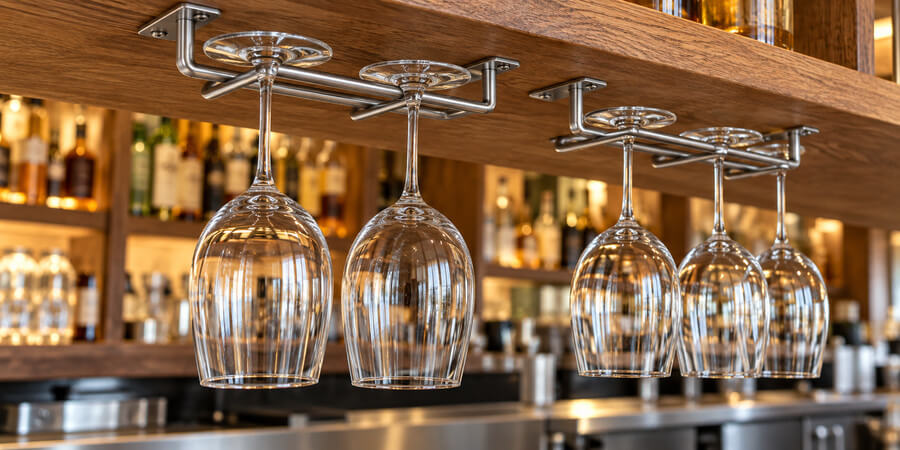
Store stemware where it will not snap. Stemmed glasses break at the stem, on the shelf as often as in the wash. A hanging glass rack over the bar holds stemware by the foot, and racked glasses stay in their compartment rack from the wash to the shelf.
Building a Glassware List
Start with one glass per family, then add by concept. A dining room runs on a beverage glass, a water or juice glass, an all-purpose wine glass and a flute. A bar adds a rocks glass, a double old fashioned, a highball, a martini or coupe, a shot glass and a pint. Everything else is a menu decision: a margarita glass only if the menu has one, a hurricane only for the tiki list, a Nick and Nora only when the stirred drinks earn it.
Buy in lines, not pieces. Most makers sell a line across sizes and shapes with the same wall and base design, so a rocks glass, a highball and a cooler from one line look like a set on the table. Mixing lines is fine in the back bar; it shows at a four-top.
Count seats, then racks. Own at least one glass per seat for each glass the menu uses at once, plus a rack's worth in the wash, and keep the case count in step with the compartment count of the rack that holds it so a case restocks whole racks.
Match durability to the turn. The volume glasses, beverage, cooler, rocks and highball, are the ones to buy rim-tempered or fully tempered and stackable. Spend on crystal where the glass is part of the presentation and the guest is paying for it.
Frequently Asked Questions
What are the main types of glassware used in bars and restaurants?
Four families: beverage tumblers (juice, water, beverage, cooler), cocktail glasses (rocks, double old fashioned, highball, collins, martini, coupe, margarita, hurricane, shot), stemware (red, white and all-purpose wine glasses, flutes, goblets) and specialty glasses (pints, pilsners, mugs, Irish coffee mugs, drinking jars). The chart at the top lists each one with its ounces.
What is the difference between a highball and a collins glass?
Height and width more than ounces. A highball is shorter and wider, about 4-1/2 to 6-1/4 inches tall, for two-part drinks like a gin and tonic. A collins is taller and narrower, 13 to 16 ounces on our listings, for built drinks with more mixer and ice like a Tom Collins or a mojito. Several makers sell one glass as "Collins / Hi-Ball".
How many ounces does a wine glass hold?
On our listings, red wine glasses hold 7 to 31 ounces with most between 16 and 24, white wine glasses 6 to 16, and all-purpose glasses 9 to 16. The glass is not filled: a standard pour is 5 ounces, and the rest of the bowl is room for aroma.
What size is a standard rocks glass?
Rocks glasses run 4.5 to 14 ounces on our listings, and most sit between 8 and 12. The double old fashioned is 12 to 13.5 ounces and taller. A rocks glass serves a 2-ounce pour over ice; the double takes a double pour or a large cube.
What size is a martini glass?
Most martini glasses on our listings hold 8 to 10 ounces, with lines from 2.5-ounce mini martini glasses for desserts up to 11.5 ounces. The drink is served up, without ice, so a 9-ounce glass carries a 3-ounce cocktail with room to spare.
What is the difference between a coupe and a Nick and Nora glass?
Both are stemmed glasses for drinks served up. The coupe is a wide, shallow bowl of 7 to 12 ounces, used for sparkling wine, daiquiris and sidecars. The Nick and Nora is a small bell-shaped bowl of about 6 ounces for stirred drinks in a smaller pour, and it spills less on the way to the table.
What is a cocktail glass capacity?
It depends on which glass the maker calls a cocktail glass. The stemmed V-shaped cocktail glass is the martini glass, 8 to 10 ounces in most lines and up to 11.5 on our listings; a few lines sell a 20- to 25-ounce stemmed bowl as a cocktail glass for gin drinks served in a large bowl. Check the ounces on the listing rather than the name.
What is a goblet used for in a restaurant?
Water at a set table. A goblet is a short-stemmed bowl of 8 to 16 ounces sold as a water or banquet goblet, and the banquet lines are built with a wide foot and thick stem for weddings and events. It also serves house wine where a restaurant keeps one glass for both.
What is the difference between rim-tempered and fully tempered glassware?
Rim-tempered glass has a heat-treated rim, the edge that chips when glasses knock together in a rack. Fully tempered glass is heat-treated all over, so the walls and base are strengthened as well as the rim. Volume beverage and cocktail lines are usually rim-tempered; stackable lines and some crystalline cocktail lines are fully tempered.
Is lead-free crystal glassware right for a busy bar?
For the glasses guests notice, yes; for volume tumblers, no. The lead-free crystal and crystalline lines on our listings are wine, cocktail and long drink glasses with a thin laser-cut or fine rim, sold for fine dining and cocktail bars. The thin rim is the point and also the weak spot, so keep soda-lime glass for the beverage and cooler sizes.
Should a restaurant use stemless wine glasses?
Where the stem is the problem. Stemless glasses do not snap at the stem, take fewer rack extenders and suit patios and casual dining. The trade is a warm hand on the bowl and fingerprints on the glass, so fine dining lists usually keep the stem.
How do I pick the right glass rack for my glassware?
Measure the widest point of the glass and choose the compartment count whose maximum glass diameter is larger: 9 for martini and margarita, 16 or 20 for wine and mugs, 25 for rocks and pints, 36 for highballs and flutes, 49 for shots. Then measure the height and add extenders. The full charts are in the dish and glass rack sizing guide.
Shop Restaurant Glassware
Start with the beverage glass and the all-purpose wine glass in a line the makers sell across sizes, then add the cocktail glasses the menu calls for. Our drinking and beverage glasses cover juice through cooler sizes, cocktail glasses hold the rocks, highball, martini, coupe, margarita, hurricane and shot glasses, wine glasses run from tasting glasses to balloon bowls and flutes, and glass cups and mugs carry the Irish coffee and café pieces. The full restaurant glassware range includes beer glasses, drinking jars, milk bottles and beakers.
Related Guides & Resources
- Beer Glass Sizes: Ounces by Type & Pour Chart - Every beer glass by ounces, and why "pint" means three sizes.
- Dish and Glass Rack Sizing Guide - Compartments, extenders and which rack fits each glass.
- Commercial Glasswasher Guide - The bar machines that wash the glasses in this chart.
- Sell More Wine in Your Restaurant - Pours, lists and the service that moves the bottle.
Share This!