Beer Glass Sizes: Ounces by Type & Pour Chart
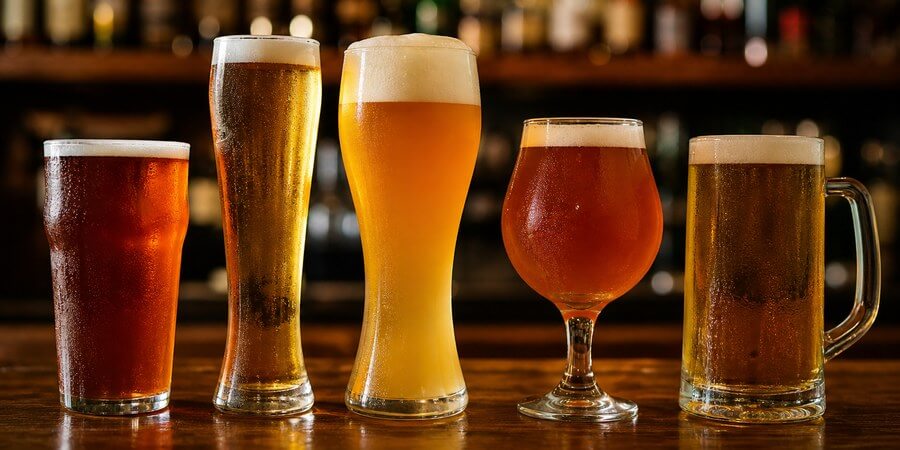
Table of Contents
How many ounces each beer glass holds - from taster flights to liter steins - and why "pint" means two different sizes
The standard beer glass in the United States holds 16 ounces - the American pint. In the UK it holds 20 imperial ounces, tasting flights pour 4 to 7 ounces, and festival mugs run 34 ounces and beyond. In between sits every size a bar program actually uses, and the names overlap enough to cause real ordering mistakes. This guide charts how many ounces each glass type holds, untangles the pint problem (16 vs. 20 vs. the 14-ounce "cheater"), and covers the pour-cost math that makes glass size a business decision, not just a style one.
The pint problem: one word, three different glasses
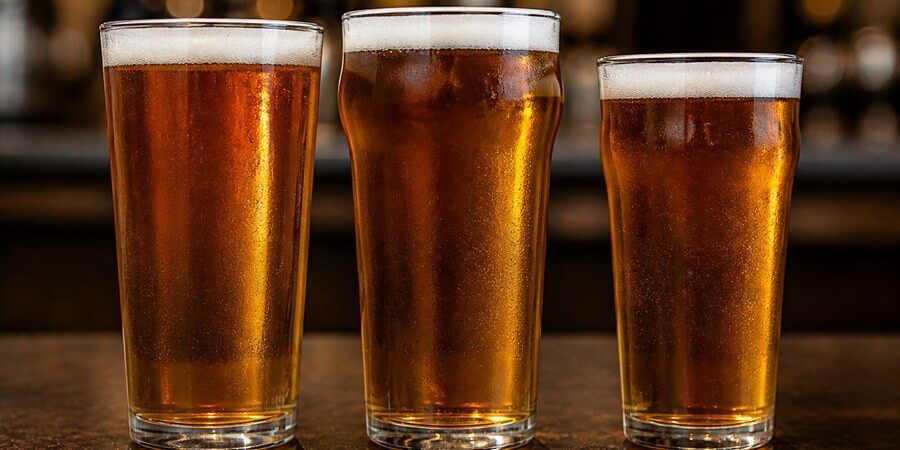
No beer glass term causes more confusion than "pint," because it describes at least three different pours:
- The American pint (shaker) - 16 US ounces. The straight-sided, conical workhorse of American bars. It stacks, it survives the dish pit, it doubles as a mixing glass, and it neither helps nor hurts the beer in it.
- The imperial pint (nonic) - 20 imperial ounces. The UK standard, with a bulge near the lip that improves grip, protects the rim from chips, and supports a longer-lasting head. One wrinkle worth knowing when reading spec sheets: the British imperial fluid ounce is slightly smaller than the US fluid ounce, so a 20-imperial-ounce glass is about 19.2 US ounces, not 20.
- The 14-ounce "cheater pint." Visually almost identical to a 16-ounce shaker, but two ounces smaller. Some operations use it deliberately to manage pour cost; the risk is guests who expect a full pint and notice. If you serve a 14-ounce pour, the honest play is to price and describe it as what it is.
That last point is the pour-cost math worth doing before any glassware order: at the same menu price, serving in a 14-ounce glass instead of a 16-ounce glass reduces every pour by 12.5%. Across a busy tap program that is a real margin difference - which is exactly why the size printed on the case matters more than how the glass looks on the shelf.
Beer glass size chart
Capacities below combine the standard published ranges with what commercial glassware actually ships in - where a range is wide, the low end is the traditional size and the high end is the largest common commercial version.
| Glass type: | Typical capacity: | Shape: | Best for: |
| Taster / sampler | 4 - 7 oz | Mini pint, tulip, or stange | Beer flights, tastings |
| Stange | 6.5 oz traditional, up to 12 oz modern | Slim, straight cylinder | Kolsch, altbier, delicate beers |
| Pilsner | 10 - 16 oz | Tall, slender, widens toward the mouth | Pilsners, pale lagers, blonde ales |
| Tulip / stemmed | 12 - 16 oz | Short stem, curved bowl, flared lip | Belgian ales, saisons, sours, big-aroma beers |
| Snifter | 12 - 16 oz | Footed bowl, tapered lip | Barleywines, imperial stouts, high-ABV beers |
| American pint (shaker) | 16 oz | Straight-sided cone | Everything - the US standard |
| English pub / nonic | 16 - 20 oz | Conical with bulge near lip | Ales, stouts, UK-style service |
| Wheat / weizen | 18 - 32 oz | Tall with a bulb near the top, or footed goblet | Hefeweizen, wheat ales, gose |
| Goblet / chalice | 13 - 32 oz | Wide bowl on a thick stem | Belgian dubbels, tripels, quadrupels |
| Beer mug / stein / tankard | 10 - 34 oz (festival steins to 40) | Heavy walls, handle, often dimpled | Lagers, Oktoberfest, high-durability service |
Two supporting sizes round out a program: beer pitchers hold around 64 ounces for table service, and brewery-designed IPA and stout glasses are specialty shapes in the pint range, engineered to concentrate aroma for those specific styles. Browse all of these side by side in our commercial beer glasses category, where you can filter by type and capacity, or start from the full restaurant glassware collection.
The sizes, family by family
Pints and pub glasses (14 - 20 oz). The volume backbone of nearly every program. Shakers stack and survive; nonics chip less and hold a head longer. Many bars stock a 16-ounce and a 20-ounce version of the same glass so the menu can offer two pour sizes without changing the look of the line. Mixing glasses - the same conical shape sold for cocktail service - run 14 to 22 ounces and quietly double as beer service in many operations, one case doing two jobs.
Pilsners (10 - 16 oz). Tall and slender to show off clarity, color, and rising carbonation. The smaller footprint also makes the pour look generous - a 12-ounce pilsner appears fuller than 12 ounces in a shaker ever would, which is why light lagers in slim glasses flatter both the beer and the margin.
Wheat and weizen glasses (18 - 32 oz). Built tall with a bulb near the top to hold the thick, fluffy head wheat beers produce; the traditional German pour is a half liter (about 17 ounces), and commercial versions - including footed weiss goblets - run up to 32 ounces. The tapered bottom is traditionally credited with keeping yeast sediment out of the last sip.
Stemware: tulips, snifters, and goblets (12 - 32 oz). The craft-beer service tier. Tulips flare at the lip to hold froth; snifters are built for swirling high-alcohol beers the way brandy is served; goblets sit on thick stems with wide mouths for hearty Belgian styles. Many goblets are nucleated - laser-etched inside the base so carbonation streams continuously and the head rebuilds itself with every sip. Stemware also earns its keep commercially: smaller, more elegant pours are the standard way taprooms serve strong beers profitably.
Mugs, steins, and tankards (10 - 40 oz). The durability tier - heavy walls, handles, and dimpled designs that survive clinking and constant handling. Published ranges disagree here more than anywhere: some charts say mugs start at 20 ounces, but commercial catalogs (ours included) carry mugs and tankards from 10 ounces up to 34, with novelty festival steins reaching 40 and beyond. If your program includes frosted mugs, plan the freezer space - dedicated glass chillers and frosters exist for exactly that service.
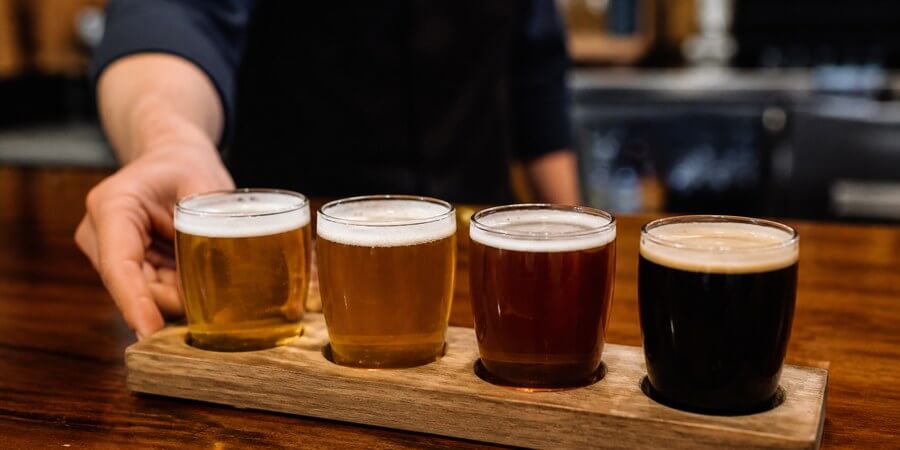
Tasters, flights, and stanges (4 - 12 oz). Flight glasses hold 4 to 7 ounces so a guest can sample three or four beers in the volume of one pint - and flights consistently sell at a premium per ounce. If flights are on your menu, pair the glasses with flight paddles and carriers so servers can run them safely. The stange - a slim 6.5-ounce cylinder from Cologne - is the traditional kolsch glass, now commonly sized up to 12 ounces for American service.
Choosing sizes for your program
Match the glass count to the pour list, not the other way around. A program pouring standard lagers, a couple of IPAs, and a stout needs three sizes at most: a 16-ounce pint for the standards, a 10-to-13-ounce stemmed glass for the strong pours, and taster glasses if flights are on the menu. Every additional shape adds storage, breakage, and sorting time in the dish pit.
Think in pour cost, not just glass cost. The glass sets the pour, the pour sets the margin. A 13-ounce tulip for an 8% imperial stout is not stingy - it is how strong beer is served everywhere, and it keeps the pour cost of expensive kegs in line. The reverse mistake is worse: putting a high-ABV, high-cost beer in a 20-ounce glass because that is what was clean.
Plan the support equipment with the glasses. Beer service quality depends on "beer-clean" glassware - residue kills head retention instantly - so high-volume programs pair the glass order with dedicated glass washers and organize storage in glass racks that protect rims between services. On the draft side, our kegerators and beer dispensers category covers the pouring end of the same program, and beer pitchers handle table service by the 64-ounce round.
Frequently Asked Questions
How many ounces are in a pint glass?
A US pint glass holds 16 ounces; a UK imperial pint glass holds 20 imperial ounces (about 19.2 US ounces, since imperial ounces are slightly smaller). The 14-ounce "cheater pint" looks nearly identical to the 16-ounce shaker but pours two ounces less.
Are beer glasses 12 or 16 oz?
The standard American beer glass is 16 ounces - the shaker pint. Glasses holding 12 ounces are usually pilsners, tulips, or specialty glasses matched to a bottle-sized pour. Both are common in commercial service; the 16-ounce pint is the default.
What is a 12 oz beer glass called?
Usually a pilsner, a tulip or stemmed glass, or a modern stange - all standard commercial sizes matched to a 12-ounce bottle or a controlled draft pour. There is no single name for the size; the shape determines what it is called.
What is 22 oz of beer called?
In bottles, 22 ounces is a "bomber." In glassware, a 22-ounce pour lands in beer mug and large pub glass territory - mugs commonly run from 10 up to 34 ounces, so a 22-ounce glass is simply a large mug or oversized pub glass rather than a named standard.
What size are beer flight glasses?
Taster glasses hold 4 to 7 ounces, and a typical flight runs three to five of them on a paddle - so a full flight totals roughly one pint of beer across several styles. Flights typically price at a premium per ounce compared to full pours.
Why do imperial pint glasses have a bulge near the top?
The nonic bulge does three jobs: it makes the glass easier to grip, it prevents rims from touching (and chipping) when the glasses are stacked or racked, and it helps support the beer's head. "Nonic" comes from "no-nick."
What is a nucleated beer glass?
A glass with fine etching inside the base. The etched points give dissolved carbonation a place to form bubbles, so a steady stream rises through the beer, continuously rebuilding the head and releasing aroma. Nucleation appears in everything from pub pints to Belgian goblets.
What glass should high-alcohol beers be served in?
Smaller stemware - tulips, snifters, and goblets in the 12-to-16-ounce range, poured well short of the rim. The bowl shape concentrates aroma, and the smaller pour matches both the strength of the beer and the economics of expensive kegs.
Why does a German wheat beer glass look so tall?
The weizen glass is built around the beer's head: tall walls give the foam somewhere to go, the bulb near the top holds it, and the traditional half-liter pour (about 17 ounces) leaves room for it. The narrow base is traditionally said to keep yeast sediment out of the final sip.
Do I need different glasses for every beer style?
No - that is a brewery-taproom luxury. Most bars run well on three sizes: a standard pint for volume pours, one stemmed glass for strong and specialty beers, and tasters if flights are on the menu. Add style-specific glasses only when a beer is a signature item worth presenting distinctively.
Related Resources
- Kegerator & Beer Dispenser Guide - The draft equipment side of the same beer program
- Attracting Customers with Local Craft Beers - Building the beer program these glasses serve
- Restaurant Glassware Types Guide - Every other bar and restaurant glass by name and ounces, from rocks to flute
- Restaurant Glassware - Every glass category beyond beer: wine, cocktail, beverage, and specialty
Share This!