Kegerator & Beer Dispenser Guide
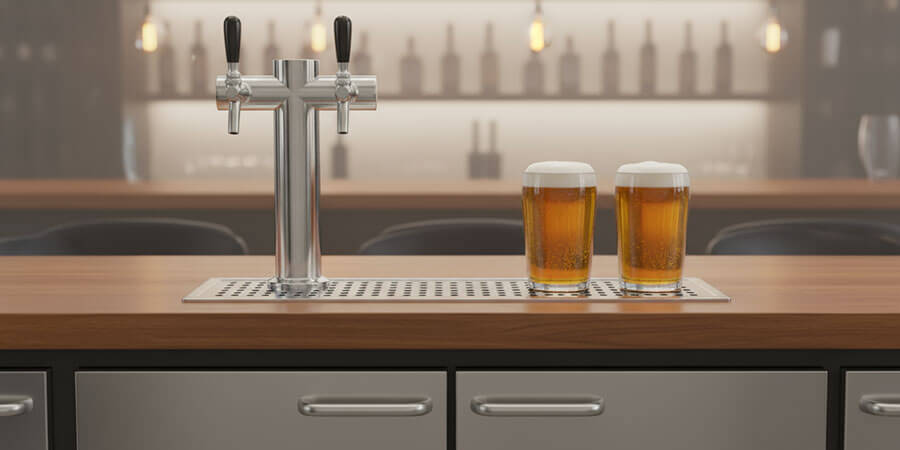
Table of Contents
Commercial kegerators and beer dispensers keep draft beer at the perfect temperature and pressure for consistent pours in bars, restaurants, hotels, casinos, stadiums, and event venues. These systems combine refrigeration, keg storage, and dispensing towers to deliver fresh beer on demand.
The primary buying drivers include capacity for your peak service hours, compatibility with your existing draft lines, and reliability during busy periods. Most commercial operators choose between single and dual draft arms based on their menu complexity and service volume.
Commercial vs Residential Kegerators
Commercial kegerators differ significantly from residential models in several key ways. Commercial units are built for continuous heavy use in busy environments, featuring more durable construction, higher capacity, and advanced cooling systems. They typically hold multiple half-barrel kegs (15.5 gallons each) and can dispense hundreds of beers per day, compared to residential models that usually handle one keg and serve occasional home use.
Commercial kegerators include features like digital temperature controls, heavy-duty compressors, and stainless steel construction designed to withstand constant operation. They also offer more taps, better insulation, and higher-quality components that reduce maintenance needs. While residential kegerators cost $300-$800 and focus on convenience, commercial models range from $2,000-$6,000 and prioritize reliability, capacity, and professional performance for business applications.
Types of Beer Dispensers
Kegerators and beer dispensers are categorized by how many kegs they hold and the number of draft arms they support, which determines how many different beers you can serve simultaneously.
Single Keg Units
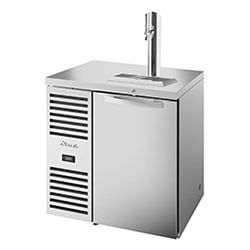
Single keg units are designed to hold and dispense one half-barrel (15.5-gallon) keg at a time.
- Best Uses: Small venues, tasting rooms, or satellite bars with focused beer offerings
- Key Features: Optimized for one keg, efficient cooling, compact design
- Pros: Perfect temperature control for single keg, easy to restock, lower energy use
- Cons: Limited capacity, requires frequent keg changes for variety
Multiple Keg Units
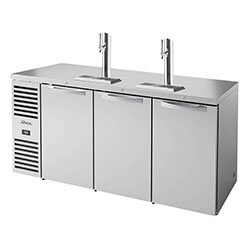
Multiple keg units accommodate 2-5 half-barrels simultaneously for high-volume operations.
- Best Uses: Large bars, stadiums, banquet halls, or busy restaurants with diverse menus
- Key Features: High capacity storage, multiple dispensing options, robust cooling systems
- Pros: Handles peak demand, reduces restocking frequency, supports complex menus
- Cons: Higher energy consumption, larger footprint, increased maintenance
1 Draft Arms
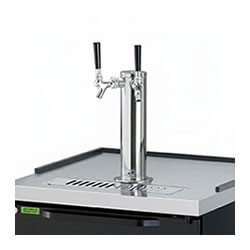
Single-draft systems offer one dispensing tower for serving one beer at a time.
- Best Uses: Small bars, cafes, pubs, or hotel lounges with limited draft selections
- Key Features: Compact footprint, simpler setup, lower initial cost
- Pros: Easy to maintain, energy efficient, affordable entry point
- Cons: Limited to one beer variety, may require manual switching for variety
2 Draft Arms

Dual-draft systems provide two dispensing towers for serving two different beers simultaneously.
- Best Uses: Full-service restaurants, sports bars, casinos, or event venues with multiple draft options
- Key Features: Two independent towers, flexible beer selection, higher capacity
- Pros: Greater menu flexibility, better for busy periods, accommodates different beer styles
- Cons: Larger footprint, higher energy use, increased maintenance complexity
Versatile Commercial Units
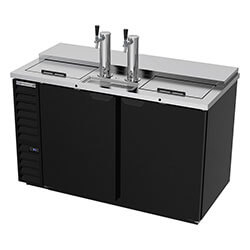
Versatile commercial units offer flexible designs that adapt to different commercial environments and service styles. These machines include club top units that boast room to store bottles and cans in addition to your keg(s) through a top door. The club top units provide convenient access to speed up the serving process for your bartenders or waitstaff. Club tops generally store six packs or smaller amounts of beer, soda, or other canned beverages of your choice. They can also be used to frost glasses so your customers can indulge in an ice cold beverage. For choosing the glasses themselves, our beer glass sizes guide charts every type and capacity in ounces.
- Best Uses: Hotels, convention centers, catering companies, or multi-purpose venues
- Key Features: Modular components, adaptable configurations, commercial-grade durability
- Pros: Scalable for different needs, professional appearance, long-term reliability
- Cons: Higher initial investment, may require customization
Kegerators and beer dispensers also come in pass-through and non-pass-through configurations. Pass-through models allow access from both sides, making them ideal for busy bars where staff need to access kegs from behind the bar. Non-pass-through units have all access from the front, suitable for self-service areas or limited-space installations.
Understanding Kegerator Components
Understanding the key components of a kegerator helps you make informed decisions about setup and maintenance. Here's a breakdown of the main parts:
- Faucet Handle: Faucet handles control beer flow and come in various styles for different pouring preferences.
- Faucet: Faucets dispense beer and can be single or multiple per tap tower depending on your setup.
- Drip Tray: Drip trays collect spills and condensation at the base of the tap tower for easy cleanup.
- Tap Tower: Tap towers hold faucets and direct beer flow; they come in different heights and faucet configurations.
- Guard Rail: Guard rails prevent items from falling off the top of the unit when used for glass storage.
- CO2 Tank: CO2 tanks provide pressure to push beer through the lines and maintain carbonation.
- Beer Line: Beer lines carry beer from the keg to the faucet, requiring regular cleaning to maintain quality.
- Coupler: Couplers connect to kegs and allow CO2 to enter while beer flows out.
- Regulator: Regulators control CO2 pressure to ensure consistent pouring and prevent foaming.
- CO2 Line: CO2 lines connect the regulator to the coupler for proper gas flow.
- Casters: Casters provide mobility for freestanding units, making them easier to position and service.
- Keg: Kegs store and chill beer; commercial units typically use half-barrel (15.5-gallon) or full-barrel (31-gallon) sizes.
Features & Accessories
- Capacity: Measured in half-barrels (15.5-gallon kegs) or full barrels (31-gallon kegs); systems typically hold 1-5 kegs depending on model
- Temperature Control: Maintains beer at 38-42°F with digital controls and alarms
- Door Quantities: Available in 1, 2, 3, or 4-door configurations for different storage needs and capacity requirements
- CO2 Integration: Built-in regulators and lines for proper carbonation and pressure
- Drip Trays: Removable trays under towers to catch spills and condensation
- What's Included: Most kegerators come with refrigeration unit, draft tower, beer lines, and basic hardware. CO2 tanks, casters, and actual kegs are typically sold separately.
- Accessories: Draft towers, beer lines, cleaning kits, pressure gauges, spare regulators, casters (optional), CO2 tanks (sold separately)
Selecting the Right Beer Dispenser
Production & Capacity
Match your dispenser capacity to your peak beer consumption. A busy restaurant might need 2-3 barrels daily, while a small bar could manage with 1 barrel. Consider your menu rotation and seasonal demand spikes.
Space & Utilities
Beer dispensers require dedicated floor space (typically 24-36 inches wide) and electrical outlets. Ensure adequate ventilation for heat dissipation and proper drainage for condensate. Most units need 115V power and may require CO2 tank connections.
Budget & Total Cost of Ownership
Entry-level single-draft systems start at $2,000-$3,000. Dual-draft models range from $3,500-$6,000. Factor in installation costs ($500-$1,000) and annual maintenance/CO2 expenses ($200-$500). Energy costs add $100-$300 yearly depending on usage.
Compliance & Safety
Choose units with ETL or NSF certifications for food service safety. Ensure proper ventilation to prevent CO2 buildup and install carbon monoxide detectors. Follow local fire codes for flammable gas storage.
Cost & ROI Snapshot
- Entry Range: $2,000–$3,500 for single-draft systems
- Mid Range: $3,500–$5,000 for dual-draft systems
- Premium: $5,000+ for high-capacity commercial models
- Operating Costs: $300–$600 per year (energy, CO2, maintenance)
- Break-Even Insight: Payback in 1-2 years through reduced waste and faster service vs. bottled beer
Barrel Quantity Reference Table
| Barrels: | Business Types: | Daily Servings: | Storage Notes: | Best For: | Best For: |
| 1 Barrel | Small bars, cafes, pubs | 50-100 beers | Compact storage, easy rotation | Limited draft menus, low volume | Limited draft menus, low volume |
| 2 Barrels | Restaurants, sports bars | 100-200 beers | Side-by-side or stacked | Balanced variety and volume | Balanced variety and volume |
| 3 Barrels | Full-service restaurants | 150-300 beers | Requires larger unit | Busy operations, multiple varieties | Busy operations, multiple varieties |
| 4 Barrels | Large bars, breweries | 200-400 beers | High-capacity models | High-volume venues, festivals | High-volume venues, festivals |
| 5 Barrels | Event venues, stadiums | 250-500 beers | Maximum capacity units | Peak demand, large crowds | Peak demand, large crowds |
Installation & Maintenance
Installation Checklist
- Position unit on level surface with proper clearance (6 inches behind, 12 inches sides)
- Connect to dedicated 115V outlet and ground properly
- Install CO2 regulator and connect gas lines
- Mount draft tower and run beer lines
- Test system pressure and temperature settings
- Calibrate pour pressure for each beer type
Care Schedule
| Task: | Frequency: | Notes: |
| Clean drip trays | Daily | Remove and sanitize to prevent mold |
| Check temperature | Daily | Should read 38-42°F |
| Inspect CO2 levels | Weekly | Top up as needed to maintain pressure |
| Clean beer lines | Monthly | Use commercial line cleaning solution |
| Defrost coils | As needed | If frost buildup occurs |
| Service regulators | Annually | Professional maintenance recommended |
Troubleshooting Highlights
- Flat beer: Check CO2 pressure (should be 10-12 PSI for most beers) or replace regulator
- Warm beer: Verify temperature settings and ensure proper ventilation around unit
- Foamy pours: Adjust pressure down or check for line blockages
- No flow: Inspect beer lines for kinks or check keg connections
- When in doubt, call a certified beer system technician for repairs
Frequently Asked Questions
How many kegs should I get for my commercial venue?
Calculate based on your peak weekend consumption. A busy bar might need 2-3 half-barrels daily, while a small cafe could manage with 1 keg. Consider your menu variety and customer preferences.
What's the difference between 1 and 2 draft systems?
Single-draft systems serve one beer at a time, making them simpler and cheaper. Dual-draft systems let you serve two different beers simultaneously, offering more menu flexibility for larger operations.
How often do I need to clean the beer lines?
Clean lines monthly with commercial cleaning solution to prevent bacterial growth. Daily drip tray cleaning prevents mold and maintains hygiene standards.
Can I use any CO2 tank with my dispenser?
Use food-grade CO2 tanks rated for beverage use. Standard 5-10 lb tanks work for most restaurant applications, but larger operations may need bigger cylinders.
What temperature should beer be stored at?
Keep beer at 38-42°F in the dispenser. This maintains proper carbonation and prevents the beer from becoming too warm or freezing.
How do I know if my beer lines need cleaning?
Signs include off-flavors, slow pours, or excessive foam. Regular monthly cleaning prevents these issues and ensures consistent quality.
Can I convert a single-draft to dual-draft system?
Some models allow upgrades, but it's usually more cost-effective to purchase the correct capacity initially. Check manufacturer specifications for conversion options.
What size CO2 tank do I need?
A 5 lb tank lasts 1-2 weeks in moderate use. Busy restaurants may need 10-20 lb tanks. Consider a CO2 monitoring system for automatic refills.
How much space do I need for a kegerator?
Plan for 24-36 inches wide and 30-36 inches deep, plus 6 inches clearance behind for ventilation. Allow room for CO2 tank placement nearby.
What's the warranty on commercial kegerators?
Most offer 1-3 year parts and labor warranties. Extended coverage is available for $200-500 annually. Always register your unit for warranty claims.
Shop Kegerators & Beer Dispensers
- Beer Dispensers - Complete selection of commercial kegerators and draft systems
- 1 Draft Beer Dispensers - Single-draft kegerators for smaller operations
- 2 Draft Beer Dispensers - Dual-draft kegerators for full service
Related Guides & Resources
- Commercial Refrigeration Guide - Comprehensive overview of commercial cooling equipment
- Commercial Ice Machine Guide - Ice machines and storage for beverage service
- Commercial Cooking Equipment Guide - Kitchen equipment for food preparation
Share This!