Commercial Glasswasher Guide
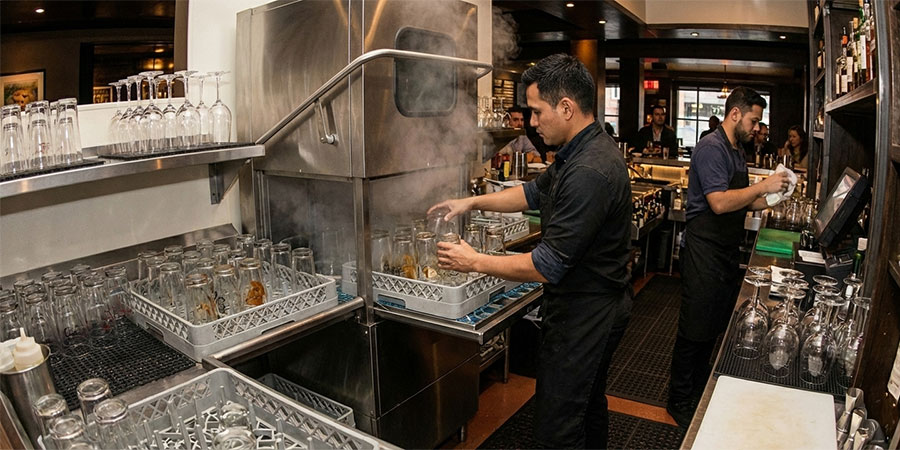
Table of Contents
Choose the right glass care equipment for bars, restaurants, and beverage service
Spotless, streak-free glassware defines beverage presentation quality in bars, breweries, and restaurants. Commercial glasswashers deliver rapid cleaning cycles (60-90 seconds) with gentle spray patterns designed specifically for glassware, eliminating lipstick marks, fingerprints, and water spots that standard dishwashers leave behind. This guide covers automated glasswasher machines, manual bar washers, and electric polishers, helping you match equipment to your glassware volume, bar layout, and service standards.
Dedicated glass care equipment serves bars and beverage operations where presentation quality directly impacts customer perception. A craft beer loses appeal when served in a glass with lipstick residue. Wine service demands spotless stems. Cocktail bars need rapid turnaround during happy hour rushes.
Dedicated glasswashers differ from standard dishwashers in three critical ways:
- Gentler spray - Lower pressure prevents breakage of delicate stems
- Faster cycles - 60-90 seconds versus 2-3 minutes for dishwashers
- Specialized racks - Designed for pint glasses, wine stems, and tumblers
Glass care equipment ranges from simple manual brush washers ($19-$750) for small bars to automated undercounter machines ($3,100-$19,000) processing 2,000 glasses hourly. Understanding the differences between automated glasswashers, manual washers, and polishers ensures you match equipment to your volume and quality standards.
Types of Commercial Glass Care Equipment
Automated Glasswashers (Underbar/Undercounter Machines)
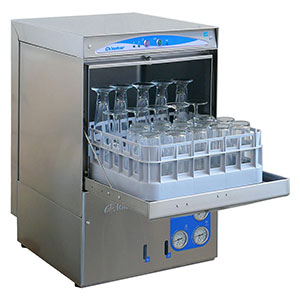
Fully automated machines designed for high-volume bar and beverage operations, washing and sanitizing glassware in dedicated racks. These compact units fit beneath bar tops or in underbar equipment lines, keeping glass washing within arm's reach of bartenders. Cycle times of 60-90 seconds allow staff to wash, rack, and reload glasses without leaving the service area during busy periods.
Automated glasswashers use gentler spray patterns than standard dishwashers, reducing breakage of delicate stems and thin-walled glassware. High-temp models reach 180°F for chemical-free sanitization (preferred for beer service), while low-temp models use precise chemical dosing for operations with limited electrical capacity. Carousel models rotate glasses through wash zones for highest throughput, while pass-through designs create clean separation between dirty and sanitized glassware.
Best For: High-volume bars, nightclubs, breweries, wineries, hotel bars
Capacity: 720-2,000 glasses per hour (or 20-39 racks per hour)
Styles:
- Carousel (rotary) - Glasses rotate through wash cycle
- Pass-through - Linear flow, dirty in front, clean out back
- Rack-based - Standard rack system similar to undercounter dishwashers
Key Features:
- High-temp (180°F) or low-temp (chemical) sanitization
- 60-90 second cycle times
- Built-in rinse aid and detergent dispensers
- Drain pump options for elevated drains
- Compact underbar footprint (18-24"W)
Pros:
- Highest throughput (720-2,000 glasses/hr)
- Consistent sanitization meeting health codes
- Automated operation reduces labor
- Gentle spray minimizes breakage
- Fast drying
Cons:
- Higher cost ($3,100-$19,000)
- Requires electrical service (115-240V)
- Needs plumbing connections
- Ongoing maintenance required
- Chemical or booster heater costs
Manual Bar Glass Washers (Brush-Style)
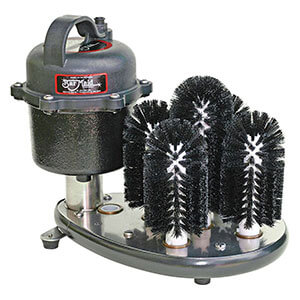
Simple brush-based washers for quick glass cleaning in bars, using rotating brushes powered by water pressure or electric motors. These units mount directly to three-compartment sinks or bar stations, allowing bartenders to quickly scrub glasses between pours without leaving the service area. Manual washers provide immediate cleaning for lipstick, residue, and fingerprints that accumulate during service.
While manual brush washers excel at quick rinses, they do not sanitize glassware to health code standards. Most operations use them as a first-pass cleaning step, following with proper sanitization in an automated glasswasher or chemical sanitizer solution. The low cost ($19-$750) and zero-footprint installation make brush washers ideal as backup stations or for small neighborhood bars where volume doesn't justify an automated machine.
Best For: Small bars, backup washing stations, quick rinse between pours
Brush Configurations:
- 2-brush - Basic side brushes for tumblers
- 3-brush - Side and base brushes for thorough cleaning
- 5-brush - Side, base, and top brushes for all glass types
Types:
- Manual - Hand-operated, no power required
- Electric upright - Motor-driven brushes above sink
- Submersible - Motor sits in sink basin
Capacity: Hand speed limited (100-200 glasses/hour typical)
Pros:
- Very low cost ($19-$750)
- Simple installation (mount to sink or drop in)
- No electrical needed (manual models)
- Immediate rinse between pours
- Minimal maintenance
Cons:
- Not true sanitization (rinse only)
- Manual labor intensive
- Lower throughput than machines
- Doesn't meet health code sanitization
- Must follow with sanitizer or machine wash
Electric Glass Polishers
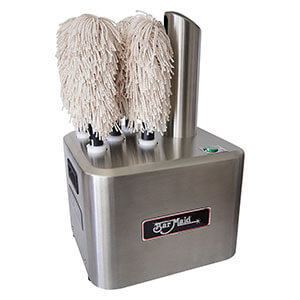
Motorized polishing systems using soft brushes and warm air to buff glassware to a lint-free, spotless finish after washing. Glass polishers address the water spots and streaks that even the best glasswashers leave behind, transforming clean glassware into presentation-ready stems and tumblers. The combination of rotating soft brushes and warm air blowers dries and buffs glasses simultaneously.
Fine dining restaurants and upscale wine bars consider glass polishers essential for maintaining presentation standards. A water-spotted wine glass undermines the perception of quality, regardless of how exceptional the wine. Polishers process 300-700 glasses per hour, making them practical for pre-service prep or continuous polishing during banquet operations. While they add a labor step, the professional finish justifies the investment for establishments where presentation directly impacts guest experience.
Best For: Fine dining, wine service, banquet operations, upscale cocktail bars
Throughput: 300-700 glasses per hour (depending on model)
Features:
- 3-brush or 5-brush configurations
- Warm air blower - Speeds drying and prevents spots
- Soft bristles - Won't scratch delicate crystal
- Countertop mounting - Compact footprint
Pros:
- Perfect spotless finish
- Removes water spots machines leave
- Ideal for wine stems and crystal
- Professional presentation
- Lint-free buffing
Cons:
- Requires pre-washing (not a cleaner)
- Higher cost ($1,600-$1,800)
- Electrical required (115V)
- Adds labor step
- Brush replacement needed
Glass Care Equipment Comparison Table
| Type: | Best For: | Throughput: | Price Range: | Sanitization: |
| Automated Glasswasher | High-volume bars, breweries | 720-2,000 glasses/hr | $3,100-$19,000 | Yes (180°F or chemical) |
| Manual Brush Washer | Small bars, quick rinse | 100-200 glasses/hr | $19-$750 | No (rinse only) |
| Electric Glass Polisher | Fine dining, wine service | 300-700 glasses/hr | $1,600-$1,800 | No (polish only) |
Features & Accessories
Sanitization (Automated Glasswashers Only)
High-Temperature (180°F final rinse):
- Chemical-free sanitization using heat
- Requires booster heater (some built-in)
- Better for beer service (no chemical taste)
- Flash drying from hot rinse
- Higher energy costs
- Typical power: 208-240V
Low-Temperature Chemical Sanitization:
- Uses chlorine or quaternary ammonium sanitizer
- Lower electrical requirements (115-208V)
- Lower energy costs
- Ongoing chemical expense ($30-$80/month)
- Air-dry required (slower)
Booster Heaters
Booster heaters raise water temperature to 180°F for the final rinse in high-temperature sanitization cycles. Only high-temp glasswashers (33% of models) require them; low-temp chemical models (67%) do not.
Built-in vs. External:
- Some high-temp glasswashers include a built-in booster heater
- Others require purchasing an external booster heater ($400-$1,200)
- Always check product specifications for "Booster Heater Included: Yes/No"
Beer Service Advantage: High-temperature sanitization is preferred for beer service because it eliminates chemical residue that can kill beer head. Craft beer bars and breweries often choose high-temp models for this reason. If selecting high-temp for beer service, verify the booster heater is included or budget for an external unit.
Brush Configurations (Manual Washers)
- 2-brush - Basic tumbler and rocks glass cleaning
- 3-brush - Adds base brush for better coverage
- 5-brush - Full coverage including rim and base
- Brush materials - Nylon (most common), natural bristle (gentler)
Drain Options
Most glasswashers (64%) do NOT include drain pumps, making this a critical decision for bar installations. Understanding your drain situation before purchasing prevents costly installation problems.
Drain Types:
- Gravity drain - Standard option, water flows downward to floor drain below machine outlet
- Pump drain (drain pump) - Actively lifts wastewater to elevated drain lines, adds $150-$400 to equipment cost
When You Need a Drain Pump: Bar and underbar installations frequently require drain pumps due to older building plumbing. Common scenarios include: floor drain positioned higher than machine outlet, installing under existing bar with limited plumbing access, retrofitting in historic buildings not originally designed for glasswashers, or bar floor drain located across the room from intended machine placement.
Common Bar Installation Mistake: Bar owners often purchase cheaper glasswashers without drain pumps to save money. During installation, they discover the bar's floor drain is elevated or positioned far away. This results in installation delays, equipment returns, and costly plumbing modifications ($1,000-$2,500 to relocate drain lines).
How to Check Before Ordering: Measure your bar floor drain position relative to where you plan to install the glasswasher. If the drain is higher than the machine outlet or you're uncertain about your plumbing situation, choose a model with drain pump included. The $150-$400 pump investment is significantly less than $1,000+ for drain relocation.
Replacement Parts & Accessories
- Brush heads - Replace every 3-6 months ($10-$50 per set)
- Glass racks - Compartmented for pints, wine stems, tumblers
- Detergent/rinse aid - Beer-specific formulas prevent head killing
- Booster heaters - External units for high-temp sanitization
Selecting the Right Glass Care Equipment
Production & Capacity
Calculate your peak glassware volume to size equipment properly.
Glasses-Per-Hour Formula:
Bar seats × drinks per hour per seat × 1.5 (reuse factor) = Glasses/hour
Example:
- Bar seats: 30
- Drinks/hour per seat: 2
- Calculation: 30 × 2 × 1.5 = 90 glasses/hour
- Solution: Manual brush washer or small automated glasswasher (20 racks/hr = ~400 glasses/hr)
Capacity Recommendations:
| Operation Type: | Glasses/Hour: | Recommended Equipment: |
| Small neighborhood bar | 40-100 | Manual 3-brush washer |
| Sports bar, pub | 100-300 | Undercounter glasswasher (720-1,000 glasses/hr) |
| Nightclub, high-volume bar | 300-600 | Pass-through glasswasher (1,200-1,500 glasses/hr) |
| Brewery tasting room | 400-800 | Carousel glasswasher (1,500-2,000 glasses/hr) |
| Fine dining wine service | 20-60 | Manual washer + electric polisher |
Manual washers work for low volume or as backup units. Automated machines are essential for bars serving 100+ glasses per hour.
Space & Utilities
Underbar/Undercounter Space:
- Automated glasswashers: 18-24"W × 19-26"D × 28-37"H
- Fit beneath bar or in underbar equipment line
- Pass-through models need access both sides
- Manual washers: Mount to 3-compartment sink or bar
Electrical:
- Manual washers: None required (hand-operated)
- Electric manual washers: 115V, 15A
- Automated glasswashers (low-temp): 115-208V, 15-20A
- Automated glasswashers (high-temp): 208-240V, 30-40A
- Glass polishers: 115V, 10-15A
Plumbing:
- 3/4" cold water supply (hot water for some models)
- 15-20 PSI water pressure minimum
- Floor drain or drain pump required (automated machines)
- Manual washers drain directly into sink
Budget & Total Cost of Ownership
Equipment Costs:
- Manual brush washers: $19-$750
- Electric manual washers: $400-$750
- Glass polishers: $1,600-$1,800
- Undercounter glasswashers: $3,100-$9,500
- Pass-through glasswashers: $8,000-$15,000
- Carousel glasswashers: $12,000-$19,000
Installation Costs (Automated Machines):
- Electrical work: $200-$800
- Plumbing connections: $300-$800
- Professional installation: $300-$600
- Total: $800-$2,200
Operating Costs (Automated Machines):
- Electricity: $30-$150/month
- Water/sewer: $20-$80/month
- Detergent: $20-$60/month
- Rinse aid: $10-$25/month
- Sanitizer (low-temp): $30-$80/month
- Glass-specific beer detergent prevents head-killing residues
High-volume bars justify automated glasswasher costs through labor savings and faster turnaround. Small bars can start with manual washers and upgrade as volume grows.
Installation & Maintenance
Installation Checklist (Automated Glasswashers)
- Verify electrical service (voltage, amperage, GFCI protection)
- Confirm drain location or install drain pump
- Measure underbar space with clearances
- Install water supply line (cold or hot per model)
- Position for workflow (dirty glasses in, clean out)
- Level machine for proper drainage
- Connect water, drain, electrical
- Install booster heater if required (high-temp)
- Test sanitization cycle and verify temperatures
- Train staff on glass loading and operation
Installation Checklist (Manual Washers & Polishers)
- Mount to sink rim or install submersible base
- Connect to electrical if powered model
- Verify sink has adequate depth (10-12" minimum)
- Install drain connections if submersible
- Test brush rotation and water flow
Maintenance Schedule
| Frequency: | Tasks: |
| Daily | Clean brush heads (manual washers), remove glass chips/debris from tanks, wipe down exterior, check detergent levels |
| Weekly | Deep clean wash arms and nozzles, inspect filters, verify water temperature, clean brush heads thoroughly |
| Monthly | Replace worn brush heads (manual washers), descale wash tank, check pump seals, calibrate chemical dispensers |
| Quarterly | Professional service (automated machines), replace worn gaskets, test safety interlocks |
| Semi-Annually | Replace brush sets (heavy use), full descaling treatment, inspect electrical connections |
Common Issues & Solutions
- Glasses still spotted - Check rinse aid level, verify rinse temperature (180°F high-temp), use beer-specific detergent
- Lipstick not removing - Increase detergent dose, check spray arm pressure, verify brushes not worn (manual)
- Slow drying - Verify booster heater operation (high-temp), check rinse aid dispenser
- Water won't heat - Test booster heater, check thermostat, inspect heating element
- Brushes not spinning - Check water pressure (manual), inspect motor (electric), clear debris
Frequently Asked Questions
Do I need a dedicated glasswasher or can I use a regular dishwasher?
Bars serving 50+ glasses per hour need dedicated glasswashers. Regular dishwashers use stronger spray that can break delicate stems, take 2-3 minutes per cycle versus 60-90 seconds for glasswashers, and may leave detergent residue that kills beer head. Glasswashers use gentler spray, faster cycles, and glass-specific chemicals. Small operations can use standard dishwashers with glass racks but will experience slower service.
What's the difference between a glasswasher and a glass polisher?
Glasswashers wash and sanitize dirty glassware using water, detergent, and sanitizer. Glass polishers buff clean, dry glassware to remove water spots and create a lint-free shine using soft brushes and warm air. You need both washing (for cleaning) and polishing (for spotless finish). Most bars use only glasswashers; fine dining and wine service add polishers for premium presentation.
How many glasses per hour can different glasswashers handle?
Manual brush washers handle 100-200 glasses/hour (hand-speed limited). Automated undercounter glasswashers process 720-1,000 glasses/hour (20-25 racks). Pass-through models reach 1,200-1,500 glasses/hour. Carousel glasswashers achieve 1,500-2,000 glasses/hour. Calculate your peak: bar seats × 2-3 drinks/hour × 1.5 reuse factor to size correctly.
Should I choose high-temp or low-temp for a glasswasher?
Choose high-temp for breweries and beer-focused bars where chemical residue can kill beer head. High-temp uses 180°F rinse for chemical-free sanitization but requires more electrical power (208-240V, 30-40A) and costs more to operate. Choose low-temp (chemical sanitization) for cocktail bars, wine service, or when electrical capacity is limited. Low-temp uses 115-208V, costs less to run, but has ongoing chemical expenses ($30-$80/month).
Do glasswashers need special plumbing?
Automated glasswashers need 3/4" water supply, 15-20 PSI pressure, and floor drain connection. Models with drain pumps can lift water to elevated drains. Manual brush washers mount to existing 3-compartment sinks with no additional plumbing. Unlike dishwashers, some glasswashers can use cold water only (detergent and chemicals provide cleaning power). Verify model requirements before purchase.
What are carousel glasswashers and when do I need one?
Carousel (rotary) glasswashers use a rotating drum that continuously moves glasses through wash, rinse, and sanitize zones. They offer the highest throughput (1,500-2,000 glasses/hour) for extremely high-volume operations like nightclubs, stadiums, and large breweries. Choose carousel models when you regularly exceed 1,000 glasses per hour during peak service. They cost more ($12,000-$19,000) but reduce labor and handle extreme volume.
Can manual glass washers sanitize glassware?
No. Manual brush washers rinse and clean glasses but do not sanitize to health code standards. They remove visible debris and lipstick but require follow-up sanitization in a 3-compartment sink sanitizer solution or through an automated glasswasher. Manual washers work as quick-rinse stations between pours or for light cleaning, but health departments require proper sanitization. Use manual washers for initial cleaning, then sanitize in machine or chemical solution.
How much do glass polishers cost and are they worth it?
Electric glass polishers cost $1,600-$1,800 and process 300-700 glasses per hour. They're worth it for fine dining restaurants, wine bars, and upscale cocktail programs where spotless, lint-free glassware enhances presentation and perceived value. High-end wine service particularly benefits from polishing, as water spots on crystal stems appear unprofessional. Sports bars and casual establishments typically skip polishers and rely on glasswashers with rinse aid.
What chemicals do glasswashers use?
High-temp glasswashers use low-alkaline detergent and rinse aid only (no sanitizer needed due to 180°F rinse). Low-temp models use detergent, rinse aid, and chemical sanitizer (chlorine or quaternary ammonium). Beer-focused operations should use beer-specific detergents that prevent head-killing residue. Never use standard dishwasher detergent in glasswashers as it can leave film and kill beer foam. Glass-specific formulas cost $20-$60/month.
How often do brush heads need replacement?
Manual glass washer brush heads last 3-6 months with daily use. High-volume bars may replace monthly. Signs brushes need replacement: bristles worn down, brushes don't rotate smoothly, glasses still have residue after cleaning. Brush replacement sets cost $10-$50. Electric polisher brushes last 6-12 months. Keep spare brush sets on hand to avoid downtime during busy service.
Shop Glass Care Equipment
- Glass Washer Machines - Automated undercounter, carousel, and pass-through glasswashers for bars and breweries
- Bar Glass Washers & Polishers - Manual brush washers and electric glass polishers for spotless presentation
- Commercial Dishwashers - Full dishwashing systems for mixed bar and restaurant operations
Related Guides
- Commercial Dishwasher Guide - Complete dishwashing equipment for restaurants and foodservice
- 5 Things to Know Before Buying a Dishwasher - Quick decision framework for warewashing equipment needs
Share This!