Restaurant Furniture Guide
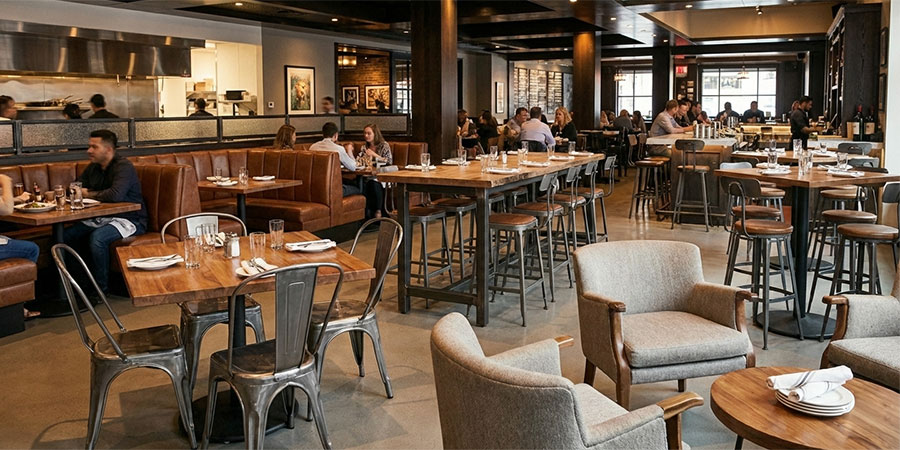
Table of Contents
Choose the right furniture types, materials, and layouts for your foodservice operation
Restaurant furniture is a critical component of your establishment's atmosphere, customer comfort, and operational efficiency. Choosing the right seating and tables involves balancing aesthetic appeal with durability, space constraints, and budget requirements. This guide covers the primary furniture categories - including chairs, tables, booths, bar stools, and outdoor options - helping you select high-quality commercial-grade pieces that withstand the rigors of a busy dining environment while maximizing your seating capacity and meeting compliance standards.
Unlike residential furniture, commercial restaurant furniture is engineered to withstand constant use, heavy weight loads, and frequent cleaning with industrial-strength chemicals. Every piece of furniture in a professional foodservice environment must meet specific durability standards, often including BIFMA (Business and Institutional Furniture Manufacturers Association) testing, to ensure safety and longevity in high-traffic settings.
The right furniture choice affects four critical operational areas:
- Customer Experience - Comfort and style directly influence how long guests stay and their overall perception of your brand.
- Seating Capacity - Efficient furniture selection and layout maximize revenue potential per square foot.
- Maintenance & Longevity - Commercial-grade materials reduce replacement frequency and simplify daily cleaning routines.
- Safety & Compliance - Proper furniture ensures stability for guests and meets ADA (Americans with Disabilities Act) accessibility requirements.
Furniture types range from versatile stackable chairs and heavy-duty metal tables to custom-upholstered booths and weather-resistant outdoor sets. Understanding the specific benefits of different materials, construction methods, and configurations prevents costly replacement cycles and ensures your dining room remains both functional and inviting for years to come.
Types of Restaurant Furniture
Restaurant Chairs
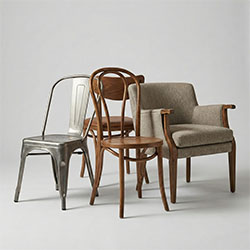
Commercial restaurant chairs are the primary touchpoint for guest comfort and must balance style with extreme durability. Available in wood, metal, and upholstered options, these chairs are designed to handle hundreds of users daily without compromising structural integrity. Wood chairs offer a classic, warm aesthetic suitable for fine dining or traditional bistros, often featuring mortise-and-tenon joinery for maximum strength. Metal chairs, typically constructed from steel or aluminum, provide a modern or industrial look and are exceptionally easy to sanitize, making them popular for high-volume casual dining and fast-casual concepts.
When selecting chairs, consider the operational benefits of stackable models, which allow for easy floor cleaning and flexible storage for events or seasonal seating changes. Upholstered chairs add a layer of luxury and comfort but require careful selection of high-performance fabrics or vinyls that resist stains and abrasions. Many operators opt for chairs with nylon or felt glides to protect flooring and reduce noise during service. Regardless of the material, ensure the chairs have a weight capacity suitable for a diverse range of guests, typically 250 to 500 pounds for commercial-grade seating.
Restaurant Tables
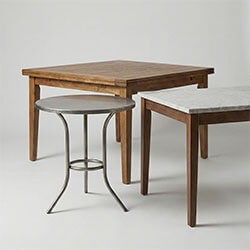
Restaurant tables serve as the foundation of the dining experience, consisting of three main components: the table top, the base, and the mounting hardware. Table tops come in a vast array of materials, including laminate, solid wood, granite, and stainless steel, each offering different levels of heat resistance, scratch resistance, and maintenance requirements. Laminate tops are a cost-effective and highly durable choice for casual dining, available in hundreds of colors and patterns, while solid wood tops provide a premium feel that can be refinished over time.
The table base is equally important, providing the stability necessary to prevent wobbling and spills. Cast iron bases are the industry standard for their weight and durability, while aluminum bases offer a lighter, rust-resistant alternative for outdoor use. Bases are available in various heights - including standard dining height (30 inches), counter height (36 inches), and bar height (42 inches) - allowing you to create visual interest and different dining zones within your space. Choosing the right combination of top and base ensures your tables can support heavy plates and glassware while remaining stable on uneven floors through the use of adjustable glides.
Restaurant Booths & Benches
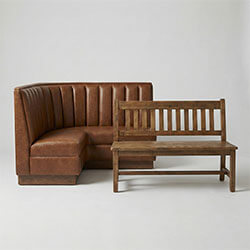
Booths and benches offer a sense of privacy and comfort that traditional chairs cannot match, often becoming the most requested seating in a restaurant. They are available in several configurations, including single booths, double booths, wall benches, and circular banquettes, allowing you to maximize seating along walls and in corners. Beyond comfort, booths are highly space-efficient, as they require less "aisle clearance" than chairs, which must be pulled out for guests to sit. This efficiency can increase your total seating capacity by up to 20% in certain layouts.
The construction of a commercial booth involves a heavy-duty wood or metal frame, high-density foam padding, and durable upholstery. Vinyl is the most common choice for restaurant booths due to its ease of cleaning and resistance to spills, but high-performance fabrics are also popular for a more upscale look. Design options such as button tufting, headrolls, and wood trim allow you to customize the booths to match your interior design perfectly. When planning your layout, remember that booths are semi-permanent fixtures, so their placement should be carefully considered during the initial design phase to ensure proper flow and accessibility.
Bar Stools
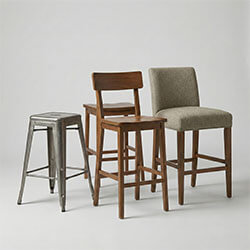
Bar stools are essential for maximizing revenue at bars, counters, and high-top tables, providing a casual and social dining option for guests. They are typically available in two primary heights: counter height (24-inch seat height) for 36-inch surfaces, and bar height (30-inch seat height) for 42-inch surfaces. Like chairs, bar stools come in wood and metal varieties, with options for backless designs to save space or high-back designs for increased comfort during longer stays. Swivel mechanisms are a popular feature, allowing guests to easily turn and converse with others or watch televisions in a sports bar setting.
Durability is paramount for bar stools, as they often experience more movement and "climbing" than standard chairs. Look for stools with reinforced footrests, often protected by a metal kick plate, to prevent wear and tear from shoes. Upholstered seats can enhance the guest experience, but ensure the material is rated for high-traffic commercial use. For outdoor bars, aluminum or synthetic wicker stools provide the necessary weather resistance while maintaining a stylish appearance. Properly spaced bar stools - typically 24 inches from center to center - ensure guests have enough elbow room without wasting valuable counter space.
Outdoor/Patio Furniture
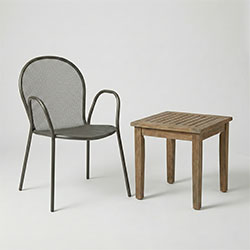
Outdoor furniture allows restaurants to expand their seating capacity and take advantage of pleasant weather, but it must be specifically designed to withstand UV rays, rain, and temperature fluctuations. Materials such as powder-coated aluminum, synthetic teak, and high-density polyethylene (HDPE) are ideal for patio use because they do not rust, rot, or fade easily. Patio sets often include lightweight, stackable chairs and tables with umbrella holes, providing flexibility for different group sizes and sun protection for guests.
Maintenance is a key consideration for outdoor furniture, as it is exposed to the elements and urban pollutants. Choosing materials that can be easily hosed down or wiped clean saves labor time and keeps your patio looking fresh. Umbrellas are a necessary accessory for most outdoor spaces, providing shade and enhancing the visual appeal of the patio, but they must be paired with heavy bases to prevent tipping in windy conditions. When the season ends, having furniture that stacks or folds simplifies storage and protects your investment until the next year.
Folding Tables & Chairs
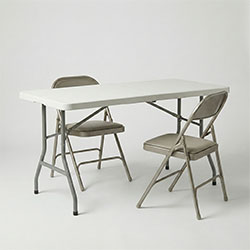
Folding tables and chairs are the ultimate solution for flexible seating, making them indispensable for banquet halls, event spaces, and restaurants that host large parties. Modern commercial folding furniture has come a long way from the flimsy options of the past, now featuring high-impact plastic or padded vinyl seats and heavy-duty steel frames that can support significant weight. These pieces are designed for rapid setup and teardown, often featuring gravity-lock legs for safety and integrated handles for easy carrying.
The primary advantage of folding furniture is its storage efficiency; hundreds of chairs can be stored in a relatively small area when not in use, often on specialized carts or dollies. Folding tables are available in various shapes - including round, rectangular, and cocktail height - allowing you to configure your space for everything from a formal wedding to a casual corporate seminar. When selecting folding furniture, look for "non-marring" feet to protect your floors during the frequent movement of the pieces. Investing in high-quality folding options ensures that your "extra" seating is just as comfortable and professional-looking as your permanent furniture.
Host Stations & Accessories
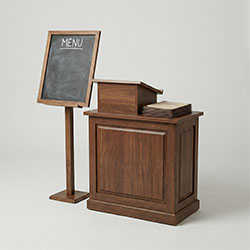
Host stations and furniture accessories are the "supporting cast" that ensures your restaurant runs smoothly and accommodates all types of guests. The host station is the first thing guests see, providing a professional space for managing reservations, menus, and seating charts. These stations often include integrated storage for menus, wine lists, and waitlist pagers, and can be customized with your restaurant's logo or specific finishes to match the decor. Wait stations, located throughout the dining room, provide a convenient spot for servers to store extra napkins, silverware, and water pitchers, reducing trips to the kitchen and improving service speed.
Accessories such as highchairs and booster seats are essential for making your restaurant family-friendly and compliant with safety standards. Commercial-grade highchairs are typically made of durable wood or easy-to-clean plastic, featuring wide bases for stability and safety straps to secure young children. Other important accessories include tray stands for servers, coat racks for guests, and waste receptacles that blend into the furniture design. By choosing accessories that match the quality and style of your primary furniture, you create a cohesive and professional environment that meets the needs of every guest.
Restaurant Furniture Comparison Table
| Type: | Materials: | Best For: | Stackable: | Indoor/Outdoor: |
| Restaurant Chairs | Wood, Metal, Upholstered | General Dining | Often | Mostly Indoor |
| Restaurant Tables | Laminate, Wood, Granite | Dining Surfaces | No | Both Options |
| Restaurant Booths | Vinyl, Fabric, Wood | Privacy & Comfort | No | Indoor |
| Bar Stools | Metal, Wood, Vinyl | Bars & High-Tops | Sometimes | Both Options |
| Outdoor Furniture | Aluminum, HDPE, Teak | Patios & Decks | Usually | Outdoor |
| Folding Furniture | Plastic, Steel, Vinyl | Events & Banquets | Yes | Both Options |
| Host Stations | Wood, Laminate, Metal | Entry & Service | No | Indoor |
Features & Specifications
Materials & Construction
The longevity of restaurant furniture depends heavily on the quality of materials and the methods used in construction. For wood furniture, look for solid hardwoods like oak, maple, or beech, and ensure the joints are reinforced with mortise-and-tenon construction, wood screws, and glue. Metal furniture should be made from high-gauge steel or aluminum, with fully welded joints rather than bolts, which can loosen over time. The finish is also critical; powder-coating on metal and catalyzed lacquer on wood provide the best resistance to scratches and chemical cleaners.
Frame Construction & Weight Capacity
Commercial furniture must be built to handle significantly more weight and stress than residential pieces. A standard commercial chair should have a minimum weight capacity of 250 pounds, though many heavy-duty models are rated for 500 pounds or more. Look for features like "V-shaped" corner blocks under chair seats and reinforced cross-bracing on table bases to ensure stability. For booths, a solid wood or steel frame is essential to prevent sagging and structural failure over years of use.
Stackability & Storage
For many operations, the ability to stack furniture is a major operational advantage. Stackable chairs allow for easier floor maintenance at the end of the night and provide flexibility for changing room configurations. When evaluating stackable options, check how many chairs can be safely stacked (typically 4 to 10) and whether they require a specialized chair dolly for transport. Some tables also feature "flip-top" mechanisms that allow the tops to fold vertically, enabling the tables to be nested together for compact storage.
ADA Compliance & Accessibility
Meeting the requirements of the Americans with Disabilities Act (ADA) is not just a legal obligation but a way to ensure all guests feel welcome. ADA-compliant tables must have a clear floor space of at least 30 inches by 48 inches and a knee clearance of at least 27 inches high, 30 inches wide, and 19 inches deep. At least 5% of your total seating must be accessible, and these seats should be distributed throughout the dining area. Additionally, aisles between furniture must be wide enough (typically 36 inches) to accommodate wheelchairs and mobility devices.
Selecting the Right Restaurant Furniture
Capacity per Square Foot
One of the most important steps in selecting furniture is determining how many guests you can comfortably seat in your available space. As a general rule, you should allow for 12 to 15 square feet per person in a casual dining setting, and 18 to 20 square feet per person for fine dining. This calculation includes the space for the furniture itself as well as the necessary aisle space for guests and staff to move safely. Overcrowding your dining room can lead to a poor guest experience and potential safety hazards, while under-utilizing the space leaves revenue on the table.
Space Planning & Layout
Effective space planning involves more than just fitting in as many tables as possible; it requires creating a logical flow for both guests and staff. Consider the "path of travel" from the entrance to the seating area, and from the seating area to the restrooms and kitchen. Use a mix of table sizes - such as "deuces" (two-person tables), four-tops, and larger communal tables - to accommodate different group sizes efficiently. Placing booths along the perimeter and free-standing tables in the center is a classic layout that balances privacy with flexibility.
Budgeting for Quality
When budgeting for restaurant furniture, it is tempting to choose the lowest-priced options to save on startup costs. However, the "total cost of ownership" is often lower for higher-quality commercial pieces that don't need to be replaced every two years. A good strategy is to invest more in your "primary" seating - the chairs and tables that will see the most use - and look for cost savings in less-frequented areas or accessories. Don't forget to include the cost of shipping, assembly, and potential installation in your initial budget.
Compliance & Safety Standards
Beyond ADA requirements, your furniture must meet local fire codes and health department regulations. Many jurisdictions require that upholstered furniture meet CAL 117 or similar fire retardancy standards. Health inspectors will look for smooth, non-porous surfaces that are easy to sanitize, especially on table tops and seating in food prep areas. Choosing furniture that is NSF (National Sanitation Foundation) certified or meets BIFMA standards provides assurance that the pieces are safe for use in a commercial environment.
Installation & Maintenance
Assembly & Setup
Many restaurant furniture items are shipped "KD" (knocked down) to save on shipping costs, requiring assembly upon arrival. It is critical to follow the manufacturer's instructions exactly, using the provided hardware and often adding a drop of wood glue to joints for extra stability. For table bases, ensure the mounting plate is centered on the table top and that all screws are tightened firmly. Once assembled, use a level to check every table and adjust the floor glides to eliminate any wobbling, which is a major source of guest complaints.
Cleaning by Material
Different furniture materials require specific cleaning protocols to maintain their appearance and longevity.
- Wood: Use a damp cloth with mild soap and water; avoid excessive moisture and harsh chemicals that can strip the finish.
- Metal: Wipe down with a general-purpose cleaner; for stainless steel, use a dedicated stainless cleaner to prevent streaks.
- Laminate: Highly resistant to most cleaners, but avoid abrasive pads that can scratch the surface.
- Upholstery/Vinyl: Use a solution of mild soap and water for daily cleaning; for tough stains on vinyl, a diluted bleach solution (1:10) is often acceptable, but always check the manufacturer's cleaning guide first.
Reupholstering & Refinishing
One of the benefits of high-quality commercial furniture is that it can often be refreshed rather than replaced. Solid wood chairs and table tops can be sanded and refinished to remove scratches and update the color. Booths and upholstered chairs can be reupholstered with new vinyl or fabric when the original material becomes worn or outdated. This "refresh" approach can save you 50% or more compared to the cost of buying new furniture and allows you to update your restaurant's look without a full renovation.
Weather Protection for Outdoor Sets
To maximize the life of your outdoor furniture, implement a seasonal maintenance routine. During the off-season, store furniture indoors or under heavy-duty waterproof covers to protect it from snow and ice. Even during the season, bringing cushions inside during heavy rain and closing umbrellas when not in use prevents unnecessary wear. Periodically check the powder-coating on metal pieces for chips and touch them up with matching paint to prevent rust from forming.
Frequently Asked Questions
What is the difference between residential and commercial furniture?
Commercial furniture is specifically engineered for high-traffic environments, featuring reinforced joints, heavy-duty materials, and finishes that withstand industrial cleaners. It often undergoes rigorous testing (like BIFMA) to ensure it can handle constant use and significant weight loads that would cause residential furniture to fail within months.
How much space should I allow between tables?
For a comfortable dining experience and safe staff movement, allow at least 18 inches between the backs of chairs when guests are seated. Main aisles should be at least 36 inches wide to accommodate wheelchairs and high-volume foot traffic.
Are booths better than chairs for seating capacity?
Booths are generally more space-efficient because they can be placed back-to-back and require less aisle clearance than chairs. Using booths along walls can increase your total seating capacity by 10 - 20% compared to an all-chair layout.
How do I choose the right table height?
Standard dining tables are 30 inches high and pair with 18-inch seat height chairs. Counter-height tables are 36 inches high for 24-inch stools, and bar-height tables are 42 inches high for 30-inch stools. Using a mix of heights can create visual interest and different dining "zones."
What are the most durable materials for restaurant table tops?
High-pressure laminate (HPL) is the most popular choice for its balance of durability, cost, and design options. Solid wood is very durable and can be refinished, while granite and quartz offer extreme heat and scratch resistance but at a higher price point.
How do I ensure my restaurant furniture is ADA compliant?
Ensure at least 5% of your seating is accessible, with tables providing at least 27 inches of knee clearance and 30 inches of width. Aisles must be at least 36 inches wide, and accessible tables should be distributed throughout the dining area.
What is the average lifespan of commercial restaurant furniture?
With proper maintenance, high-quality commercial furniture typically lasts 7 to 10 years. Metal and solid wood pieces often last longer, while upholstered items may need refreshing or reupholstering every 3 to 5 years depending on volume.
How can I prevent my restaurant tables from wobbling?
Most commercial table bases come with adjustable floor glides. Ensure the table is positioned on a level surface and adjust the glides until all four points make firm contact with the floor. For persistent issues, specialized "self-leveling" glides are available.
What weight capacity should I look for in a restaurant chair?
A standard commercial chair should be rated for at least 250 pounds. For high-volume or diverse environments, many operators prefer "heavy-duty" chairs rated for 500 pounds to ensure maximum safety and durability.
Is it worth buying stackable chairs?
Yes, especially if you have a multi-purpose space or need to clear the floor for cleaning. Stackable chairs provide operational flexibility and save significant storage space when not in use.
Shop Restaurant Furniture
- Commercial Furniture - Full selection of restaurant-grade seating, tables, and accessories
- Restaurant Seating - Chairs, booths, and bar stools in various styles and materials
- Restaurant Tables - Complete tables, tops, and bases for every dining environment
- Outdoor Restaurant Furniture - Weather-resistant seating and tables for patios and decks
Related Guides
- Restaurant Seating Layout Design - Tips for maximizing capacity and flow in your dining room
- Commercial Dishwasher Guide - Essential equipment for maintaining clean and sanitary dinnerware
- 5 Things to Know Before Buying a Dishwasher - Quick decision framework for your next equipment purchase
Share This!