Cappuccino & Espresso Machines
Commercial Espresso and Cappuccino Machines for Cafes, Restaurants and High-Volume Coffee Programs
Type
Number of Groups
Width
Helpful Resources

Commercial Espresso Machines for Cafes and Restaurants
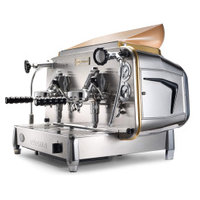
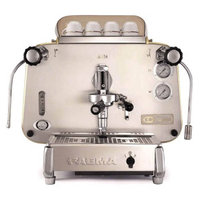
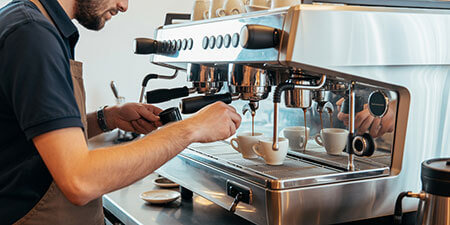
A commercial espresso machine is the centerpiece of any cafe or restaurant coffee program, and choosing the right one requires matching machine type, group count, and water source configuration to your volume, staff skill level, and operational setup. These are significant investments -- machines in this category range from entry-level single-group units through high-capacity three-group workhorses -- and the wrong choice in any of those three dimensions creates problems that are difficult to correct after installation. We offer commercial espresso and cappuccino machines from Casadio, Faema, and Unic in semi-automatic, automatic, and super-automatic configurations with one, two, and three group options.
Semi-Automatic Espresso Machines
Semi-automatic machines give the barista manual control over when the shot starts and stops, requiring the operator to monitor extraction and cut the flow at the right moment. This level of control is what specialty coffee programs and experienced baristas typically prefer because it allows for adjustment shot-to-shot based on grind, dose, and visual cues. Semi-automatic machines are the standard in craft coffee environments and any operation where espresso quality is a primary differentiator, but they require trained staff to deliver consistent results.
Automatic Espresso Machines
Automatic machines use volumetric dosing to stop the shot automatically once a programmed volume of water has passed through the puck. This removes the most variable step in the process -- the barista no longer needs to time or watch the extraction -- which dramatically improves consistency across shifts and staff skill levels. Automatic machines are the most common choice for full-service restaurants, hotel lobbies, and operations where espresso is a strong menu item but barista training depth varies. They still require a trained operator for grind adjustment, tamping, and milk steaming on non-automatic wand models.
Super-Automatic Espresso Machines
Super-automatic machines grind, dose, tamp, brew, and in many cases steam milk with minimal operator intervention, typically reduced to selecting a drink and pressing a button. These are the right choice for operations where labor is a constraint, coffee quality needs to be consistent without skilled barista staffing, or high throughput is needed with minimal training overhead. Self-serve hotel breakfast stations, corporate dining, and high-volume quick-service environments are common use cases. Super-automatic machines carry a higher upfront cost but reduce ongoing labor demands significantly.
One, Two and Three Group Configurations
Group count determines how many shots can be pulled simultaneously and is directly tied to peak volume requirements. A single-group machine is appropriate for lower-volume operations or smaller footprint installs where a dedicated espresso bar is not the primary focus. Two-group machines are the most common configuration for independent cafes and restaurants with active coffee programs, allowing two baristas to work simultaneously or one barista to maintain faster throughput during rushes. Three-group machines are built for high-volume operations where espresso output is a core part of the business and demand is sustained across service periods.
Direct Plumb vs. Pour-Over Models
Nearly all machines in this category require a direct water line connection, which delivers consistent water pressure and eliminates the need to manually refill a water tank. A small number of pour-over models are available for locations where direct plumbing is not practical, though these require regular refilling and are better suited to lower-volume applications. Confirming your plumbing hookup before selecting a machine is an essential step in the buying process.
What to Consider Before You Buy
The decision sequence is: machine type based on staff capability and desired consistency, group count based on peak volume, and water source based on your installation constraints. For a complete espresso bar setup, explore all coffee and espresso equipment and accessories including grinders, portafilters, and tampers, or browse the full range of beverage equipment for additional coffee and drink service options.
Shop Our Cappuccino & Espresso Machines Today
Browse the full selection above and filter by type, group count, and water source to find the right machine for your operation.