Commercial Espresso Machine Guide
Table of Contents
Essential espresso equipment for restaurants and commercial kitchens
Commercial espresso machines are the heartbeat of successful cafe and restaurant beverage programs, transforming coffee service from a commodity into a profit center. From automatic machines that deliver consistent quality with minimal staffing to semi-automatic models that blend technology with barista artistry, this comprehensive guide covers everything operators need to select, maintain, and maximize the right espresso equipment for their specific foodservice applications. Whether you're opening a specialty cafe, upgrading restaurant beverage service, or expanding hotel amenities, the right commercial espresso machine ensures operational efficiency, customer satisfaction, and sustainable profitability while meeting the demands of modern coffee culture.
Investment Scenarios by Operation Type
Specialty Cafe (50-150 drinks/day):
- Equipment Investment: $5,000-$15,000
- Annual Savings/Benefits: $8,000-$15,000
- Payback Period: 8-18 months
- 5-Year Net Benefit: $30,000-$60,000
- Best Fit: Semi-automatic machines for quality and efficiency balance
Restaurant/Casual Dining (150-400 drinks/day):
- Equipment Investment: $8,000-$25,000
- Annual Savings/Benefits: $12,000-$25,000
- Payback Period: 6-15 months
- 5-Year Net Benefit: $45,000-$100,000
- Best Fit: Automatic or semi-automatic based on menu complexity
High-Volume Operation (400+ drinks/day):
- Equipment Investment: $15,000-$50,000+
- Annual Savings/Benefits: $20,000-$45,000+
- Payback Period: 9-18 months
- 5-Year Net Benefit: $75,000-$175,000+
- Best Fit: Super automatic for maximum efficiency and consistency
Commercial Espresso Machine Types & Applications
GoFoodservice categorizes commercial espresso machines by automation level and operational requirements. Each type serves specific business needs, from high-volume consistency to artisanal preparation.
1. Automatic Espresso Machines
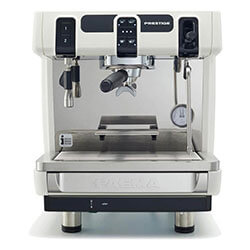
Automatic espresso machines prioritize operational efficiency and consistent quality for busy foodservice environments. These machines integrate grinding and brewing processes, making them ideal for establishments where speed and reliability take precedence over manual craftsmanship.
Business Applications:
- Quick-service restaurants needing fast, consistent beverage service
- Hotel lobbies and breakfast operations with high-volume demands
- Casual dining establishments with limited barista expertise
- Foodservice operations prioritizing labor efficiency over artisanal preparation
Key Performance Features:
- Integrated burr grinders with adjustable settings for different coffee beans
- Programmable shot timing and automatic tamping for consistent extraction
- Digital controls with preset drink options for faster service
- Built-in cleaning cycles to maintain hygiene and reduce maintenance time
- Cup warmers and hot water spouts for complete beverage preparation
Operational Benefits:
- Staff Efficiency: Minimal training required - new employees productive within hours
- Quality Consistency: Same results regardless of operator skill level
- Service Speed: 40-60% faster than manual preparation during peak hours
- Labor Savings: Reduce barista staffing needs by 30-50% for beverage service
2. Semi-Automatic Espresso Machines
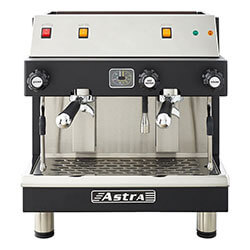
Semi-automatic espresso machines offer the perfect balance between technology and craftsmanship, appealing to operations that value both efficiency and quality. These machines provide automatic pressure control while allowing baristas to manually manage the brewing process.
Business Applications:
- Specialty coffee shops emphasizing artisanal preparation and customer experience
- Upscale restaurants and cafes with complex beverage menus
- Operations requiring customization and latte art presentation
- Establishments where barista skill contributes to brand differentiation
Key Performance Features:
- Automatic 9-bar pressure control for authentic espresso extraction
- Manual control over water flow timing and shot volume
- Integrated steam wands for milk frothing and specialty drinks
- Multiple group heads for simultaneous preparation
- Pressure gauges and temperature monitoring for quality control
Operational Benefits:
- Quality Control: Baristas can adjust extraction for different coffee origins and roasts
- Menu Flexibility: Support for complex beverages like custom lattes and specialty drinks
- Customer Experience: Visible preparation builds perceived value and loyalty
- Staff Development: Creates opportunities for barista skill advancement and retention
3. Super Automatic Espresso Machines
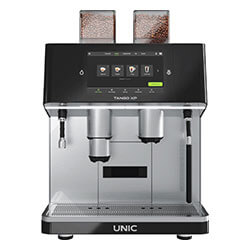
Super automatic espresso machines represent the pinnacle of beverage technology, offering complete automation from bean to cup. These advanced systems excel in high-volume operations where consistency and minimal staffing are critical success factors.
Business Applications:
- High-volume cafes and coffee shops with 400+ daily drinks
- Hotel and resort beverage programs requiring 24/7 service capability
- Office buildings and corporate cafeterias needing self-service options
- Quick-service chains prioritizing operational efficiency and consistency
Key Performance Features:
- Fully automated process from whole bean grinding to finished beverage
- Customizable drink menus with hundreds of preset options
- Integrated milk refrigeration and automatic frothing systems
- Remote monitoring and usage reporting capabilities
- Automatic cleaning cycles and maintenance alerts
Operational Benefits:
- Maximum Efficiency: 24/7 operation with minimal staffing requirements
- Consistent Quality: Identical results across all locations and times
- Labor Savings: Significant reduction in skilled labor requirements
- Scalability: Easy expansion and menu customization without additional training
The Business Case for Commercial Espresso Machines
Why Restaurants and Cafes Need Professional Espresso Equipment
Commercial espresso machines transform beverage service from a cost center into a significant profit driver, delivering consistent quality that builds customer loyalty and repeat business. Unlike manual preparation or basic coffee makers, professional espresso equipment delivers:
- Premium Beverage Quality: Authentic espresso extraction with proper pressure and temperature control
- Menu Expansion: Enable specialty drinks like lattes, cappuccinos, and custom beverages
- Operational Efficiency: 3-5x faster service than manual methods during peak hours
- Cost Control: Precise portioning reduces waste and ensures profitability
- Brand Differentiation: Professional equipment supports premium positioning
- Customer Satisfaction: Consistent quality builds loyalty and positive reviews
Efficiency Benefits & Time Savings
Espresso Preparation Time Comparison:
| Task: | Manual Method: | Commercial Machine: | Time Savings: |
| Single espresso shot | 45 seconds | 25 seconds | 44% faster |
| Cappuccino preparation | 2 minutes | 45 seconds | 62% faster |
| Morning rush (50 drinks) | 75 minutes | 30 minutes | 60% faster |
| Daily cleanup | 20 minutes | 5 minutes | 75% faster |
| Staff training | 1-2 weeks | 2-3 days | 80% faster |
Operational Productivity Impact:
- Service Speed: Process 120-200 drinks per hour vs. 40-60 manually
- Labor Efficiency: $8,000-$18,000 annual savings per machine
- Reduced Waste: Minimize over-extraction and coffee waste by up to 20%
- Staff Training: 2-3 days vs. 1-2 weeks for manual methods
- Quality Control: Consistent extraction prevents customer complaints
Cost Control & Profitability Impact
Financial Impact of Professional Espresso Equipment:
- Beverage Revenue Increase: 25-50% higher margins on specialty drinks
- Waste Reduction: 10-20% less coffee waste through precise extraction
- Labor Savings: $10,000-$20,000 annual reduction in labor costs
- Customer Retention: 15-25% increase in repeat visits from quality consistency
- Upselling Opportunities: Enable premium beverage add-ons and customization
ROI Analysis: Return on Espresso Investment
| Investment Factor: | Annual Savings/Benefit: | 5-Year Value: |
| Labor Efficiency | $15,000-$25,000 | $75,000-$125,000 |
| Waste Reduction | $8,000-$15,000 | $40,000-$75,000 |
| Revenue Increase | $25,000-$50,000 | $125,000-$250,000 |
| Quality Consistency | $10,000-$20,000 | $50,000-$100,000 |
| Equipment Reliability | $3,000-$8,000 | $15,000-$40,000 |
Total Annual ROI: 100-150% return on investment within 1-2 years
Selection Framework
Production Capacity Planning Calculator
Match your espresso machine to peak demand periods and daily operational requirements. Consider both espresso shots and milk-based beverages when calculating capacity needs.
Daily Volume Requirements by Operation Type:
| Operation Type: | Daily Espresso Volume: | Recommended Groups: | Machine Type: |
| Small Cafe (50-150 drinks) | 100-300 shots | 1-2 groups | Automatic/Semi-Automatic |
| Restaurant/Casual Dining (150-400 drinks) | 300-800 shots | 2-3 groups | Semi-Automatic/Automatic |
| High-Volume Cafe (400+ drinks) | 800-1,500+ shots | 3+ groups | Super Automatic |
Peak Hour Capacity Planning:
- Morning Rush: 60-80% of daily volume occurs in 2-3 hours
- Lunch Service: 20-30% of daily volume during peak lunch periods
- Buffer Capacity: Plan for 20-30% above average demand for special events
Application-Specific Considerations
Cafe/Specialty Coffee Shop:
- Focus on quality and presentation over pure speed
- Semi-automatic machines allow barista artistry and customization
- Customer-facing preparation enhances perceived value
- Specialty drinks (custom lattes, pour-overs) require skilled operators
Restaurant/Casual Dining:
- Balance speed with quality for table service integration
- Automatic machines ensure consistent results across shifts
- Multiple group heads support simultaneous preparation
- Beverage service integrated with food ordering workflow
High-Volume/Quick Service:
- Speed and consistency take priority over artisanal preparation
- Super automatic machines minimize labor requirements
- Self-service options reduce staffing needs during peak hours
- 24/7 operation capability for extended service hours
Key Features & Specifications
Essential Selection Features
Automation Level: Match to your staffing capabilities and service model Group Configuration: Single, double, or triple groups based on peak capacity Power Requirements: 120V standard or 208-240V for high-capacity models Water Connection: Direct plumbed preferred for consistent performance Dimensions: Measure counter space and plan for workflow efficiency
Essential Accessories for Professional Operation
- Professional knock boxes for grounds management
- Stainless steel frothing pitchers in multiple sizes
- Calibrated tampers for consistent dosing
- Commercial grinders matched to machine capacity
- Water filtration systems for consistent quality
- Cleaning and maintenance supplies for daily care
Installation & Maintenance
Professional Installation Requirements
Commercial espresso machines require professional installation to ensure optimal performance and safety. While basic setup can be straightforward, complex electrical and plumbing connections demand certified technicians.
Installation Checklist:
- Professional electrical connection with dedicated circuit
- Water line installation (direct connection preferred)
- Water filtration system setup and testing
- Machine positioning and leveling for stable operation
- Initial calibration and performance testing
- Staff training on operation and safety procedures
- Warranty registration and service scheduling
Installation Cost Factors:
- Basic Setup: $500-$1,000 for standard electrical and water connections
- Complex Electrical: $1,000-$2,500 for upgraded service or three-phase power
- Plumbing Modifications: $800-$2,000 for new water lines and filtration
- Professional Calibration: $300-$600 for initial setup and testing
Maintenance Schedules & Best Practices
Regular maintenance ensures consistent performance and extends equipment life. Most manufacturers recommend professional servicing every 6-12 months, with daily and weekly care handled by staff.
Daily Maintenance Procedures:
- Clean group heads and portafilters after each use
- Wipe down machine surfaces and remove coffee grounds
- Purge steam wands and check for proper function
- Empty drip trays and clean exterior surfaces
- Verify water levels and filtration system operation
Weekly Maintenance Tasks:
- Deep clean group heads and backflush machine
- Descale boiler system with manufacturer-approved solutions
- Clean and sanitize steam wands and milk frothing equipment
- Check and calibrate pressure settings
- Inspect gaskets, seals, and connections for wear
Monthly Professional Service:
- Complete system diagnostics and performance testing
- Replace worn components and filters
- Calibrate pressure and temperature controls
- Update software and firmware as needed
- Comprehensive cleaning of internal components
Troubleshooting
Common Issues & Solutions
Performance Problems:
- Weak espresso shots: Check grind size, coffee dose, and tamping pressure. Clean group heads if blocked.
- Machine not heating properly: Verify electrical connection and thermostat settings. Descale if mineral buildup present.
- Inconsistent pressure: Check water supply and filter condition. Purge air from lines if needed.
- Strange noises or vibrations: Inspect pump operation and check for loose components.
Maintenance-Related Issues:
- Steam wand problems: Clean tip thoroughly and check for blockages. Replace worn components.
- Water quality issues: Replace filters regularly and descale according to manufacturer schedule.
- Error codes on digital displays: Consult manual for specific codes and recommended actions.
Operational Challenges:
- Training new staff: Provide comprehensive training on all machine functions and safety procedures.
- Peak hour management: Pre-heat machine and prepare components before busy periods.
- Quality consistency: Establish standard operating procedures and regular quality checks.
Frequently Asked Questions
What's the difference between automatic and super-automatic espresso machines?
Automatic machines handle grinding and brewing automatically but require manual milk frothing, while super-automatic machines fully automate the entire process including milk steaming and drink preparation. Super-automatic models offer maximum convenience but cost significantly more.
How much space do I need for a commercial espresso machine?
Compact single-group models require 12-18 inches of counter width, while larger multi-group machines need 30-60 inches. Plan for 24-36 inches of clearance behind the machine for operation and maintenance access.
Can I use regular coffee in an espresso machine?
Espresso requires finely ground coffee specifically formulated for high-pressure extraction. Regular drip coffee produces weak, bitter results. Use quality espresso beans ground fresh for each use.
How often should I clean my espresso machine?
Daily cleaning of group heads, portafilters, and steam wands is essential. Weekly deep cleaning and descaling prevents buildup. Professional servicing every 3-6 months ensures optimal performance.
What's the typical lifespan of a commercial espresso machine?
With proper maintenance, commercial espresso machines last 7-12 years. Regular cleaning and professional servicing extend equipment life and maintain performance.
Do I need special electrical service for espresso machines?
Most machines require dedicated circuits with appropriate voltage (120V or 208-240V) and amperage. Check manufacturer specifications and consult an electrician for proper installation.
Can espresso machines handle decaf and flavored coffees?
Yes, most commercial models work with various coffee types. Super-automatic machines often have separate hoppers for different beans, while manual models allow baristas to adjust preparation accordingly.
How do I train staff on espresso machine operation?
Start with basic safety procedures, then progress to machine operation, cleaning protocols, and quality control. Most manufacturers offer training programs, and hands-on practice is essential for mastery.
What maintenance costs should I expect?
Annual maintenance costs typically range from 8-15% of machine purchase price, including parts, labor, and consumables. Regular preventive maintenance reduces unexpected repairs.
Can I finance an espresso machine purchase?
Yes, most manufacturers offer leasing options, and equipment financing through restaurant lenders provides tax advantages. Calculate ROI to determine the most cost-effective financing approach.
Shop Espresso Machines
- Commercial Espresso & Cappuccino Machines - Complete selection of automatic, semi-automatic, and super-automatic espresso machines from top brands.
- Coffee & Espresso Beans - Premium espresso beans formulated for commercial brewing.
- Creamer Dispensers & Frothing Pitchers - Essential milk frothing equipment for latte and cappuccino preparation.
- Knock Boxes & Bars - Professional knock boxes for spent coffee grounds management.
- Coffee Service Supplies - Complete line of espresso accessories and maintenance supplies.
Related Guides & Resources
- Commercial Coffee Maker Guide - Batch brewer types, sizing by cups per hour and water line requirements for the drip side of a coffee program.
- Commercial Coffee Grinder Guide - Burr types, hopper sizing and grind consistency for the grinder that feeds the machine
- Commercial Blender Guide - Compare blenders for smoothies and specialty drinks to complement your espresso operation.
- Commercial Refrigeration Guide - Essential refrigeration for storing milk, cream, and perishable ingredients.
- Commercial Ice Machine Guide - Ice machines for cold brew coffee and iced espresso drinks.
- Restaurant Equipment Parts Guide - Find replacement parts and accessories for your espresso equipment.
Share This!