Kitchen Hacks for Commercial Kitchens: Techniques That Actually Work During Service
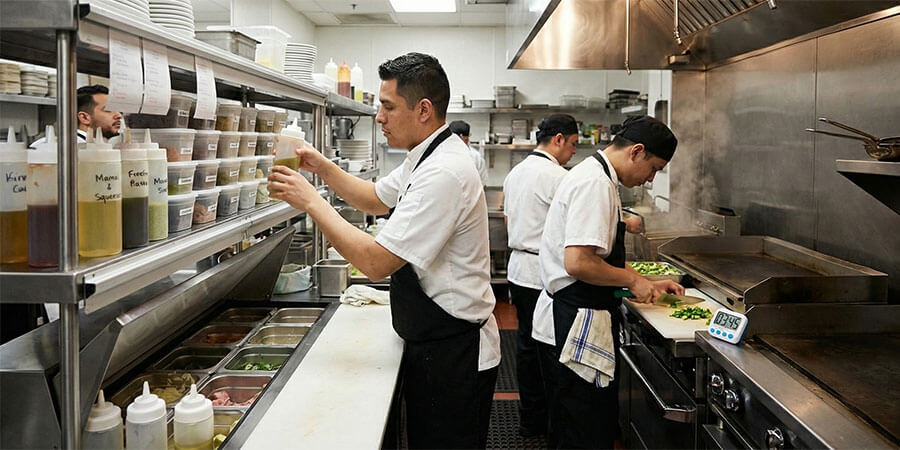
Table of Contents
Practical shortcuts and workflow tricks experienced line cooks and kitchen managers use to run faster, cleaner, and more efficient shifts
Commercial kitchens run on speed, precision, and consistency - and the best operators are always looking for ways to squeeze more efficiency out of every shift. This post covers 18 practical techniques organized by workflow phase: prep, service, station management, storage, and waste reduction. These are the kinds of tricks that experienced kitchen workers already know, and that newer staff can start using immediately.
Running a commercial kitchen is a different game than cooking at home. The stakes are higher, the volume is relentless, and the margin for error is thin. A technique that saves 30 seconds per plate adds up to hours over a full service. A storage shortcut that reduces spoilage by 10% can meaningfully move your food cost numbers.
According to the National Restaurant Association's 2025 Operations Data Abstract, food costs sit at a median of 32.0% of sales and labor costs at 36.5%. Profitable operators run labor at 34.2% - nearly 9 points lower than operators running at a loss. That gap doesn't come from paying people less. It comes from running tighter operations.
This post focuses on hands-on, shift-level efficiency. For broader topics like kitchen layout, food safety protocols, and energy management, there are dedicated resources linked throughout.
| Workflow Phase: | Techniques Covered: | Primary Benefit: |
| Prep | Batch cutting, container systems, portioning, garnish timing | Faster setup, consistent mise en place |
| Station Management | Station layout, board stability, clean-as-you-go, communication | Fewer errors, smoother execution |
| Service | Wave firing, timers, plate warming, plating sequences | Speed without quality loss |
| Storage & Organization | Prep-date labeling, shelf height, use-first zones, dry storage | Less spoilage, faster access |
| Waste Reduction | Trim tracking, trim utilization, plate audits, ordering discipline | Lower food cost, less surplus |
| Kitchen Layout | Movement mapping, shared equipment placement, pass management | Reduced steps, better flow |
Prep Phase: Set Yourself Up Before Service Starts
The fastest service starts with the best mise en place. Every minute you save during prep compounds through the entire shift.
Batch your cuts by shape, not by dish. Instead of prepping each menu item separately, group all your julienne cuts together, all your brunoise together, all your rough chops together. You stay in one motion longer, your knife work gets faster, and you reduce the mental switching cost of moving between tasks. This is especially useful for prep cooks handling multiple stations.
Use a consistent container system for mise en place. Standardize which containers hold which quantities for each station. When every cook knows that a full third-pan of diced onion equals two service periods for the grill station, restocking becomes automatic. It also makes it easier to spot what's running low at a glance. Food storage containers with clear sides and standardized sizing make this system work without extra communication.
Pre-portion sauces and dressings into squeeze bottles at the start of each shift. This cuts plating time significantly during service and reduces the chance of over-portioning. Label each bottle clearly. If you're running multiple sauce variations, color-code the caps or use tape flags. Squeeze bottles are one of the highest-ROI tools in a prep cook's kit.
Weigh portions during prep, not during service. Portioning proteins and starches before service - rather than eyeballing during the rush - keeps food costs consistent and speeds up line execution. A portion scale at the prep station pays for itself quickly in reduced over-portioning.
Prep your garnishes last. Delicate herbs, microgreens, and citrus zest deteriorate faster than most other components. Prep them at the end of your mise en place routine so they're at peak quality when service starts, not wilted from sitting for two hours.
Station Management: Keeping the Line Moving
A well-organized station is the difference between a cook who's always in the weeds and one who can handle a full rail without breaking a sweat.
Set up your station in the order you plate, not the order you cook. Think about the sequence of your most common plates and arrange your mise en place to match that flow - left to right, or in whatever direction your hands naturally move. Reaching across your body for a component mid-plate is a small inefficiency that adds up across hundreds of covers.
Keep a damp towel folded under your cutting board. It prevents the board from sliding, which is both a safety issue and a speed issue. A cutting board that moves while you're working forces you to slow down and reset. This is one of those tricks that experienced cooks do automatically and newer cooks often skip.
Use the "clean as you go" principle at the station level, not just at the end of service. Wipe your station between every few plates. A cluttered station slows you down and increases the chance of cross-contamination. This isn't just about cleanliness - it's about maintaining the mental clarity to work fast and accurately. For a full breakdown of commercial kitchen cleaning protocols, the commercial kitchen cleaning tips blog covers the details.
Communicate ticket times out loud, not just on the screen. When a ticket comes in with a long cook time on one component, call it to the relevant station immediately. Don't wait for the expediter to catch it. The best kitchens have a culture of proactive communication - cooks calling out their status without being asked.
Know your equipment's hot spots. Every flat-top, oven, and fryer has zones that run hotter or cooler than the dial suggests. Experienced cooks map these zones mentally and use them intentionally - hotter zones for searing, cooler zones for holding. New cooks often fight their equipment instead of working with it.
Service Shortcuts: Speed Without Sacrificing Quality
During a rush, every second counts. These techniques help you move faster without cutting corners on the plate.
Fire in waves, not one ticket at a time. When multiple tickets come in close together, group them by cook time rather than by order of arrival. Fire all your 8-minute proteins together, then your 4-minute items. This keeps your timing tighter and reduces the number of plates sitting under the heat lamp.
Use a timer for everything, not just long cooks. Even experienced cooks benefit from timers on short tasks during a busy service. When you're managing four or five things simultaneously, a 90-second timer on a sauté pan is the difference between a perfect result and a burned component. Most commercial kitchens have timers available - use them aggressively.
Pre-warm your plates before service. Cold plates pull heat from food faster than most people realize. A plate that's been sitting at room temperature will drop the temperature of a protein noticeably in the time it takes to get from the pass to the table. Keep plates in a warming drawer or low oven during service. It's a small step that makes a real difference in the guest experience.
Develop a standard plating sequence for each dish and stick to it. Consistency comes from repetition, and repetition requires a fixed sequence. When every cook plates the same dish in the same order, quality stays consistent across the shift and across different cooks. Document your plating sequences during training and revisit them when quality starts to drift.
Storage and Organization: The Foundation of a Functional Kitchen
Disorganized storage costs time on every single shift. These techniques reduce the friction of finding, accessing, and rotating product.
Label everything with the date it was prepped, not just the date it was received. A container of prepped roasted vegetables has a different shelf life than the raw vegetables it came from. Using prep dates rather than receive dates gives you accurate information for FIFO rotation and reduces the chance of serving something past its prime. Day-of-week labels make this fast and consistent across your whole team.
Store items at the height where they're used most. Frequently accessed prep items should be at eye level or arm height. Rarely used items go on the top or bottom shelves. This sounds obvious, but many kitchens store things based on where they fit rather than where they're used. A well-organized commercial shelving setup is worth thinking through carefully - the layout you choose affects how fast your team can work every single day.
Use a dedicated "use first" zone in your walk-in. Designate one shelf or section specifically for items that need to be used before anything else - product that's close to its use-by date, opened packages, or partial containers. When cooks know to check this zone first, you reduce waste without requiring anyone to memorize what's running low.
Keep your dry storage organized by frequency of use, not by category. Spices you use every service should be at the front. Specialty items you use once a month go in the back. Reorganizing by use frequency rather than alphabetically or by cuisine type can save meaningful time during prep.
Waste Reduction: Practical Techniques That Affect Your Bottom Line
According to ReFED's 2024 analysis, the foodservice sector generated 12.5 million tons of surplus food - with nearly 70% coming from plate waste. Surplus food is valued at roughly 14% of total foodservice sales. That's not an abstract environmental statistic. It's money leaving your kitchen.
Track your trim waste by station. When you're breaking down proteins or prepping vegetables, weigh your trim before it goes in the bin. Over a week, you'll have a clear picture of where your waste is concentrated. That data tells you whether you need better knife skills training, different prep techniques, or different product specs from your supplier. For more on managing food costs systematically, the food cost control blog covers the broader strategy.
Build trim utilization into your prep planning. Vegetable trim becomes stock. Protein trim becomes staff meal or a special. Bread that's past its prime becomes breadcrumbs or croutons. The best kitchens treat trim as an ingredient, not as waste. This requires intentional planning - someone has to own the trim and know what to do with it. The food waste reduction blog has specific techniques for building this into your operation.
Audit your plate returns. When plates come back with consistent amounts of a specific component uneaten, that's data. Either the portion is too large, the preparation isn't landing with guests, or the component doesn't belong on the plate. Plate waste is one of the most direct feedback loops available to a kitchen team.
Tighten your ordering based on actual usage, not habit. Many kitchens order the same quantities week after week out of routine. Tracking actual usage against what you ordered - and adjusting par levels accordingly - can reduce over-ordering significantly. Building a tighter ordering system around actual usage data - rather than routine - is one of the fastest ways to improve food cost numbers.
Kitchen Layout and Workflow Design
The physical layout of your kitchen determines how efficiently your team can move. Even small adjustments to station placement can reduce unnecessary steps during service.
Map your most common movement patterns. During a slow period, watch where cooks are walking during a typical service sequence. If the same path gets traveled dozens of times per shift and requires crossing another cook's path, that's a layout problem worth solving. The commercial kitchen design guide covers how to think through workflow zones, traffic patterns, and station placement systematically.
Position shared equipment at the intersection of the stations that use it most. A shared prep sink, slicer, or reach-in should be accessible to the stations that need it most often - not tucked in a corner because that's where the plumbing happened to be. When shared equipment is inconveniently placed, cooks work around it in ways that create inefficiency and safety issues.
Create a dedicated landing zone at the pass. The pass should have a clear, uncluttered surface where completed plates can be staged before they go to the floor. When the pass is cluttered with random items, plating slows down and communication between kitchen and front-of-house breaks down. Keep it clear as a discipline.
Frequently Asked Questions
What's the single most impactful efficiency change a kitchen can make?
Standardizing mise en place - the containers, quantities, and placement for each station. When every cook sets up the same way, training gets faster, quality gets more consistent, and the kitchen runs better even when key people are out. It's not glamorous, but it's the foundation everything else builds on.
How do commercial kitchen hacks differ from home cooking tips?
Volume and consistency. Home cooking tips optimize for a single cook making a single meal. Commercial techniques optimize for speed, repeatability, and quality across hundreds of covers with multiple cooks. Batch processing, standardized portioning, and systematic mise en place are essential in a commercial kitchen - they don't make sense at home.
How can line cooks reduce mistakes during a busy service?
Timers, verbal communication, and a clean station. Most mistakes during service happen when a cook is managing too many things mentally at once. Timers offload the cognitive work of tracking cook times. Calling out ticket times keeps the whole team aligned. A clean, organized station reduces the chance of grabbing the wrong component under pressure.
What's the best way to reduce food waste in a commercial kitchen?
Start by measuring it. Most kitchens don't have a clear picture of where their waste is actually coming from - whether it's over-ordering, trim waste, plate returns, or spoilage. Once you know where the waste is concentrated, you can address it specifically. Tracking trim by station and auditing plate returns are two of the fastest ways to get that data.
How do experienced kitchen managers keep food costs in check?
Consistent portioning, tight ordering, and trim utilization. According to the NRA's 2025 Operations Data Abstract, fullservice operators run food costs at a median of 32.0% of sales. The gap between profitable and unprofitable operations often comes down to how consistently portions are controlled and how tightly ordering is tied to actual usage.
Are there techniques that help with high staff turnover in kitchens?
Standardization is the best defense against turnover. When your mise en place, portioning, plating sequences, and storage systems are documented and consistent, a new cook can get up to speed faster and make fewer mistakes. BLS data shows restaurant employee turnover averages above 75% - systems that don't depend on institutional knowledge in individual people's heads are essential.
What's the fastest way to improve station organization?
Spend 15 minutes at the end of a service watching where cooks reach, what they can't find, and what's in the wrong place. Then fix those three things before the next shift. Station organization problems are usually obvious once you're looking for them.
Related Resources
- Commercial Kitchen Design Guide - How to think through kitchen layout, workflow zones, and station placement for maximum efficiency
- Food Safety Tips for Commercial Kitchens - Essential food safety protocols every kitchen team should have in place
- Energy Efficiency in Commercial Kitchens - Practical ways to reduce energy costs without disrupting operations
- Food Cost Control Tips - Strategies for keeping food costs in line across ordering, prep, and service
- Restaurant Inventory Management - How to build an ordering and tracking system that reduces waste and over-ordering
Share This!