How to Set Up a Small Commercial Kitchen
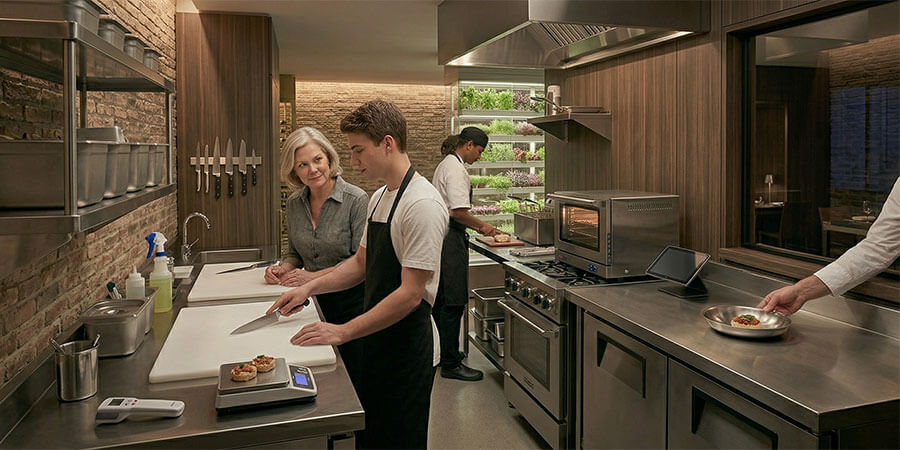
Table of Contents
Build a stronger small commercial kitchen by planning workflow, utilities, storage, and equipment together instead of squeezing them in later
Setting up a small commercial kitchen is one of those jobs that looks straightforward until everything starts competing for the same few feet of space. Menu ambitions collide with ventilation needs, storage gets squeezed by the cookline, dish and prep paths cross each other, and suddenly the kitchen feels crowded before the first service even starts.
That is why small-kitchen setup works best when you treat it as a sequence, not a shopping trip. The smartest small kitchens are not only compact. They are deliberate. The workflow is clear, the zones make sense, the equipment earns its footprint, and the utility and code realities are accounted for before installation begins.
Start With The Menu And The Workflow It Demands
One of the biggest mistakes in small-kitchen setup is trying to design the room before you have been honest about the menu.
That is because the menu decides:
- What cooking methods matter most
- How much prep space is really needed
- What refrigeration support the line requires
- Whether the kitchen will be batch-oriented, order-oriented, or both
| Workflow Question: | Why It Matters In A Small Kitchen: |
| What is the core cooking method? | Helps define the line and utility load |
| How much prep is done on-site? | Shapes table space and cold storage needs |
| What volume hits the rush? | Decides whether compact equipment is enough |
| Where does dish and sanitation work happen? | Prevents the room from collapsing into cross-traffic |
The menu is what tells the room what to be. If that part is vague, the setup usually becomes expensive guesswork.
For the equipment-selection side, Choosing Equipment for a Small Commercial Kitchen is the strongest internal companion piece.
The Small Kitchen Has To Be Zoned Even If It Has Very Little Space
The space may be tight, but the logic still has to be clear. A small commercial kitchen usually works best when it still accounts for the major functional areas:
- Receiving and storage
- Prep
- Cooking
- Plating or service handoff
- Warewashing and sanitation
That does not mean every zone gets its own room. It means the activity sequence should still make sense. If prep constantly crosses the dish path, or cooked food has to move through cluttered storage to reach service, the problem is not only the size. It is the sequence.
This is also why small-kitchen layout should be drawn around movement, not just around equipment dimensions.
When the zones are weak, the problems usually show up in very ordinary ways: prep gets interrupted by dish flow, storage creeps into active work areas, and plated food has to travel farther than it should through cluttered paths. Those are exactly the kinds of daily frictions that make a small kitchen feel harder than its size alone would suggest.
Utility Planning Has To Happen Early
SBA's location and startup-cost guidance are useful here because they reinforce how much utilities, permits, and buildout conditions matter to the plan. A small kitchen is especially vulnerable to utility surprises because the margin for improvisation is lower.
That means operators need to think early about:
- Electrical load
- Gas availability if relevant
- Ventilation and hood needs
- Plumbing and drainage
- Hand sink and warewashing requirements, which still need to be confirmed against local jurisdiction rules
This is one reason small kitchens often feel harder than larger ones. You cannot simply “find room later” for the utility reality. If the infrastructure is mismatched, the whole plan becomes less stable.
It also changes equipment selection more than many operators expect. A piece of equipment may look ideal in the catalog and still become the wrong choice once the real electrical, gas, ventilation, or plumbing conditions of the space are taken seriously.
This is one reason plan review and utility conversations belong early in the process. They tend to reshape the kitchen more than small late-stage fixture choices ever do.
For the broader code-informed planning side, Design a Commercial Kitchen Guide and Commercial Cooking Without a Hood are the strongest internal resources.
Equipment Selection Is Really A Footprint Discipline Problem
Small-kitchen setup goes wrong when every piece of equipment is chosen as if it lives in isolation.
The stronger approach is to ask whether the equipment:
- Solves a daily production problem
- Supports the menu directly
- Justifies its space and utility burden
- Creates a cleaner or messier workflow around it
| Equipment Decision: | Better Question To Ask: |
| Countertop appliance | Is this used often enough to earn the space? |
| Floor unit | Does the output justify the utility and footprint burden? |
| Specialty equipment | Does it solve a real repeated need or only a rare one? |
| Multi-use equipment | Does it reduce clutter and movement in practice? |
This is one reason small commercial kitchens usually reward restraint. Fewer, better-matched pieces often perform better than a room full of occasional-use equipment.
Storage Usually Decides Whether The Kitchen Feels Organized Or Cramped
Operators often focus on the hot line first and discover later that storage was the real pressure point all along.
That is why a small kitchen still needs a plan for:
- Dry storage
- Refrigerated support
- Under-counter or worktop storage
- Vertical shelving
- Safe placement of cleaning tools and chemicals
Without a storage plan, the kitchen starts storing things wherever there is an empty surface, and once that happens the workflow breaks down quickly.
This is also where organization systems matter much more than some people expect. A small kitchen usually feels much larger when every category of tool or ingredient has a stable home.
Ventilation And Heat Still Shape The Whole Room
Small kitchens do not become simpler because they are small. In some ways, they become more sensitive.
High-heat equipment, poor hood fit, and crowded line layouts can make the room hotter, tighter, and harder to move through than the operator expected. That is why the lineup should be chosen with the whole room in mind, not only the cook surface itself.
This is especially important when the kitchen is considering:
- Fryers
- Ranges
- Griddles
- Ovens with higher thermal impact
- Equipment that already pushes the hood or utility limits
The stronger small kitchen is the one that still feels manageable during a rush, not just the one that technically fits the equipment on paper.
Small Kitchens Need Better Discipline Around Prep And Reset
A compact kitchen can still perform very well, but it usually needs stronger discipline than a larger room does.
That can include:
- Better prep sequencing
- More intentional product staging
- Cleaner start-up and shut-down routines
- Less tolerance for clutter or underused equipment
- Faster dish and sanitation recovery
This matters because small kitchens are less forgiving. When one station drifts, the whole room feels it faster.
That is also why setup is not finished when the equipment is installed. It is finished when the room can actually support the team's rhythm consistently.
The Best Small Commercial Kitchens Usually Look Simpler Than The Owner Imagined
This is one of the most useful mindset shifts in the whole topic.
Many operators initially imagine the ideal kitchen as a room that can do everything. The stronger small kitchen is usually the one that does the right things well. It stays focused, cleaner, and more repeatable because the equipment, storage, and workflow were chosen for the actual concept instead of the imagined future version of it.
That is why a good small commercial kitchen often feels calmer than people expect. It is not empty. It is just more intentional.
That intentionality is usually what helps the page perform well too. People searching for small commercial kitchen setup are often overwhelmed by how many moving parts are involved. The more clearly the kitchen can be explained as a sequence of practical decisions instead of a giant build-out fantasy, the more useful the setup plan becomes.
A Better Small Commercial Kitchen Setup Checklist
| Setup Area: | What “Right” Usually Looks Like: |
| Menu and production logic | Clear enough to define the room |
| Zones | Prep, cook, storage, sanitation, and service flow still make sense |
| Utilities | Electrical, gas, ventilation, and plumbing are accounted for early |
| Equipment | Each piece earns its footprint |
| Storage | Dry, cold, and tool storage reduce clutter instead of creating it |
| Workflow | The room still works under rush conditions |
This is the version of small-kitchen setup that holds up better than the old “three easy steps” framing. The work is not necessarily easy. It just becomes much more manageable once the right sequence is clear.
That is also why stronger small-kitchen planning tends to look calmer on paper than people expect. It is usually less about adding more and more equipment, and more about keeping each decision tied to a specific workflow need.
Frequently Asked Questions
How do you set up a small commercial kitchen?
Start with the menu, then map the workflow, then build the equipment, utilities, storage, and sanitation plan around that sequence. The strongest small kitchens work because the room is organized around production and movement rather than around a random equipment list.
What is the biggest mistake in a small commercial kitchen setup?
One of the biggest mistakes is choosing equipment before the workflow is clear. That often leads to a cramped room, weak storage, traffic conflicts, and utility problems that should have been solved earlier in the planning stage.
Does a small commercial kitchen still need zones?
Yes. Even if the room is compact, the kitchen still needs a clear logic for receiving, storage, prep, cooking, service handoff, and sanitation. The zones may be tighter, but the sequence still matters.
Why does storage matter so much in a small kitchen?
Because poor storage quickly turns every available surface into overflow space. Once that happens, prep and service become slower and the room starts feeling chaotic much faster than a larger kitchen would.
How important are ventilation and utilities in a small kitchen?
Extremely important. A small kitchen has less room to absorb mistakes in hood planning, electrical load, gas support, and plumbing. Utility planning needs to happen early because improvisation later is much harder.
Can a small commercial kitchen still be efficient?
Yes. Small kitchens can be highly efficient when the menu is focused, the equipment earns its footprint, and the workflow is organized clearly enough that the team can move cleanly through the room during service.
Related Resources
- Choosing Equipment for a Small Commercial Kitchen - Equipment-specific companion to the setup conversation.
- Design a Commercial Kitchen Guide - Broader layout and planning support for commercial kitchen design.
- Commercial Cooking Without a Hood - Useful when ventilation constraints shape the plan.
- Commercial Kitchen Organization Systems - Storage and organization habits that support a tighter room.
- Key Considerations for First-Time Restaurant Buyers - Useful when the kitchen setup is part of a broader restaurant launch decision.
Share This!