Commercial Kitchen Organization Systems
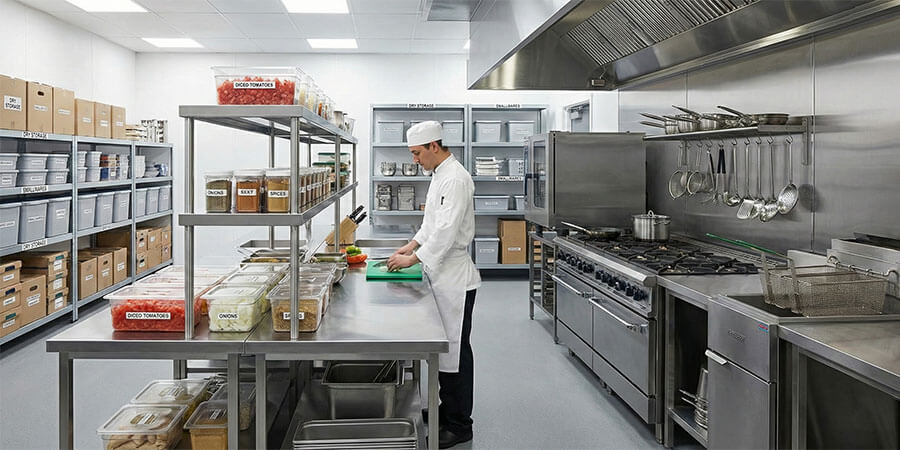
Table of Contents
Organize a commercial kitchen with clear zones, labeled storage, and restocking routines that keep speed high and mistakes low
A disorganized kitchen creates wasted steps, missing tools, and slower service. This post shows how to organize storage zones, choose practical shelving, and build routines that keep order.
Kitchen organization is not about buying more containers. It is about designing a storage system that supports how your team actually works.
When kitchens get messy, the cost shows up fast: wasted motion, forgotten restocks, inconsistent prep, and a service line that constantly stops to look for basic tools.
This post focuses on a practical approach: define zones, set storage rules, label aggressively, and build a restock routine.
Start With Zones, Not Products
Before you touch shelves, decide what each area is responsible for.
Common zones:
- Receiving and dry storage
- Cold storage
- Prep
- Line stations
- Dish and sanitation
The goal is simple: items should live where they are used, and they should return to the same place every time.
If you are doing a full reset that includes layout and workflow, the Design a Commercial Kitchen Guide is the best companion for zone planning.
Receiving and Put-Away: The Fastest Organization Win
If receiving is chaotic, everything downstream becomes chaotic.
A simple receiving workflow:
- Check the shipment
- Put it away immediately
- Date and rotate before it hits the shelf
The key is not speed. The key is consistency. When put-away is delayed, boxes pile up and staff start placing product wherever there is space.
The "Two-Step" Rule for Storage
If a cook has to walk across the kitchen for a common item, it will end up on the nearest surface.
Use a two-step rule:
- High-frequency items should be reachable within a couple steps of where they are used
- Low-frequency items can live further away, but still need a labeled home
This single principle reduces clutter more than any bin system.
Shelving Strategy: Put the Right Things on the Right Height
Good shelving is about accessibility and safety.
Practical rules:
- Heavy items go between knee and chest height
- Fast-moving items go on the easiest-to-reach shelves
- Avoid deep shelves that hide inventory behind inventory
If you are rebuilding your storage setup, Commercial Shelving is a useful place to compare common formats, and the Commercial Shelving Buying Guide can help you plan the right mix.
Dry Storage: Use Dunnage and Clear Floor Lines
If dry storage becomes a pile, it is usually because there is no clear "home" and no clear floor boundary.
- Keep product off the floor with Dunnage Racks and Shelves
- Mark clear walk paths and keep them clear
- Keep backups behind primaries so FIFO is easier
Walk-In Organization: Make Cold Storage Easy to Scan
Walk-ins get disorganized because they hide problems until it is too late.
Practical rules:
- Group by category (proteins, produce, dairy, prepared)
- Keep the most-used items at eye level
- Use labeled "homes" so items return correctly
- Keep a clear "incoming" spot so new product does not get mixed randomly
Labeling That Actually Works During Service
Labels are not for new hires. Labels are for busy people.
Make labels scannable:
- Large text
- Consistent placement
- Short names
Label the home, not just the container. If the shelf is labeled, items return correctly even when the container changes.
Use One Naming System Across the Kitchen
If prep calls an item one thing and the line calls it another, labels will not stick.
Pick one short name per item category and use it everywhere: shelf labels, checklists, and prep sheets.
Par Levels and Restock Routines
Most kitchens are not messy because staff do not care. They are messy because restocking is unclear.
Set par levels for the items that cause chaos when they run out:
- Gloves, towels, sanitizer supplies
- Common pans, lids, and utensils
- To-go packaging (if applicable)
Assign restock ownership. If everyone owns restock, no one owns restock.
Receiving and Put-Away: Where Chaos Usually Starts
If receiving is rushed, storage becomes a "just put it somewhere" event.
Basic rules that keep order:
- Put-away happens immediately, not later
- Storage labels and homes are visible at eye level
- Backups go to a defined backup home, not the closest open shelf
A Simple Table for Building Your Organization Plan
Use this to map the most common items and where they should live.
| Item Category: | Primary Home: | Backup Home: | Restock Trigger: |
| Line tools (tongs, spatulas) | Each station | Shared backup drawer | End of shift checklist |
| Pans and lids | Prep rack | Overflow shelf | When rack hits half |
| Dry goods | Dry storage shelf | Overhead backup | Weekly count |
| Chemicals and sanitizer | Dish area | Locked cabinet | When bottles hit low |
| To-go supplies | Packing station | Dry storage | Daily close |
Weekly Audit: Catch the Slow Drift
Kitchens rarely "explode" into mess overnight. They drift.
Use a short weekly audit so you catch drift early.
| Audit Item: | What to Check: | Pass/Fail Cue: |
| Shelf homes | Labels visible and used | Items return to the right shelf |
| Walk paths | Clear lanes | No boxes or bins blocking movement |
| Par levels | Still realistic | No constant out-of-stocks |
| Overflow zones | Not becoming permanent storage | Overflow stays temporary |
| Cleaning zone | Tools stored correctly | No chemicals near food tools |
Inventory and Ordering: Organization That Prevents Shortages
Storage systems break when the kitchen runs out of basics.
Two habits help:
- Set a simple count day for high-impact items
- Reorder based on par, not based on panic
When ordering is predictable, storage stays predictable.
Overflow Rules: How to Handle the Unexpected Without Ruining the System
Even well-run kitchens have unexpected deliveries, catering spikes, and menu changes.
The kitchens that stay organized have one rule: overflow is temporary and it has a home.
Practical overflow rules:
- Use one overflow shelf per zone and label it
- Set a time limit (for example, overflow must be cleared by the next shift)
- Do not allow overflow to become a second, unlabeled storage system
When overflow is controlled, the rest of the kitchen stays calm.
Organize for Food Safety and Cleaning Flow
If your organization system makes cleaning harder, it will fail.
Good habits:
- Keep cleaning tools in a dedicated sanitation zone
- Avoid storing food-contact items near chemical storage
- Leave clear access for mopping and wiping under key shelves
If your team needs a clear baseline for cleaning categories, Cleaning vs Sanitizing vs Disinfecting helps standardize what each step means.
Keep the Line Clean With Micro-Resets
Most clutter is created during service. You cannot "organize" your way out of a bad mid-shift reality.
Use micro-resets:
- A two-minute wipe and re-stack between pushes
- A single place for "unassigned" tools that appear during service
- A close checklist that returns stations to baseline
If you use carts, bins, and staging equipment to move items into position quickly, Storage and Transport can help you standardize how items move through the kitchen.
Station Maps: Make Each Line Position Self-Sufficient
Line stations get messy when cooks have to borrow from each other constantly.
Practical steps:
- Define a minimum station kit (tools, pans, towels)
- Store backups in a predictable backup home
- Use labels so the kit is rebuilt the same way after every close
When stations are self-sufficient, traffic drops and the whole kitchen feels calmer.
Sanitation Storage: Keep Cleaning Tools Organized (and Out of the Way)
Cleaning supplies create clutter when they do not have a dedicated home.
Practical rules:
- Keep a dedicated sanitation zone near dish
- Store chemicals separately from food-contact tools
- Label spray bottles and keep a simple refill routine
When sanitation storage is organized, staff clean more often because it is easy to do.
The One-Minute Close Habit
Before anyone clocks out, do one minute of returning items to their labeled homes. Put away one stray tool, wipe one surface, and clear one overflow spot.
This prevents the next shift from starting with a mess, and it keeps "temporary" surfaces from becoming permanent storage.
If you do only one thing this week, do this. Small daily returns create long-term order, especially during busy seasons.
Tools and Smallwares: Stop Losing the Basics
If spatulas, ladles, and thermometers wander, the kitchen will never feel organized.
Two habits help:
- Create one "home" for shared tools (and label it)
- Keep station tools at the station, not in a communal pile
This reduces the constant low-level searching that slows service and frustrates staff.
Prep-to-Line Staging: Keep Service Moving
Even organized storage can fail if prep does not arrive at the line consistently.
Practical habits:
- Stage prep in the same containers every day
- Use labeled shelves or speed racks so items land in predictable locations
- Keep backups in a defined backup home, not in random corners
This reduces the mid-rush scavenger hunt for basic prep.
Train the System, Not Just the Person
Organization survives when it is taught the same way every time.
Simple training ideas:
- Walk new hires through the zones and label system on day one
- Use the weekly audit table to reinforce expectations
- Treat misplacement as a systems issue first (unclear labels, unclear homes)
Frequently Asked Questions
How do you organize a commercial kitchen?
Start by defining zones (storage, prep, line, dish), then assign every item a labeled home close to where it is used. Add par levels and a restock routine so the system survives busy shifts.
What is the best way to organize dry storage?
Group by category, store heavy items at safe heights, label shelf locations, and avoid deep shelves that hide inventory. Use a simple count routine so ordering and restocking stay predictable.
How do I keep the kitchen from getting messy during service?
Reduce walking and searching. Put high-frequency items within a couple steps of their station, label homes, and build a mid-shift reset routine so clutter does not accumulate.
What shelving works best in a restaurant kitchen?
Shelving that is easy to clean, adjustable, and strong enough for your loads. The key is layout: fast-movers at easy height, heavy items in safe ranges, and backups clearly labeled.
How do I set up restocking so it actually happens?
Define par levels for the most painful items, assign one owner per zone, and make restock part of open and close checklists.
What should I label in a kitchen?
Label shelves and storage homes first, then label containers where needed. The goal is fast scanning and fast returns, not perfect documentation.
Related Resources
- Commercial Shelving - Storage options for kitchens and back-of-house
- Commercial Shelving Buying Guide - Plan shelving layouts and formats
- Dunnage Racks & Shelves - Keep product off the floor in storage areas
- Cleaning vs Sanitizing vs Disinfecting - Standardize cleaning routines and responsibilities
- Design a Commercial Kitchen Guide - Zone planning and layout workflow
- Storage and Transport - Carts, bins, and staging tools that support consistent flow
Share This!