Sheet Pan Sizes: Dimensions, Oven Fit & Size Chart
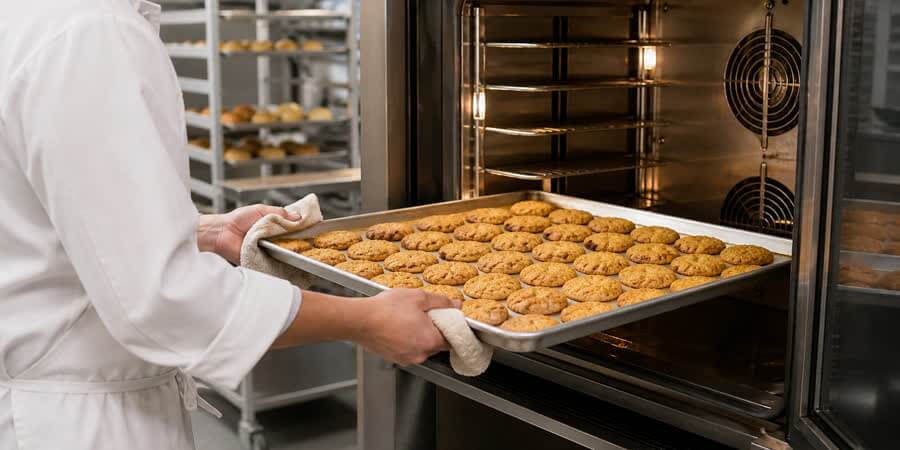
Table of Contents
Every standard sheet pan size - what each measures, which ovens and racks fit it, and why published dimensions disagree
The commercial standard sheet pan is the full size, 26" x 18" - the pan the entire bakery world is built around. Every other size is a fraction of that footprint: the half sheet (18" x 13") that rules home kitchens, the quarter (13" x 9 1/2") that fits toaster ovens, the eighth for prep, and the two-thirds for specialty ovens. This guide charts every standard size, explains which ovens and racks each one actually fits, clears up why published dimensions for the "same" pan disagree, and settles the sheet-pan-versus-hotel-pan question that trips up half the orders in foodservice.
One footprint, five sizes: how the system works
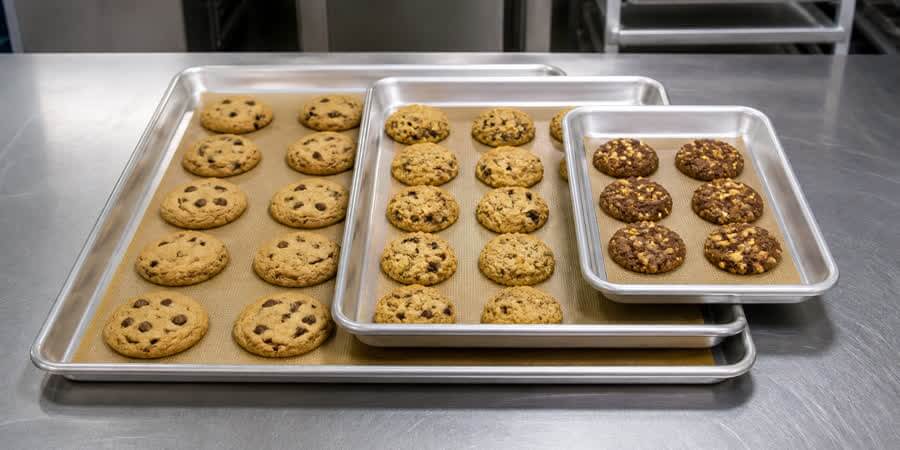
Like steam table pans, sheet pans are built on a fractional system - but around a different base. The full-size sheet pan measures 26" x 18", which is 468 square inches of flat cooking surface. Cut that in half and you get the half sheet (18" x 13"), half again for the quarter (13" x 9 1/2"), and half once more for the eighth - which is why an eighth pan measures roughly 9 1/2" x 6 1/2", almost exactly one eighth of the full pan's area. The two-thirds pan sits between half and full for ovens that cannot take a full sheet.
So why do published dimensions disagree? Look at any two size charts and you will find the two-thirds pan listed as 22" x 16" in one and 21" x 15" in another, the half sheet as 18" x 13" or 18" x 12", and the quarter as 13" x 9", 13" x 9 1/2", or 13" x 10". None of them are wrong: sheet pan sides flare outward, so the measurement depends on whether the maker quotes the top rim or the pan body, and manufacturers genuinely differ by an inch. Our own catalog carries two-thirds pans at both 22" x 16" and 21" x 15". The practical advice: sizes within a family all serve the same role, but if pans must nest, stack, or slide into tight rack channels, standardize on one manufacturer's dimensions rather than mixing.
Sheet pan size chart
| Pan size: | Typical dimensions: | Fits: | Common uses: |
| Full sheet | 26" x 18" | Commercial ovens and racks only | High-volume baking, roasting, sheet-pan meals, bakery production |
| Two-thirds sheet | 21" x 15" to 22" x 16" | Combi and specialty ovens | Batch cooking where a full pan will not fit |
| Half sheet | 18" x 13" (some run 18" x 12") | Standard home ovens, half-size convection ovens | The all-purpose workhorse - cookies, roasting, prep |
| Quarter sheet | 13" x 9 1/2" (also 13" x 9" and 13" x 10") | Toaster ovens, countertop ovens | Small batches, reheating, station prep |
| Eighth sheet | 9 1/2" x 6 1/2" (also 10" x 6") | Any oven, prep counters | Mise en place, individual portions, garnish trays |
Two details complete the picture. Standard sheet pans have a rim about one inch tall - deep enough to contain juices, shallow enough for air circulation and easy spatula access. Rimless or single-rim cookie sheets trade the edge for easy sliding of delicate baked goods. And sheet cake pans are a different animal despite the shared name: they use similar footprints but run 2 to 3 inches deep for batter. Browse the full range of bun and sheet pans by size, weight, and style, or start from the complete commercial baking pans collection.
One naming note that confuses new buyers: "bun pan" and "sheet pan" are the same thing. The bakery trade says bun pan, the restaurant trade says sheet pan, and equipment listings use both interchangeably.
Oven fit: the constraint that picks your size
The single most important thing to know about sheet pan sizes: a full-size sheet pan does not fit in a standard home oven. Full sheets are built for commercial ovens and commercial racks. This is why the half sheet is the biggest pan most home cooks have ever used - and why "half sheet" and "baking sheet" mean the same pan at retail.
On the commercial side, the relationship runs the other way: ovens are literally rated by sheet pan count. A full-size convection oven is described as a 5-pan oven; a bakery rotating rack oven takes an entire rack of pans at once; half-size convection ovens are built around the 18" x 13" half sheet. If you are matching pans to an oven purchase, our commercial convection oven guide covers oven capacities in exactly these terms.
Rack math: how sheet pans store and travel
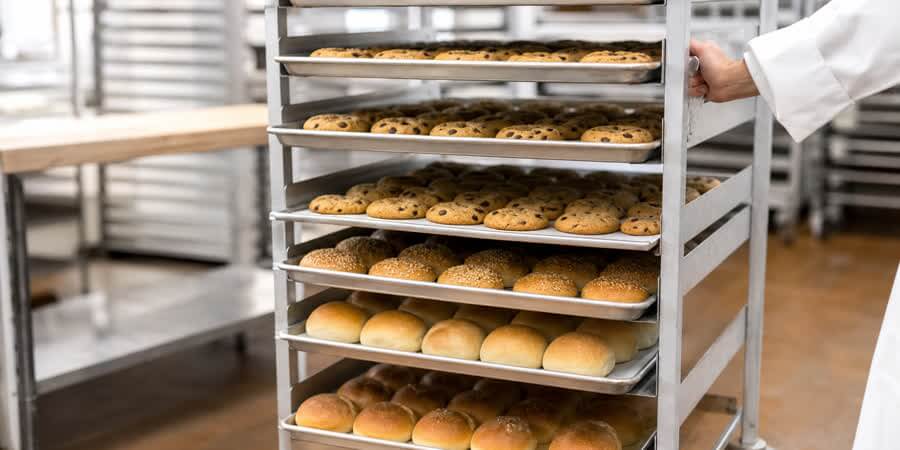
Sheet pans run on rails - and the rack system is built around the full-size 26" x 18" footprint, with half pans riding the same racks two per level on many models.
Full-height bun pan racks are the standard bakery workhorse, commonly holding 18 to 20 pans on rolling casters, while compact and specialty racks run from under a dozen pans to 40 or more. Browse bun pan and sheet pan racks by capacity, height, and material to match your volume.
Roll-in racks wheel directly into rack ovens, proofers, and refrigerators, so an entire batch moves from prep to bake to chill without ever leaving its rack. Half-height, countertop, undercounter, and wall-mount racks put pan storage at the station instead of across the kitchen.
Covers and dollies finish the system: rack covers turn an open rack into a protected proofing or transport cabinet, and pan dollies move stacked pans without a full rack. The rack system is also the reason pan-size standardization matters: every rail, cover, dolly, and oven slot in the building assumes the standard footprint.
Weight, material, and style
Aluminum in two weights. Standard-weight aluminum pans are the economical everyday choice with excellent heat transfer; heavy-weight pans use thicker metal that resists the warping that constant oven cycles and dish pits inflict. High-volume bakeries should default to heavy weight for anything that bakes daily - a warped pan rocks on the rack, browns unevenly, and spills.
Beyond plain aluminum. Perforated pans let air circulate under crusts for crisper baking and faster cooling. Non-stick coatings ease release for sticky items. Stainless steel pans double as presentation and serving trays. Rimless cookie sheets slide delicate goods off without lifting.
Liners sized to match. Parchment sheets are sold pre-cut to standard pan sizes - full and half sheet parchment drops straight in with no trimming. Stock pan liners and parchment paper in the same sizes as your pans and cleanup gets dramatically faster.
Sheet pans vs. hotel pans: not the same system
The two pan families get confused constantly in ordering, and they are built for different jobs on different footprints. Sheet pans are shallow open trays (about 1" deep) on the 26" x 18" system, made for baking, roasting, and prep in ovens and racks. Hotel pans are deep, flanged containers on the 12" x 20" system, made to hang in steam table wells and holding equipment. A sheet pan cannot sit in a steam table well - it has no flange and the wrong footprint - and a hotel pan defeats the airflow that baking needs. Our hotel pan sizes guide charts that entire second system, depths and capacities included.
Frequently Asked Questions
What are the standard sheet pan sizes?
Five sizes cover commercial and home use: full sheet (26" x 18"), two-thirds (21" x 15" to 22" x 16" depending on manufacturer), half sheet (18" x 13"), quarter sheet (13" x 9 1/2"), and eighth sheet (9 1/2" x 6 1/2"). Each size is roughly half the area of the one above it, and standard rims run about one inch tall.
What is the difference between a cookie sheet and a sheet pan?
A sheet pan has a rolled rim around all four sides, roughly an inch tall, which contains juices and adds rigidity. A cookie sheet is rimless or has a single raised edge, so delicate baked goods slide off without lifting. For everything beyond cookies and pastry, the rimmed sheet pan is the more versatile buy.
Will a full-size sheet pan fit in a home oven?
No. Full sheets at 26" x 18" are commercial-only - standard home ovens max out at the half sheet (18" x 13"), which is why the half sheet is the retail "baking sheet." If a recipe calls for a full sheet pan at home, use two half sheets.
Is a quarter sheet pan the same as a 9x13?
Close, but not identical. A quarter sheet pan measures about 13" x 9 1/2" with a one-inch rim. The classic "9x13" is usually a cake or casserole pan with 2-inch or taller sides. They cover similar footprints, but the deep 9x13 is for batters and braises while the shallow quarter sheet is for baking and roasting.
How big is a three-quarter sheet pan?
Three-quarter is not one of the five standard sizes, and pans sold under that label vary by maker - most fall between the half sheet and full sheet, in the neighborhood of the two-thirds pan (21" x 15" to 22" x 16"). Measure before buying if it needs to fit a specific oven or rack.
Why do half sheet pans measure 18" x 13" in one brand and 18" x 12" in another?
Sheet pan sides flare outward, so dimensions depend on whether the manufacturer measures the outer rim or the pan body - and makers genuinely differ by up to an inch within every size family. The pans serve the same role, but if your pans must nest or slide into tight rack channels, standardize on one manufacturer's dimensions.
How many sheet pans does a bun pan rack hold?
Common full-height rolling racks hold 18 to 20 full-size pans. Compact, countertop, and half-height racks run from a handful of pans to a dozen, and high-capacity and double racks reach 40 or more. Many racks accept half sheets two per level, doubling the count for smaller pans.
How many people does a sheet cake feed?
Using the deeper sheet-cake pans that share these footprints, a quarter sheet cake is commonly cited at roughly 24 to 26 party-size servings - which is why the quarter sheet is the standard answer for a 25-person event. Half and full sheet cakes scale up from there, with exact counts depending on slice size, which is where a sheet cake marker keeps every portion consistent.
Are sheet pans and hotel pans interchangeable?
No. Sheet pans are shallow 26" x 18" trays for ovens and racks; hotel pans are deep 12" x 20" flanged containers for steam table wells and holding equipment. Neither works in the other's equipment. See our hotel pan sizes guide for that system.
What is a bun pan?
The same thing as a sheet pan. "Bun pan" is the bakery trade's name for it, and rack listings use the terms interchangeably - a 20-pan bun rack holds 20 full-size sheet pans.
Related Resources
- Commercial Bakery Oven Guide - Which bakery ovens fit these pans, and how many pans each format holds
- Hotel Pan Sizes: Dimensions, Depths & Capacity Charts - The other pan system: steam table pan sizes, depths, and capacities
- Commercial Convection Oven Guide - The ovens rated in sheet pan capacity
- Commercial Cooking Release Products Guide - Liners, parchment, and release products sized to these pans
Share This!