Folding Table Sizes: Dimensions & Seating Chart
Table of Contents
Standard folding table dimensions, seats per table, event math, and the tablecloth pairing for each size
Three folding table sizes do most of the work in event seating: the 6-foot rectangle (30" x 72"), the 8-foot rectangle (30" x 96"), and the 60-inch round. Around them sits a full system of banquet, seminar, card, and cocktail tables - each with a standard footprint, a standard seat count, and a standard tablecloth that fits it. This guide charts every common size, covers the planning math that converts a guest list into a table count, and pairs each table with the linen size that actually fits - the question every first-time event planner asks after the tables arrive.
Folding table size chart
Folding tables stand 29 to 30 inches tall - standard dining height - and fold flat to just a few inches thick for storage. Seat counts below follow event-industry standards: the lower number seats guests comfortably along the sides, the higher number adds a chair at each end.
| Table: | Dimensions: | Seats: | Best for: |
| 4-Foot Rectangle | 24" x 48" | 4 | Kids' tables, registration, small displays |
| Card / Square | 34" x 34" | 4 | Game tables, cafe-style seating |
| 5-Foot Rectangle | 30" x 60" | 4 - 6 | Compact banquet rows, buffet service |
| 6-Foot Rectangle | 30" x 72" | 6 - 8 | The all-purpose banquet workhorse |
| 8-Foot Rectangle | 30" x 96" | 8 - 10 | Maximum seating density, long banquet rows |
| Seminar Tables | 18" x 72" or 18" x 96" | 3 - 4 (one side) | Classrooms, conferences, check-in rows |
| 48" Round | 48" diameter | 6 | Small social tables |
| 60" Round | 60" diameter | 8 | The standard wedding and banquet round |
| 71-72" Round | 71" - 72" diameter | 10 | Large-party rounds |
| Cocktail Rounds | 24" - 32" diameter | 2 - 4 standing | Standing receptions (bar-height models) |
If you have noticed that published seat counts disagree - one chart says a 6-foot table seats 8, another says 6 - both are describing the same table honestly. The difference is the ends and the elbow room: 6 guests along the sides is comfortable dining, 8 with end chairs is standard banquet practice, and squeezing more works only for short events where nobody minds touching elbows. Plan formal dinners at the low number and casual events at the high one, and the complaints disappear.
Two clarifications the listings rarely make. First, some 6-foot tables run 34 to 36 inches wide instead of 30 - the extra width adds elbow room and center space for family-style platters, at the cost of row density. Second, "fold-in-half" or bi-fold tables are the same footprints with a hinge down the middle and a carry handle - identical in service, easier for one person to move.
Browse the full lineup of folding tables and chairs by size, shape, and material. One distinction worth knowing: stainless steel folding work tables are a different animal - kitchen prep surfaces that fold, not guest seating.
Event math: turning a guest list into a table count
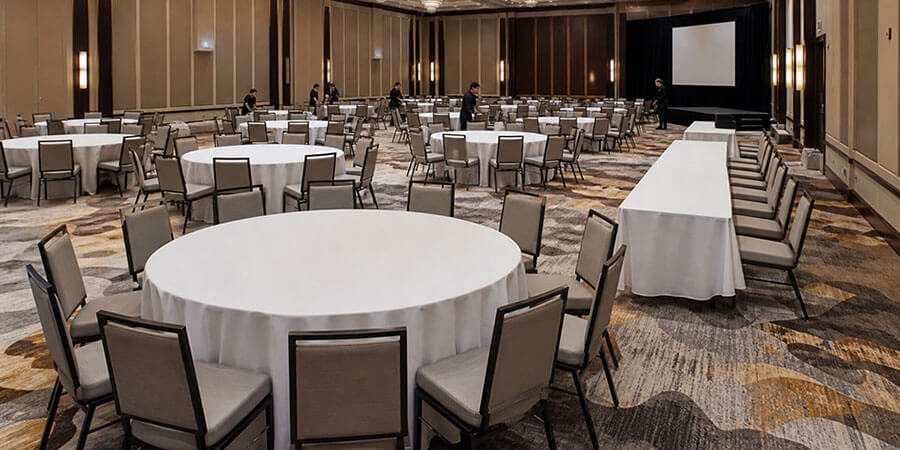
The planning question behind every folding table order is the same: how many tables does the event need? The arithmetic is straightforward once you pick a table.
Seated dinner for 100 guests:
- 60" rounds at 8 guests each: 13 tables
- 8-foot rectangles at 8 to 10 each: 10 to 13 tables
- 6-foot rectangles at 6 to 8 each: 13 to 17 tables
A worked example makes the pattern concrete. A 150-guest wedding reception on 60-inch rounds needs 19 guest tables (150 divided by 8, rounded up), plus a head table - typically one or two 8-foot rectangles - plus rectangles for the buffet line, cake, gifts, and guest book. The guest-list math gets you to 19; the real order is closer to 24 tables. Budget the extras from the start, because they are the tables event planners forget until setup day.
Rounds or rectangles? Rounds win on conversation - every guest faces every other guest - and they anchor wedding and gala layouts. Rectangles win on density and service: banquet rows pack more guests into the same floor, join end-to-end into continuous runs, and suit family-style and buffet lines. Many events mix both: rounds for guest seating, rectangles for the buffet, head table, and registration.
Do not forget the floor space around the table. A table's footprint is only the beginning - guests need roughly 18 to 24 inches of pushed-back chair space on every seating side, and service aisles between tables need 42 to 60 inches depending on traffic. Our restaurant seating layout guide publishes the full clearance standards, and they apply to banquet rooms the same way they apply to dining rooms.
For everything else the event needs beyond tables, our banquet supplies collection gathers the equipment side of event service in one place.
The tablecloth pairing: which linen fits which table
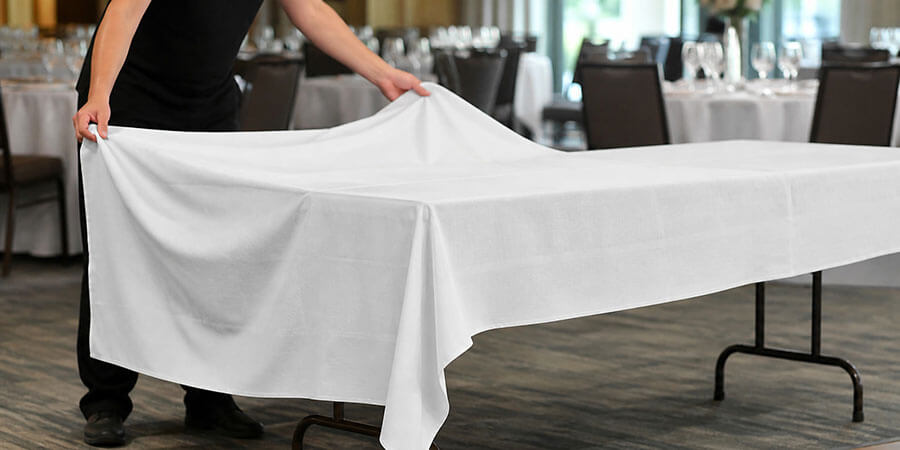
Tablecloth confusion has a simple cause: the cloth is named by its own dimensions, not the table's. The system underneath is one formula - cloth size = table size + twice the drop you want - with three standard drops for a 30-inch-tall table:
- Short drop (about 6 - 10"): casual coverage, legs visible
- Lap drop (about 15"): the standard for dining - the cloth reaches lap height
- Floor length (about 30"): formal events - the cloth touches the floor
| Table: | Lap-Length Cloth (~15" drop): | Floor-Length Cloth (~30" drop): |
| 6-Foot Rectangle (30" x 72") | 60" x 102" | 90" x 132" |
| 8-Foot Rectangle (30" x 96") | 60" x 126" | 90" x 156" |
| 60" Round | 90" round | 120" round |
| 48" Round | 78" round | 108" round |
Check the math on any row and the formula holds: a 90" x 132" cloth on a 30" x 72" table leaves 30 inches on every side - exactly floor length. For sizes outside the chart, apply the formula; for trade shows and displays, fitted and stretch covers are cut to the table's exact dimensions instead.
One more linen tool worth knowing: table skirting clips to the table edge and hangs to the floor on the guest-facing sides, dressing buffet lines, registration desks, and head tables without wrestling a full floor-length cloth. Skirting pairs with a simple lap-length topper, which is why buffet tables usually order both. Our table covers and skirts category carries both halves of the pairing.
Materials, frames, and the storage question
Tops. Blow-molded plastic dominates commercial folding tables - lightweight, weather-tolerant, and cleanable with a wipe-down, which is why it owns the indoor/outdoor event market. Wood and laminate tops read more formal and sit under cloths at upscale events; resin splits the difference.
Frames and legs. Steel wishbone legs with locking mechanisms are the commercial standard - the lock matters, because a leg that folds under load is the classic folding-table failure. Check the frame's weight rating against real use: buffet tables carry chafing dishes and full pans, not just plates.
Match the chairs to the table fleet. Folding chairs follow the same logic as the tables: metal frames for maximum durability and stacking, resin and plastic for outdoor weather and lighter handling, and padded seats for events where guests sit through a program or a long dinner. Standard-height chairs pair with the 29-30" tables; bar-height cocktail tables need stools or standing service. Buying chairs and tables as a coordinated fleet also keeps the folded stack uniform, which matters more than it sounds when everything shares one storage closet.
Storage and transport are half the purchase. A folding table fleet exists precisely because it disappears between events - so plan where it disappears to. Tables store on edge in racks or flat in stacks, and furniture dollies and carts move a stack of tables or fifty folded chairs in one trip instead of twenty. If the fleet moves between buildings, bi-fold tables with handles cut the labor meaningfully.
Frequently Asked Questions
What are the standard folding table sizes?
Rectangles run 4-foot (24" x 48"), 5-foot (30" x 60"), 6-foot (30" x 72"), and 8-foot (30" x 96"), plus narrow 18"-wide seminar tables. Rounds run 48", 60", and 71-72" diameters, with small cocktail rounds for standing service. Standard height is 29 to 30 inches.
What size is a 6-foot folding table?
72 inches long, 30 inches wide, and 29 to 30 inches tall in the standard version - some models run 34 to 36 inches wide for extra elbow room. It seats 6 guests along the sides, or 8 with a chair at each end.
What size folding table seats 8?
Two good answers: an 8-foot rectangle (30" x 96") seats 8 along the sides with room to spare, and a 60-inch round seats 8 facing each other. A 6-foot rectangle also handles 8 if you use both ends, though the corner seats are snug.
How many tables do I need for 100 guests?
About 13 60-inch rounds (8 guests each), 10 to 13 8-foot rectangles, or 13 to 17 6-foot rectangles. Round up, add a table or two for the head table and gifts or registration, and remember every table also needs chair clearance and aisle space around it.
What size tablecloth fits a 6-foot folding table?
A 60" x 102" cloth gives the standard lap-length drop of about 15 inches; a 90" x 132" cloth reaches the floor for formal events. The rule for any table: cloth size equals table size plus twice the drop you want.
Are round or rectangular tables better for events?
Rounds are better for conversation and formal dinners - everyone faces the table's center. Rectangles seat more guests per square foot, join into continuous banquet rows, and work better for buffets and family-style service. Most full-scale events use both.
What is a seminar table?
A narrow folding table - 18 inches wide by 6 or 8 feet long - designed for one-sided seating. The slim footprint suits classrooms, conference rows, and check-in stations where guests sit or stand on one side only.
What is a fold-in-half folding table?
The same standard footprint with a hinge across the middle, folding to half length with a carry handle. In use it performs identically; in transport one person can carry it. Popular for fleets that move between rooms or buildings often.
How tall are folding tables?
Standard models are 29 to 30 inches tall - normal dining height that pairs with standard folding chairs. Bar-height cocktail versions run around 42 inches for standing receptions, and some adjustable models offer multiple heights.
How should folding tables be stored?
Folded flat, either stacked horizontally or on edge in racks, in a dry space - and moved on a dolly rather than carried. A table cart turns a two-person, twenty-trip teardown into a one-person job and protects table edges from the drops and dings that shorten fleet life.
Related Resources
- Restaurant Seating Layout Guide - The clearance and spacing standards that apply to banquet rooms too
- Restaurant Furniture Guide - Permanent furniture selection for dining rooms
- Concession Equipment & Supplies Guide - Outfitting the event stands these tables often serve
Share This!