Restaurant Ideas Guide

Table of Contents
How to turn your restaurant ideas into a validated concept with real market demand and a clear competitive advantage
Having a great restaurant idea is the easy part - turning it into a viable concept is where most aspiring owners stall or stumble. The restaurant industry generated over one and a half trillion in sales in 2025, with roughly 50,000 new restaurants opening annually. Yet approximately half of all restaurants close within five years, and the difference between those that survive and those that do not often comes down to what happens before the doors open - concept validation, competitive research, and honest assessment of market demand. This guide walks you through how to develop restaurant ideas into a concrete concept, validate that concept against real market conditions, select the right format for your situation, and position your restaurant to stand out in a competitive landscape.
Every restaurant starts as an idea. Maybe it is a cuisine you grew up with that nobody in your area serves well. Maybe it is a format you experienced while traveling. Maybe it is a hunch that your neighborhood needs something specific - a breakfast spot, a late-night option, a fast casual concept built around a food category that only exists in full-service restaurants.
The problem is that ideas feel good. They are exciting. They are personal. And that emotional attachment is exactly what causes many aspiring restaurant owners to skip the hard work of validating whether their idea can actually sustain a business. The restaurant industry is enormous - employing nearly 16 million people - but it is also unforgiving to concepts that launch without proper groundwork.
This guide is not about generating ideas. You probably already have several. This guide is about the process of taking those ideas and pressure-testing them - through market research, competitive analysis, format selection, and concept refinement - until you have something that is not just exciting to you, but viable in the market you plan to enter.
Why Most Restaurant Ideas Fail Before They Open
The often-repeated claim that 90% of restaurants fail in the first year is a myth. Bureau of Labor Statistics data shows actual first-year closure rates are closer to 17-30%, and restaurant closures reached a seven-year low in 2025. But roughly half of all restaurants do close within five years, and the causes tend to trace back to decisions - or non-decisions - made during the concept phase.
Undercapitalization gets the headlines, but poor concept-market fit is the underlying cause. When a restaurant runs out of money, the question is why. Often the answer is that the concept did not generate enough demand, the pricing did not support the cost structure, or the location did not match the target customer. These are all concept-phase failures disguised as financial ones.
Emotional attachment overrides market analysis. Many first-time restaurant owners fall in love with their idea and skip competitive research. They assume that because they would eat at their restaurant, others will too. But your personal preferences are not market data. A concept needs enough demand in a specific geographic area to support the revenue required to cover rent, labor, food costs, and still produce a margin.
Copying is as dangerous as ignoring the market. Some operators go the opposite direction - they see a successful concept and try to replicate it. But a copycat restaurant starts at a disadvantage because the original already has brand recognition, operational experience, and customer loyalty. The goal is not to be the only restaurant serving a certain cuisine - it is to offer a clear reason why someone should choose your version.
| Concept-Phase Mistake: | Consequence: | How to Avoid It: |
| Skipping competitive research | Opening into a saturated market with no differentiator | Map every competitor within your target radius before committing |
| Ignoring target demographics | Building a concept your neighborhood cannot support | Study local population data, income levels, dining patterns |
| Choosing format based on preference, not economics | Cost structure that margins cannot support | Model your costs for each format before selecting one |
| Underestimating operational complexity | Burnout, inconsistency, declining quality | Match concept complexity to your experience and staffing capacity |
| No concept validation | Discovering lack of demand after investing | Test your concept through pop-ups, social media response, or pre-orders |
Understanding Your Market Before You Build Your Concept
Market research is not optional - it is the foundation of every successful restaurant concept. Before you refine your idea, you need to understand the market you plan to enter.
Start with your trade area. Your trade area is the geographic radius from which you will draw the majority of your customers. For a fast casual restaurant in a suburban area, that might be a three to five mile radius. For a destination dining concept, it could be an entire metro region. Define your trade area first, then study everything about it.
Study the demographics. Local population size, median household income, age distribution, and dining-out frequency all shape what concepts can succeed in an area. A high-end tasting menu concept will struggle in a college town where the median income skews low. A fast casual bowl concept may underperform in a retirement community that prefers full-service dining. The data is available through census records, local economic development offices, and commercial real estate reports.
Map the competitive landscape. Identify every restaurant within your trade area. Categorize them by concept type, price point, and service format. Look for gaps - cuisines that are underrepresented, price points that are not served, dayparts (breakfast, lunch, dinner, late night) that lack options. Also look for oversaturation - if your trade area already has twelve burger restaurants, launching the thirteenth requires a very strong differentiator.
Read the trends, but do not chase them. Consumer dining behavior is shifting. McKinsey research from January 2026 found that food away from home now accounts for more than half of all U.S. food and beverage spending. An OpenTable study from late 2025 reported an 8% increase in dining out year over year, and 55% of Americans expect to spend more on restaurants in 2026. But these macro trends do not mean every concept will succeed everywhere - they mean the overall market is healthy, and your job is to find the right position within it.
Market research checklist:
- Define your trade area radius and map it
- Pull demographic data for your trade area (population, income, age, household size)
- List all existing restaurants within the trade area by type, price point, and format
- Identify gaps in cuisine, price point, daypart, or service format
- Study foot traffic patterns and peak dining times for your target location
- Research local dining preferences and cultural food preferences
- Check planned developments that could change the competitive landscape
Choosing a Restaurant Format
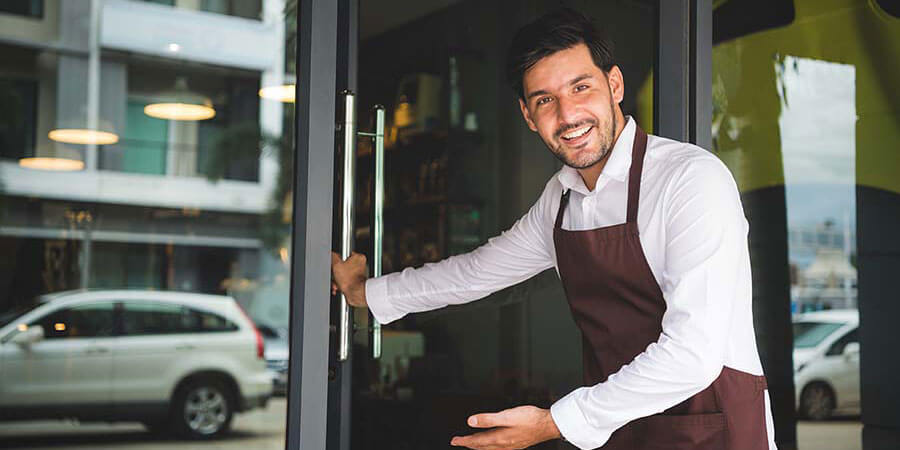
Your format - the type of restaurant you operate - determines your cost structure, staffing needs, equipment requirements, target market, and daily operations. Choosing the right format is not just about what you want to cook - it is about matching your concept to a business model that works for your market, your capital, and your experience level.
Full-service restaurants offer the broadest menu flexibility and highest per-guest revenue but require the most capital, the largest staff, and the most complex operations. You need front-of-house and back-of-house teams, a full dining room with commercial furniture, a complete kitchen line with cooking equipment, and refrigeration. Full-service works best in areas with strong dinner demand and customers willing to spend time - and money - on a sit-down experience.
Fast casual is the fastest-growing restaurant segment, projected to add tens of billions in revenue through the end of the decade. Fast casual occupies the space between quick-service and full-service - higher food quality and a more curated experience than fast food, but without full table service. This format requires less front-of-house labor, allows for more focused menus, and typically generates strong lunch traffic. It appeals to the growing consumer preference for quality food with convenience.
Quick-service (QSR) focuses on speed, consistency, and volume. The quick-service segment represents the largest share of restaurant sales in the U.S. Equipment needs are more standardized, menus are more limited, and the operational model prioritizes throughput. QSR concepts compete heavily on convenience and value - which means location and drive-through access are critical to success.
Food trucks offer the lowest barrier to entry in terms of capital and overhead. The U.S. food truck market includes over 92,000 operators and continues to grow steadily. Food trucks allow you to test a concept in multiple locations, build a following before committing to a permanent space, and operate with a skeleton crew. The tradeoff is limited kitchen capacity, weather dependence, and the operational challenge of finding and securing profitable locations.
Ghost kitchens (virtual kitchens) operate without a physical dining room, serving customers exclusively through delivery and pickup. The U.S. ghost kitchen market includes thousands of operators and is growing as delivery demand remains strong - roughly 60% of consumers order delivery or takeout at least once a week. Ghost kitchens offer the lowest overhead of any restaurant format but depend entirely on third-party delivery platforms and digital marketing to reach customers.
| Format: | Startup Complexity: | Staffing Needs: | Best For: |
| Full-service | Highest - full buildout, dining room, bar, complete kitchen | Large - FOH and BOH teams, management | Experienced operators with strong capital and proven concepts |
| Fast casual | Moderate - focused kitchen, counter service, limited seating | Medium - BOH team, minimal FOH | Operators targeting lunch traffic with a quality-focused, efficient concept |
| Quick-service | Moderate - standardized equipment, drive-through potential | Medium - focused on speed and throughput | High-volume concepts in high-traffic locations |
| Food truck | Lowest - mobile unit, limited equipment | Small - often owner-operated with 1-2 staff | Concept testing, niche cuisines, event-based and location-flexible models |
| Ghost kitchen | Low - shared or rented kitchen space, no dining room | Small - BOH only, no FOH required | Delivery-focused concepts, operators testing demand before investing in a physical space |
Validating Your Concept Before You Invest
Concept validation is the most skipped and most valuable step in restaurant development. It bridges the gap between your idea and reality - and it costs a fraction of what a failed launch costs.
Test before you build. A pop-up event, a farmers market booth, a catering operation, or even a social media campaign built around your concept can generate real market feedback before you sign a lease or purchase equipment. The goal is to answer one question - will people pay for what you plan to offer?
Talk to potential customers, not friends and family. Friends will tell you your food is great. Potential customers will tell you whether they would drive across town for it, how much they would pay, and how often they would come back. Conduct informal surveys in your target trade area. Present your concept, your proposed menu, and your price point, and listen to the response.
Run the numbers before committing. Financial viability is not a feeling - it is math. The restaurant industry operates on average pre-tax margins of roughly 5-10%. At those margins, your concept must generate enough revenue to cover food costs (typically 28-35% of revenue), labor costs (typically 25-35%), rent (typically 6-10%), and still leave a profit. If your concept requires premium ingredients that push food costs to 40% or a staffing model that pushes labor above 35%, the math may not work regardless of how good the food is.
Social media as a validation tool. Before you open, create social media accounts for your concept. Post about your menu, your story, your progress. Consumer research shows that 74% of diners use social media to decide where to eat, and a majority check a restaurant's social media presence before visiting for the first time. The engagement you receive - followers, comments, direct messages, shared posts - is free market research. Low engagement is not failure - it is useful data that your concept or messaging may need refinement.
Concept validation methods:
- Host pop-up events at local venues, breweries, or community spaces
- Sell at farmers markets or food festivals to test menu items and pricing
- Start a catering side business to build demand and refine operations
- Launch social media accounts and gauge interest through engagement metrics
- Conduct informal surveys or tastings in your target neighborhood
- Test delivery-only through a ghost kitchen before investing in a physical location
- Pre-sell gift cards or memberships to measure commitment beyond interest
Building Your Competitive Advantage
In a market with hundreds of thousands of restaurants, opening another one without a clear competitive advantage is a strategy for mediocrity. Your advantage does not need to be revolutionary - it needs to be specific, defensible, and meaningful to your target customer.
Your advantage can come from multiple sources. A unique cuisine or fusion that does not exist in your market. A price point that undercuts competitors without sacrificing quality. A format or experience that creates something people cannot get elsewhere - a chef's counter, a rotating seasonal menu, a hyper-local sourcing model. A location or daypart strategy that serves an unmet need - the only breakfast option in a business district, the only late-night restaurant in a residential neighborhood.
Specificity beats breadth. A restaurant that tries to do everything - sushi, burgers, pasta, tacos - communicates no expertise and no clear identity. The strongest concepts are focused enough that a customer can describe them in one sentence. The most successful new concepts in recent years share a common trait - they do one thing exceptionally well rather than many things adequately.
Your concept story matters. Consumers increasingly choose restaurants based on story and identity, not just food. Why does this restaurant exist? What is the personal or cultural connection behind the concept? What makes this version different from the five other restaurants serving the same cuisine? A compelling origin story - tied to your heritage, your training, your community, or your values - creates emotional connection that pure food quality cannot replicate.
Your competitive advantage must be sustainable. A gimmick attracts attention once. A sustainable advantage - sourcing relationships, culinary expertise, operational efficiency, community connection, brand identity - creates repeat customers. Ask yourself whether your differentiator would still matter to customers after their fifth visit. If the answer is no, it is a gimmick, not an advantage.
From Concept to Operational Plan
Once you have validated your concept and identified your competitive advantage, the next step is translating your idea into an operational plan. This is where concept meets reality - and where many good ideas break down because the operator did not think through the details.
Your menu drives your equipment needs. Every menu item implies specific equipment. A pizza concept requires ovens, dough prep equipment, and cold storage for toppings. A breakfast-focused restaurant needs griddles, ranges, and egg-handling capacity. A beverage-heavy concept requires blenders, espresso machines, and refrigeration for perishable ingredients. Design your menu first, then spec your restaurant equipment based on what you actually plan to serve. For a detailed breakdown of kitchen equipment needs by type, see our Restaurant Technology Guide.
Your format drives your layout. A full-service restaurant needs a dining room, server stations, and potentially a bar. Fast casual needs a counter, an efficient kitchen line, and a pickup area. A ghost kitchen needs nothing but a kitchen. Your seating layout affects capacity, which directly affects revenue potential. Plan your layout around your format and expected throughput.
Your concept drives your staffing model. A fine dining concept requires experienced cooks, trained servers, a sommelier or bar program manager, and a host. A food truck might run with two people. Be honest about the talent you can attract and afford - if your concept requires highly skilled labor and your market has a limited talent pool, you will face chronic staffing challenges. The industry's labor turnover exceeds 75% annually, so building a concept that can operate effectively even with constant turnover is a practical necessity.
Your financial model drives your feasibility. Before purchasing equipment, signing a lease, or hiring staff, build a financial model that accounts for every cost category. Use the Restaurant Menu Pricing Guide to develop a pricing strategy that supports your cost structure. If the numbers do not work, adjust the concept - simplify the menu, change the format, find a less expensive location. The time to discover financial problems is during planning, not during operations.
Build a realistic startup timeline. Industry consultants estimate that a properly executed restaurant opening takes 9-13 months from concept finalization to opening day. That timeline includes site selection, lease negotiation, permitting, buildout, equipment installation, staff hiring, training, and a soft opening period. Rushing this timeline creates problems that compound after opening.
Financing your concept. Once your operational plan is complete, you will have a clear picture of your capital requirements. Our Restaurant Financing Guide covers the full landscape - SBA loans, equipment financing, buy now pay later options, and what lenders look for in a restaurant application. Many equipment suppliers also offer financing at the point of purchase, which simplifies the process of getting your kitchen equipped without depleting your cash reserves.
Frequently Asked Questions
How do I know if my restaurant idea is good enough?
A good restaurant idea is one that meets three criteria - you have the skill and passion to execute it, there is demonstrable market demand in your target area, and the economics support profitability at realistic revenue levels. If any one of those three is missing, the idea needs more development. Passion without demand is a hobby. Demand without skill is a staffing problem. Profitability without passion leads to burnout.
What is the most common reason restaurant concepts fail?
Poor concept-market fit - building something the local market does not need or want enough. This manifests as slow traffic, low check averages, or high customer acquisition costs. The remedy is thorough market research and concept validation before committing capital. Undercapitalization is often cited as the top cause, but it is frequently a symptom of insufficient demand rather than a root cause.
Should I open a franchise or an independent restaurant?
Franchises offer a proven system, brand recognition, and operational support, but require franchise fees and limit your creative control. Independent restaurants offer full creative freedom and higher potential margins but carry more risk because the concept is unproven. Industry data suggests franchises have higher five-year survival rates, but independents that succeed can be more profitable because they do not pay ongoing royalties.
How important is location compared to the concept itself?
Both matter, and they are interdependent. The best concept in the wrong location will struggle - a high-end steakhouse in a low-income area, or a breakfast spot on a street with no morning foot traffic. Likewise, a prime location will not save a weak concept. The goal is to match your concept to a location where your target customers already are - or will be drawn to.
What is the cheapest type of restaurant to open?
Food trucks and ghost kitchens have the lowest startup costs. Food trucks require a vehicle, limited equipment, and no commercial lease. Ghost kitchens operate in shared or rented kitchen spaces with no dining room buildout or front-of-house staff. Both formats allow you to test a concept with minimal capital before investing in a full restaurant.
How do I validate my concept without spending a lot of money?
Host pop-up events, sell at farmers markets, start a catering operation, or launch a delivery-only menu from a shared kitchen. Create social media accounts for your concept and measure engagement. These approaches generate real customer feedback and revenue data without the cost of a full restaurant buildout.
How long does it take to develop a restaurant concept and open?
From concept finalization to opening day, most properly executed restaurant launches take 9-13 months. That includes site selection, lease negotiation, permitting, construction, equipment procurement, staff hiring and training, and a soft opening phase. Rushing this timeline typically leads to operational problems that persist after opening.
What role does technology play in concept development?
Technology affects both your operations and your customer experience. Over 73% of restaurant operators increased tech spending recently, and nearly 75% of restaurant traffic now comes from off-premises channels like takeout, delivery, and drive-through. Your concept should account for how customers will discover you (social media, search, delivery apps), how they will order (in-person, online, kiosk), and how you will manage operations (POS, inventory, scheduling). See our Restaurant Technology Guide for a full breakdown.
Can I test a restaurant concept part-time while keeping my current job?
Yes, and this is one of the smartest approaches for first-time operators. Food trucks, catering, farmers market booths, and delivery-only ghost kitchens can all be operated on a limited schedule. This lets you test your concept, build a customer base, refine your menu, and generate some revenue before making the leap to a full-time restaurant operation.
How do I create a menu that supports my concept and my margins?
Your menu should reinforce your concept identity while working within practical cost constraints. Every item needs to be evaluated for food cost percentage, preparation complexity, and contribution to your overall margin. A focused menu with 15-25 items typically outperforms a sprawling one with 50+ items because it reduces waste, simplifies inventory, improves execution consistency, and strengthens your brand identity. See our Restaurant Menu Design Guide for detailed guidance on building a menu that works.
Related Resources
- Restaurant Financing Guide - How to fund your restaurant once your concept is ready
- Restaurant Menu Pricing Guide - Price your menu to protect margins
- Restaurant Menu Design Guide - Design a menu that supports your concept
- Restaurant Marketing Guide - Build awareness and drive traffic to your restaurant
- Restaurant Technology Guide - Essential systems for restaurant operations
- Restaurant Equipment - Browse commercial kitchen equipment for your concept
Share This!