Kitchen Cleaning Hacks That Save Time and Actually Work
Table of Contents
Proven Cleaning Techniques for Every Surface, Appliance, and Grease Problem - From Quick Home Fixes to Commercial Methods
A kitchen that looks clean and a kitchen that is clean are two different things. Grease hides behind appliances. Bacteria lingers on cutting boards that only got a quick rinse. Drain odors creep in because the fix takes two ingredients you already own - but nobody told you.
Whether you run a busy restaurant kitchen or just want your home kitchen to stop fighting you, the hacks in this guide are practical, tested, and organized by where the mess actually lives. You will find natural solutions that work surprisingly well, commercial-grade approaches for tougher jobs, a cleaning schedule you can actually follow, and the food safety fundamentals that separate "looks clean" from "is clean."
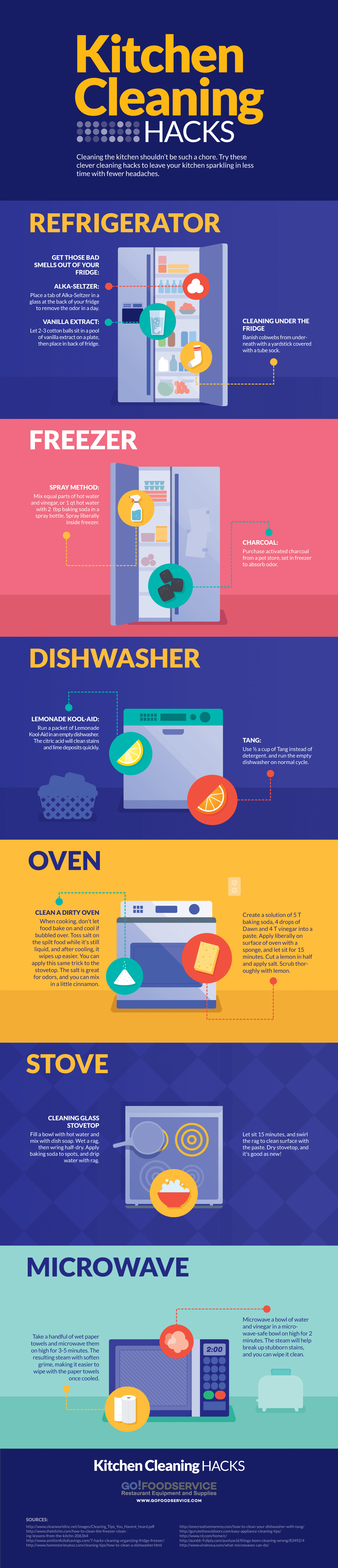
The infographic below highlights our top cleaning hacks at a glance. Keep reading for detailed techniques, the right products for each job, and a cleaning schedule you can put to work today.
Surface Cleaning Hacks - Countertops, Cutting Boards, and Stainless Steel
Every kitchen surface has a personality. What works on granite will damage marble. What shines stainless steel will streak laminate. Here is how to handle each one without guessing.
Countertops
Laminate and solid surface counters clean up well with a simple mix of warm water and a few drops of dish soap. For stubborn stains, make a paste with baking soda and water, apply it to the stain, let it sit for five minutes, and wipe clean. Avoid abrasive scrubbers on solid surfaces - they leave micro-scratches that trap bacteria over time.
Granite and stone counters need a pH-neutral approach. Vinegar and citrus-based cleaners are too acidic and will etch natural stone over time. Stick with warm water and a mild dish soap, then dry with a clean cloth to prevent water spots. For disinfecting, use a diluted isopropyl alcohol spray (70% solution) - it evaporates without leaving residue.
Tile counters and backsplash benefit from the baking soda and vinegar combination. Sprinkle baking soda on the tile, spray white vinegar over it, let the fizzing reaction work for a few minutes, then scrub the grout lines with a stiff brush. This lifts grease and mildew out of grout without harsh chemicals.
Cutting Boards
Cutting boards are one of the highest-risk surfaces in any kitchen. The FDA reports that cross-contamination from improperly cleaned cutting boards is a leading contributor to foodborne illness.
- Plastic boards - Run through the dishwasher after every use, or hand wash with hot soapy water and sanitize with a diluted bleach solution (one tablespoon per gallon of water). Replace boards that have deep knife grooves - those grooves harbor bacteria that washing cannot reach.
- Wood boards - Hand wash only (dishwashers warp wood). Scrub with coarse salt and half a lemon to deodorize and pull out stains. Follow with a hot water rinse. Once a month, rub food-grade mineral oil into the surface to prevent cracking and keep the wood from absorbing moisture.
Stainless Steel
Stainless steel shows every fingerprint and water spot, but the fix is simple. Wipe in the direction of the grain with a damp microfiber cloth, then buff dry. For deeper cleaning, apply a thin layer of baking soda paste, wipe with the grain, and rinse. A few drops of olive oil on a soft cloth can restore the shine - just buff well so the surface does not feel greasy. In commercial kitchens, a food-safe stainless steel cleaner paired with the right cleaning supplies keeps prep surfaces looking professional without leaving residue near food areas.
Appliance Cleaning Hacks - Oven, Microwave, Refrigerator, and More
Appliances collect grease, spills, and odors faster than any other part of the kitchen. These hacks tackle each one without requiring specialty products.
Oven
Skip the self-clean cycle for routine maintenance - it heats to extreme temperatures that can stress door seals and electronics. Instead, make a thick paste from baking soda and water, spread it across the interior (avoiding heating elements), and let it sit overnight. The next morning, spray white vinegar over the paste. It will fizz and loosen baked-on residue. Wipe clean with a damp cloth, then go over it once more with plain water to remove any residue.
For the oven racks, soak them in a bathtub or large basin with hot water and a few tablespoons of dish soap for two to four hours. Scrub with a stiff brush, rinse, and dry before reinstalling.
Microwave
The easiest microwave cleaning hack takes five minutes. Fill a microwave-safe bowl with water and the juice of one lemon (drop the squeezed halves in too). Microwave on high for three to five minutes until the window is steamy. Let it sit with the door closed for two more minutes so the steam loosens dried-on splatter. Open the door and wipe down the interior with a cloth - everything should lift right off. The lemon eliminates odors naturally.
Refrigerator
Pull out all shelves and drawers. Wash them in the sink with warm soapy water - do not put cold glass shelves directly under hot water, as the temperature shock can crack them. Let them come to room temperature first.
Wipe down the interior with a solution of two tablespoons of baking soda dissolved in a quart of warm water. This cleans without leaving chemical residue near food. Pay attention to door gaskets - fold them open gently and wipe out the crumbs and moisture that collect in the folds. Dirty gaskets lose their seal, which forces the compressor to work harder and raises energy costs.
For commercial refrigeration equipment, check condenser coils monthly. Dusty coils reduce efficiency and can shorten equipment life significantly.
Dishwasher
Your dishwasher cleans your dishes, but it also needs cleaning itself. Place a cup of white vinegar on the top rack and run an empty cycle on the hottest setting. The vinegar dissolves mineral deposits, grease film, and odor-causing residue. Follow up by sprinkling baking soda across the bottom and running a short hot cycle - this brightens the interior and neutralizes lingering smells.
Check the filter at the bottom of the unit monthly. A clogged filter recirculates dirty water and is the most common reason a dishwasher stops cleaning effectively.
Deep Fryers (Commercial Kitchens)
For commercial deep fryers, a weekly boil-out keeps performance and oil quality where they need to be. Drain the oil, fill the fryer with water and a commercial fryer cleaner, bring to operating temperature, let it work for fifteen to twenty minutes, drain, rinse thoroughly, and dry before refilling with fresh oil. Wipe down the exterior - especially the sides and control panel - daily with a degreaser and a clean cloth.
Sink and Drain Cleaning Hacks
Sinks and drains are among the most bacteria-heavy zones in the kitchen. A 2022 NSF International study found that kitchen sinks rank among the germiest spots in a home - often carrying more bacteria than a bathroom faucet handle.
Stainless Steel Sink Polishing
Sprinkle baking soda across a wet sink, scrub with a soft sponge in the direction of the grain, and rinse. For extra shine, rub a small amount of olive oil across the surface with a paper towel and buff it out. This fills micro-scratches and makes the sink look new.
Drain Flush
Pour half a cup of baking soda down the drain, followed by half a cup of white vinegar. Cover the drain opening with a wet cloth or stopper to keep the fizzing reaction working inside the pipe. After fifteen minutes, flush with boiling water. This breaks up grease and organic buildup without harsh drain chemicals. For persistent slow drains, repeat weekly.
Garbage Disposal Freshening
Drop a handful of ice cubes and a few citrus peels (lemon, lime, or orange) into the disposal. Run it with cold water for thirty seconds. The ice sharpens the blades and knocks off buildup, while the citrus oils eliminate odors naturally.
For commercial kitchens, keeping floor drains clean is equally important. A neglected floor drain is one of the fastest ways to attract pests and fail a health inspection. Enzymatic drain cleaners work well as a weekly maintenance treatment in high-volume operations.
Grease Removal Techniques That Actually Work
Grease is the single most persistent kitchen cleaning challenge. It migrates further than you think - from the stovetop to the backsplash, up into the hood vent, and across the floor in an invisible film.
Stovetop Grease
For fresh grease splatters, a spray of diluted dish soap and warm water usually does the job. For baked-on stovetop grease, apply a baking soda paste, cover with a damp cloth, and let it sit for thirty minutes. The paste softens the grease so it lifts without aggressive scrubbing.
Hood and Vent Grease
Kitchen hood filters should be cleaned regularly - weekly in commercial kitchens, monthly in home kitchens that do a lot of frying. Soak filters in hot water with a generous amount of dish soap or a degreaser for thirty minutes, then scrub with a stiff brush. Rinse and let them dry completely before reinstalling. Heavy buildup on the hood surface itself responds well to a degreaser spray, dwell time of five to ten minutes, and a wipe with a microfiber cloth.
Backsplash Grease
Mix equal parts white vinegar and warm water in a spray bottle. Spray the backsplash, let it sit for five minutes, and wipe clean. For tile backsplashes with greasy grout, use the baking soda sprinkle and vinegar spray method described in the surface cleaning section above.
Baked-On Grease on Pans
For sheet pans and baking dishes with baked-on grease, try this: coat the surface with a paste of baking soda and hydrogen peroxide, let it sit for two to four hours (or overnight for heavy buildup), then scrub with a non-scratch pad. The combination breaks the bond between grease and metal without damaging the pan surface.
Cast iron is the exception - never use soap or acidic cleaners on cast iron. Instead, scrub with coarse salt and a paper towel, rinse with hot water, dry immediately on a burner, and apply a thin coat of cooking oil.
Kitchen Cleaning Schedule - Daily, Weekly, Monthly, and Quarterly
The most effective cleaning hack is not a product or technique - it is consistency. A schedule prevents small messes from becoming big problems. This framework works for both home and commercial kitchens; adjust task frequency based on your volume.
| Frequency: | Task: | Method: | Why It Matters: |
| Daily | Wipe down counters and prep surfaces | Soap and water, then sanitizer | Prevents cross-contamination |
| Daily | Clean stovetop and range | Degrease drip pans, wipe grates | Grease buildup is a fire hazard |
| Daily | Wash and sanitize cutting boards | Hot water, detergent, sanitizer | One of the highest-risk surfaces |
| Daily | Sweep and mop floors | Degreasing floor cleaner | Prevents slips and pest attraction |
| Daily | Empty trash and replace liners | Fresh liner after each removal | Odor and pest control |
| Daily | Clean sink and run a drain flush | Baking soda and vinegar method | Prevents odor and bacterial buildup |
| Weekly | Deep clean oven interior | Baking soda paste overnight method | Removes baked-on residue |
| Weekly | Clean microwave interior | Lemon water steam method | Loosens splatter and eliminates odors |
| Weekly | Wipe down refrigerator shelves | Baking soda and water solution | Prevents mold and cross-contamination |
| Weekly | Clean hood filters | Hot soak with degreaser | Maintains ventilation and fire safety |
| Weekly | Sanitize trash cans | Hot water and disinfectant | Eliminates bacteria and odors |
| Monthly | Pull out appliances and clean behind them | Vacuum, degrease, wipe | Removes hidden grease and debris |
| Monthly | Clean refrigerator coils | Coil brush or vacuum attachment | Maintains efficiency and extends life |
| Monthly | Deep clean dishwasher | Vinegar cycle, clean filter | Prevents buildup and keeps dishes clean |
| Quarterly | Clean ventilation ducts | Professional service (commercial) | Fire prevention and air quality |
| Quarterly | Inspect and clean gaskets and seals | Damp cloth, mild cleaner | Maintains equipment efficiency |
| Quarterly | Clean light fixtures and ceiling vents | Step ladder, damp cloth, degreaser | Grease and dust accumulate overhead |
The Right Cleaning Tools for Every Job
Having the right tool matters as much as having the right cleaner. Using a dish sponge on a greasy floor grate wastes time and spreads contamination. Here is what to keep stocked and where each tool performs best.
| Tool: | Best For: | Avoid Using On: | Notes: |
| Microfiber cloths | Stainless steel, counters, glass, appliance exteriors | Nothing - safe on nearly all surfaces | Wash separately from other laundry; avoid fabric softener |
| Scrub pads (non-scratch) | Sinks, pots, baking sheets, stovetops | Non-stick coatings, polished stainless | Color-code by task to prevent cross-contamination |
| Stiff-bristle brush | Grout, drain grates, oven racks, hood filters | Delicate surfaces, non-stick pans | Replace when bristles flatten |
| Squeegee | Floors (after mopping), glass, stainless surfaces | Rough or textured surfaces | Essential in commercial kitchens for floor safety |
| Kitchen towels | General wiping, drying, equipment wipe-downs | Not for sanitizing unless single-use | Designate separate towels for separate tasks |
| Sponge with abrasive side | Dishes, light-duty surface cleaning | Cast iron, non-stick, stainless steel | Replace frequently - sponges harbor bacteria fast |
| Bottle brush | Inside bottles, narrow containers, drain openings | N/A | Useful for garbage disposal and drain cleaning |
| Floor mop (microfiber head) | Kitchen floors, under equipment | N/A | Microfiber picks up grease better than cotton |
Keep your cleaning station organized with the right janitorial supplies so everything is within reach when you need it. In commercial kitchens, wet floor signs and commercial floor mats at transition points reduce slip risk during and after cleaning.
Food Safety and Sanitation - Cleaning vs. Sanitizing
This is where many kitchens - both home and commercial - get it wrong. Cleaning and sanitizing are two separate steps, and skipping either one creates risk.
Cleaning removes visible dirt, grease, and food debris. It uses soap, detergent, or a degreaser with physical scrubbing. A surface can look clean after this step but still carry harmful bacteria.
Sanitizing reduces bacteria and pathogens to safe levels. It requires a chemical solution (bleach, quaternary ammonium, or another EPA-registered sanitizer) applied to an already-clean surface. Sanitizers do not work effectively on dirty surfaces - the organic matter interferes with the chemical action.
The Correct Sequence
- Scrape or remove loose food and debris
- Wash with hot water and detergent
- Rinse with clean water
- Apply sanitizer at the correct concentration
- Air dry - do not towel dry, as towels can reintroduce bacteria
Sanitizer Concentrations That Matter
The FDA Food Code specifies minimum concentrations for common sanitizers:
- Chlorine (bleach) solutions - 50 to 100 ppm for food-contact surfaces. A common ratio is one tablespoon of unscented household bleach per gallon of water.
- Quaternary ammonium (quat) solutions - 200 ppm minimum, though specific products vary. Follow label instructions.
- Iodine solutions - 12.5 to 25 ppm. Less commonly used in kitchens today.
Use sanitizer test strips to verify concentration. Too weak and the sanitizer will not kill pathogens. Too strong and it can leave harmful chemical residue on food-contact surfaces. For hand soaps and sanitizers at handwashing stations, the CDC recommends washing hands for at least twenty seconds with soap and water - hand sanitizer is a supplement, not a replacement for handwashing in kitchen environments.
For a more detailed breakdown of when to clean, sanitize, or disinfect, see Cleaning vs. Sanitizing vs. Disinfecting.
Common Kitchen Cleaning Mistakes to Avoid
Even experienced cooks and kitchen managers make these errors. Each one either wastes time, damages surfaces, or creates a food safety gap.
Using the wrong cleaner on the wrong surface. Vinegar on marble etches the stone. Bleach on stainless steel causes pitting and discoloration. Abrasive scrubbers on non-stick coatings destroy the finish. Always match the cleaner to the surface material.
Mixing cleaning chemicals. Bleach and ammonia create toxic chloramine gas. Bleach and vinegar produce chlorine gas. Hydrogen peroxide and vinegar form peracetic acid, which can irritate skin and lungs. The rule is simple: never mix chemicals unless the product label specifically says it is safe to do so.
Sanitizing without cleaning first. Spraying sanitizer on a greasy, food-covered surface does almost nothing. The organic matter blocks the sanitizer from reaching the bacteria. Clean first, then sanitize - every time.
Not rinsing sanitizer properly. Some sanitizers require a rinse step after application and before food contact. Others are designed to air dry without rinsing. Read the label and follow it. Improper rinsing can leave chemical residue that contaminates food.
Neglecting hidden spots. The areas you cannot see are often the dirtiest. Under heavy equipment, behind refrigerators, inside door gaskets, underneath sink rims, and around drain covers all collect grease, food particles, and moisture that breed bacteria and attract pests. Put these on your monthly or quarterly schedule.
Using one sponge for everything. A single sponge used on dishes, counters, and the stovetop spreads bacteria from one surface to another. Designate tools for specific tasks - or better yet, switch to microfiber cloths that can be washed and sanitized between uses.
Skipping the floor after cleaning everything else. All the grease and debris you wiped off surfaces ends up on the floor. Always clean top-down: ceilings and hoods first, then walls and surfaces, then equipment, and floors last. For strategies on keeping your entire kitchen organized and maintained, the food safety tips guide covers the operational habits that prevent problems before they start.
Frequently Asked Questions
What is the best natural kitchen cleaning solution?
A mix of equal parts white vinegar and water works well for most non-stone surfaces, glass, and light grease. For tougher jobs, baking soda paste (baking soda mixed with a small amount of water) handles baked-on residue and stains on sinks, ovens, and stovetops. Lemon juice adds natural deodorizing and mild antibacterial properties. These solutions are inexpensive and effective for daily maintenance, though they are not substitutes for proper sanitizing on food-contact surfaces.
How often should I deep clean my kitchen?
It depends on volume. Home kitchens benefit from a weekly deep clean of the oven, microwave, and refrigerator, with monthly attention to behind appliances and inside the dishwasher. Commercial kitchens need daily deep cleaning of cooking equipment, weekly hood filter and refrigerator cleaning, and quarterly attention to ventilation ducts and under-equipment areas. The cleaning schedule table in this guide provides a complete framework.
What is the fastest way to remove baked-on grease?
Apply a paste of baking soda and water (or baking soda and hydrogen peroxide for stubborn spots) and let it sit for at least thirty minutes - overnight for heavy buildup. The dwell time does the hard work so you do not have to scrub aggressively. For commercial equipment, a dedicated degreaser with proper dwell time is more efficient at scale.
Is vinegar safe to use on all kitchen surfaces?
No. Vinegar is acidic and will etch natural stone surfaces like marble, granite (with prolonged use), and travertine. It can also damage grout over time if used in high concentrations. Vinegar works well on glass, stainless steel, laminate counters, tile, and most appliance interiors. For stone surfaces, use a pH-neutral cleaner instead.
What is the difference between cleaning and sanitizing?
Cleaning removes visible dirt, grease, and food with soap and scrubbing. Sanitizing uses a chemical solution to reduce bacteria to safe levels on an already-clean surface. Both steps are required for food-contact surfaces. Skipping the cleaning step means the sanitizer cannot reach the bacteria, and skipping the sanitizing step means harmful pathogens can remain on a surface that looks clean. See Cleaning vs. Sanitizing vs. Disinfecting for a full breakdown.
How do I keep my kitchen smelling fresh without air fresheners?
Address the source rather than masking it. Flush drains weekly with baking soda and vinegar. Clean the garbage disposal with ice and citrus peels. Wipe down the trash can interior with disinfectant after each bag change. Keep an open box of baking soda in the refrigerator to absorb odors. Simmer a pot of water with lemon slices, a cinnamon stick, and a few cloves for a natural kitchen fragrance that actually comes from something clean.
What should I never mix when cleaning my kitchen?
Never mix bleach with ammonia (produces toxic chloramine gas), bleach with vinegar (produces chlorine gas), or hydrogen peroxide with vinegar (creates peracetic acid). As a general rule, do not combine any two cleaning chemicals unless the product labels explicitly state they are compatible. Use one product, rinse the surface, and then apply the next if needed.
Related Resources
- Commercial Kitchen Cleaning Tips - Frequency-based cleaning routines for professional kitchens
- Cleaning vs. Sanitizing vs. Disinfecting - When to use each method and why it matters
- Food Safety Tips for Commercial Kitchens - Operational habits that prevent foodborne illness
- Preventing Food Poisoning Outbreaks in Restaurants - Strategies for keeping your kitchen safe
- Cleaning Supplies and Tools - Commercial-grade cleaning equipment
Share This!