Essential Restaurant Equipment You Need in Your Steakhouse
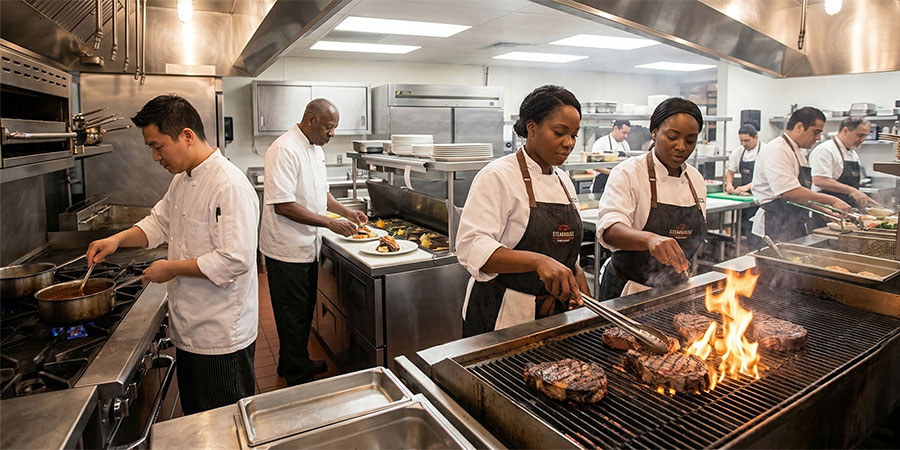
Table of Contents
Build A Steakhouse Line That Supports Strong Searing, Fast Ticket Flow, And The Side Dishes And Prep Work Guests Expect
Steakhouses are judged on more than the steak itself. Guests notice the sear, the consistency, the pace of service, the supporting sides, and whether the whole meal feels like it came out of a kitchen built for the job.
That is why steakhouse equipment decisions should not stop at "we need a grill." A steakhouse line is a system: broiling or charbroiling, holding, fry support, prep, refrigeration, and enough workspace to keep proteins, sides, and finishing steps moving without chaos.
The right equipment mix depends on menu style, but the underlying question stays the same: what lineup helps the kitchen execute steak well, repeatedly, and at volume?
Start With The Core Cooking Identity Of The Steakhouse
Before buying equipment, define how the steakhouse wants to cook.
Is the kitchen built around:
- High-heat charbroiling?
- Broiling thick cuts?
- A mixed line with ranges, broilers, and finishing ovens?
- A menu that balances steak with seafood, fried sides, and broader grill items?
That cooking identity determines almost everything else: utility load, hood demand, line spacing, prep needs, and side-equipment priorities.
| Steakhouse Style: | Core Need: | Equipment Emphasis: |
| Grill-Forward Casual Steakhouse | Fast sear, visible grill marks, speed | Charbroilers, fryers, prep support |
| Classic Steakhouse | Strong broiling, finishing control, thicker cuts | Broilers, ranges, hot holding, precise prep |
| Broad Upscale Grill Concept | Mixed proteins and sides, more menu range | Charbroilers, ranges, ovens, fry support |
| Hybrid Steak-and-Seafood Menu | Protein flexibility and plating support | Charbroilers, broilers, cold storage, prep surfaces |
The goal is not to own every hot-line option. It is to own the right combination for your actual menu.
Charbroilers And Broilers Usually Define The Line
For many steakhouses, the line starts with charbroiling or broiling.
Charbroilers
Charbroilers are usually the most direct fit when the menu depends on strong sear, grill marks, and a grilled flavor profile. They support steakhouse identity in an obvious way.
Broilers / Upright Broilers
Broilers make more sense when the menu or house style emphasizes top-down heat and thicker cuts with a different finishing profile.
The right question is not which tool is "better." It is which one fits the product and service style better.
| Equipment: | Best For: | Watch For: |
| Charbroiler | Grill marks, sear, grill flavor, high visual identity | Smoke, ventilation, grease management, cleaning |
| Upright / Steak Broiler | Thick cuts, broiling profile, finishing control | Space, workflow, operator familiarity |
| Range + Grill Configuration | Menu flexibility and mixed cooking methods | Can dilute the steakhouse focus if underpowered |
Useful resources include the Commercial Charbroiler Buying Guide, Commercial Charbroilers, Broilers & Upright Broilers, and Best Tips for Using a Charbroiler.
The Steakhouse Does Not Run On Steak Alone
Steakhouse equipment planning should include more than the steak station itself. Side dishes, prep work, and plate finishing are part of the guest experience, not secondary to it.
A steakhouse line often needs support for:
- Fries, onion rings, or other fried sides
- Baked potatoes or roasted potato programs
- Bread service and side prep
- Sauces, compound butters, and garnishes
- Salads and chilled station prep
That means the equipment plan should include the support systems around the steak, not just the steak station itself.
If a guest orders a great steak and the sides lag, the table still reads the meal as weak.
Ranges, Fryers, And Ovens Carry More Of The Menu Than Most Operators Expect
Steakhouses often lean hard on the visual drama of the grill, but ranges, fryers, and ovens quietly carry a huge part of the guest experience.
Ranges handle sauces, finishing, sauté work, and parts of the side program.
Fryers often support core side dishes and appetizers that strongly influence ticket times.
Ovens matter for baked potatoes, bread service, and menu items that do not belong on the grill.
That is why the supporting hot line should be built around the actual menu rather than assumed to be standard. Useful adjacent references include Commercial Range Buying Guide and Choosing the Right Range Top Configuration for Your Restaurant.
Prep Space And Refrigeration Often Decide Whether Service Feels Smooth
Steakhouse kitchens can look simple from the dining room and still become chaotic behind the line if prep and cold storage are undersized.
Think through:
- Protein storage and rotation
- Butchering or portioning workflow
- Space for seasoning, resting, and plating support
- Room for cold sides, garnishes, and service mise en place
This is also where the steakhouse avoids one of the most common layout mistakes: treating the grill as the center of the kitchen while underbuilding everything that feeds it.
Prep counters, refrigeration, and organization determine how quickly the grill team can work without constantly crossing paths or searching for ingredients.
Ventilation, Holding, And Finishing Support The Whole Steak Program
Steakhouses usually focus on the fire side of the line first, but the surrounding support matters just as much.
High-heat steak cooking creates smoke, grease, and intense recovery demands. That means ventilation performance, holding strategy, and finishing space directly affect consistency. If the kitchen cannot move product cleanly from sear to rest to plate, the hero equipment loses part of its value.
Because ventilation requirements are code-sensitive, confirm hood capacity, clearances, and cleaning requirements with the appropriate local authorities and qualified professionals for the installation.
Think through:
- Whether the hood and surrounding ventilation can keep up with peak grill output
- Where rested steaks and finished sides hold briefly before plate-up
- How the expo or finishing area handles sauces, butter, and garnish without slowing the line
- Whether the pass can support hot food flow without crowding the cooking station
This is one reason steakhouse equipment planning should be system planning. The grill may define the identity, but ventilation and finishing support protect the execution.
Smallwares And Service Tools Still Affect Steakhouse Execution
The bigger equipment gets the attention, but small support tools still shape the guest result.
Steakhouse service depends on repeatable prep and plate finishing, which means the kitchen also needs the right supporting tools for portioning, resting, slicing, and final assembly. If those tools are inconsistent or poorly organized, even a strong hot line can feel slower and less controlled than it should.
This matters most in operations that promise consistency. Guests expect the same doneness control, the same plate quality, and the same timing on every visit. A steakhouse cannot create that with centerpiece cooking equipment alone. It needs a full prep-to-pass system that supports the promise from the raw product stage through final plate presentation.
When operators think this way, equipment decisions become clearer. The question changes from "what grill do we need?" to "what full line helps us execute the steakhouse experience without friction?"
That broader view also helps avoid a common budget mistake: overspending on the headline equipment while underspending on the tools and support flow that make the station actually usable during peak periods. In practice, the guest experiences the whole system, not just the grill.
Cleaning And Maintenance Matter More In A Steakhouse Line
Steakhouse equipment gets dirty in specific ways: grease, smoke, carbon, and protein-heavy residue. That means cleanup systems matter.
Focus on:
- Grill and charbroiler cleaning routines
- Fryer oil management and filtering discipline
- Hood and ventilation cleanliness
- Stainless prep and service surface reset
If the line is hard to clean, it will be harder to keep consistent over time. Maintenance and cleaning are not side issues - they are part of how the steakhouse protects product quality and equipment life.
Related posts like Best Tips for Using a Charbroiler and Commercial Range Cleaning Guide support that operational side well.
Build For The Ticket Mix, Not Just The Signature Dish
Many steakhouses buy for the hero photo instead of the full order mix.
But the kitchen has to handle:
- Different steak cuts and temperatures
- Appetizers and fried starters
- Potatoes, vegetables, and sauces
- Surf-and-turf or seafood add-ons
- Peak ticket bursts that hit the whole line at once
That is why one piece of steak equipment never solves the whole problem. The best steakhouse kitchens are balanced kitchens.
If the menu includes broader grilled items, a charbroiler may be the center of the line. If the menu leans into more classic broiled steaks, your equipment balance may shift. Either way, the equipment should be built around the order mix that actually happens.
Choose Equipment That Fits The Brand Experience
Steakhouses are experience-driven. Guests often expect confidence, consistency, and a strong sense that the house knows how to cook steak properly.
That means equipment should support:
- Reliable doneness control
- Speed at peak demand
- Clean plate assembly and garnish handling
- A side program that keeps up with protein output
The right steakhouse equipment is not just functional. It supports the promise the concept makes to the guest.
That is why the best equipment plan usually feels intentional from start to finish. It reflects how the house wants to cook, how fast it needs to move, and what kind of plate experience it wants guests to remember every service consistently.
When that alignment is right, the kitchen feels more controlled at peak periods, the ticket mix is easier to manage, and the guest experience becomes more consistent from one shift to the next. That consistency is a major part of what separates a credible steakhouse from a restaurant that only serves steaks.
Frequently Asked Questions
What equipment is most important in a steakhouse kitchen?
The answer usually starts with the primary steak-cooking method - often charbroilers or broilers - but the supporting lineup matters almost as much. Ranges, fryers, ovens, prep surfaces, and refrigeration all affect whether the steakhouse can execute consistently.
Are charbroilers better than broilers for a steakhouse?
Not automatically. Charbroilers are often the better fit when grill marks and grilled flavor are central to the concept. Broilers make more sense for operations focused on a different heat profile and finishing style. The menu should decide.
Does a steakhouse need a fryer?
Many do, because popular sides and appetizers often depend on one. If fries, onion rings, or fried starters are part of the guest expectation, fryer support becomes important to ticket flow.
Why does prep and storage matter so much in a steakhouse?
Because steaks do not arrive at the grill ready for perfect service by themselves. Portioning, seasoning, cold storage, plating support, and side prep all need room and structure.
What is the biggest equipment mistake in a steakhouse?
Overbuilding the centerpiece cooking equipment and underbuilding the support around it. A grill-focused concept still needs enough prep, refrigeration, and side-cooking support to keep the whole ticket moving.
Should steakhouse equipment decisions be based only on the signature steak item?
No. The better question is what the whole ticket mix demands. Steakhouses succeed when the entire plate and the timing of service feel strong, not just the main protein.
Related Resources
- Commercial Charbroiler Buying Guide - Compare charbroiler types and core buying factors
- Commercial Charbroilers - Browse one of the most common steakhouse line anchors
- Broilers & Upright Broilers - Useful for classic steakhouse cooking styles
- Commercial Range Buying Guide - Build the supporting hot line correctly
- Charbroiler Accessories and Parts - Support cleaning, upkeep, and wear-item replacement around the grill station
Share This!