Ghost Kitchen Food Trucks: What They Are and Why They Matter
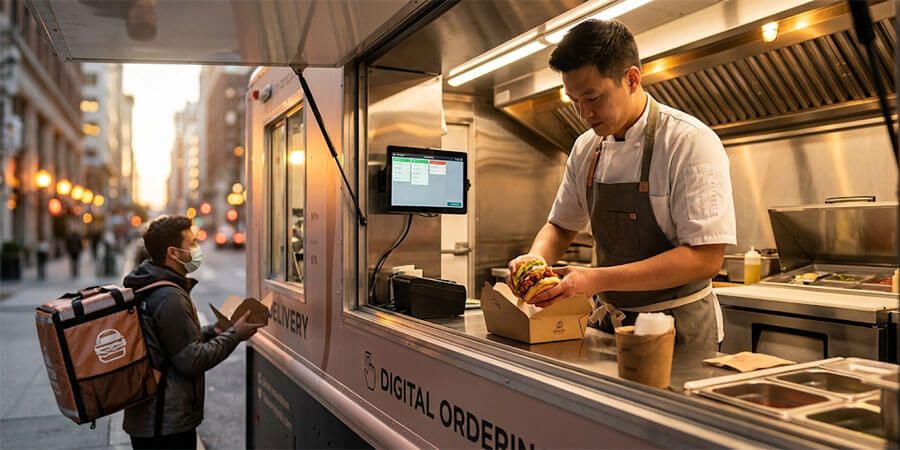
Table of Contents
Understand where ghost kitchens and food trucks overlap, where they stay different, and when a mobile hybrid model actually makes sense
The phrase ghost kitchen food truck sounds straightforward, but it is not a standardized industry term. That matters, because a lot of public content talks about it as if it were a formal category with one fixed meaning. In practice, people use the phrase to describe a few different models that combine delivery-first thinking with a mobile kitchen.
The most useful way to approach the topic is to separate the concepts first. A ghost kitchen is a delivery-first or pickup-first kitchen with no dine-in room. A food truck is a mobile kitchen that serves from a truck, trailer, or similar unit. A ghost-kitchen-style food truck is a hybrid: a mobile kitchen run with little or no dine-in emphasis, often supported by a commissary or shared prep base, and sometimes built around pre-orders, event service, pickup, or delivery rather than walk-up volume alone.
Start With The Definitions That Actually Matter
The overlap between these formats creates the confusion.
| Format: | Core Idea: | Customer Experience: | Best Known Strength: |
| Ghost kitchen | Delivery-first or pickup-first kitchen with no dining room | Customers usually order digitally | Lower front-of-house overhead |
| Food truck | Mobile kitchen that serves from a truck or trailer | Walk-up service, events, or mobile vending | Mobility and location flexibility |
| Ghost-kitchen-style food truck | Mobile kitchen run with delivery-first or hybrid logic | Often pre-orders, events, pickup, or limited walk-up | Mobility plus lower fixed overhead |
That third category is where the page lives. The phrase can describe a truck that serves almost entirely through pre-orders and delivery zones, a truck that uses a commissary as its prep base and serves from changing locations, or a truck that operates like a mobile extension of a delivery-focused brand.
What it should not imply is that every food truck is automatically a ghost kitchen, or that every ghost kitchen is mobile. Those are still different business models.
If you want the broader delivery-only explanation first, Pros and Cons of Ghost Kitchens is the best companion read.
Why The Topic Matters More In 2026 Than It Did Before
The interest behind this topic is real even if the terminology is messy. National Restaurant Association 2025 off-premises research makes the bigger backdrop clear: nearly 75% of restaurant traffic now happens off-premises, and younger consumers continue to be major drivers of takeout, delivery, and mobile ordering demand.
That does not automatically mean every operator should launch a ghost-kitchen-style truck. It does mean more operators are trying to find lower-overhead ways to reach off-premises demand without committing to a full traditional restaurant.
This is where the hybrid idea becomes relevant. Food trucks can operate with lower fixed overhead than many brick-and-mortar restaurants, and ghost kitchens can reduce dining-room costs. Put those instincts together and you get a model that appeals to operators who care about mobility, controlled overhead, and digital-first ordering.
What A Ghost Kitchen Food Truck Usually Looks Like In Practice
In practice, most versions of this model look like one of these setups:
| Operating Model: | How It Usually Works: | Good Fit: | Main Risk: |
| Mobile delivery-first truck | Truck produces food for pre-orders, delivery, or pickup windows | Dense local demand and strong digital ordering | Harder delivery handoff logistics |
| Commissary-supported truck | Prep, storage, and cleaning happen at a licensed base; service happens from the truck | Operators who need stable prep support | Local permit and commissary rules vary |
| Event-driven hybrid | Truck serves festivals, private events, and pre-booked service blocks with online ordering support | Catering and event-heavy concepts | Revenue may be uneven without good scheduling |
| Brand-extension truck | Existing restaurant or delivery brand uses a truck to enter new zones | Operators testing markets before a lease | Brand consistency and ops discipline matter |
The key point is that the truck is still a real operating kitchen with mobile constraints. The ghost-kitchen side of the model changes how orders are generated and fulfilled. It does not remove the practical realities of mobile foodservice.
The Biggest Advantage: Flexibility Without A Full Dining Room
The hybrid model matters because it can reduce fixed overhead while keeping more location flexibility than a traditional lease.
A delivery-first truck or mobile pickup concept can let an operator:
- test neighborhoods before committing to a permanent location
- keep the concept focused on food production instead of full dine-in service
- move between events, commercial zones, or seasonal opportunities
- build off-premises demand without taking on a full front-of-house setup
That flexibility is especially useful for operators who are still validating demand or who want to layer several revenue streams together instead of relying on one storefront.
For the wider business case behind mobile foodservice, it helps to compare this hybrid idea against the more traditional food-truck model too.
The Biggest Constraint: Mobility Does Not Remove Operational Complexity
This is where public discussions often get too optimistic.
A ghost-kitchen-style food truck may lower some costs, but it also adds operational complexity in areas like:
- route and location planning
- commissary or shared-kitchen coordination
- online ordering and pickup timing
- packaging that holds quality in transit
- local permit and health-department compliance
- power, ventilation, storage, and refrigeration limits inside the truck
In other words, the model removes the dining room. It does not remove the need for disciplined systems.
That is why the best version of this model is usually a narrow one. Tight menus, strong prep systems, and a very clear service pattern tend to work better than broad menus and vague operating plans.
Commissary And Base-Of-Operations Planning Still Matter
One of the easiest mistakes in this topic is assuming the truck itself replaces the need for a proper base of operations. In many jurisdictions, mobile food businesses still need an approved commissary, shared kitchen, or similar support arrangement for prep, cleaning, storage, servicing, or permit compliance. The details vary by jurisdiction, but the planning burden is real.
That means a ghost-kitchen-style truck should usually be viewed as part of a larger operating system, not as a totally self-contained business in every market.
This is one reason the model matters: it can combine a mobile customer-facing unit with a more stable prep and storage backbone. But it is also one reason the model gets misunderstood. Mobility and lower overhead do not equal zero infrastructure.
If you are planning the mobile side in detail, Food Truck Equipment Checklist is the best next step.
Technology Usually Decides Whether The Model Feels Smooth Or Chaotic
Ghost-kitchen logic depends heavily on order flow, timing, and communication. That means the technology side matters much more than many truck operators expect.
The strongest setups usually have:
- a clear digital ordering path
- realistic pickup and fulfillment windows
- a process for managing spikes rather than accepting every order blindly
- a menu engineered for travel and tight execution
- a system for updating locations, hours, and service zones clearly
This is why some operators treat the model less like a traditional roaming truck and more like a controlled mobile production point. The more delivery-first or pre-order-first the concept becomes, the more important order management and communication become.
For that side of the business, Restaurant Online Ordering Guide is the most useful support resource, especially when pickup windows and order timing are central to the model.
What Menus Work Best In This Hybrid Format
Not every menu belongs in a ghost-kitchen-style truck.
The best fit usually has these traits:
- compact menu
- fast assembly or finishing
- good travel performance
- limited equipment sprawl
- prep that can be organized cleanly between commissary and truck work
That is why the model tends to favor bowls, sandwiches, handhelds, wings, tacos, rice-based concepts, and other menus that travel better than delicate plated food. The question is not just whether the food can be made in a truck. It is whether it can be made consistently, held briefly if needed, packaged well, and delivered or picked up without falling apart.
The narrower the menu, the easier this gets.
When The Model Makes Sense - And When It Does Not
A ghost-kitchen-style food truck often makes sense when:
- you want lower fixed overhead than a traditional restaurant
- you want mobility or market-testing flexibility
- your menu travels well and stays tight
- your operation already understands off-premises workflows
- you have a realistic plan for commissary, storage, and permit compliance
It is usually a weaker fit when:
- the menu depends on broad production or complicated plating
- success depends on a strong dine-in experience
- your market requires a stable high-visibility location more than mobility
- you do not yet have the systems to manage digital ordering and mobile execution together
The hybrid concept is not automatically better than a standard ghost kitchen or a standard food truck. It is better only when the mobility and the delivery-first logic both solve real business problems at the same time.
Why The Topic Still Matters Even If The Name Stays Messy
The phrase itself may never become a clean official category, but the business question behind it is not going away.
Operators are still asking the same core thing: is there a lower-overhead way to reach off-premises demand without locking into a full dine-in footprint? For some concepts, the answer may be a ghost kitchen. For others, it may be a standard food truck. For some, especially event-driven or market-testing operations, the answer may be a hybrid mobile model that borrows from both.
That is why the topic matters. It reflects a real operating need, even if the naming is still loose.
Frequently Asked Questions
What is a ghost kitchen food truck?
The phrase usually refers to a mobile kitchen that borrows from ghost-kitchen logic - little or no dine-in focus, strong pickup or delivery emphasis, and a tighter digital-first operating model. It is not a standardized legal or industry category, so the exact meaning can vary by operator and market.
Is a ghost kitchen the same thing as a food truck?
No. A ghost kitchen is usually a delivery-first or pickup-first kitchen with no dining room. A food truck is a mobile kitchen. A ghost-kitchen-style truck is a hybrid idea that combines mobile service with delivery-first or pickup-first thinking.
Do ghost kitchen food trucks still need a commissary?
Often, yes, but the exact requirement depends on local rules. Many jurisdictions require or strongly expect a mobile food business to have an approved commissary, shared kitchen, or similar base of operations for prep, storage, servicing, or cleaning support. Always check local permitting requirements before assuming the truck can operate fully on its own.
What kind of menu works best for a ghost-kitchen-style food truck?
The best menus are tight, fast, and travel-friendly. Foods that hold quality during pickup or delivery and do not require broad equipment spread tend to work best. Broad menus and delicate plated dishes are much harder to execute well in this format.
Is a ghost-kitchen-style food truck cheaper than opening a restaurant?
It often has lower fixed overhead than a full dine-in restaurant, but that does not mean it is simple or cheap in every situation. Mobile equipment, permits, commissary support, packaging, technology, and logistics still require planning and capital. The savings are real only if the concept is matched to the format well.
When does this model make the most sense?
It tends to make the most sense for concepts that want mobility, lower fixed overhead, and a strong off-premises focus at the same time. It is often attractive for market testing, events, delivery-first concepts, and operators who want a more flexible growth path than a traditional lease.
Related Resources
- Pros and Cons of Ghost Kitchens - Broader delivery-only model context and tradeoffs.
- Food Trucks Matter - The bigger business case for mobile foodservice.
- Food Truck Equipment Checklist - Mobile kitchen equipment, layout, and compliance planning.
- Restaurant Online Ordering Guide - Useful if the truck relies on digital ordering and pickup.
- Restaurant Technology Guide - Order flow, systems, and integration planning.
Share This!