Restaurant Online Ordering Guide
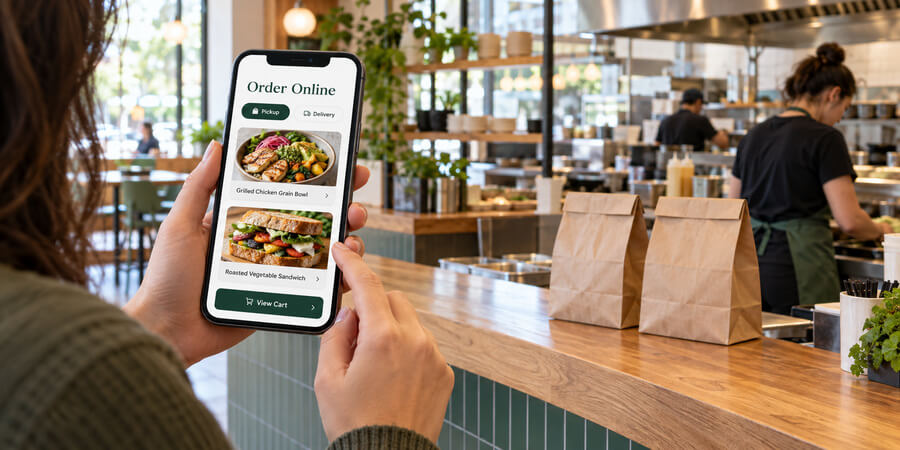
Table of Contents
How to build an online ordering system that increases revenue, retains customer data, and protects your margins
Off-premises dining now accounts for 75% of all restaurant traffic, and online ordering is no longer a convenience - it is an expectation. Customers who order through a restaurant's own channels place 35% more items per check, complete orders four times faster on mobile apps, and have 45% higher lifetime value than web-only customers. This guide covers how to set up online ordering, the critical differences between direct and third-party platforms, how to optimize your digital menu, packaging that protects food quality, and how to measure whether your online ordering program is driving profitable growth.
Online ordering has moved from a competitive advantage to a baseline expectation. The National Restaurant Association's 2025 Off-Premises Trends report found that 75% of all restaurant traffic now happens off-premises - through takeout, delivery, and drive-thru - and 67% of Gen Z and millennials say takeout is essential to their lifestyle. Nearly 60% of younger consumers use takeout or drive-thru at least weekly.
For restaurants that have not yet invested in a structured online ordering system, the cost of inaction is measurable. You are losing orders to competitors who make it easy to browse, customize, and pay from a phone. For restaurants already offering online ordering, the question shifts from "should I?" to "am I doing it profitably?" - because how you handle online orders matters as much as whether you offer them.
This guide addresses both situations: setting up online ordering correctly from the start, and optimizing an existing program to increase revenue, reduce costs, and build the customer relationships that drive long-term profitability.
Why Online Ordering Matters Now
The shift to off-premises dining accelerated during the pandemic, but the data shows it has become permanent. The National Restaurant Association found that 58% of limited-service operators and 41% of full-service operators say off-premises now accounts for a larger share of their sales compared to 2019. McKinsey's January 2026 consumer research confirms that food away from home now accounts for more than half of all U.S. food and beverage spending.
Speed is the new standard. The same NRA report found that 94% of consumers say speed is critical for off-premises orders. Research from Talker Research's 2024 survey of 2,000 U.S. adults found that customer frustration begins at the 29-minute mark for delivery orders. Online ordering systems that streamline the path from menu browsing to kitchen preparation directly address this expectation.
Customers want quality to travel. The NRA found that 90% of consumers say they would order a greater variety of items if food maintained on-premises quality during delivery, and more than half would pay more for premium packaging that supports quality during transport. This signals a significant revenue opportunity for restaurants that invest in proper takeout packaging.
Loyalty drives ordering channel choice. 65% of drive-thru users and over 60% of takeout and delivery users say loyalty program membership affects where they order. Online ordering systems that integrate loyalty programs capture this behavior and turn occasional customers into regulars.
| Metric: | Finding: | Source: |
| Restaurant traffic that is off-premises | 75% | National Restaurant Association 2025 |
| Gen Z and millennials who say takeout is essential | 67% | National Restaurant Association 2025 |
| Consumers who say speed is critical for off-premises | 94% | National Restaurant Association 2025 |
| Would order more variety if food quality held during delivery | 90% | National Restaurant Association 2025 |
| Adults who have used mobile ordering recently | 57% (74% of millennials) | National Restaurant Association 2025 |
| Catering orders growth year-over-year | 47% increase | Olo 2025 platform data |
| Limited-service operators now offering delivery | 65% | National Restaurant Association 2025 |
Direct Ordering vs. Third-Party Platforms
The most important strategic decision in online ordering is whether to build your own direct ordering system, use third-party delivery platforms, or combine both. Each approach has different implications for profitability, customer data, and long-term growth.
Third-party platforms provide reach but take margin. Delivery platforms typically charge restaurants 15-30% commission on each order. When you add payment processing, marketing fees, delivery contributions, and other costs, the true total cost can reach 35-48% of revenue on those orders. For a restaurant operating on 3-5% profit margins, a 30% commission means every third-party order is unprofitable before the food leaves the kitchen - the value comes only if that customer returns.
Direct ordering preserves your margin. When customers order through your own website or app, total costs are typically limited to payment processing fees of 2.9-5%. The difference is dramatic: a direct order that generates the same revenue as a third-party order can be 30-45 percentage points more profitable.
Direct orders generate larger checks. Paytronix's 2024 Online Ordering Report found that guests order 35% more items per check through first-party platforms compared to third-party marketplaces. The same research found that customers who order both in-store and online have 35% higher lifetime value than customers who only order in-store, and mobile app users specifically show 45% higher lifetime value than web-only users.
Third-party platforms obscure your brand. Research shows that a significant percentage of customers cannot recall the restaurant name after ordering through a delivery app - they remember the platform, not the restaurant. Direct ordering keeps your brand front and center throughout the experience, from menu browsing to order confirmation to follow-up marketing.
The hybrid approach works for many restaurants. Use third-party platforms as a discovery channel - a way for new customers to find you - while building incentives for direct ordering. Offer exclusive deals, faster pickup times, or loyalty rewards for customers who order directly. Owner.com's January 2025 survey found that 42% of guests use third-party apps mostly to reorder from restaurants they already know, which means many of these customers could be converted to direct ordering with the right incentive.
| Factor: | Direct Ordering: | Third-Party Platforms: |
| Commission cost | 2.9-5% (payment processing only) | 15-30% (can reach 35-48% total) |
| Customer data ownership | Full - email, phone, order history | Limited or none |
| Items per check | 35% more than third-party | Baseline |
| Customer lifetime value | 35% higher (omnichannel); 45% higher (mobile app vs web) | Lower - platform loyalty, not restaurant |
| Brand visibility | Full control | Platform-centric, low restaurant recall |
| Discovery and reach | Limited to your marketing | Access to platform's user base |
| Delivery logistics | You manage or hire drivers | Platform handles delivery |
Choosing the right balance:
- Use third-party platforms for discovery and reaching new customers in your area
- Build your own direct ordering for repeat customers and loyalty members
- Offer exclusive incentives (loyalty points, faster pickup, special menu items) for direct orders
- Track what percentage of your online revenue comes from each channel monthly
- Set a goal to shift an increasing share of orders from third-party to direct over time
- Never rely on a single platform for the majority of your online orders
Setting Up Your Online Ordering System
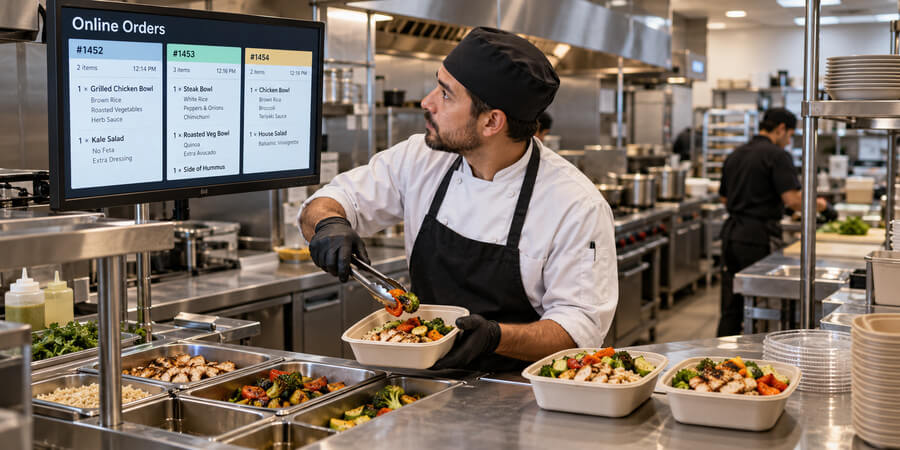
Whether you are launching online ordering for the first time or upgrading an existing system, the foundational decisions you make now will determine your profitability and customer experience for years. Focus on getting these elements right from the start.
Mobile-first is mandatory. The NRA found that 57% of adults have used mobile ordering recently, rising to 74% among millennials. Paytronix's 2025 report found that mobile app orders complete four times faster than web browser orders, and native mobile apps complete orders 5-10 times faster than white-labeled or embedded channels. If your online ordering does not work seamlessly on a phone, you are losing orders at the point of highest intent.
Integrate with your POS system. Online orders that flow directly into your kitchen display system or ticket printer eliminate manual re-entry, reduce errors, and save staff time. Restaurants using integrated POS systems report up to 30% less time spent on administrative tasks. Avoid the "tablet per platform" problem - juggling multiple tablets from different ordering services slows ticket times, drains labor, and creates confusion during rushes.
Design your digital menu for online behavior. Online menus are not digital copies of your paper menu. Customers browsing on a phone scan quickly, so organize items into clear categories with descriptive names. Include modification options (add-ons, substitutions, special instructions) that reduce errors and increase average check. High-quality food photos significantly impact ordering decisions - items with photos consistently outperform items without them in conversion rates.
Set realistic preparation and delivery times. Overpromising on speed leads to late orders, cold food, and negative reviews. Analyze your kitchen's actual throughput at different volumes and set preparation estimates that you can consistently meet. Build in buffer time for peak periods rather than using the same estimate all day.
Enable order throttling. During unexpected rushes, the ability to temporarily slow incoming online orders prevents your kitchen from being overwhelmed. Many ordering platforms allow you to increase estimated wait times or pause ordering during peak periods - use this feature rather than accepting more orders than you can execute well.
Online ordering setup checklist:
- Ensure your ordering flow is fully functional and fast on mobile devices
- Integrate online orders with your POS to eliminate manual re-entry
- Organize your digital menu into scannable categories with clear item descriptions
- Add modification options and special instructions to reduce order errors
- Include high-quality photos for your most popular and highest-margin items
- Set preparation time estimates based on actual kitchen throughput data
- Enable order throttling for peak periods to maintain quality
Optimizing Your Digital Menu
Your online menu is your most important sales tool for off-premises revenue. Unlike a dine-in menu where servers can upsell and answer questions, your digital menu must do all the selling on its own.
Lead with your best sellers and highest-margin items. Online customers make decisions quickly. Place your strongest items where they appear first in each category. Items that photograph well and travel well should be featured prominently - a beautiful dish that arrives soggy is worse than no photo at all.
Write descriptions that sell. In-person, customers can see and smell dishes at nearby tables. Online, your description is the only information they have. Include key ingredients, preparation method, and portion context. "Grilled chicken breast" tells customers nothing. "Wood-grilled free-range chicken breast with roasted garlic mashed potatoes and seasonal vegetables" creates appetite.
Build in upsell opportunities. Suggest add-ons, sides, and beverages at the item level and again at checkout. Online ordering platforms that recommend complementary items can increase average check size without requiring staff effort. A "complete your meal" prompt before checkout that suggests drinks, appetizers, or desserts captures revenue that would otherwise be left on the table.
Curate your menu for travel. Not every dine-in item belongs on your online menu. Remove items that do not travel well - dishes that lose quality during delivery damage your reputation and generate complaints. Instead, feature items that maintain their integrity in takeout containers and arrive looking and tasting close to what guests experience in your dining room.
Keep your menu current. Out-of-stock items, outdated seasonal specials, and incorrect prices create frustration and abandoned orders. Designate someone on your team to review your online menu weekly. Mark items as unavailable in real-time when ingredients run out rather than accepting orders you cannot fulfill.
Digital menu optimization tips:
- Feature best-selling, high-margin items at the top of each category
- Write descriptions that include key ingredients, preparation method, and portion context
- Add suggested add-ons at item level and a "complete your meal" prompt at checkout
- Remove items that do not travel well - protect your reputation
- Update availability in real-time when items sell out
- Review your entire online menu weekly for accuracy and seasonal relevance
Packaging That Protects Your Food and Brand
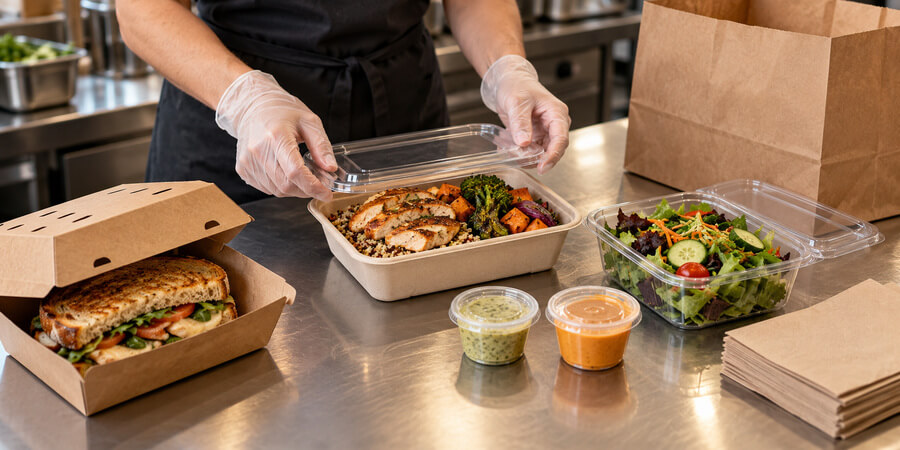
The quality of your food when it arrives at a customer's door is the single most important factor in whether they order again. The NRA found that 90% of consumers would order a greater variety of items if quality held during delivery - meaning packaging is not just operational, it is a revenue lever.
Match containers to food types. Different foods have different packaging needs. Hot items need vented containers that prevent sogginess from steam. Cold items need insulation. Liquids need leak-proof seals. Crispy items need ventilation, not sealed containers that trap moisture. Investing in the right food containers and packaging for each menu category pays for itself in reduced complaints and higher reorder rates.
Separate components when possible. Dressings, sauces, and toppings that make a dish great in the dining room can make it soggy during transit. Package them separately with clear labels so customers can assemble the dish as intended. This small step dramatically improves the delivered experience for salads, sandwiches, tacos, and any dish with contrasting textures.
Brand your packaging. Every takeout order is a mobile advertisement. Bags, containers, and napkins with your restaurant's name, logo, and ordering information remind customers where their food came from and how to reorder. Include a small insert with your direct ordering link, loyalty program information, or a promotion for their next order.
Test your own delivery experience. Order from your own restaurant through every channel you offer. Time how long it takes. Open the packaging exactly as a customer would. Eat the food. Note what held up, what did not, and what could be improved. Do this quarterly at minimum, and more often after menu changes.
Packaging best practices:
- Use vented containers for hot items to prevent steam-related sogginess
- Package sauces, dressings, and toppings separately with clear labels
- Invest in leak-proof containers for soups, beverages, and saucy dishes
- Brand bags and containers with your name, logo, and reorder information
- Include an insert promoting direct ordering or your loyalty program
- Test your own delivery experience quarterly by ordering through every channel
Building Online Ordering Into Your Marketing
Online ordering is not just an operations function - it is a marketing channel. Every order is an opportunity to capture customer data, encourage repeat visits, and build loyalty.
Capture customer data with every order. Direct ordering gives you email addresses, phone numbers, order history, and preferences. Use this data to send targeted email marketing campaigns - reorder reminders, new menu announcements, and personalized offers based on past purchases. This is the single biggest advantage direct ordering has over third-party platforms, where the platform owns the customer relationship.
Integrate your loyalty program. Olo's 2025 platform data shows that 50% of guests were repeat customers, averaging 4 orders per year. Paytronix found that loyalty members visit 40% more frequently than non-members, and that 38% of quick-service loyalty members place orders online. Make loyalty enrollment part of the ordering flow - not an afterthought.
Promote your direct ordering channels. Use your social media presence, email list, in-store signage, and receipt messaging to push customers toward ordering directly. Offer a first-order incentive for signing up. Nearly 90% of consumers said they would use limited-time app-only offers according to the NRA's 2025 report - exclusive deals for direct ordering are a proven conversion tool.
Use online ordering data to improve operations. Track peak ordering times, most-ordered items, average check sizes, and preparation time accuracy. This data reveals where your menu, staffing, and kitchen flow need adjustment. Restaurants that treat ordering data as a management tool rather than just a transaction record make better operational decisions.
Measuring Online Ordering Performance
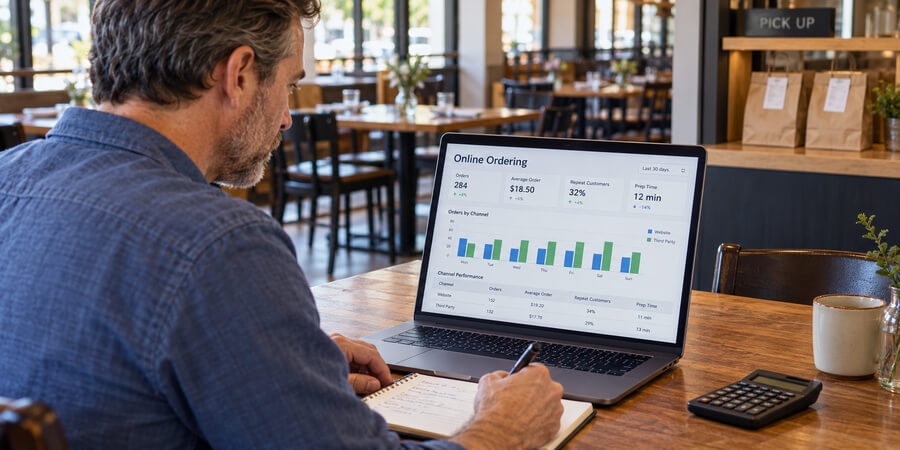
Track these metrics to understand whether your online ordering program is generating profitable growth or just adding volume at the expense of margin.
Online order share measures what percentage of your total revenue comes from online channels. Track this by channel - direct website, direct app, and each third-party platform separately. A growing share of direct orders relative to third-party orders indicates improving profitability.
Average order value by channel reveals whether certain channels generate larger or smaller checks. Paytronix data shows that first-party orders include 35% more items per check than third-party. If your third-party average is significantly lower, you may be subsidizing low-value orders with high commissions.
Customer acquisition cost by channel divides marketing and commission costs by the number of new customers acquired through each channel. Third-party platforms may deliver more new customers, but at a much higher cost per acquisition. Direct channels cost less per customer but require your own marketing effort.
Repeat order rate tracks how many online customers order again within 30, 60, and 90 days. This is the most important measure of whether your online experience creates loyalty. Olo's 2025 data found that half of all guests were repeat customers - benchmark your own rate against this.
Preparation time accuracy compares your estimated preparation time to actual completion. Consistently exceeding estimates builds trust. Consistently missing them generates complaints and negative reviews. Track this daily and adjust estimates seasonally.
Revenue per channel after costs calculates net revenue after deducting commissions, fees, packaging costs, and delivery expenses for each channel. This is the true measure of profitability - not gross order value.
| Metric: | What It Tells You: | How to Track: |
| Online order share by channel | Whether direct orders are growing vs. third-party | POS reporting, channel-specific dashboards |
| Average order value by channel | Which channels generate larger checks | Compare average tickets across platforms |
| Customer acquisition cost | True cost of gaining each new online customer | Marketing and commission costs divided by new customers |
| Repeat order rate (30/60/90 day) | Whether online experience creates loyalty | Customer database analysis, loyalty platform data |
| Preparation time accuracy | Whether you are meeting speed expectations | Compare estimated vs. actual prep times daily |
| Revenue per channel after costs | True profitability by channel | Gross revenue minus commissions, fees, packaging, delivery |
Frequently Asked Questions
Do I need both direct ordering and third-party platforms?
Most restaurants benefit from both. Third-party platforms provide discovery - they put your restaurant in front of new customers browsing for options. Direct ordering provides profitability - orders through your own channels cost 2.9-5% in processing fees versus 15-30% in third-party commissions. The strategy is to use platforms for acquisition and direct ordering for retention.
How do I convince customers to order directly instead of through delivery apps?
Offer exclusive incentives: loyalty program points, faster pickup times, menu items only available through direct ordering, or a first-order discount. Owner.com's 2025 survey found that 50% of guests would order directly if they could save their payment information and past orders - make the direct experience genuinely more convenient.
What percentage of my menu should be available for online ordering?
Not everything on your dine-in menu belongs online. Remove items that do not travel well, require tableside preparation, or lose quality in containers. Focus on items that photograph well, maintain quality during transit, and represent your restaurant's best work. Most restaurants find that 70-85% of their dine-in menu translates well to online.
How do I handle order accuracy for online orders?
Online orders are inherently more accurate than phone orders because customers enter their own specifications. Integrate online orders directly with your POS or kitchen display system to eliminate manual transcription errors. Include a clear order confirmation step before submission, and train kitchen staff to flag unclear modifications rather than guessing.
Should I offer my own delivery or rely on third-party drivers?
If you have the volume and proximity to justify it, your own delivery preserves the full customer experience and avoids commission fees. If volume is inconsistent or your delivery radius is large, third-party logistics make more sense. Some restaurants use a hybrid approach - their own drivers during peak periods and third-party for off-peak or distant deliveries.
How do I set the right preparation time estimates?
Measure your actual kitchen throughput at different volume levels. Set estimates that you can consistently beat, not the fastest possible time. Overestimating slightly and delivering early builds customer trust. Underestimating and delivering late generates complaints. Adjust estimates during peak hours and for complex orders.
What packaging mistakes should I avoid?
The three most common packaging failures are: sealing hot items in airtight containers (creates steam and sogginess), not separating wet components from dry ones (ruins texture), and using containers too large for the portion (food slides around and looks unappetizing). Match container type and size to each menu item specifically.
How important are food photos for online ordering?
Very important. Items with high-quality photos consistently outperform items without them in conversion rates. Customers cannot see, smell, or ask about your food online - the photo is your primary sales tool. Invest in professional food photography for your top sellers and highest-margin items at minimum.
How do I prevent my kitchen from being overwhelmed by online orders?
Enable order throttling - the ability to increase estimated wait times or temporarily pause online ordering during unexpected rushes. Most ordering platforms offer this feature. Also, staff specifically for online order volume during peak periods rather than treating online orders as an add-on to dine-in operations.
Is online ordering worth it for fine dining or limited-menu concepts?
The NRA found that even 41% of full-service operators say off-premises is a larger share of sales now than in 2019. Fine dining may not suit traditional delivery, but curated takeout menus, family meal packages, and catering orders work well. Limited-menu concepts benefit significantly because a focused menu translates easily to online and maintains quality during transport.
Related Resources
- Restaurant Marketing Guide - Foundational marketing strategies for restaurant owners
- Restaurant Email Marketing Guide - Build email campaigns to re-engage online ordering customers
- Restaurant Coupons and Promotions Guide - Drive online orders with targeted promotions
- Restaurant Social Media Guide - Promote your direct ordering channels to your audience
- Restaurant Menu Design Guide - Design menus that work for both dine-in and online ordering
Share This!