Breaking Bad Eating Habits
Table of Contents
Ten common eating habits that sabotage your health - and the science-backed strategies to replace them for good
Every year, millions of people resolve to eat better. Most fail within weeks - not because they lack willpower, but because they're fighting habits that have been reinforced by thousands of repetitions. Grabbing chips straight from the bag while watching a show, skipping breakfast to "save calories," eating lunch at your desk without tasting a single bite - these patterns feel automatic because they are.
The good news is that habits are not permanent. Neuroscience research shows that the same brain mechanisms that locked these patterns into place can be used to overwrite them with healthier ones. It takes longer than the popular "21 days" myth suggests, but it is absolutely doable with the right approach.
The infographic below summarizes each habit and its fix at a glance. Keep reading for a deeper look at each one and practical strategies to make lasting changes.
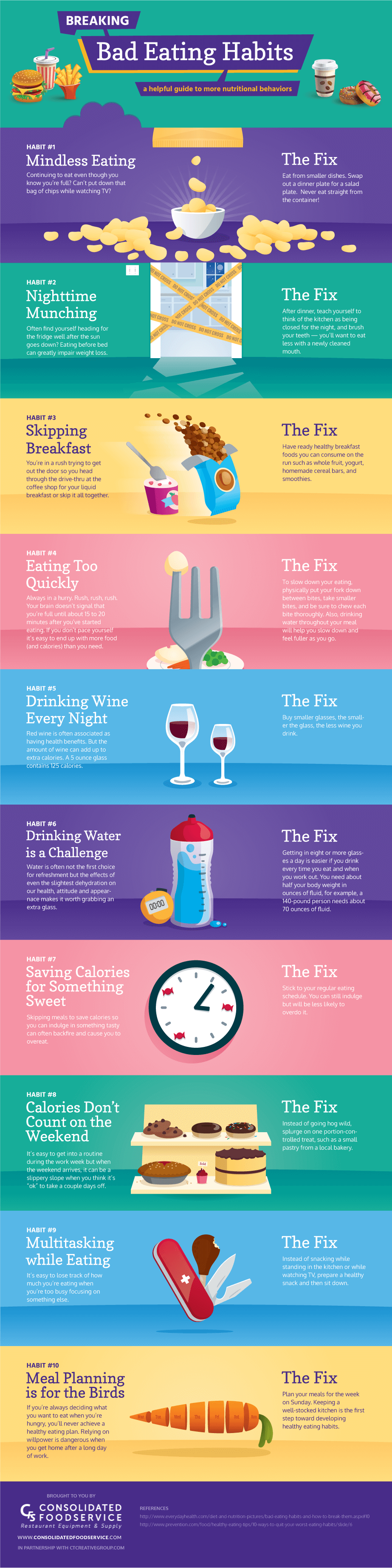
This guide breaks down ten of the most common bad eating habits, explains why each one is harmful according to current nutrition and behavioral science, and gives you concrete fixes you can start using today.
Why Bad Eating Habits Are So Hard To Break
Before diving into the specific habits, it helps to understand why they resist change in the first place. Every habit follows the same neurological loop, first described by researchers at MIT and popularized by behavioral scientists:
- Cue - a trigger that initiates the behavior (time of day, emotional state, environment)
- Routine - the behavior itself (reaching for a snack, skipping a meal, eating too fast)
- Reward - the payoff your brain receives (sugar rush, comfort, convenience)
The more times you complete this loop, the deeper the neural pathway becomes. Eventually the routine fires almost automatically when the cue appears - no conscious decision required.
The 21-Day Myth
You have probably heard that it takes 21 days to form a new habit. That number comes from a 1960 observation by plastic surgeon Maxwell Maltz about how long patients took to adjust to physical changes - it was never a rigorous study on behavior change. A 2009 study published in the European Journal of Social Psychology by researchers at University College London found that, on average, it takes 66 days for a new behavior to become automatic. The range was wide - from 18 to 254 days depending on the person and the complexity of the habit. Simple changes like drinking a glass of water with breakfast became automatic faster, while complex ones like daily exercise took much longer.
The takeaway: give yourself at least two months, expect setbacks, and focus on consistency over perfection.
Habits That Affect How Much You Eat
These habits cause you to consume more food than your body needs - often without you realizing it.
Mindless Eating
Why it's harmful: When you eat directly from a large container - a family-size bag of chips, a pint of ice cream, a box of crackers - you lose track of how much you have consumed. Research from Cornell University's Food and Brand Lab found that people eat up to 45 percent more when they eat from larger containers compared to pre-portioned servings. Your brain relies on visual cues like an empty plate or bowl to signal "done," and a large container removes that signal entirely.
How to fix it:
- Transfer snacks to a small bowl or plate before eating - never eat directly from the package
- Use smaller dishes for meals. A standard dinner plate has grown from nine inches to twelve inches over the past few decades, and portions have grown with it
- Put away leftovers before sitting down to eat so seconds require a deliberate decision
- Keep serving dishes off the table during meals - plating in the kitchen reduces consumption by roughly 20 percent according to Cornell research
The right dinnerware makes a measurable difference. Smaller plates and bowls create natural portion boundaries without requiring you to count calories or weigh food.
Eating Too Quickly
Why it's harmful: Your gut needs roughly 20 minutes to send satiety signals to your brain. When you eat a full meal in seven or eight minutes, you overshoot your actual hunger by a wide margin before your brain catches up. A 2018 study published in BMJ Open tracked nearly 60,000 adults over six years and found that fast eaters were significantly more likely to develop obesity and metabolic syndrome than those who ate at a normal or slow pace.
How to fix it:
- Put your fork down between bites - this one simple action can cut meal duration by 30 percent
- Chew each bite thoroughly, aiming for 15 to 20 chews per mouthful
- Drink water throughout the meal, which naturally creates pauses
- Set a minimum meal time of 20 minutes and pace yourself to meet it
- Eat with others when possible - conversation creates natural pauses between bites
Calories Don't Count On The Weekend
Why it's harmful: Five days of careful eating can be completely undone by two days of unrestrained consumption. Research published in the journal Obesity found that adults tend to consume an average of 115 additional calories per day on weekends compared to weekdays. That may not sound like much, but over a year it adds up to roughly 12,000 extra calories - enough to gain about three to four pounds annually from weekend overeating alone.
How to fix it:
- Allow yourself one portion-controlled treat instead of two full days of "anything goes"
- Maintain regular meal timing on weekends - skipping breakfast to sleep in often leads to overeating later
- Plan weekend meals with the same intention you give weekdays
- If you eat out, choose your meal in advance by reviewing the menu online so you make a deliberate choice rather than an impulse one
Habits That Affect When You Eat
Meal timing and consistency matter more than most people realize. These habits disrupt your body's natural hunger and energy rhythms.
Skipping Breakfast
Why it's harmful: The debate around breakfast has gone back and forth in recent years, but the evidence is clear on one point: people who skip breakfast tend to compensate with larger meals and more snacking later in the day. A 2019 meta-analysis published in the Journal of Cardiovascular Development and Disease linked habitual breakfast skipping to a 21 percent increased risk of cardiovascular disease. Beyond long-term risk, skipping breakfast impairs concentration and decision-making in the morning hours - making you more likely to grab whatever is convenient when hunger finally hits.
How to fix it:
- Keep grab-and-go options ready: fruit, yogurt, cereal bars, or pre-made smoothies
- Prep overnight oats or hard-boiled eggs in batches so breakfast requires zero morning effort
- If you genuinely aren't hungry first thing, eat a small something within two hours of waking
- Pair protein with fiber to sustain energy - yogurt with berries, eggs with whole-grain toast, or nut butter on a banana
Nighttime Munching
Why it's harmful: Eating late at night is associated with higher total calorie intake, poorer food choices, and disrupted sleep quality. A 2022 study in Cell Metabolism found that late eating increased hunger, decreased calories burned, and promoted fat storage compared to eating the same food earlier in the day. Late-night snacking also tends to involve highly palatable, calorie-dense foods - you rarely reach for a salad at 11 p.m.
How to fix it:
- Establish a kitchen "closing time" after dinner and stick to it
- Brush your teeth after your last meal - it signals your brain that eating is done for the day
- If genuine hunger strikes, choose a small, protein-rich snack like a handful of nuts rather than chips or sweets
- Address the real trigger - late-night eating is often driven by boredom or stress rather than actual hunger
Saving Calories For Something Sweet
Why it's harmful: Skipping meals or eating very little throughout the day to "bank" calories for dessert or a large dinner backfires physiologically. When your blood sugar drops from undereating, your body releases hormones that trigger intense cravings for high-calorie foods. By the time you allow yourself to eat, you're likely to consume far more than the calories you "saved" - and your choices will skew toward sugar and refined carbs because that's what your depleted body craves fastest.
How to fix it:
- Stick to a regular eating schedule with meals and snacks spaced three to four hours apart
- Include a small treat within your normal eating pattern rather than depriving yourself all day
- Focus on balanced meals with protein, healthy fat, and fiber that keep blood sugar stable
- Reframe the goal: eating well consistently is more effective than restriction followed by overindulgence
Habits That Affect What And How You Eat
These habits influence your food environment, hydration, and the quality of attention you bring to meals.
Drinking Water Is A Challenge
Why it's harmful: Even mild dehydration - as little as one to two percent of body weight - impairs cognitive function, mood, and physical performance according to research published in the Journal of the American College of Nutrition. Many people also confuse thirst for hunger, leading to unnecessary snacking when a glass of water would have satisfied the need. Chronic low water intake is linked to higher rates of kidney stones, urinary tract infections, and constipation.
How to fix it:
- Drink a full glass of water every time you eat a meal or snack - pair the two behaviors
- Drink water before, during, and after exercise
- A general guideline is to aim for roughly half your body weight in ounces daily (a 160-pound person would target about 80 ounces)
- Keep a water bottle visible at your workspace and refill it at set times
- If plain water bores you, add sliced fruit, cucumber, or a splash of citrus
Proper hydration is one of the simplest health improvements you can make, and the right glassware on your table serves as a visual reminder to keep drinking throughout meals.
Drinking Wine Every Night
Why it's harmful: A nightly glass of wine can easily escalate from a ritual to a dependency. Beyond the caloric impact - a standard five-ounce glass of wine contains 120 to 130 calories - regular alcohol consumption disrupts sleep quality, impairs recovery, and taxes the liver. The World Health Organization revised its position in 2023, stating that no level of alcohol consumption is safe for health. Even moderate daily drinking is associated with increased risk of several cancers according to research published by the American Institute for Cancer Research.
How to fix it:
- Use smaller glasses - people pour 12 percent less into narrow glasses versus wide ones, according to Cornell research
- Designate three or more alcohol-free days per week
- Replace the ritual, not just the drink - if wine signals "relaxation time," swap it for herbal tea, sparkling water with citrus, or another calming routine
- Track your consumption honestly for a week - many people underestimate how much they drink
Multitasking While Eating
Why it's harmful: Eating while scrolling your phone, working at your desk, or watching television divides your attention and reduces the brain's ability to register satiety. A review published in the American Journal of Clinical Nutrition found that distracted eating leads to a moderate increase in immediate intake and a much larger increase in later eating - because your brain failed to properly encode the memory of the meal. If you can't remember eating lunch, your brain is more likely to signal hunger again soon after.
How to fix it:
- Sit down at a table for meals whenever possible - eating standing up or on the go promotes mindless consumption
- Put your phone face-down or in another room during meals
- Focus on the sensory experience: taste, texture, temperature, and aroma
- If you must eat at your desk, close your laptop and take a genuine break - even ten minutes of focused eating is better than thirty minutes of distracted grazing
- Prepare a healthy snack in advance so you have something intentional to eat rather than grabbing whatever is nearby
Meal Planning Is For The Birds
Why it's harmful: Without a meal plan, every eating decision becomes an in-the-moment choice - and in-the-moment choices under time pressure or hunger default to convenience over nutrition. A 2017 study in the International Journal of Behavioral Nutrition and Physical Activity found that people who planned meals consumed a significantly more varied and healthier diet and were less likely to be overweight. Unplanned eating also leads to more food waste, more impulse purchases, and higher grocery spending.
How to fix it:
- Dedicate 20 to 30 minutes on Sunday to plan meals for the week ahead
- Keep a running list of seven to ten meals your household enjoys and rotate through them
- Prep ingredients in batches - wash and chop vegetables, cook grains, marinate proteins
- Use food storage containers for portioned meal prep so grab-and-go meals are as convenient as takeout
- Start small: plan just dinners for the first few weeks, then expand to lunches and breakfasts
All Ten Habits At A Glance
| # | Bad Habit: | Why It Hurts: | Quick Fix: |
| 1 | Mindless eating | Removes visual portion cues, leads to overconsumption | Eat from small plates and bowls, never from the container |
| 2 | Eating too quickly | Outruns satiety signals, promotes overeating | Put fork down between bites, set a 20-minute minimum |
| 3 | Weekend calorie free-for-all | Undoes five days of healthy eating | One controlled treat instead of two days of excess |
| 4 | Skipping breakfast | Triggers later overeating and impairs focus | Keep grab-and-go options ready (fruit, yogurt, smoothies) |
| 5 | Nighttime munching | Higher calorie intake, poorer food choices, disrupted sleep | Close the kitchen after dinner, brush teeth early |
| 6 | Saving calories for sweets | Blood sugar crashes trigger intense cravings | Maintain regular meal schedule, include small treats daily |
| 7 | Not drinking enough water | Impairs cognition, causes false hunger signals | Drink with every meal, target half your body weight in ounces |
| 8 | Nightly wine habit | Extra calories, disrupted sleep, long-term health risks | Use smaller glasses, designate alcohol-free days |
| 9 | Multitasking while eating | Reduces satiety awareness, increases later eating | Sit at a table, put devices away during meals |
| 10 | No meal planning | Defaults to convenience food, increases waste and cost | Plan meals on Sunday, prep ingredients in batches |
Common Triggers And Healthier Alternatives
| Trigger: | Unhealthy Default: | Healthier Alternative: |
| Boredom at night | Chips, cookies, ice cream from the container | Herbal tea, a small handful of nuts, or a brief walk |
| Stress at work | Vending machine snacks, fast food drive-through | Pre-packed snack with protein (yogurt, trail mix, cheese) |
| Running late in the morning | Skipping breakfast entirely | Overnight oats prepped the night before, a banana with nut butter |
| Social pressure at dinner | Oversized portions, extra drinks | Choose your order in advance, alternate alcoholic drinks with water |
| Afternoon energy crash | Sugary coffee drink, candy bar | Apple with peanut butter, a short walk outside, plain coffee |
| Weekend celebrations | All-day grazing, multiple desserts | One intentional treat, maintain normal meal times |
| Eating at your desk | Mindless snacking through the afternoon | Set a lunch break, eat away from screens for at least 10 minutes |
| Post-workout hunger | Fast food or oversized "reward" meal | Pre-made smoothie or balanced meal prepped in advance |
Making Changes That Actually Stick
Understanding the habit loop is only the first step. Here are evidence-based strategies for making new eating habits permanent.
Start with one habit, not ten. Trying to overhaul your entire diet at once is a recipe for burnout. Pick the single habit from this list that costs you the most - whether that's nighttime snacking, skipping breakfast, or eating too fast - and focus on that one for at least a month before adding another.
Design your environment. Stanford behavior scientist BJ Fogg's research shows that environment design is more reliable than motivation. Make healthy choices easy and unhealthy ones harder. Put fruit on the counter and cookies in a high cabinet. Keep a water bottle on your desk. Use smaller plates. These changes require no willpower because they happen before the decision point.
Track your progress. A simple habit tracker - whether an app or a checkmark on a calendar - provides accountability and makes your streak visible. Research on self-monitoring consistently shows that people who track their behavior are more successful at changing it.
Expect imperfection. The University College London study that established the 66-day average also found that missing a single day did not significantly derail habit formation. What matters is getting back on track the next day, not maintaining a flawless streak. Perfectionism is the enemy of consistency.
Replace, don't just remove. Habits leave a void when you eliminate them. If your evening routine was dinner followed by wine and television snacking, removing both without a replacement creates uncomfortable empty space. Fill it with something that provides a similar reward - herbal tea, a short walk, a chapter of a book - and the transition is far smoother.
Understanding food safety fundamentals also supports healthier eating routines. If you handle and store food properly, your prepped meals stay safe and appetizing throughout the week. Our guide on food safety tips for commercial kitchens covers core principles that apply to home kitchens as well.
Frequently Asked Questions
How long does it really take to break a bad eating habit?
The widely cited "21 days" figure is a myth. A 2009 study from University College London published in the European Journal of Social Psychology found that new habits take an average of 66 days to become automatic, with a range of 18 to 254 days depending on the person and the behavior. Simple swaps like drinking water with meals may click in a few weeks, while complex changes like consistent meal planning can take several months. Focus on repetition and consistency rather than counting days.
Is it better to change one eating habit at a time or several at once?
Research on behavior change consistently favors a single-habit approach. Trying to fix multiple habits simultaneously divides your limited self-regulation resources and increases the likelihood of relapsing on all of them. Pick the one habit that has the biggest impact on your health or daily routine, work on it for four to eight weeks until it feels automatic, then move to the next one.
Does skipping breakfast actually cause weight gain?
The relationship between breakfast and weight is nuanced. Skipping breakfast does not directly cause weight gain, but it is associated with compensatory overeating later in the day - particularly choosing calorie-dense convenience foods when hunger becomes intense. Observational studies, including a large meta-analysis published in 2019, link habitual breakfast skipping to increased cardiovascular risk. If you are not hungry in the morning, eating a small amount within two hours of waking is a reasonable middle ground.
Why do I crave junk food late at night?
Late-night cravings are driven by a combination of factors. Willpower is a finite resource that depletes throughout the day, making it harder to resist tempting foods by evening. Boredom and stress - common in the evening hours - trigger emotional eating patterns. Additionally, if you undereat during the day, your body compensates by driving cravings for high-calorie foods at night. Eating balanced meals at regular intervals throughout the day is the most effective way to reduce nighttime cravings.
Can I drink other beverages instead of water to stay hydrated?
Most beverages contribute to hydration, but some come with significant downsides. Sugary drinks add empty calories. Diet sodas may maintain cravings for sweet flavors. Caffeinated drinks have a mild diuretic effect, though moderate coffee and tea consumption still results in net hydration. Water remains the best default because it hydrates without any unwanted extras. If plain water is unappealing, adding fruit slices, cucumber, or a splash of citrus can make it more enjoyable without adding meaningful calories.
Is meal prepping actually worth the time investment?
Yes. Research published in the International Journal of Behavioral Nutrition and Physical Activity found that meal planning is associated with a healthier, more varied diet and lower rates of obesity. The upfront time investment - typically 30 to 90 minutes once a week - pays back in reduced daily decision fatigue, less food waste, fewer impulse purchases, and more nutritious meals. Start with prepping just two or three components (a grain, a protein, and chopped vegetables) and build from there.
What if I fall off track after making progress?
Occasional lapses are normal and expected. The University College London habit study found that missing a single day did not meaningfully affect long-term habit formation. The danger is not a single lapse - it is the all-or-nothing mindset that turns one bad day into a complete abandonment of the new behavior. If you slip, acknowledge it without judgment, identify what triggered the lapse, and resume the new behavior at your very next meal. Consistency over time matters far more than perfection on any given day.
Related Resources
- 5 Ways Your Restaurant Can Reduce Food Waste - Operational strategies for cutting waste in commercial kitchens that apply to home cooking too
- Effective Ways to Prevent Food Poisoning - Food safety fundamentals for safe meal prep and storage
- 10 Food Safety Tips for Commercial Kitchens - Core hygiene and handling practices that keep prepped meals safe
- Food and Beverage - Browse food and beverage options for healthier eating
- Dinnerware - Portion-friendly plates and bowls in various sizes
Share This!