Outdoor Catering Equipment Guide
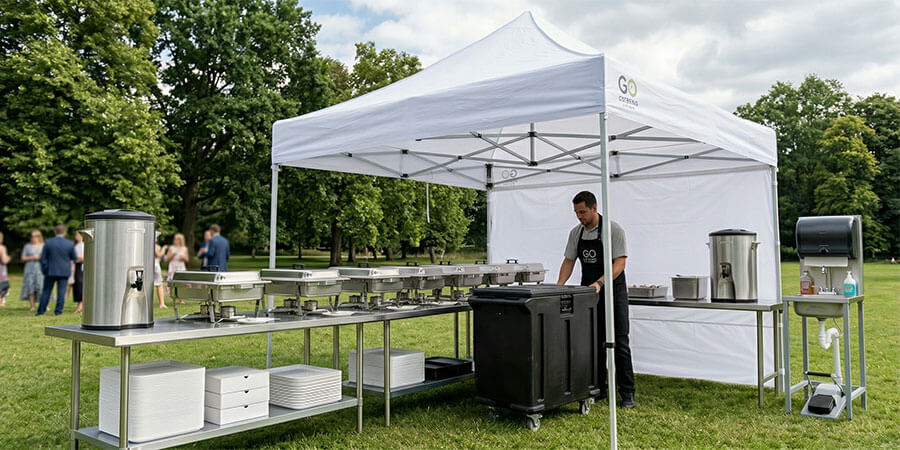
Table of Contents
Build a better outdoor catering setup by planning transport, holding, service, sanitation, and weather exposure as one connected system
Outdoor catering becomes difficult when operators think only about the cooking equipment. The actual challenge is broader: the food has to travel, stay at the right temperature, be served efficiently, and hold up through weather, distance, power limitations, and the physical demands of working in a temporary environment.
That is why the best outdoor catering equipment list is not just a shopping list. It is a system plan. If transport, holding, service, and cleanup are not all considered together, even good food can arrive looking disorganized or unsafe.
Start With The Type Of Outdoor Event You Are Actually Serving
Not every outdoor catering job asks the same thing from the equipment.
| Event Type: | What The Equipment Has To Solve: |
| Wedding or formal event | Presentation, holding, table flow, and service polish |
| Festival or casual public event | Speed, queue handling, and durable service setup |
| Corporate outdoor event | Reliability, timing, and flexible beverage support |
| Picnic or park catering | Portability, cold holding, and lightweight staging |
This is the first decision that matters. A plated outdoor wedding and a festival serving line may both happen outside, but they do not need the same equipment priorities.
Temperature Control Usually Decides Whether The Event Feels Professional
Outdoor catering equipment should first be judged by what it does for temperature control. FDA Food Code principles matter here because the event is still foodservice even if the walls are gone.
That means the setup has to support:
- Hot food transport and holding
- Cold food transport and holding
- Refill rhythm that does not leave food exposed too long
- A service layout that does not create unnecessary temperature drift
This is why insulated carriers, cold holding, and buffet or service-line equipment deserve as much attention as the cooking gear. At many outdoor events, the real quality loss happens after the food is already made.
Transport Equipment Is The Real Foundation Of Outdoor Catering
If food and serviceware cannot arrive organized, the rest of the event gets harder before service even starts.
That is why strong outdoor catering setups usually start with transport and holding tools such as:
- Food pan carriers
- Durable trays and bus boxes
- Ingredient containers that travel cleanly
- Beverage transport solutions for both hot and cold service
The right transport setup reduces damage, reduces temperature drift, and reduces the scramble that often happens during unloading.
Holding Equipment Often Matters More Than Cooking Equipment On Site
Many outdoor events do not need extensive live cooking. They need better holding and better service sequencing.
That is why equipment such as chafing dishes, food pan carriers, hot holding, and beverage dispensers so often do the real work of making outdoor catering feel polished.
| Equipment Role: | Why It Matters In Outdoor Catering: |
| Hot holding | Protects food quality and buffet flow |
| Cold holding | Keeps drinks, desserts, and perishables under control |
| Beverage service | Reduces congestion and refill delays |
| Serviceware support | Prevents line breakdown and reset chaos |
The best setups are often the ones that reduce service stress after transport instead of trying to recreate a full indoor kitchen outside.
Outdoor Power And Fuel Planning Need To Happen Early
One of the easiest outdoor catering mistakes is assuming power will somehow work itself out once the event starts.
If you are using induction equipment, beverage equipment, warming units, lighting, or active refrigeration, you need to know in advance:
- What power is available
- Whether the event site limits equipment type
- Whether extension and placement create traffic or safety problems
- Whether backup fuel or alternate holding plans are needed
If you are cooking outside rather than only serving outside, this question becomes even more important. Equipment selection should follow the site's real utility constraints, not your ideal setup.
For the broader outdoor-equipment view, a full outdoor kitchen and service plan matters just as much as the individual unit list.
Staffing And Service Style Should Shape The Equipment Loadout
Outdoor catering equipment should also match the way the event will actually be served.
If the event is buffet-driven, your priorities lean more heavily toward holding, line setup, and flow. If it is plated service, your priorities lean more toward staging, landing space, and a cleaner transport-to-service handoff. If it includes chef stations or live finishing, the equipment list shifts again because power, heat, ventilation, and guest-facing presentation all become more important.
This is one reason outdoor catering setups can feel overbuilt so quickly. Operators sometimes pack for every possible service style instead of the one the event actually needs. The smarter approach is to match the equipment to the service pattern first and only then add support items around it.
Service Tables, Staging Zones, And Backup Space Deserve More Respect
Outdoor events often feel harder than indoor ones because the support surfaces disappear first. If there is nowhere clean to stage trays, reset plates, land beverage refills, or build the next wave of service, the whole event starts running on improvisation.
That is why outdoor catering equipment should also include a plan for tables, backup staging, and support surfaces. Even a strong hot-holding setup can feel messy if the service team has no clear place to land tools, bus tubs, backup flatware, or quick resets.
This is one of the least glamorous parts of the setup, but it is often one of the most important.
It is also one of the easiest things to underpack because it does not feel like "core equipment" in the same way a carrier or chafer does. In practice, though, the event often feels smoother or messier based on support surfaces more than on any single cooking item.
Sanitation And Handwashing Still Have To Travel With You
Outdoor catering does not suspend sanitation requirements. It usually makes them harder.
That means the plan still needs to account for:
- Handwashing support
- Cleaning and wiping supplies
- Waste control during service
- Safe handling zones for utensils and food-contact items
- A reset process when weather, wind, or guest traffic disrupts the setup
This is where event operators get in trouble when they overfocus on presentation and underfocus on operating discipline. A beautiful table means very little if the sanitation support is weak.
For the broader sanitation framework, Food Safety Guide is the strongest related resource.
Beverage Equipment Deserves Its Own Plan
Outdoor events often create more beverage demand than operators expect, especially in heat, at longer events, or when the bar or beverage station becomes a social bottleneck.
That is why outdoor catering usually benefits from a specific beverage plan instead of "we'll figure it out when we get there."
Common needs include:
- Insulated Beverage Dispensers
- Cold beverage holding
- Ice management
- Faster refill logic
- A support surface or bar station that keeps drink service from colliding with food service
When beverage flow is planned well, the whole event feels calmer.
Weather Exposure Changes The Equipment Decision More Than Most Buyers Expect
Outdoor catering is not just indoor service moved outside. Wind, heat, direct sun, light rain, uneven ground, and longer transport paths all change how equipment behaves.
That affects:
- How stable tables and service lines feel
- How quickly food and drink temperatures drift
- How much cleanup labor the event requires
- Whether lightweight service pieces still make sense
- Whether guests can even move through the setup comfortably
This is one reason outdoor catering equipment should be chosen for real site conditions, not just for catalog convenience.
It also explains why outdoor events usually need a backup version of the service plan. If wind increases, rain starts, or the ground condition changes, the team should already know what shifts first: holding positions, beverage stations, service line direction, guest flow, or staging surfaces. The smoother those decisions are, the less the event feels like it is coming apart in real time.
A Better Outdoor Catering Equipment Checklist
| Equipment Category: | What To Prioritize: |
| Transport | Durable carriers, trays, containers, safe staging |
| Hot holding | Chafers, insulated carriers, service-line timing |
| Cold holding | Ice, coolers, beverage support, protected perishables |
| Beverage service | Dispensers, refills, ice, clear service point |
| Sanitation | Handwashing support, wipes, cleaning tools, trash control |
| Outdoor support | Shade, stability, weather-response flexibility |
This is the version of an outdoor catering equipment list that helps service instead of just filling a truck.
The Best Outdoor Catering Setups Feel Controlled, Not Overloaded
Outdoor events reward operators who stay focused. The strongest setups usually use fewer, better-chosen pieces of equipment rather than trying to recreate a full indoor kitchen on grass, concrete, or pavement.
That does not mean minimal. It means intentional. If each piece solves a real transport, holding, beverage, sanitation, or service problem, the event gets easier. If the equipment list is just a pile of "might need" items, the setup gets slower and messier fast.
If your operation also handles mobile cooking or event-style service beyond catering, Food Truck Equipment Checklist is another useful next read because it reinforces the same portable-service discipline from a different angle.
That is also why experienced outdoor caterers usually pack more for control than for show. The winning setup is often the one with the strongest holding logic, the clearest staging plan, and the least last-minute scrambling once guests are actually in line.
Frequently Asked Questions
What equipment do you need for outdoor catering?
The strongest outdoor catering setup usually needs transport carriers, hot and cold holding, beverage support, serviceware, sanitation supplies, and a plan for weather and utilities. The exact mix depends on the event, but outdoor catering almost always needs more holding and transport discipline than operators expect.
What matters most in outdoor catering - cooking equipment or holding equipment?
Often holding equipment. Many outdoor events are won or lost after the food is already cooked. If the operation cannot transport, hold, and serve the food well outdoors, the cooking equipment alone will not save the event.
How do you keep food at safe temperatures during outdoor catering?
Use the right hot and cold holding equipment, minimize unnecessary exposure time, and build the service flow around refill and staging logic instead of leaving food sitting in weak conditions. Outdoor service needs stronger temperature-control discipline because the environment is less forgiving.
What beverage equipment is most useful for outdoor catering?
Beverage dispensers, ice management, cold holding, and a dedicated beverage station are usually the most useful starting points. Beverage demand often becomes a bottleneck outdoors, so the setup should be planned intentionally rather than treated as an afterthought.
Why is sanitation harder outdoors?
Because outdoor catering adds wind, dust, guest movement, distance from permanent facilities, and more temporary staging. That makes handwashing support, waste control, surface resets, and contamination prevention harder unless they are planned directly into the setup.
What is the biggest mistake in outdoor catering equipment planning?
Treating the equipment list like a shopping list instead of a service system. The strongest plans start with transport, holding, sanitation, and event flow rather than assuming the outdoor site will behave like a normal kitchen.
Related Resources
- Commercial Outdoor Kitchen Equipment Guide - Broader guide to outdoor cooking, refrigeration, and service equipment.
- Food Truck Equipment Checklist - Useful portable-service planning logic for mobile and event-based operations.
- Food Pan Carriers - Holding and transport solutions for catered food.
- Chafing Dishes - Buffet and service-line hot holding options.
- Food Safety Guide - Broader food-handling and sanitation context for off-site service.
Share This!