Bakery Startup Equipment Essentials
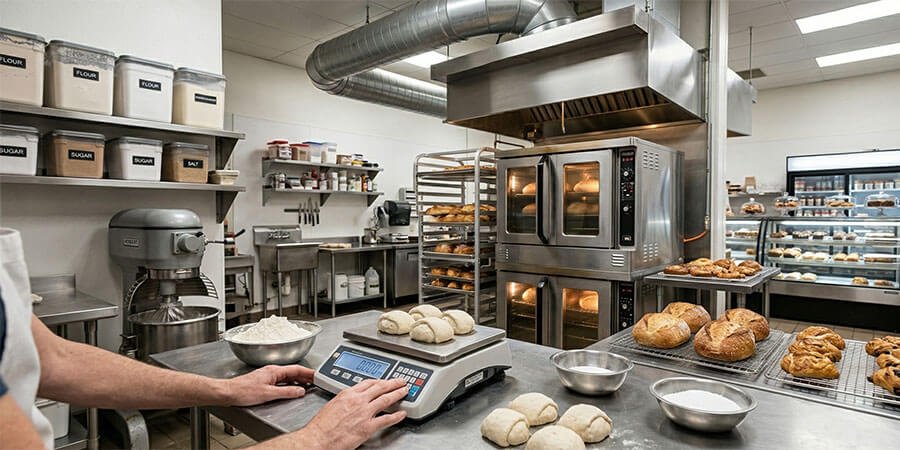
Table of Contents
Build a stronger bakery from the start by prioritizing production, storage, prep, and display equipment that actually supports daily workflow
Starting a bakery is not only about buying ovens and hoping the rest works itself out later. A bakery succeeds when the production flow, storage, prep space, cold holding, and display or sales support all make sense together. If those pieces are mismatched, the operation starts feeling cramped, inefficient, or harder to scale long before the recipes become the problem.
That is why the best bakery startup equipment plan is not just a checklist of “must-haves.” It is a sequence. What do you need to mix? What do you need to bake? What do you need to hold cold? What do you need to store, scale, stage, and sell? The clearer those answers are, the easier it becomes to spend money on the equipment that earns its footprint first.
Start With The Bakery Type You Are Actually Building
Not every bakery needs the same equipment mix.
| Bakery Model: | What The Equipment Has To Support: |
| Bread-forward bakery | Dough mixing, proofing, baking rhythm, rack flow |
| Cake and pastry bakery | Precision scaling, refrigeration, finishing and display |
| Micro bakery or startup | Space-efficient production and flexible storage |
| Retail bakery with front display | Production plus visible merchandising |
This is the first decision that matters because the right startup equipment list depends on the product mix. A bread-heavy bakery and a cake-heavy bakery can both call themselves bakeries, but they do not stress the same tools in the same way.
For the planning side of that decision, product mix and sales strategy should still be thought through together instead of separately.
Mixers Usually Sit Near The Center Of The Equipment Plan
If a bakery produces any real volume, the mixer decision matters early.
The issue is not only whether the mixer can turn. It is whether it can handle the actual doughs, batters, and production rhythm of the business. SBA's startup-cost guidance is helpful here because it reinforces that equipment belongs in startup capital planning rather than being treated as an afterthought. The wrong mixer can contribute to labor waste, batch inconsistency, or a much earlier upgrade need than the owner expected.
| Mixer Question: | Why It Matters: |
| What batch sizes are realistic? | Prevents buying too small or too large |
| Are you doing dough-heavy production? | Changes the type and strength required |
| How often will it run each day? | Affects durability and throughput need |
| What attachments matter? | Keeps future purchases aligned with real work |
For the product-side guide, Kitchen Mixing Equipment Guide is the strongest internal next step.
Ovens Define The Bakery's Daily Rhythm
The oven decision is usually the most emotionally obvious one, but it still needs to be tied back to production reality.
The best bakery oven choice depends on:
- Product type
- Volume
- Batch timing
- Utility setup
- How much flexibility you need across different baked items
This is why startup bakeries often need to think about ovens less as a dream purchase and more as a throughput tool. A great oven matters, but the right great oven is the one that fits your menu and pace, not the one that only sounds the most impressive.
For deeper selection help, Commercial Convection Oven Buying Guide and Types of Commercial Ovens are the strongest related resources.
Scales, Tables, And Small Equipment Still Shape Consistency
One of the easiest bakery mistakes is spending heavily on the large hero equipment while underestimating the smaller tools that create consistency.
That includes:
- Baker's scales
- Work tables
- Trays and pans
- Cooling space
- Smallwares that support portioning and repeatability
These pieces often do not look glamorous, but they shape how stable the production process feels from batch to batch.
Precision tools and slicing decisions deserve just as much attention as the larger hero equipment because they influence consistency every day, not only during peak production.
Refrigeration And Ingredient Storage Need More Respect Than Many Startups Give Them
SBA's startup planning guidance is useful here because it reinforces that equipment costs should be planned as part of the whole operating system. Refrigeration is not only about food-safety and health-code requirements. It also determines how well the bakery can hold ingredients, stage production, and protect finished goods or fillings.
That means the bakery needs to think seriously about:
- Ingredient cold storage
- Display refrigeration if needed
- Dry storage and shelving
- Where backup stock actually lives
If cold storage and dry storage are undersized, the bakery starts feeling constrained quickly, no matter how good the mixer and oven are.
| Storage Area: | What It Supports: |
| Refrigerated ingredient storage | Dairy, fillings, perishables, staged prep |
| Dry storage and shelving | Flour, sugar, packaging, backup stock |
| Display or merchandiser support | Guest-facing product sales and freshness perception |
| Work table support storage | Daily tools and fast-access production items |
Display Equipment Is Part Of Sales, Not Just Presentation
Bakery display cases matter because they shape what guests notice first. A strong display is not only decorative. It supports product visibility, freshness perception, and can influence purchase behavior.
That is why bakery startup equipment planning should include the sales side too:
- What will the guest see first?
- Which items need display refrigeration?
- Which products sell best when merchandised visibly?
- How much front-of-house display capacity do you really need?
This is where the production and sales sides of the bakery finally meet. A bakery can make beautiful products, but if the display strategy is weak, it becomes harder to turn that production into dependable retail sales.
For that side, bakery display and holding should be treated as a sales system, not just a furniture choice.
Startup Bakers Should Buy For Workflow, Not For Fantasy
It is easy to overbuy when the business still exists mostly as an idea. That is especially true in bakery planning because equipment is visual, aspirational, and easy to imagine at full scale.
The stronger approach is to ask:
- What does the bakery need on day one?
- What equipment can be added later without breaking the process?
- Which pieces create the most daily value immediately?
- Which purchases are only solving a future scenario that may not happen yet?
This does not mean buying cheap or thinking small. It means buying in sequence instead of buying emotionally.
That sequencing also makes training easier. When the bakery grows from a cleaner production flow, new staff can learn the system more quickly because the equipment and station logic were chosen around the real process instead of around a future wish list.
Cooling, Holding, And Packaging Can Become Bottlenecks Faster Than Expected
Bakery owners often focus first on mixing and baking, then realize later that the business is slowing down somewhere after the oven.
That can happen when there is not enough room to cool trays, stage finished items, package orders, or hold specialty products while the front-of-house side catches up. These are not glamorous equipment decisions, but they shape how quickly the bakery can move from production into sale.
This is one reason startup bakeries often benefit from thinking about the full handoff from mixing to baking to cooling to display. The smoother that sequence feels, the easier the operation becomes to scale without constant improvisation.
It also makes the front-of-house side easier to support. When packaging, cooling, and display are all planned together, the bakery is less likely to lose finished-product quality simply because the post-oven workflow was never built carefully enough.
Utilities, Layout, And Cleaning Still Matter
The bakery will still need the same operational basics as any other commercial kitchen:
- Enough power or gas support for the oven and mixer plan
- Enough room for trays, cooling, and staff movement
- Enough cleaning support to maintain food-safe equipment and prep areas
- A layout that reduces crossing and awkward movement during production
This is one reason bakery startup equipment should never be treated as a set of isolated appliances. The bakery is a production environment, and the better the pieces fit together, the easier it is to scale later.
For the broader space-planning side, Choosing Equipment for a Small Commercial Kitchen is a useful comparison read.
The Best Bakery Startup Equipment Plan Usually Looks Simpler Than Expected
The strongest new bakeries are often not the ones with the most equipment. They are the ones with the right sequence of equipment.
That usually means:
- One strong mixer solution
- The right oven for the real product mix
- Reliable scales and prep surfaces
- Enough refrigeration and storage
- Enough display support to turn production into sales
When those five areas are covered well, the bakery has a much stronger base to grow from.
It is also why many successful bakery startups look more disciplined than flashy. They are not defined by how much equipment they own at once. They are defined by how well the equipment supports the products they actually make and sell every day.
Frequently Asked Questions
What equipment do you need to start a bakery?
Most real bakery startups need a core mixer setup, an oven that fits the product mix, scales and prep surfaces, refrigeration and dry storage, and some kind of display or merchandising plan if they sell directly to customers. The exact list depends on what the bakery actually makes.
What is the most important bakery equipment to buy first?
Mixers, ovens, scales, prep space, and storage usually come first because they support production directly. Display equipment matters too, but the bakery has to be able to produce consistently before the front-of-house side can really perform.
Do startup bakeries need commercial equipment right away?
If the bakery is operating as a real commercial business rather than a hobby or occasional side project, commercial-grade equipment usually becomes necessary because volume, durability, storage, and workflow requirements increase quickly.
How do I choose the right oven for a bakery?
Start with your product mix, volume, batch rhythm, and utilities. Bread, cakes, pastries, and mixed-product bakeries can all prioritize different oven characteristics, so the right oven should follow production reality rather than aspiration alone.
Why do bakery startups need strong storage planning?
Because ingredient storage, refrigeration, and backup stock all shape how smoothly production runs. A bakery with weak storage often feels crowded and constrained even if the oven and mixer are strong.
What is the biggest equipment mistake bakery startups make?
Overbuying for a future version of the business before the current production system is defined clearly enough. A better startup usually comes from buying in sequence for real workflow instead of chasing an idealized full build-out too early.
Related Resources
- Bakery Marketing Strategy - Helps connect production decisions to actual sales growth.
- Kitchen Mixing Equipment Guide - Stronger mixer selection help for bakery production.
- Commercial Convection Oven Buying Guide - Better oven-selection guidance for commercial baking.
- How to Choose the Best Bakers Scale - Precision matters more than many startups expect.
Share This!