How to Use a Commercial Food Mill in Your Restaurant
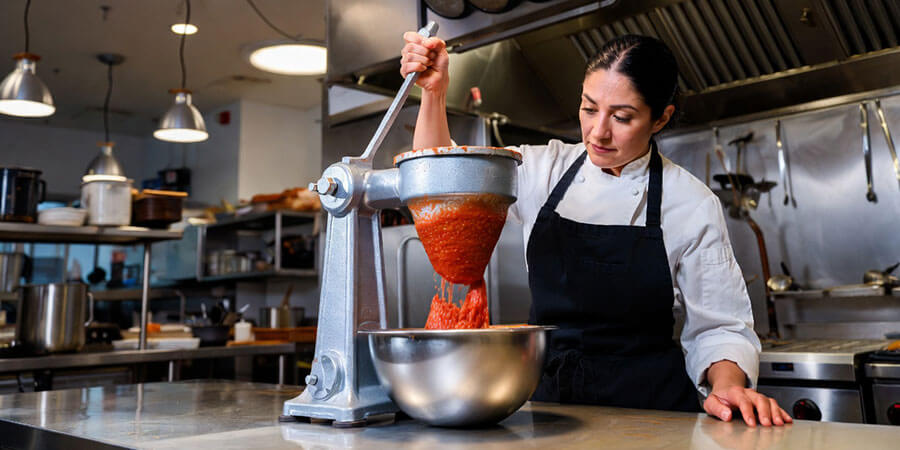
Table of Contents
Everything restaurant professionals need to know about food mills - from basic operation to advanced kitchen techniques
A food mill is one of those kitchen tools that does not look impressive sitting on a shelf, but earns its place the moment you need silky smooth tomato sauce, lump-free mashed potatoes, or a perfectly strained fruit puree. Unlike blenders and food processors that pulverize everything indiscriminately, a food mill gives you control - straining out seeds, skins, and fibers while producing a texture that powered equipment simply cannot replicate.
Whether you run a high-volume kitchen cranking out gallons of marinara or a farm-to-table operation processing seasonal produce, understanding how to use a food mill properly saves time and improves consistency. This post covers basic operation, practical applications, disc selection, and maintenance.
What Is a Food Mill and How Does It Work
A food mill is a hand-operated or electric kitchen tool that purees soft foods while simultaneously straining out seeds, skins, cores, and fibers. It has three main components - a hopper bowl that holds the food, a rotating blade that presses food against the bottom, and an interchangeable perforated disc that determines the fineness of the output.
You place cooked food into the hopper and turn the crank handle (or engage the motor on electric models). The blade forces food through the perforated disc, and the pureed product passes into a bowl below. Seeds, skins, and tough fibers stay behind in the hopper.
What makes a food mill different from other food preparation equipment is this built-in separation. A blender or food processor grinds tomato seeds and skins right into your sauce, adding bitterness and grit. A food mill removes them automatically, giving you a cleaner flavor and smoother texture in a single pass.
Types of Food Mills for Commercial Kitchens
Food mills come in two basic configurations, and the right choice depends on your volume and how frequently you use it.
Manual Rotary Food Mills
The classic design features a hand crank mounted on a hopper that sits over a pot or bowl. Manual mills are durable, easy to clean, and require no power source. Most commercial manual models handle batches of two to five quarts at a time, and they give the operator direct control over speed and pressure for precise texture control.
Electric Commercial Food Mills
Electric models use a motor to drive the blade, processing large volumes faster with less physical effort. These are essential for commissary kitchens producing large batches of sauce or facilities doing large-scale preserving. The tradeoff is cost, size, and cleaning complexity.
| Feature: | Manual Rotary Mill: | Electric Commercial Mill: |
| Best for | Daily restaurant use, moderate batches | High-volume production, commissary kitchens |
| Batch size | 2 - 5 quarts typical | 10+ quarts, continuous feed capable |
| Speed | Operator-controlled | Consistent motorized speed |
| Physical effort | Moderate - requires hand cranking | Minimal - motor-driven |
| Cleaning | Simple disassembly, few parts | More components to clean and sanitize |
| Texture control | High - vary speed and pressure manually | Consistent but less variable |
| Power source | None required | Electrical outlet needed |
| Footprint | Compact, stores easily | Larger, needs dedicated counter space |
How to Use a Food Mill Step by Step
Getting the best results from a food mill comes down to preparation and technique. Follow these steps for consistent output every time.
Step 1 - Cook your food first. Food mills work on soft, cooked foods. Raw vegetables and firm fruits will not process effectively and can damage the blade or disc. Cook produce until it is tender enough to mash easily with a fork.
Step 2 - Select the right disc. Choose your perforated disc based on the texture you want. Fine discs for smooth sauces and baby food, medium for general pureeing, and coarse for rustic textures. More on disc selection below.
Step 3 - Set up your station. Position the food mill securely over a large pot or bowl. Most commercial models have hooks or clips that grip the rim. Make sure the setup is stable since you will apply downward pressure while cranking.
Step 4 - Add food in manageable batches. Fill the hopper about halfway. Overloading slows processing and makes cranking harder. For items in liquid, transfer solids first with a slotted spoon, then add liquid gradually.
Step 5 - Crank with steady, even pressure. Turn the handle clockwise at consistent speed. Periodically reverse direction for a few turns to clear food buildup from the disc perforations.
Step 6 - Scrape and discard solids. After each batch, scrape remaining skins, seeds, and fibers from the disc. Discard and reload.
Step 7 - Adjust consistency. Too thick - add cooking liquid or stock. Too thin - process additional solids to thicken naturally.
Practical Restaurant Applications
A food mill handles tasks across your entire menu. Here are the applications where it outperforms every other tool in the kitchen.
Tomato sauce and passata. This is the food mill's signature job. Quarter your tomatoes, cook them down briefly, and run them through the mill. Seeds and skins stay behind, and you get a clean, bright sauce base without the bitterness that ground seeds introduce. For a smoother passata, use a fine disc. For a rustic sauce with more body, use a medium disc.
Mashed potatoes. A food mill produces the smoothest mashed potatoes possible without making them gluey. Unlike a mixer or food processor that overworks the starch and creates a paste-like texture, a food mill presses cooked potatoes through the disc gently. The result is light, fluffy mashed potatoes with no lumps - every time.
Fruit purees and coulis. Process cooked berries, stone fruits, or apples through a fine disc to create seedless purees for dessert sauces, cocktail mixers, or pastry fillings. Raspberry and blackberry coulis made in a food mill have a clean, smooth texture impossible to achieve with a blender.
Cream soups and bisques. After cooking your soup base, run it through a food mill for a velvety texture that retains more body than a blender would produce. Butternut squash soup, potato leek, and lobster bisque all benefit from the slightly denser consistency a food mill delivers.
Applesauce and apple butter. Cook apples with skins on - the food mill removes skins and cores after cooking, saving significant prep time while retaining nutrients and color from the skins.
Baby food operations. Commercial kitchens producing baby food rely on food mills for safe, consistent textures. The straining action removes choking hazards while producing age-appropriate consistency.
Jams, preserves, and vegetable purees. Process cooked fruit through a fine disc to remove seeds, or run fibrous root vegetables like carrots and parsnips through the mill for refined purees that a blender would leave stringy.
Food Mill vs Food Processor vs Blender
One of the most common questions in commercial kitchens is when to use a food mill versus other processing equipment. Each tool has a different strength, and using the wrong one affects texture, flavor, and efficiency.
| Factor: | Food Mill: | Food Processor: | Blender: |
| Primary function | Puree and strain simultaneously | Chop, slice, shred, and mix | Liquefy and emulsify |
| Straining ability | Built-in - removes seeds, skins, fibers | None - processes everything together | None - processes everything together |
| Texture result | Smooth puree with body | Variable - can overprocess to paste | Very smooth, thin, aerated |
| Best for | Tomato sauce, mashed potatoes, fruit purees | Chopping vegetables, making doughs, slicing | Smoothies, soups (thin), emulsified sauces |
| Handles seeds/skins | Yes - separates automatically | No - grinds them into the product | No - grinds them into the product |
| Starch-heavy foods | Excellent - gentle processing avoids gluey texture | Poor - overworks starches | Poor - overworks starches |
| Volume per batch | Moderate (2 - 5 qt manual, 10+ qt electric) | Moderate (varies by bowl size) | Small to moderate |
| Aeration | Minimal - preserves dense body | Moderate | High - incorporates air |
| Power required | None (manual) or minimal (electric) | Electric | Electric |
| Cleaning ease | Simple disassembly | Multiple blades and parts | Blade assembly and jar |
When to choose a food mill: Any time you need to puree and strain in one step, or when working with starchy foods like potatoes that a food processor would turn gluey.
When to choose a food processor: Chopping, slicing, or shredding raw ingredients, or any task where you want pieces rather than a puree.
When to choose a blender: Emulsified sauces, thin soups, or any application where aeration improves the product.
Most commercial kitchens keep all three because a food mill fills a gap between the other two that no other tool covers.
Choosing the Right Disc Size
Most commercial food mills include three interchangeable discs. Choosing the right one is the difference between a refined sauce and a chunky mess.
Fine disc (1 - 1.5 mm holes). Use for smooth tomato passata, seedless berry purees, baby food, and any application where you want the silkiest possible texture. Fine discs require more cranking effort because the perforations are smaller, so work in smaller batches.
Medium disc (2 - 2.5 mm holes). The workhorse disc for most restaurant applications. Use for mashed potatoes, standard tomato sauce, applesauce, and vegetable purees. Medium discs balance smooth texture with processing speed.
Coarse disc (4 - 5 mm holes). Use for rustic preparations where you want some texture - chunky applesauce, rustic tomato sauce, or coarse vegetable purees for soup bases. Coarse discs process faster and require the least effort.
When in doubt, start with the medium disc. You can always pass the product through a second time with a finer disc if you want a smoother result, but you cannot add texture back once it has been processed too fine.
Cleaning and Maintenance
A food mill is only as reliable as your cleaning routine. Food residue left in the perforations of the disc harbors bacteria and affects performance.
Disassemble completely after every use. Remove the blade, disc, and any gaskets or clips. Each component needs individual attention - food trapped in disc perforations will not come out if you wash the mill assembled.
Clean discs immediately. Dried food in the perforations is difficult to remove and can permanently clog smaller holes. Rinse discs under hot running water right after use, then scrub both sides with a stiff brush. A small bristle brush designed for perforated surfaces works best.
Sanitize per food safety protocols. After cleaning, sanitize all components according to your local health code requirements. Food mills contact ready-to-eat food directly, so proper sanitization is critical for preventing foodborne illness.
Inspect discs regularly. Check for bent or warped discs, worn perforations, and cracks that could harbor bacteria. A warped disc produces inconsistent texture and should be replaced promptly.
Store disassembled and dry. Stacking wet components leads to corrosion, even on stainless steel. Dry all parts thoroughly before storing and keep discs separated to prevent scratching.
Tips for Commercial Kitchen Efficiency
- Batch your milling work. Process all your tomato sauce, potato puree, and fruit coulis during prep rather than during service. Food milling is a prep task, not a line task.
- Use a stable, heavy receiving vessel. A food mill requires downward pressure and cranking force. Use a heavy stockpot or secure the bowl with a damp towel underneath.
- Pre-cook to the right softness. Undercooked food clogs the disc and slows processing. Food should be soft enough to mash with a spoon before it goes into the mill.
- Set up a dedicated milling station. Keep a cutting board nearby for rough-chopping larger items, and work over an area where splashes are easy to clean.
- Label and date your output. Once milled, products like tomato puree and fruit coulis look similar. Label immediately with contents, date, and disc size used.
- Train every cook on proper technique. Make sure your team knows to reverse the crank periodically, avoid overloading the hopper, and clean discs immediately after use.
Frequently Asked Questions
What is a food mill and what is it used for?
A food mill is a kitchen tool that purees soft, cooked foods while straining out seeds, skins, and fibers in a single step. Common uses include tomato sauce, mashed potatoes, fruit purees, applesauce, cream soups, and baby food - any preparation where you want a smooth texture without unwanted solids.
Can I use a food mill for raw foods?
No. Food mills are designed for soft, cooked foods. Raw vegetables and firm fruits will not process through the disc effectively and can damage the blade. Always cook ingredients until fork-tender before milling.
What is the difference between a food mill and a food processor?
A food mill purees and strains simultaneously, separating seeds, skins, and fibers automatically. A food processor chops everything together without straining. Food mills also handle starchy foods like potatoes without making them gluey, while food processors overwork the starch.
What size food mill do I need for a commercial kitchen?
A two to five quart hopper capacity handles daily sauce, soup, and puree tasks for most restaurants. High-volume operations should consider an electric model with a larger hopper or continuous-feed capability.
How do I choose the right disc for my food mill?
Fine disc (1 - 1.5 mm) for smooth sauces and seedless purees, medium disc (2 - 2.5 mm) for mashed potatoes and tomato sauce, coarse disc (4 - 5 mm) for rustic textures. Start with medium if unsure - you can always pass the product through again with a finer disc.
How do I clean food mill discs properly?
Rinse discs under hot water immediately after use before food dries in the perforations. Scrub both sides with a stiff bristle brush, then sanitize per health code requirements. Store dry and separated to prevent corrosion.
Is a food mill worth the investment for a restaurant?
Yes, if your menu includes tomato-based sauces, mashed potatoes, fruit purees, or cream soups. A food mill produces textures no other tool can replicate, particularly for starch-heavy foods and preparations requiring seed and skin removal. It is low-cost with a long lifespan.
Related Resources
- Food Mills and Accessories - Commercial food mills for restaurant kitchens
- Food Preparation Equipment - Essential prep tools for commercial kitchen operations
- Commercial Blenders - When blending is the right tool for the job
- Food Safety Tips for Commercial Kitchens - Keeping your kitchen compliant and safe
- Food and Beverage Supplies - Ingredients and supplies for foodservice operations
Share This!