Disposable Glove Guide
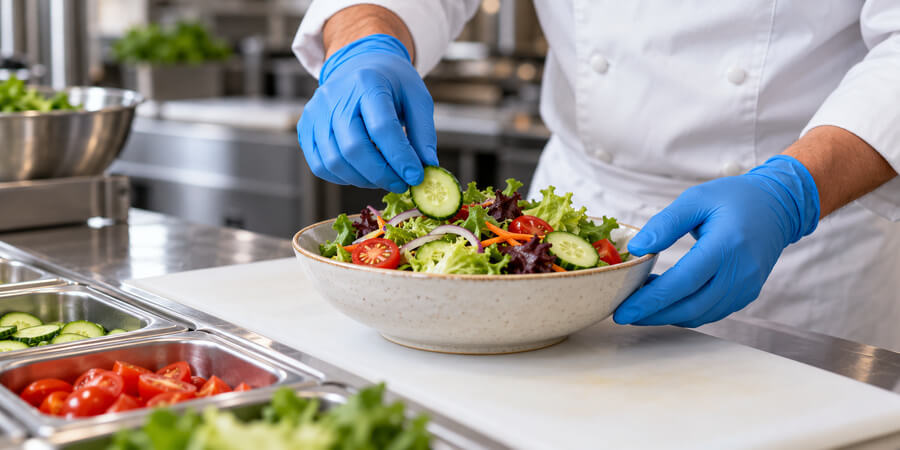
Table of Contents
How to match single-use gloves to each kitchen task, change them on time and stay inside the Food Code glove rules
Nitrile is the all-round disposable glove for food work: FDA's glove guidance rates it strong, durable and oil resistant, good with greasy food and for tasks of up to about an hour. Poly gloves suit quick assembly jobs under five minutes and vinyl short, cool, low-fat tasks under fifteen, while latex carries an allergy risk for the staff who wear it.
Disposable Gloves Compared
| Glove: | Best use in FDA's guidance: | Task length in FDA's guidance: | Watch for: | On our listings: |
| Nitrile | Greasy foods and precision work, in cold and moderately hot kitchens | Moderate tasks, usually under an hour | Relatively high cost; stiffens and tires hands over long wear; breaks down with acetone | 4 to 5 mil, small to extra large, powder-free, 1,000 a case |
| Vinyl | Very short, low-stress tasks with frequent changes | Under 15 minutes | Not for hot food, and not for fatty food, where plasticizers can migrate into it; pinholes and tears | 2.6 to 4 mil, small to extra large, powder-free, 1,000 a case |
| Poly | Light food assembly away from heat, used much like deli tissue | Under 5 minutes | Fragile and heat sensitive; tears at the seam; the loose fit costs dexterity | One size or small to large, plus elbow length; 500 to 10,000 a case |
| Latex | Weigh the staff health risk first; elastic and comfortable, with good tear resistance | Not given | An allergy risk for the staff who wear it; breaks down with oils and solvents | 4.4 mil, medium to extra large, powder-free, 1,000 a case |
No glove does every job. FDA's guidance, in Annex 3 of the Food Code, says the right glove depends on the task, and that every type depends on proper use: clean hands before gloving, regular changes, and a torn glove thrown away. A practical setup is two gloves: a quick-change glove for the assembly line and nitrile for everything that is raw, greasy or hot.
Price follows durability. Poly is the cheapest disposable glove and nitrile sits at the high end, according to the same guidance. A cheap glove that fails partway through a task is not a saving: FDA's guidance says poly and vinyl gloves often fail early, sometimes right out of the box.
Which Glove for Which Kitchen Task
| Task: | Glove: | Why: |
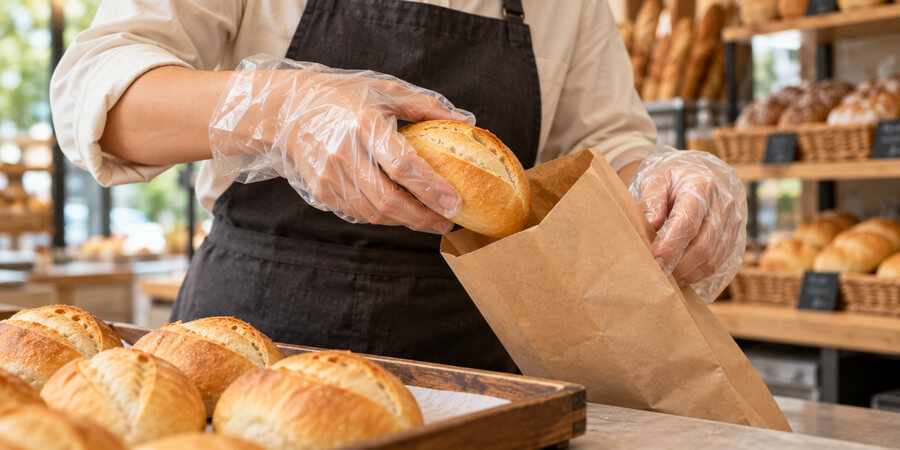
| Sandwich, salad and bakery counter work | Poly or vinyl | Short, cool, light tasks with frequent changes |
| Raw meat, poultry and fish | Nitrile | Stands up to fats and oils; vinyl should not handle fatty food |
| Hot plating and the fry station's pass | Nitrile | Rated for moderately hot work; vinyl and poly are heat sensitive |
| Slicing and knife work | A cut-resistant glove, covered with a single-use glove for ready-to-eat food | The Food Code limits uncovered cut-resistant gloves to food that will be cooked |
| Serving with tongs, scoops or spatulas | None needed | The utensil already prevents bare-hand contact |
| Cleaning and chemicals | Reusable dishwashing gloves, or nitrile | Nitrile resists chemicals better than the other disposable types |
| A worker with a latex allergy | Nitrile, vinyl or poly | None of these is made from natural rubber latex, though a few people react to the chemicals used to make nitrile |
Keep food gloves and cleaning gloves apart. Reusable dishwashing and janitorial gloves are for the dish pit and the mop bucket. A glove that has touched chemicals or a soiled surface does not go back to food.
Cover the cut glove. Mesh and fabric cut-resistant gloves, rated by cut level from A3 to A9 on our listings, protect the hand at the slicer and the butcher block. On ready-to-eat food, a single-use glove goes over the top unless the cut glove has a smooth, nonabsorbent outer surface.
The Food Code Glove Rules
The FDA Food Code bars food employees, with narrow exceptions, from touching exposed, ready-to-eat food with bare hands; they use utensils such as deli tissue, spatulas, tongs, single-use gloves or dispensing equipment instead (section 3-301.11). Gloves are one way to meet that rule, and the code sets out how to use them.
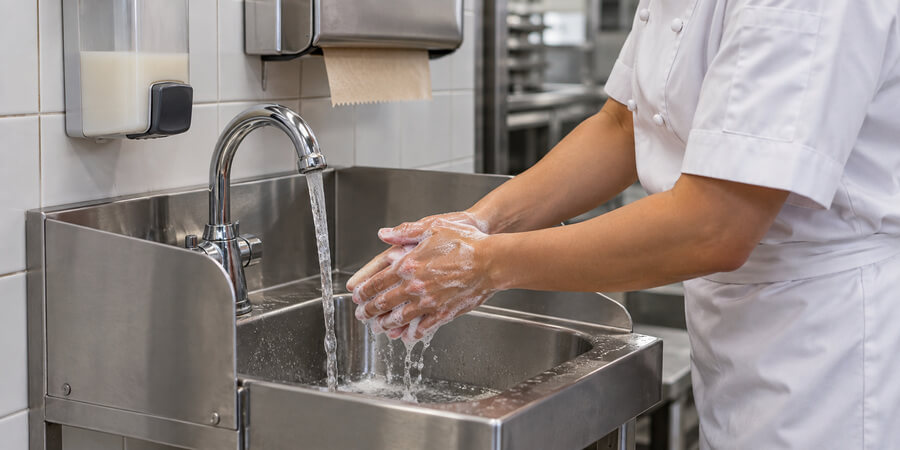
Wash first. Hands are washed before putting on gloves to start a task with food (section 2-301.14). FDA's guidance is blunt that gloves are not a replacement for handwashing: soiled hands transfer contamination to the outside of the glove as it goes on.
One task per pair. Single-use gloves are used for one task only, such as working with ready-to-eat food or with raw animal food, and for no other purpose (section 3-304.15).
Change on time. Gloves are discarded when they are damaged or soiled, or when an interruption in the work has contaminated them (section 3-304.15). FDA's guidance adds the everyday triggers: between raw and ready-to-eat food, whenever the task changes, and never putting a removed glove back on.
Double gloving needs approval. Where the health department approves it, a loose outer glove can protect an inner glove during raw work, as long as the outer glove is loose enough to slide off by gravity without touching the inner one, and the inner glove comes through intact and clean; if it does not, it is discarded too.
Cloth gloves stay away from ready-to-eat food. Cloth gloves may touch only food that will be cooked, such as frozen food or a primal cut of meat.
Wear them only when they are needed. FDA's guidance asks for glove use to be limited to ready-to-eat food and hand protection, because long wear damages skin and makes good hand hygiene harder.
Fit, Thickness and Grade
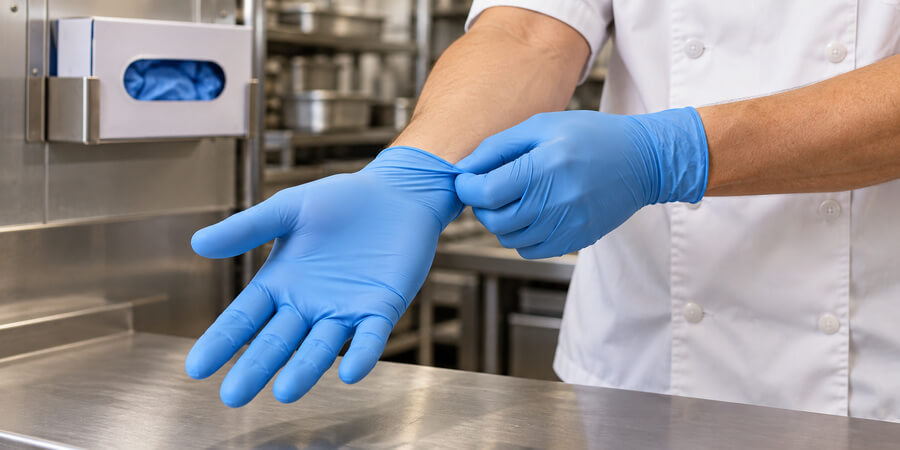
Fit. FDA's guidance warns that a poorly fitting glove reduces touch sensitivity or raises the risk of injury. Nitrile and vinyl come in small to extra large on our listings, and latex in medium to extra large. Poly gloves are loose by design, often one size fits most, which makes the quick changes they are meant for faster.
Thickness. Listings give thickness in mil, thousandths of an inch, and the chart above carries each material's range. Compare thickness within one material: FDA's guidance ranks the materials themselves, and a 4 mil vinyl glove is still a vinyl glove.
Cuffs. Where listed, the vinyl, nitrile and latex gloves on our listings are 9-1/2 inches long with a beaded or rolled cuff. Elbow-length poly gloves cover the forearm for reaching into deep containers.
Exam grade. Exam-grade nitrile gloves carry approval for medical use. FDA's guidance asks for gloves made from food-safe materials, so exam grade is a choice for kitchens that want a glove tested to a medical standard, not a requirement.
Powder-free. Every vinyl, nitrile and latex glove on our listings is powder-free. FDA's guidance notes that powdered latex gloves spread latex proteins into the air and onto food and surfaces.
Storage. Keep gloves in their original box in a dry place, as FDA's guidance advises, because latex and plastics break down over time. Disposable glove dispensers hold the boxes at each station, so the right glove is within reach at the moment a change is due.
Frequently Asked Questions
Are nitrile or vinyl gloves better for food?
Nitrile for most work. FDA's guidance rates nitrile strong and resistant to oils, fit for tasks of up to about an hour, while vinyl suits only short, low-stress tasks under 15 minutes and should not handle hot or fatty food.
Are vinyl gloves safe for food handling?
Yes, for short, cool tasks with low-fat food and frequent changes. FDA's guidance warns that plasticizers in vinyl can migrate into fatty food and that vinyl gloves tear and develop pinholes easily. The vinyl gloves on our listings are labeled safe for food contact; the guidance is about matching them to the task.
Can restaurants use latex gloves?
The Food Code does not ban them, but FDA's guidance calls latex gloves an occupational health hazard for food workers because of latex allergy, and it notes that latex glove use in the food industry has declined. FDA reviewed old reports of latex protein reaching food and found them insufficient to establish a hazard to diners; the risk it names is to the staff who wear the gloves. Check your local health department's rules before choosing latex.
How often should food workers change gloves?
Whenever a glove is damaged or soiled, when the task changes, between raw and ready-to-eat food, and after any interruption that could contaminate it. A removed glove is never put back on.
Do you have to wash your hands before putting on gloves?
Yes. The Food Code requires handwashing before donning gloves to start a task with food, and gloves never replace handwashing.
Shop Disposable Gloves
Stock the glove for each station rather than one glove for the whole kitchen: nitrile for raw, greasy and hot work, and poly or vinyl where gloves change every few minutes. Our disposable gloves filter by material, size and grade; vinyl, nitrile and latex come 1,000 to a case on our listings and poly up to 10,000, so order each size by how fast the busiest station goes through it.
Related Guides & Resources
- Food Safety Guide - Handwashing, bare-hand contact and the rest of the program glove use sits inside.
- Cutting Board Color Code Guide - Separating raw and ready-to-eat prep by color.
- Commercial Meat Slicer Guide - Slicer types and safe use at the deli station.
Share This!