Fryer Oil Filtration Guide
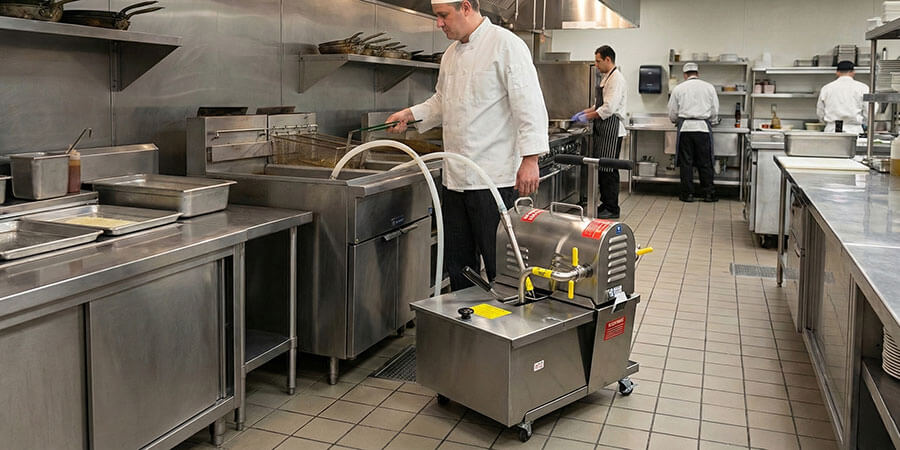
Table of Contents
Extend oil life and improve food quality with proper filtration
Cooking oil is one of the most significant recurring costs in a commercial kitchen, often second only to labor and food product itself. A proper fryer oil filtration system is not just a cleaning tool; it is a cost-saving asset that directly impacts your bottom line and food quality. By regularly removing sediment, fatty acids, and carbon deposits, filtration systems can extend the usable life of your oil by up to 50%, while ensuring your fried chicken, fries, and donuts come out crisp, golden, and free of flavor transfer. This guide covers the types of filtration machines, media options, and best practices for maintaining your oil investment.
Why Filter Oil?
Unfiltered oil degrades quickly due to heat, oxygen, and food particles. This degradation leads to "off" flavors, dark color, smoking, and greasy, soggy food. Filtration removes the enemies of oil; carbon, crumbs, and fatty acids - keeping your product tasting fresh and your oil costs down.
Types of Fryer Oil Filter Machines
Selecting the right machine depends on your fryer setup, volume, and kitchen layout. Commercial units generally fall into three categories based on how they move the oil.
Gravity Drain Systems
Gravity drain systems are the industry standard for most mobile filtration units. They are designed to slide directly under the drain valve of your fryer.
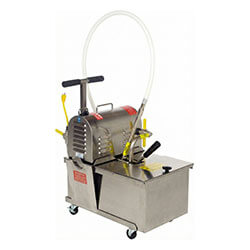
- How it Works: You open the fryer's drain valve, and gravity allows the oil to flow down into the filter pan. Once filtered, a pump activates to return the clean oil back up into the fryer vat via a hose and wand.
- Best Uses: Kitchens with standard fryers that have enough ground clearance; operators looking for a simple, reliable solution.
- Pros: Lower initial cost, simple mechanism, easy to operate.
- Cons: Requires fryer to have a drain valve accessible from the bottom; relies on gravity for the intake.
Reversible Pump Systems
Reversible pump units are "active" systems that use a powerful two-way pump to move oil in both directions.
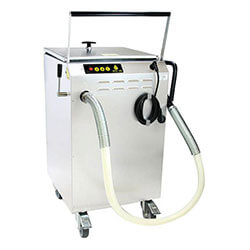
- How it Works: Instead of relying on gravity, the pump can "suck" dirty oil out of the fryer vat (suction mode) and then reverse direction to pump clean oil back in (discharge mode).
- Best Uses: Kitchens where drain valves are hard to reach, low-clearance fryers, or for preventing cross-contamination (e.g., dedicating one filter machine to multiple vats without mixing oil in a common drain).
- Pros: Maximum control, no need to rely on gravity, can clean vats that don't drain easily.
- Cons: Higher cost, slightly more complex operation.
Pressure Filtration Systems
Pressure filtration systems are high-efficiency units designed to force oil through very fine filtration media under pressure, rather than just circulating it.
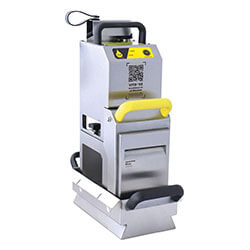
- How it Works: The system creates a pressurized cycle that pushes oil through microscopic filter paper or pads, capturing extremely fine silt and carbon that standard gravity filters might miss.
- Best Uses: High-volume frying operations (fried chicken, fish) where sediment load is heavy and oil clarity is critical.
- Pros: Superior "polishing" capability, removes finer particles, extends oil life significantly.
- Cons: Heavier equipment, requires specific pressure-rated media.
Filtration Media Types
The machine is the engine, but the media is the filter. Choosing the right consumable is crucial, and options vary by machine type and desired filtration level.
Filter Paper & Envelopes
The most common and economical choice. Filter paper comes in flat sheets or pre-formed Filter Envelopes (often used in built-in or specific mobile systems).
- Best For: General filtration, removing visible debris.
- Note: Always match the paper size exactly to your machine to prevent leakage.
Filter Pads & Discs
Thicker than paper, Filter Pads offer "depth filtration." They have a three-dimensional structure that traps particles inside the pad itself.
- Filter Discs: Circular versions often used in smaller or specialized machines.
- Best For: Heavy sediment loads; often impregnated with carbon or other agents to help remove odors.
Filter Cones & Holders
For manual filtration without a machine, Filter Cones are used with a Cone Filter Holder.
- How it Works: The holder sits on top of a stock pot or oil caddy, and hot oil is poured manually through the cone.
- Best For: Small operations, food trucks, or as a backup to mechanical systems.
Cloth Bags & Frames
Some heavy-duty systems use reusable Cloth Bags fitted over Filter Frames.
- How it Works: The cloth captures large debris and can be washed and reused multiple times before replacement.
- Best For: Extremely heavy sediment loads where disposable paper would clog instantly.
Filtration Aids (Powder)
Filtration Aids, typically Filter Powder (Diatomaceous Earth or synthetic magnesium silicate), are additives sprinkled onto the filter paper or pad.
- How it Works: It creates a "filter cake" that chemically and physically scrubs the oil.
- Best For: "Polishing" oil. Powder can remove soluble impurities like free fatty acids (FFAs) and dissolved colors that paper alone cannot touch.
- Result: Oil that is chemically cleaner and lasts significantly longer.
Pre-Filters & Accessories
- Pre-Filters: Metal screens or baskets that catch large crumbs before they reach the paper/pump, protecting the system.
- Powder Pads: Pads pre-impregnated with filter powder for convenience, eliminating the need to handle loose powder.
Breaded vs. Non-Breaded: The Impact
The type of food you cook dictates your filtration schedule. Not all frying is created equal.
Non-Breaded Products (Low Sediment)
- Examples: French fries, frozen appetizers, donuts.
- Impact: These foods leave behind minimal debris. The main enemy here is heat and oxidation.
- Filtration Frequency: Filter once daily.
- Oil Change Frequency: Typically every 6-8 days (depending on volume).
Breaded Products (High Sediment)
- Examples: Fresh fried chicken, fish and chips, onion rings, country fried steak.
- Impact: Breading falls off, carbonizes (burns), and turns into fine black silt at the bottom of the fryer. This carbon acts like a sponge for oil flavor and ruins it rapidly.
- Filtration Frequency: Filter frequently, often after every major rush or every 4 loads.
- Oil Change Frequency: Typically every 2-4 days.
- Critical Warning: Not all filter systems are built for breading. Standard paper filters or light-duty pumps can clog instantly under the heavy sediment load of fresh breading. If you fry fresh-breaded items, you must verify that your machine and media are rated for "heavy sediment" or breaded applications. Often, this requires a system with a pre-filter screen or specialized depth-filter pads to catch the large crumbs before they reach the pump.
- Requirement: Use active filtration with powder or polishers to combat the heavy sediment load.
Capacity & Sizing
Choosing the right size filter machine is critical for safety.
Matching Capacity: Your filter machine's pan capacity (measured in lbs or gallons) must be larger than the capacity of your fryer vat.
The Risk: If you have a 50lb fryer vat and drain it into a 40lb filter caddy, hot oil will overflow onto your kitchen floor - a major safety hazard.
| Recommendation: | Always size up. If you have 50lb fryers, get a 65lb+ filter machine. |
| Small Kitchens | 40-60 lb capacity units. |
| Standard Restaurants | 75-90 lb capacity units. |
| High Volume | 100-200+ lb capacity units. |
Testing & Disposal
Filtration extends oil life, but eventually, all oil dies. Knowing when to discard it is key to maintaining food quality.
Oil Test Kits
Don't guess based on color. Use science.
- Test Strips: Measure Free Fatty Acids (FFAs). When FFAs rise, oil quality drops. Dip a strip, compare the color, and know exactly when to change.
- Electronic Testers: Digital devices that measure Total Polar Materials (TPM), the most accurate indicator of oil degradation.
Disposal Units (Shuttles)
Never carry hot pots of oil to the dumpster.
- Shortening Shuttles: Wheeled transport units that allow you to safely drain the fryer and roll the waste oil to the containment bin.
- Safety: Reduces back injuries and burn risks for staff.

Cleaning & Maintenance: Boil-Outs & Daily Care
Filtration removes debris, but it doesn't clean the fryer itself. Over time, carbon buildup (polymerization) hardens onto the heating elements and vat walls, acting as insulation that forces your fryer to work harder and ruins fresh oil instantly. To combat this, you need a comprehensive cleaning strategy utilizing specific chemicals and procedures.
The "Boil-Out" Procedure
A boil-out is a deep-cleaning process that removes baked-on grease and carbon deposits. It should be performed weekly for high-volume or breaded operations, and monthly for lighter use.
- Drain & Discard: Completely drain the old oil. Do not filter it; discard it safely using a shortening shuttle.
- Fill with Water: Close the drain valve and fill the vat with water to the fill line.
- Add Boil-Out Chemical: Add a specialized Fryer Boil-Out Pack or Fryer Cleaning Puck. These concentrated alkaline cleaners are designed to break down tough carbon deposits that standard soap cannot touch. - Note: Pucks/Tablets are pre-measured for ease of use, preventing overuse of chemicals. - Note: Powder/Liquid options allow for customizable strength depending on the severity of the buildup.
- Simmer: Turn the fryer on to a low "boil-out" mode (approx. 190°F - 200°F). Do not boil vigorously, as the chemical foam can overflow. Let it simmer for 15-20 minutes.
- Scrub: Use a long-handled fryer brush to scrub the vat walls and heating elements while the solution is warm.
- Rinse & Neutralize: Drain the solution, scrub again, and rinse thoroughly with clean water. It is critical to neutralize any remaining chemical residue with a vinegar/water solution (1 cup vinegar per gallon water) followed by a final plain water rinse.
- Dry Completely: Any remaining water will cause dangerous splattering when you add fresh oil.
Daily & Deep Cleaning Chemicals
Beyond the boil-out, keeping the exterior and surrounding area clean is vital for safety and inspection compliance.
- Degreasers: Heavy-duty Multi-Surface Degreasers (sprays or gallons) are essential for cleaning the exterior stainless steel of the fryer, the hood filters above, and the floor around the unit. These cut through the sticky, polymerized oil mist that settles on surfaces.
- Fryer Pucks & Tablets: These are essentially "dishwasher pods" for your fryer. They are highly effective for the boil-out process because they dissolve slowly and provide a consistent cleaning concentration.
- Carbon Removers: For extreme buildup on baskets or element tubes, specialized carbon removers (often aerosol or soak-tank solutions) can dissolve hardened deposits that scrubbing alone won't remove.
Pro Tip: The "Salt Warning"
Salt is the number one enemy of cooking oil. It acts as a catalyst that breaks down oil chemistry almost instantly.
- Rule: NEVER salt food over the fryer vat.
- Practice: Always move the fryer basket away from the vat to a dedicated bagging station or pan before seasoning. This simple habit can extend your oil life by days.
Machine Maintenance Tips
To keep your system running, maintenance is non-negotiable.
- Clean After Use: Never leave old sediment in the filter machine overnight. It will harden and clog the pump.
- Check O-Rings: The rubber O-rings on the hose connections wear out. Inspect them weekly to prevent leaks and loss of suction.
- Warm Up: Most filter pumps are designed to move warm oil (approx 250°F - 300°F). Pumping cold oil is thick and can strain the motor; pumping boiling oil (350°F+) can damage seals. Check your manual for the ideal filtration temperature.
Frequently Asked Questions
How often should I filter my fryer oil?
At a minimum, filter once a day. For high-volume or breaded operations, filter after every lunch and dinner rush. Frequent filtration is the single best way to extend oil life.
Can I mix different oils in the filter machine?
Technically yes, but it's bad practice. If you filter fish oil and then use the same machine for your donut fryer, your donuts will taste like fish. Ideally, use separate machines or filter in a strict order (neutral items first, strong flavors last) and change media in between.
What is "polishing" the oil?
Polishing refers to filtering with a fine agent (like powder) that removes chemical impurities (FFAs, flavors) rather than just physical crumbs. It restores the oil's chemistry closer to its original state.
How do I know when my oil is "dead"?
Signs include excessive smoking at cooking temp, dark color, foul odor, foaming, or if the food tastes greasy/oily (indicating the oil is no longer sealing the food surface effectively). Use test strips for a definitive answer.
Gravity Drain vs. Reversible Pump: Which do I need?
If you have standard fryers with accessible drains and want a simple, budget-friendly option, choose Gravity Drain. If you have low-profile fryers, difficult access, or need to move oil between specific vats carefully, choose a Reversible Pump.
Can I use a filter machine for solid shortening?
Only if the machine has a heater line option. Solid shortening solidifies in the hoses as it cools, clogging the unit. Ensure your unit is rated for solid shortening if you use lard or beef tallow.
Does filtering oil improve food quality?
Absolutely. Clean oil seals food faster, preventing it from becoming greasy. It also ensures the true flavor of the food shines through rather than the taste of burnt carbon or old fat.
What is the difference between filter paper and filter envelopes?
Filter paper usually refers to flat sheets placed in a pan. Filter envelopes are two sheets sewn together (often resembling a giant tea bag) designed to slide over a specific frame or screen in your machine. Envelopes provide a dual-layer filtration surface.
Is filter powder safe for food?
Yes, commercial filter powders (like Magnesol) are food-safe synthetic silicates or diatomaceous earth designed specifically for food applications. They do not dissolve in the oil but trap impurities before being filtered out themselves.
Can I reuse filter paper?
No. Filter paper is a single-use consumable. Reusing it risks tearing (which ruins the filtration) and re-introducing old contaminants into your fresh oil.
Shop Fryer Filtration
- Fryer Oil Filter Machines - Gravity, Pressure, and Pump systems.
- Filter Media - Disposable filtration media for every brand.
- Oil Test Kits - Scientifically verify oil quality.
- Shortening Disposal Units - Safe transport for waste oil.
- Fryer Cleaning Supplies - Cleaners, degreasers, and boil-out pucks.
Shop Frying Equipment
- Commercial Deep Fryers - Gas and electric fryers for every volume.
- Fryer Baskets & Accessories - Essentials for your fry station.
Related Guides
- Commercial Fryer Guide - Choosing the right fryer for your commercial kitchen.
- Commercial Air Fryer Guide - Choosubg the right air fryer for your commercial kitchen.
Share This!