Commercial Air Fryer Guide
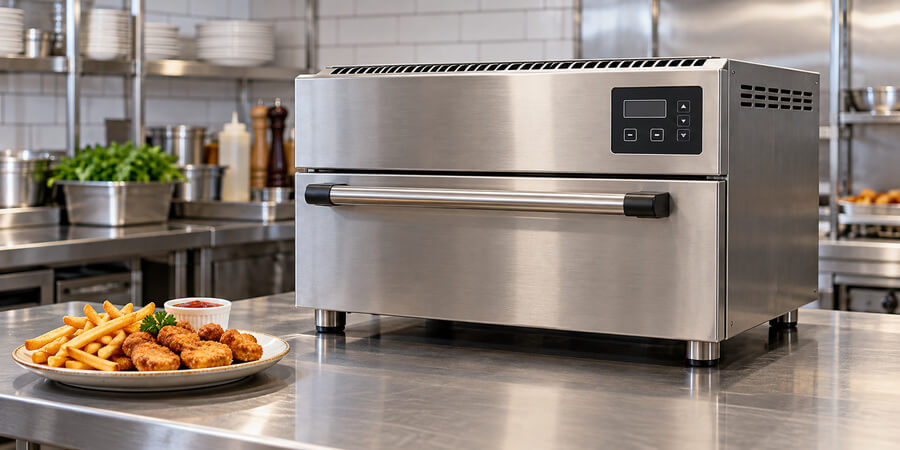
Table of Contents
Fry without oil: The ventless solution for healthier, high-margin menus
Commercial air fryers have revolutionized foodservice by enabling operators to produce crispy, "fried-like" textures without the cost, mess, or hazards of deep-frying oil. Using a powerful combination of forced hot air and radiant heat, these countertop units cook frozen and prepared foods to a golden crisp, mimicking the results of deep frying with significantly less fat. Because they do not use an oil bath, commercial air fryers typically do not require Type 1 ventilation hoods, making them the perfect solution for cinemas, bars, food trucks, kiosks, and schools looking to expand their hot food menus without expensive kitchen infrastructure.
Types of Commercial Air Fryers
While the underlying technology is consistent, commercial air fryers are distinguished by how they hold and move the food during the cooking cycle. Choosing the right type depends on your specific menu items.
Rotary Basket-Style (Batch) Air Fryers
Basket-style air fryers use a cylindrical wire mesh basket or drum to hold the food. In many commercial models, this basket rotates or tumbles continuously during the cooking cycle to ensure every piece of food is exposed to the heating element evenly.
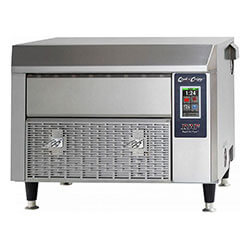
- Best Uses: High-volume loose items like French fries, chicken wings, popcorn chicken, and jalapeño poppers.
- Key Features: Rotary drum action, easy-dump handle design, compact footprint.
- Pros: Produces the most even browning on small items; mimics the "shake" of a deep fryer basket; simple to unload.
- Cons: Not suitable for delicate items that might break during tumbling (e.g., fish fillets, large onion rings) or items with wet batter.
Tray & Rack-Style Air Fryers
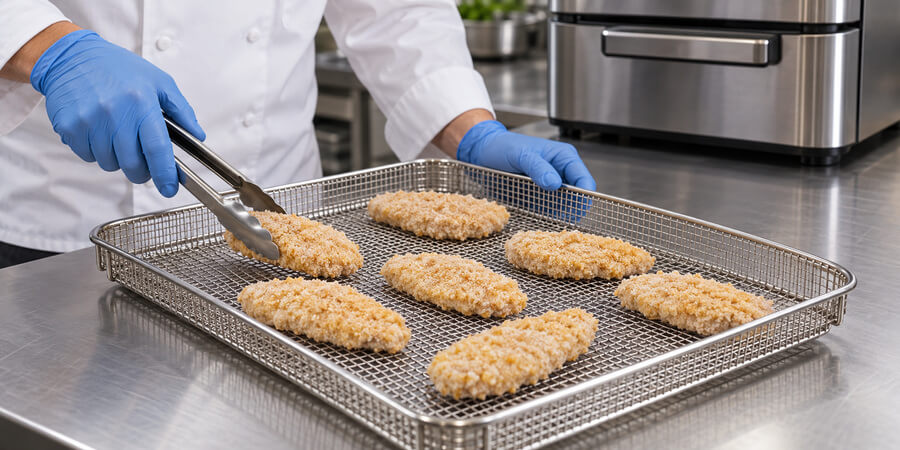
Tray-style units function more like high-velocity ovens, using flat wire racks or perforated trays to hold the food stationary while the air circulates around it. These models often have a larger internal capacity and can accommodate a wider variety of foods.
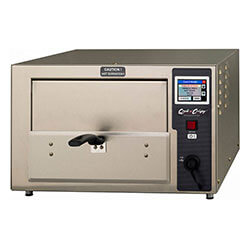
- Best Uses: Delicate items (breaded fish, crab cakes), large flat items (personal pizzas, flatbreads), and appetizers that need to keep their shape (egg rolls, mozzarella sticks).
- Key Features: Removable racks, multiple shelf positions, larger cavity.
- Pros: Extremely versatile; prevents breakage of delicate breading; can cook multiple product types simultaneously on different racks.
- Cons: May require manual flipping for thicker items; slightly larger countertop footprint.
The Technology: How It Works
Commercial air fryers achieve their results through a dual-heating process that differentiates them from standard convection ovens.
1. Radiant Heat (The Sear)
A powerful heating element (often infrared or quartz) provides direct, intense heat to the surface of the food. This mimics the "flash heat" of hot oil, starting the Maillard reaction that creates browning and flavor.
2. High-Velocity Convection (The Crisp)
A high-speed fan forces superheated air throughout the chamber. This rapid airflow strips moisture away from the surface of the food instantly. By removing moisture quickly, the exterior crisps up rather than steaming, creating the "crunch" associated with frying.
3. The Ventless Advantage
Because no oil is used, commercial air fryers do not produce "grease-laden vapors" (the heavy, flammable smoke created by deep fryers).
- No Hood Required: Most local codes classify them as standard electrical appliances, allowing installation in locations without Type 1 exhaust hoods.
- Plug-and-Play: They can be placed on any countertop with the appropriate electrical outlet, instantly turning a front-of-house counter into a hot food station.
Key Benefits
Healthier Menu Appeal
Air frying reduces fat content by 20% to 40% compared to deep frying. This allows operators to market popular items like fries and wings as "lower fat," "greaseless," or "healthier" options—a major selling point for schools, hospitals, and health-conscious diners.
Operational Cost Savings
Eliminating oil is a massive financial advantage.
- No Oil Costs: You never buy expensive frying oil.
- No Disposal Fees: You never pay for waste oil removal.
- Labor Savings: No time spent filtering oil, boiling out tanks, or scrubbing grease spills.
Safety & Risk Reduction
- No Burns: Eliminates the risk of 350°F oil splashes or burns.
- No Slips: Removes grease accumulation on floors, a common cause of kitchen slip-and-fall accidents.
- Lower Insurance: Removing a deep fryer can sometimes lower insurance premiums due to reduced fire risk.
Location Flexibility
For businesses where installing a hood system is impossible or prohibitively expensive (e.g., historic buildings, mall kiosks, cinema concession stands), an air fryer is often the only way to serve hot appetizers legally.
Best Applications & Menu Ideas
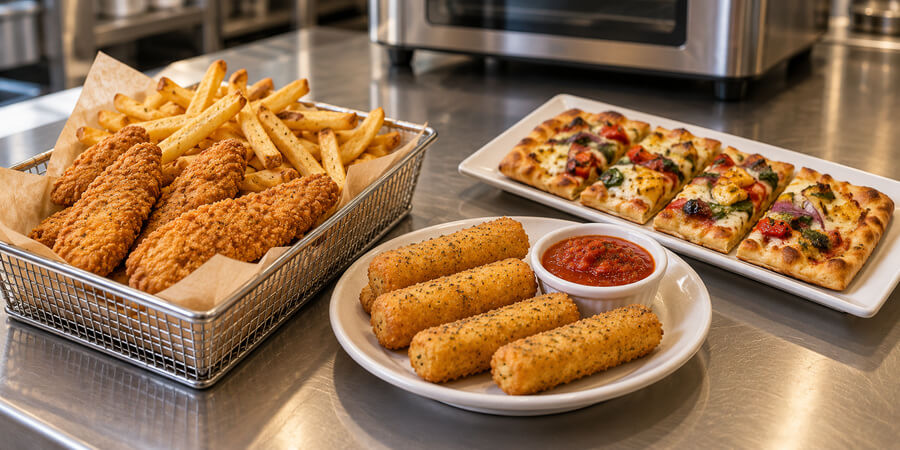
Commercial air fryers are uniquely suited to specific business segments where speed, space, and ventless operation are critical. Here is how different operations utilize them to drive high-margin food sales.
Bars, Breweries & Taprooms
For establishments focused on beverage sales, air fryers allow for a robust hot appetizer menu without a full kitchen build-out or a dedicated chef.
Operational Goal: Keep customers on-site longer with salty, craveable snacks that pair well with drinks.
| Menu Item: | Details: |
| Chicken Wings | Bone-in & Boneless staples that crisp perfectly. |
| Mozzarella Sticks | High-margin frozen appetizers that cook in minutes. |
| Loaded Fries | Air-fried potatoes topped with cheese and bacon (melted in the same unit). |
| Soft Pretzels | Heated and slightly crisped on the outside. |
Cinemas, Bowling Alleys & Family Entertainment Centers
Speed and cleanliness are paramount in these enclosed environments where grease odors would be unwelcome.
Operational Goal: High-throughput snacks that can be served by general staff with minimal training.
| Menu Item: | Details: |
| Tenders & Nuggets | Kid-friendly staples that require consistent cooking. |
| Pizza & Flatbreads | Tray-style air fryers can crisp crusts better than microwaves. |
| Corn Dogs | A concession classic that retains its crunch. |
| Funnel Cake Fries | Sweet, "fried" dough treats without the mess of oil. |
Kiosks, Food Trucks & Concession Stands
Space is the limiting factor. These operators need a single unit that can handle multiple menu items in a tiny footprint, often without fire suppression systems.
Operational Goal: Maximize menu variety per square inch of counter space.
| Menu Item: | Details: |
| Fries & Tots | The universal side dish. |
| Onion Rings | Breaded or battered (pre-fried frozen style). |
| Egg Rolls | Crisp wrappers without oil saturation. |
| Empanadas | Savory pastries that benefit from the convection crisping. |
Schools, Hospitals & Corporate Cafeterias
Institutional foodservice is driven by nutritional mandates and wellness initiatives. Air fryers allow these venues to serve "comfort foods" that meet strict fat and calorie guidelines.
Operational Goal: Serve popular "fried" items that comply with health standards.
| Menu Item: | Details: |
| Baked Fries | Lower fat versions of student favorites (Sweet Potato or Regular). |
| Breaded Fish | For healthy protein options on Fridays. |
| Veggie Burgers | Crisping the exterior to improve texture. |
| Roasted Veggies | Broccoli or cauliflower florets roasted quickly for lunch lines. |
Coffee Shops & Cafes
Cafes use air fryers to expand beyond cold pastries into savory lunch options, increasing the average ticket size.
Operational Goal: Offer warm, savory meals that justify a lunch visit.
| Menu Item: | Details: |
| Breakfast Sandwiches | Toasting the bread and heating the filling simultaneously. |
| Hash Browns | A perfect breakfast add-on. |
| Quiche/Hand Pies | Reheating with a flaky crust instead of a soggy microwave texture. |
| Pastries | Quick warm-up to refresh morning croissants and danishes. |
Selecting the Right Air Fryer
Capacity & Throughput
- Batch Size: Commercial units typically handle 2 lbs to 5 lbs of food per cycle. A 2 lb batch might serve 4-6 side orders of fries.
- Cycle Time: Most frozen appetizers cook in 4-8 minutes. Calculate your peak hour demand to determine if one unit is enough or if you need a second unit (or a larger capacity model).
Programmability
Look for models with programmable presets. This is critical for non-kitchen environments (like bars) where the operator may be a bartender or server.
- One-Touch Operation: Staff simply press "Wings" or "Fries," and the machine runs the correct time and temperature automatically.
- Consistency: Ensures the food comes out the same every time, regardless of who is working.
Electrical Requirements
Commercial air fryers are powerful appliances.
- Voltage: Many heavy-duty models require 208V or 240V service to generate enough heat for rapid recovery.
- Amperage: Check your breaker panel; a dedicated 20A or 30A circuit is often required.
Comparison: Air Fryer vs. The Rest
Air Fryer vs. Deep Fryer
- Taste/Texture: Deep fryers still offer the "gold standard" for taste and ultra-crispy texture, especially for wet-battered items. Air fryers are excellent (90% match) for pre-fried frozen foods (like oven-ready fries/wings) but cannot cook wet batters (like tempura).
- Cost: Deep fryers are cheaper to buy but expensive to run (oil). Air fryers are expensive to buy but cheap to run.
Air Fryer vs. Convection Oven
- Speed: Air fryers cook 30-50% faster than standard convection ovens due to the focused, high-velocity airflow.
- Crispness: Convection ovens are great for baking, but often dry out fries before they get crispy. Air fryers are specifically tuned to sear and crisp quickly.
Commercial vs. Residential Air Fryers
While residential air fryers are popular home appliances, they are not designed for the demands of a professional kitchen. Understanding the differences is critical for compliance and performance.
| Feature: | Commercial Air Fryers: | Residential Air Fryers: |
| Capacity | Large (2-5 lbs+ or multi-shelf); designed for batch cooking. | Small (2-6 quarts); designed for family meals. |
| Certification | NSF/UL Commercial: Meets strict sanitation and safety codes. Legal for foodservice use. | Consumer UL: Not legal for commercial kitchens; will fail health inspections. |
| Durability | Stainless steel construction; heavy-duty motors; built for continuous daily use. | Plastic components; light-duty motors; built for occasional use (1-2 times/day). |
| Power | High wattage (2000W-5000W+); often requires 208/240V; rapid recovery. | Lower wattage (1500W-1800W); standard 120V; slow recovery between batches. |
| Controls | Programmable presets; tamper-proof options; designed for staff workflow. | Consumer-friendly dials or touchscreens; less precise for standardized menus. |
| Warranty | Commercial warranty supports business use. | Residential warranty is typically voided if used in a commercial setting. |
Why You Can't Use a Home Unit: Beyond the lack of durability, using a residential air fryer in a commercial setting typically violates local health codes due to the lack of NSF certification (sanitation) and can invalidate your business insurance in the event of a fire.
Maintenance & Cleaning
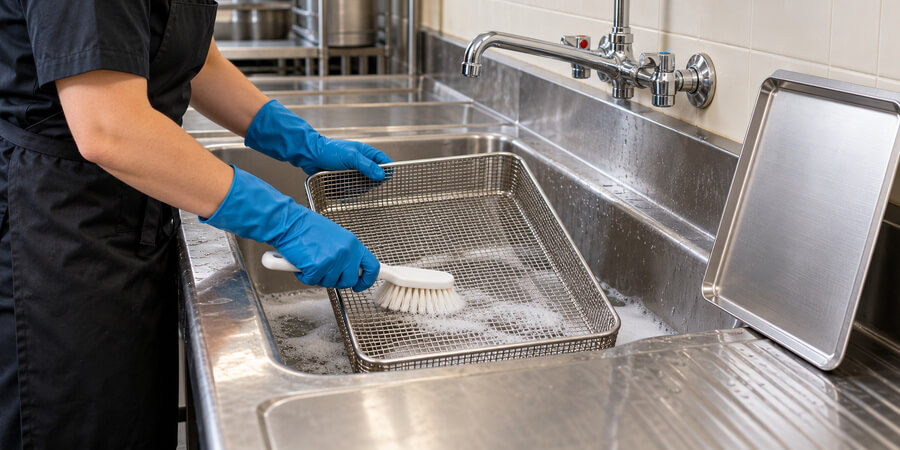
Maintaining a commercial air fryer is significantly easier than maintaining a deep fryer.
Daily Cleaning
- Removable Parts: Wash the basket, tray, and crumb drawer in the dishwasher or 3-compartment sink.
- Interior: Wipe down the interior chamber with a damp cloth and mild degreaser to remove any oil splatter from the food itself.
- Exterior: Wipe down the control panel and stainless steel housing.
Periodic Checks
- Air Intake: Check the rear air intake vents for dust buildup and vacuum if necessary to prevent overheating.
- Gaskets: Inspect door gaskets (if applicable) for wear to ensure a tight heat seal.
Frequently Asked Questions
Can I cook raw batter in a commercial air fryer?
No. Wet batters (like beer-battered fish or tempura) will drip through the basket and burn before setting. Air fryers work best with "oven-ready" frozen products (which are pre-fried at the factory) or raw items with a dry breading/rub.
Do I really not need a hood?
In most jurisdictions, yes. Because they don't emit grease-laden vapors, they are typically exempt from Type 1 hood requirements. However, always verify with your local health and fire inspectors, as local codes vary.
How long do fries take to cook?
Typical frozen fries cook in 4-6 minutes in a commercial air fryer, compared to 3-4 minutes in a deep fryer and 15-20 minutes in a convection oven.
Can I use an air fryer for baking?
Tray-style air fryers can be used for baking items like cookies or biscuits, but the high fan speed may affect the rise of delicate pastries. They are best suited for savory, crispy foods.
Shop Air Fryers
- Commercial Air Fryers - Browse our selection of ventless, oil-free frying solutions.
- Commercial Air Fryer Accessories - Browser our selection of air fryer accessories; filtration, cleaners, baskets, and more.
Related Equipment
- Commercial Deep Fryers - For traditional oil-based frying.
- Commercial Food Dehydrators - For drying and preserving food.
Share This!