Chef Base Guide
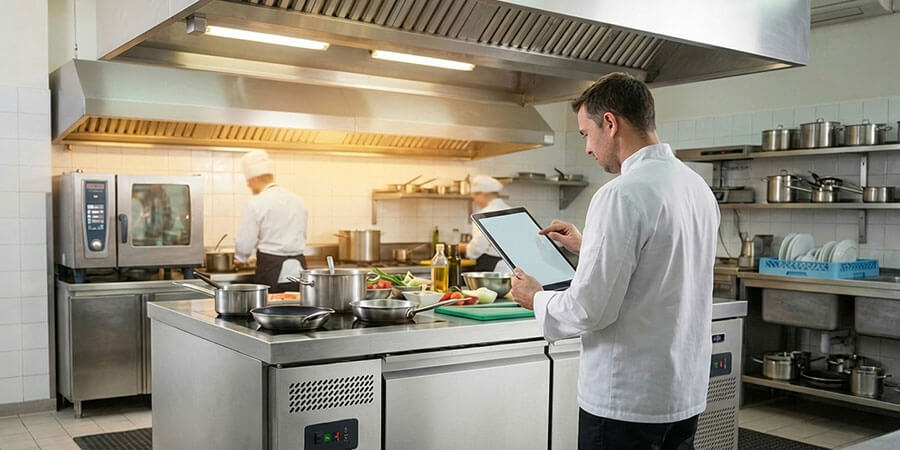
Table of Contents
Choose the right chef base for your commercial kitchen's refrigerated workspace needs.
Chef bases combine refrigeration with sturdy workspace, providing under-counter storage for ingredients while supporting heavy prep work. These units keep fresh foods at optimal temperatures and offer durable surfaces for food preparation, reducing the need to move between stations in busy commercial kitchens. Covering refrigerator and freezer types, drawer configurations, materials, and sizing guidelines, this guide helps operators select equipment that maximizes space efficiency and workflow in restaurants, cafes, and foodservice facilities.
What is a Chef Base?
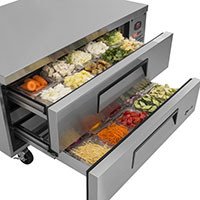
Chef bases are specialized under-counter refrigeration units that combine sturdy workspace surfaces with temperature-controlled storage, providing convenient access to ingredients during food preparation. Unlike traditional equipment stands, chef bases include refrigeration capabilities to keep fresh produce, meats, and dairy at safe temperatures (at or below 41°F) while supporting heavy prep work like chopping, mixing, and assembly.
The primary buying drivers include space utilization in compact kitchens, workflow efficiency by keeping ingredients close to prep areas, and durability for continuous commercial use. Most operations choose between refrigerator bases for fresh ingredients and freezer bases for frozen storage, with configurations ranging from 2 to 6 drawer units to match specific operational needs.
Types of Chef Bases
Chef bases are categorized primarily by temperature control type, with refrigerator bases for fresh ingredient storage and freezer bases for frozen items. The category page facets include dimensions (width 36-84", various depths/heights), drawer counts (1-4), and materials (stainless steel interior/exterior).
Refrigerator Bases
Refrigerator bases maintain temperatures at or below 41°F (typically 35-38°F) for storing fresh ingredients, dairy products, and prepared foods close to prep areas. These units feature adjustable shelving or drawers to keep items organized and accessible during service.
- Best Uses: Fresh produce storage, dairy products, prepared ingredients, sandwich assembly stations
- Key Features: Temperature at or below 41°F, digital controls, multiple drawer/shelf configurations, frost-free operation
- Pros: Energy-efficient for fresh storage, convenient access during prep, maintains food safety temperatures, versatile drawer options
- Cons: Not suitable for frozen items, requires consistent maintenance, higher initial cost than basic stands
Freezer Bases
Freezer bases operate at temperatures below 0°F for storing frozen ingredients, desserts, and backup proteins that need to remain frozen until use. These units are essential for operations with high frozen food volume, providing quick access to items without thawing.
- Best Uses: Frozen meats, seafood, desserts, backup ingredients, ice cream storage in smaller operations
- Key Features: Temperature range -10 to 0°F, heavy-duty compressors, frost-free design, secure drawer seals
- Pros: Prevents freezer burn, maintains product quality, accommodates seasonal menus, energy-efficient operation
- Cons: Limited to frozen items only, requires more power, higher noise levels during defrost cycles
Specialized Configurations
2-Drawer Units
The most common configuration, 2-drawer units offer balanced storage and workspace efficiency for small to mid-size operations. These models typically range from 36-64" wide and provide organized access to frequently used ingredients.
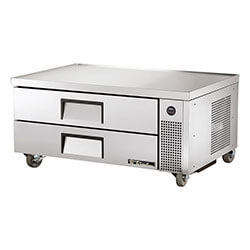
- Best Uses: Small to mid-size kitchens, cafes, food trucks, sandwich stations, single-cook lines
- Key Features: Two independent drawers, adjustable dividers, front-breathing design, 36-64" widths
- Pros: Cost-effective entry point, fits most kitchen layouts, efficient ingredient organization, simpler maintenance
- Cons: Limited capacity for high-volume operations, may require supplemental storage
4-Drawer Units
Mid-size to large units with four drawers providing expanded storage capacity and better ingredient separation. These models typically range from 72-110" wide and suit busy commercial kitchens with diverse prep needs.
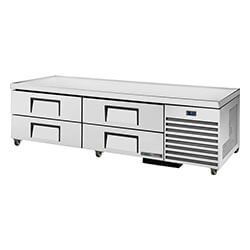
- Best Uses: Full-service restaurants, catering operations, high-volume prep areas, multi-station cook lines
- Key Features: Four independent drawers, adjustable dividers, heavy-duty construction, 72-110" widths
- Pros: Organizes ingredients by type, efficient access, supports high-volume workflow, better separation
- Cons: Requires more counter space, higher initial investment, larger footprint
6-Drawer Units
Large-capacity units designed for high-volume operations requiring maximum storage and organization. These models typically span 110-120" wide and support extensive ingredient variety across multiple prep stations.
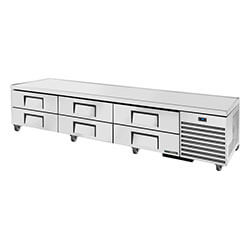
- Best Uses: Large commercial kitchens, banquet facilities, hotel operations, multi-station prep lines
- Key Features: Six independent drawers, maximum storage capacity, heavy-duty construction, 110-120" widths
- Pros: Maximum ingredient capacity, supports multiple cooks, excellent organization, reduces restocking frequency
- Cons: Requires significant counter space, highest investment level, may need dedicated electrical circuits
Food Pan Capacity
Chef bases often include specific food pan capacity ratings, typically accommodating multiple 1/6-size or full-size pans. Models may hold 2-6 pans depending on drawer height and configuration. Select units that match your standard pan sizes (12" x 20" or 18" x 26") to optimize storage and prevent wasted space. Deeper drawers support stacking for bulk storage, while shallower designs allow easy horizontal access for frequently used ingredients.
Compressor Styles and Locations
Compressors are positioned as bottom-mount (under the unit, easier access for cleaning/servicing) or side-mount (along the side, saves vertical space). Bottom-mount designs are preferred in high-volume operations requiring regular maintenance, as they simplify compressor access without moving the unit. Side-mount options work well in compact kitchens but may complicate repairs. Most commercial models feature heavy-duty compressors for continuous operation, with energy-efficient options using variable-speed technology.
Top Styles
Chef base tops come in flat designs for general prep work or risered styles (1-2" elevated edges) for improved ergonomics and liquid drainage. Risered tops prevent spills from running off the work surface and are ideal for wet prep stations or areas with frequent cleanup. Flat tops suit dry assembly tasks like sandwich making or baking preparation. All tops feature sturdy stainless steel construction rated for heavy commercial use, with some models including integrated cutting boards or risers as standard features. Where the station needs a refrigerated pan rail rather than a flat top, our refrigerated prep table sizing guide covers that format.
Base Styles
Beyond drawer arrangements, chef bases offer various base configurations including standard enclosed designs (front access only) and pass-through models (accessible from both sides). Pass-through bases enhance workflow in busy kitchens by allowing staff access from either side of the unit, though they require more floor space. Standard bases are more compact and suitable for corner installations. Both styles maintain the same refrigeration performance and workspace functionality.
| Type: | Temperature Range: | Drawer Options: | Best For: | Primary Benefits: |
| Refrigerator Bases | ≤41°F | 2, 4, or 6 drawers | Fresh ingredients | Maintains food safety, convenient prep access |
| Freezer Bases | 2 or 4 drawers | 1-3 drawers | Frozen items | Prevents thawing, quality preservation |
Features & Accessories
- Capacity: Available in 4-25 cu ft storage volumes depending on model width (36-84") and drawer count; drawer depths range 20-30" for optimal ingredient organization
- Dimensions: Models available in widths 36-84", depths 30-36", heights 30-36"; front-breathing design standard for built-in installations
- Materials: Most commercial models feature stainless steel interior/exterior (NSF certified), galvanized steel frame, and aluminum drawer slides; heavy-duty casters available as an option
- Refrigerant Types: Most models use eco-friendly R-290 refrigerant for improved energy efficiency and environmental compliance
- Controls: Most units include digital temperature displays, adjustable thermostats, audible alarms for temperature excursions, and auto-defrost cycles
- Standard Equipment: Refrigerator/freezer units generally include adjustable legs/casters, drawer liners, and user manual; extended warranties and professional installation services available separately
- Optional Accessories: Drawer dividers, shelf liners, temperature monitoring probes, heavy-duty casters, locking drawer options
Selecting the Right Chef Base
Production & Capacity
Choose capacity based on your daily ingredient usage. Small cafes (50-100 lbs daily) need 4-10 cu ft units, while full-service restaurants (200-500 lbs daily) require 15-25 cu ft models. Consider peak prep hours and ingredient variety when selecting drawer count; operations with many fresh ingredients benefit from 3-4 drawer configurations.
Space & Utilities
Units require dedicated under-counter space with 6" clearance on sides and back for proper air circulation. Electrical requirements are 115V/15 amp for most models; ensure your kitchen has appropriate power outlets. Front-breathing designs allow for seamless counter integration without side access needs.
Budget & Total Cost of Ownership
Basic 36" 2-drawer units start at $1,500-$2,500. Mid-range 48-72" 2 to 4-drawer models range from $2,500-$5,500. Premium 84-120" 4 to 6-drawer units cost $6,000-$13,000+. Annual operating costs include $200-$500 electricity and $100-$300 maintenance. Payback occurs in 2-4 years through reduced labor movement and food waste.
Compliance & Safety
Select NSF-certified units for foodservice safety. Ensure units maintain HACCP-compliant temperatures and include audible alarms. Choose models with rounded drawer edges and secure latches to prevent accidents in busy environments.
Cost & ROI Snapshot
- Entry Range: $1,500-$2,500 for compact 2-drawer units
- Mid Range: $2,500-$4,500 for 48-60" two-drawer models
- Premium: $5,000+ for wide multi-drawer commercial units
- Operating Costs: $300-$800 per year (energy, maintenance)
- Break-Even Insight: ROI in 2-4 years through 20-30% labor savings from reduced movement and 15-25% food waste reduction
Installation & Maintenance
Installation Checklist
- Verify electrical requirements (115V/15 amp standard) and ensure proper grounding
- Position unit level with adjustable feet/casters, ensuring 6" clearance on all sides
- Confirm front-breathing design aligns with counter installation without obstructions
- Test temperature controls and verify accurate calibration (32-41°F for refrigerators, -10-0°F for freezers)
- Install any optional accessories like drawer dividers or monitoring probes
- Perform initial load test with ingredients to confirm capacity and accessibility
Care Schedule
| Task: | Frequency: | Notes: |
| Clean interior/drawers | Daily | Use food-safe sanitizers, remove all contents before cleaning |
| Check temperature | Daily | Verify readings match set points, adjust as needed |
| Defrost (if manual) | Monthly | For frost-free models, inspect for buildup; manual units require periodic defrosting |
| Clean condenser coils | Quarterly | Vacuum or brush coils to maintain efficiency |
| Inspect seals/gaskets | Quarterly | Replace worn parts to prevent temperature loss |
| Professional service | Annually | Complete inspection, calibration, and preventive maintenance |
Troubleshooting Highlights
- Temperature fluctuations: Check door seals, condenser cleanliness, and thermostat calibration; ensure proper ventilation
- Excessive noise: Inspect fan motors and bearings; clean debris from components; consider sound dampening pads
- Frost buildup: Verify auto-defrost operation, check door seals, reduce door openings during peak hours
- Drawer operation: Lubricate slides regularly, check for obstructions, ensure level installation
- Power issues: Confirm circuit breaker status, test outlet functionality, replace faulty power cords
Frequently Asked Questions
How do chef bases differ from regular equipment stands?
Chef bases include built-in refrigeration or freezing capabilities, keeping ingredients fresh or frozen while providing workspace. Regular equipment stands only offer sturdy surfaces without temperature control.
What size chef base do I need for my restaurant?
Measure your under-counter space (typically 30-36" high). Width depends on prep area needs—48-60" for most operations. Choose capacity based on daily ingredient volume: 10-15 cu ft for small cafes, 20-25 cu ft for full-service restaurants.
Can I use a freezer base for fresh ingredients?
No, freezer bases operate below freezing temperatures and would damage fresh produce, dairy, and meats. Use refrigerator bases for fresh storage and freezer bases specifically for frozen items.
How much electricity do chef bases consume?
Average 3-6 amps at 115V, costing $50-150 monthly depending on usage and local rates. Energy-efficient models with digital controls can reduce consumption by 20-30%.
Do chef bases require special plumbing or ventilation?
Most models only need electrical access and adequate ventilation (6" clearance). Front-breathing designs eliminate rear access requirements, making them suitable for tight kitchen spaces.
How often should I clean chef base drawers?
Clean drawers daily after use with food-safe sanitizers. Deep clean weekly, and inspect seals quarterly to maintain food safety and temperature integrity.
Can chef bases be used outdoors or in non-kitchen areas?
Commercial chef bases are designed for indoor commercial kitchen environments with controlled temperatures. Outdoor use would require weatherproofing and may void warranties.
What warranty coverage do chef bases typically offer?
Most offer 1-3 year parts and labor warranties. Compressor warranties often extend to 5 years. Register units immediately after installation for full coverage.
How do I organize ingredients in multiple drawers?
Use the top drawers for frequently accessed items, middle drawers for less-used ingredients, and bottom drawers for bulk storage. Add dividers to separate different food types and prevent cross-contamination.
Are chef bases compatible with all counter types?
Most chef bases work with standard 30-36" counter heights. Custom installations may require adjustable feet or casters. Ensure the counter provides adequate support for the unit's weight and use.
Shop Chef Bases
- Chef Bases - Complete selection of refrigerated chef bases and freezers
- Refrigerator Bases - Units for fresh ingredient storage
- Freezer Bases - Units for frozen storage and backup items
Related Guides & Resources
- Commercial Refrigeration Guide - Comprehensive overview of commercial cooling equipment
- Restaurant Equipment Parts Guide - Maintenance for refrigeration systems
- Refrigerated Prep Table Sizing Guide - Width ladder, pan counts and rail types for the prep-station half of the cold line.
Share This!