Al Fresco Dining for Restaurants
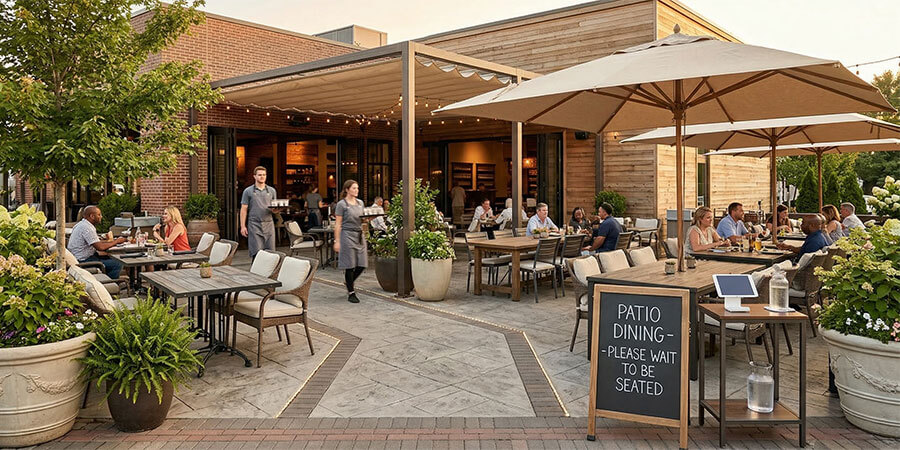
Table of Contents
Build a better outdoor dining experience by balancing comfort, traffic flow, shade, furniture, and service readiness instead of focusing on decor alone
Al fresco dining is easy to romanticize and easy to get wrong. A patio can look beautiful in photos but still feel uncomfortable, inefficient, or frustrating in real service if the layout is weak, the shade is poor, the traffic flow is awkward, or the staff has no clear plan for serving the space well.
That is why a strong outdoor dining setup is not only a design decision. It is also an operations decision. The best al fresco spaces feel easy for guests and manageable for staff at the same time.
Start With How The Outdoor Space Is Actually Used
Not every restaurant needs the same kind of outdoor dining area.
| Outdoor Format: | What It Needs Most: |
| Sidewalk patio | Clear traffic boundaries, compact furniture, visibility |
| Rooftop or terrace | Wind planning, shade, lighting, and service-path discipline |
| Garden or courtyard | Comfort, drainage, weather-readiness, and atmosphere |
| Seasonal overflow seating | Flexible furniture, faster setup, and easy breakdown |
This is the first planning question to answer. The right outdoor setup depends on how permanent the space is, how weather-exposed it is, and how much service volume you expect it to handle.
That sounds basic, but it changes nearly every decision that follows. A sidewalk patio needs tighter sightlines, clearer entry cues, and more disciplined furniture choices than a courtyard. A rooftop needs stronger wind planning and more intentional lighting than a sheltered terrace. The same design instinct does not work equally well in all four situations.
Layout And Traffic Flow Matter More Than Decor
Outdoor dining areas often get planned from the table inward instead of from the guest and server movement outward.
The stronger approach is to think about:
- Where guests enter and wait
- How staff move with trays, drinks, and hot food
- Where pickup or bussing pressure builds
- How close tables can sit without feeling cramped
- What happens when the patio is busy instead of half full
If the path through the space feels awkward, the whole experience feels less polished no matter how attractive the furniture is.
This is one reason patio layouts look deceptively easy on paper. A spacing plan can appear fine before service, then feel chaotic as soon as guests, trays, bussing tubs, strollers, bags, and wait-list traffic all start sharing the same space.
| Layout Question: | Why It Matters In Real Service: |
| Where does the guest pause first? | Reduces awkward check-in and waiting moments |
| Can servers move cleanly with loaded trays? | Prevents service slowdowns and collision pressure |
| Can a table be reset without blocking a lane? | Keeps the patio from stalling during turns |
| Is there a clear plan for overflow? | Helps the space stay organized during peak periods |
Shade, Weather, And Heat Control Decide Whether Guests Want To Stay
Comfort is what keeps outdoor dining from feeling like a novelty.
OSHA's heat guidance is built for workers, but the practical takeaway applies to outdoor dining operations too: heat and sun exposure change how people perform and how spaces feel. For staff, that affects service pace and fatigue. For guests, it affects whether they want to stay long enough to order another round, dessert, or another visit in the future.
That is why the outdoor setup should account for:
- Shade coverage during the hottest service windows
- Airflow and breeze patterns
- Protection from light rain or fast weather changes where possible
- Heat sources for cooler seasons if the concept uses the space that way
Comfort is not a finishing touch. It is part of whether the patio works at all.
Restaurants often spend heavily on the visual layer of the patio and too lightly on the environmental one. But if guests are squinting in direct sun, swatting windblown napkins, or sitting in an area that feels noticeably hotter than the dining room, the design is not doing its job.
Furniture Needs To Fit Outdoor Service, Not Just Outdoor Photos
The best outdoor furniture is the furniture that still performs well after repeated service, weather exposure, cleaning, and guest turnover.
That means thinking about table stability, chair comfort and durability, how easy pieces are to clean and move, whether layouts can flex for different party sizes, and whether surfaces stay usable in sun and changing weather.
For the product side, Restaurant Patio Furniture and Commercial Outdoor Furniture are the strongest category starting points.
This is also where the real difference between a styled patio and a workable patio shows up. A beautiful table that rocks every time a plate lands on it will not feel premium for long. A chair that looks strong in photos but becomes uncomfortable before the appetizer arrives will quietly work against the whole experience.
Outdoor Dining Works Better When Guest Expectations Are Clear
Guests should not have to guess:
- Where to check in
- Whether seating is self-serve or hosted
- Where to wait
- How the menu is presented outdoors
- What happens if weather changes suddenly
This is one reason outdoor dining often benefits from better signage and clearer service language than operators expect. If the guest is uncertain before the server arrives, the outdoor experience already feels less polished.
For the communication side of that problem, Restaurant Signage Guide is the most natural companion resource.
Sanitation And Reset Standards Still Need To Feel Tight Outside
Outdoor dining can feel relaxed, but it cannot feel neglected.
That means outdoor-service procedures should cover regular table resets, quick spill response, floor and walkway checks, trash-control points that do not drift into guest space, and weather-related cleaning and drying routines when needed.
Outdoor dining also creates more exposure to wind, debris, and foot traffic, which makes consistency even more important. A great patio still has to feel maintained.
It also needs a backup rhythm for weather surprises. Hosts and servers should know what happens when a table needs to move, when umbrellas need to be closed, or when the outdoor section needs to tighten quickly instead of improvising in front of guests.
That is one of the easiest differences between an outdoor dining space that feels intentional and one that feels improvised. Guests may not know the procedure itself, but they absolutely notice when the team does not seem to have one.
Accessibility And Ease Of Movement Should Be Planned In Early
Outdoor spaces are at their best when they are easy to navigate. That includes guests carrying bags, servers moving quickly, and anyone who needs clear accessible routes through the dining area.
That is another reason layout should come before styling. If the patio is difficult to move through, hard to seat, or full of pinch points, both guests and staff feel it immediately.
This matters for everyday hospitality just as much as for compliance-minded planning. A smoother patio is easier to serve, easier to bus, easier to host, and easier for guests to enjoy without extra friction.
Menu, Serviceware, And Support Stations Need To Fit Outdoor Reality
Not every menu behaves well outside.
Some dishes travel across an outdoor section beautifully. Others cool too fast, lose structure in the wind, or become awkward to serve when the patio is farther from the kitchen than the dining room is. That is why the smartest outdoor dining programs usually think about menu fit and support tools at the same time.
The same logic applies to serviceware and support stations. Water service, condiment access, check presenters, bussing support, and tray-land spots all feel minor until the patio is full. Once the section gets busy, those details either make the service feel easy or make it feel improvised.
The best outdoor dining sections are not only attractive. They are equipped to serve the menu they actually offer.
That usually means the section needs at least one practical support logic that guests never notice directly: a clear water-service plan, a tray landing area, a reset staging point, or a faster route for check handling and bussing. When those support details are missing, the patio may still look beautiful, but it will feel heavier to run every shift.
Lighting Should Extend Service Without Making The Space Harsh
Lighting is one of the clearest outdoor-dining upgrades because it affects both function and atmosphere.
The strongest outdoor setups usually avoid two extremes:
- Not enough light to feel navigable and comfortable
- Too much hard brightness that makes the patio feel exposed rather than relaxed
The best result is usually layered: enough visibility for service and safety, but still warm enough to feel intentional.
Lighting also changes the patio's identity over the course of a day. A space that feels bright and easy at lunch may need a different mood by evening. The operators who handle that transition well are usually the ones who planned it instead of letting it happen by accident.
Seasonal Planning Matters More Than A Perfect Summer Setup
If outdoor dining is important to the concept, the setup should not feel like leftover furniture placed outside for warm weather. It should feel integrated with the rest of the restaurant.
That means the outdoor area should align with the brand, the service model, the pace of the kitchen, and the kind of guest experience the restaurant actually wants to create.
This is especially important in markets where weather and seasonality change how the space is used over the year. Flexibility matters, but intentionality matters even more. A patio that only works on perfect spring evenings is not the same thing as an outdoor dining program.
That also means planning how the section opens, tightens, or closes when conditions change. If the team already knows how umbrellas, heaters, table moves, and section cuts are handled, the guest experience stays calmer when the weather shifts unexpectedly.
If you want the visual side of patio improvement in more detail, Patio Seating That Attracts More Customers is the best supporting blog in the repo.
The Best Al Fresco Spaces Make Outdoor Dining Feel Easy
That is the real goal. Not simply that the patio looks attractive, but that it feels natural for everyone using it.
Guests should feel comfortable, oriented, and well served. Staff should feel like the outdoor section is manageable rather than constantly awkward. And management should feel that the patio supports the concept instead of becoming a seasonal headache that happens to photograph well.
When all of those conditions line up, outdoor dining becomes more than a nice-weather accessory. It becomes a real extension of the restaurant.
Frequently Asked Questions
What makes an al fresco dining area work well?
The strongest outdoor dining areas balance guest comfort and operational flow. That means the layout is easy to move through, shade and weather exposure are planned for, furniture fits the service model, and the staff can serve the space without constant friction.
What is the biggest mistake restaurants make with outdoor dining?
Treating the space like decor instead of an operating area. A patio may look attractive and still perform badly if the traffic flow, comfort, sanitation, or service logistics were never planned properly.
How do I make outdoor restaurant seating more comfortable?
Focus on shade, airflow, table spacing, seating comfort, lighting, and how the space feels during actual service windows instead of only during ideal conditions. Outdoor dining works best when comfort is planned rather than assumed.
Does outdoor dining need its own service procedures?
Yes. Outdoor dining usually needs clearer procedures for seating, table resets, spill response, weather changes, traffic flow, and signage so the guest experience stays smooth even when the space is busy.
What furniture works best for restaurant patio dining?
The best furniture is durable, stable, easy to clean, and appropriate for the space and service style. It should support repeated turnover and changing weather without becoming hard to maintain or awkward to move.
Why does signage matter in outdoor dining?
Because outdoor spaces often create more guest uncertainty about check-in, seating, waiting, and pickup or service flow. Good signage reduces that friction and makes the patio feel more organized and intentional.
Related Resources
- Patio Seating That Attracts More Customers - Visual and layout ideas for stronger outdoor dining appeal.
- Restaurant Signage Guide - Improve communication and guest flow around outdoor seating.
- Restaurant Patio Furniture - Patio-focused furniture for outdoor dining areas.
- Outdoor Table Umbrellas & Bases - Shade and table-support options for guest comfort.
Share This!