True Health Safety Timer Models: What The HST Feature Does And How To Compare The Current Units
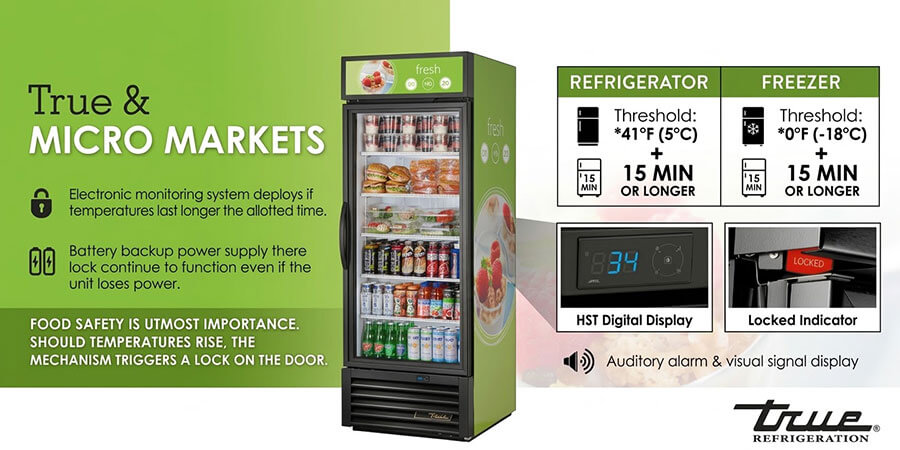
Table of Contents
Compare True HST refrigerator and freezer merchandisers with a clearer view of how the lock feature works and when it matters
If you landed on this page looking for True Manufacturing health safety timer models, you are probably trying to answer a very practical question: what does the HST feature actually do, and which units have it? That is a better question than simply asking whether a merchandiser is a refrigerator or freezer, because the HST feature is tied to product protection and access control when temperatures drift above the intended holding range.
This page focuses on the specific True HST merchandisers linked here. It uses current True manuals, product pages, and spec-sheet language to explain what the Health Safety Timer feature does, how refrigerator and freezer thresholds differ, and how to compare the four featured HST units without turning the topic into a generic merchandiser overview.
What A True Health Safety Timer Model Is
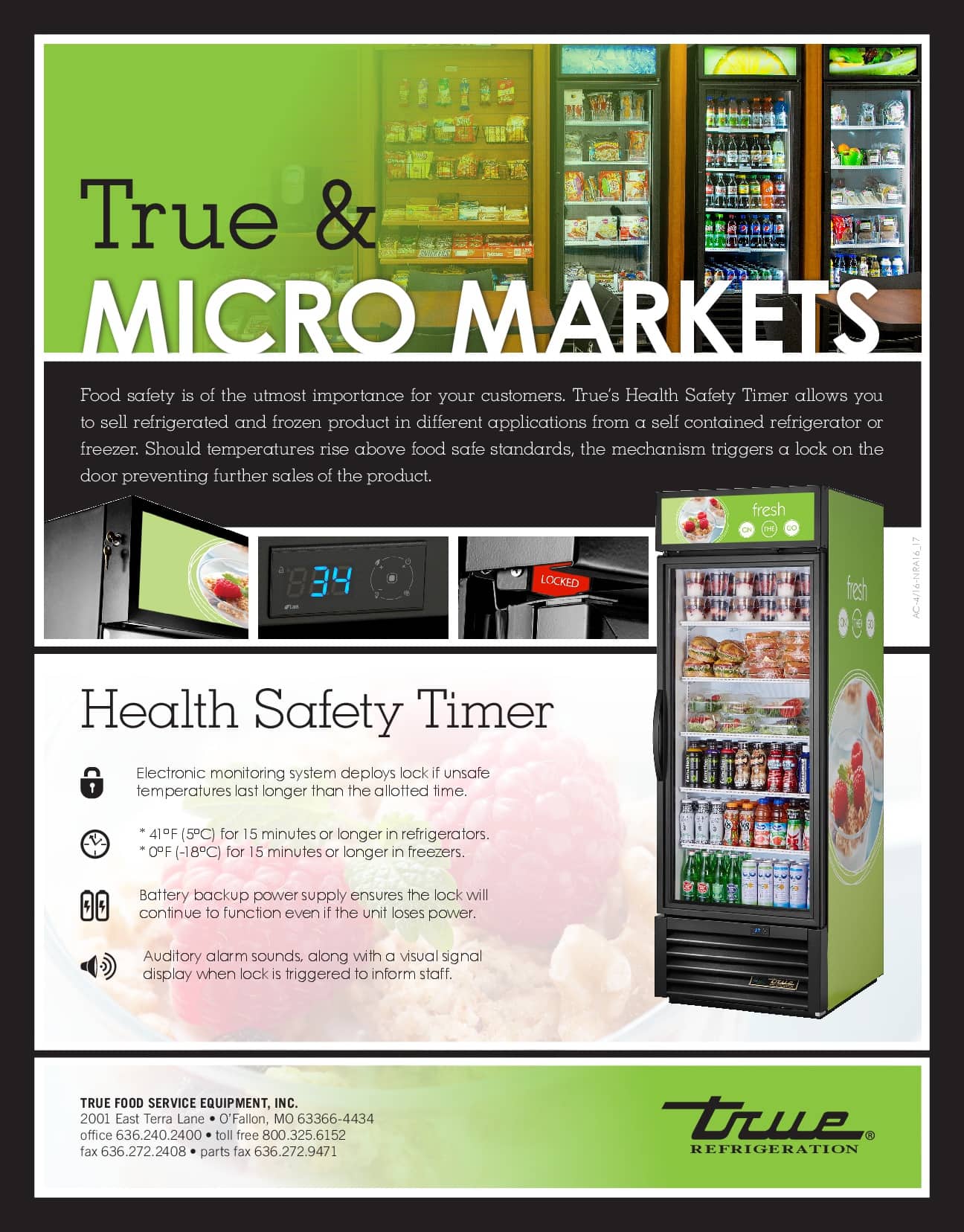
On these True merchandisers, the Health Safety Timer feature is an electronic monitoring and door-locking function tied to cabinet temperature. The purpose is straightforward: if the cabinet stays above a defined threshold for too long, the unit can lock the door and alert staff rather than continuing to allow product access as if nothing happened.
That makes HST units different from a standard glass door merchandiser in an important way. A standard merchandiser is primarily a temperature-controlled display cabinet. An HST model adds an extra control layer intended for higher-accountability holding environments where product access should stop if the unit drifts out of its intended safe zone for too long.
True's current manuals and product documentation also show that HST details need to be checked carefully by model family. True maintains separate support entries for GDM HST and GDM HST02 manuals, which is a good reminder that you should always match the exact unit and spec sheet before assuming a control sequence or feature behaves the same across every version.
How The HST Lock Works On These Models
The core concept stays the same across the units on this page: the cabinet monitors temperature, then deploys a lock and alert if the cabinet exceeds the allowed threshold for a continuous period.
What changes is the threshold.
| Model Family: | Cabinet Type: | Normal Holding Range: | HST Trigger Language: |
| GDM-23-HST-HC~TSL01 | Refrigerator | 33 degrees F to 38 degrees F | Lock deploys if temperature exceeds 41 degrees F for longer than 30 minutes |
| GDM-26-HST-HC~TSL01 | |||
| GDM-23F-HST-HC~TSL01 | Freezer | Maintains -10 degrees F | Lock deploys if temperature exceeds 0 degrees F for longer than 30 minutes |
| GDM-26F-HST-HC~TSL01 |
For the refrigerator models linked here, the feature is described as a lock that deploys if temperatures exceed 41 degrees F for longer than 30 minutes. For the freezer models linked here, the same function is described with a 0 degrees F threshold for longer than 30 minutes. True's newer HST02 documentation adds a more explicit control description, including an HST LCK display message and audible alert behavior when the lock condition is triggered.
That is why the safest way to explain HST is not as a vague "freshness timer" or general countdown timer. It is better understood as a temperature-monitoring safety control tied to a door lock and alert response.
Why Operators Look For HST Models In The First Place
The strongest use case for an HST merchandiser is not just cold storage. It is controlled product display.
These models make more sense when you need all three of the following at once:
- customer-facing visibility
- a defined refrigerated or frozen holding range
- a way to prevent continued access if the cabinet moves outside that range long enough to matter
That combination is why HST models stand out in convenience-oriented retail, self-serve packaged-food settings, healthcare foodservice, and other operations where staff want an extra layer of control over what happens after a temperature excursion.
It also explains why these units belong in a narrower conversation than a general merchandiser buying guide. If you simply need a glass door display refrigerator, many standard merchandisers may do the job. If you specifically want temperature-monitoring lock behavior tied to self-serve product access, that is where HST becomes the defining feature.
For broader display-cabinet context, the Merchandising Refrigeration Guide and the Commercial Refrigeration Guide are the best companion reads.
Refrigerator HST Models Vs Freezer HST Models
The easiest way to narrow the field is to decide whether your application is fundamentally refrigerated display or frozen display.
Choose an HST refrigerator if:
- you are displaying refrigerated packaged food or beverages
- your expected holding range is the standard mid-30s range
- you want the HST lock tied to a 41 degrees F excursion threshold
Choose an HST freezer if:
- you are displaying frozen product or ice cream
- you need a freezer case rather than a cooler
- you want the HST lock tied to a 0 degrees F excursion threshold
That sounds obvious, but it matters because HST is not the same feature applied to identical cabinets. The cabinet type, holding range, door glass, horsepower, and monitoring threshold all shift with the application.
If your need is still broader than HST itself, you may also want to browse Merchandiser Glass Door Refrigerators, Merchandiser Glass Door Freezers, and the full True Refrigeration brand page.
What To Check Before You Buy
HST is a strong feature, but it is not the only thing that decides whether one of these units is right for your operation.
| Buying Question: | Why It Matters: | What To Confirm: |
| Is the product refrigerated or frozen? | This decides the cabinet family first | Pick refrigerator or freezer before comparing cabinet width |
| Is one door enough? | The current HST set here is focused on 1-door models | Confirm volume, facings, and replenishment cadence |
| Is the unit in a customer-access area? | HST matters most when access control matters | Be clear on who opens the door and how the product is sold |
| Does your team need lock/alert behavior? | HST is the differentiator | Decide whether that extra control is operationally valuable or unnecessary |
| Can staff maintain the cabinet properly? | Merchandisers still need routine care | Plan for condenser cleaning, door checks, and manual review |
The point is to avoid buying around one feature alone. HST should be a meaningful fit for the way you sell and protect product, not just a box checked on a spec list.
Why The Exact Manual And Spec Sheet Still Matter
One of the easiest mistakes with specialty refrigeration is treating every online mention as interchangeable. True's support pages make it clear that the company maintains different documentation streams for GDM HST and GDM HST02 lines. The current HST02 product documentation also adds more explicit lock-display behavior than older summary descriptions often do.
That is why the safest workflow is:
- confirm the exact model number
- open the current True manual or install guide for that family
- check the matching spec sheet
- confirm the threshold, display behavior, and service notes on that exact unit
If you are comparing current product details directly from the manufacturer, start with True Service & Installation Manuals and the current product pages for the specific model family on True's website.
Operating And Maintenance Considerations
HST does not replace routine refrigeration care. These units still need the same practical attention that any merchandiser needs to hold temperature reliably.
Keep the condenser area clean. Current True product materials call out accessible condenser coil cleaning on these bottom-mounted cabinets. A merchandiser that cannot reject heat efficiently is more likely to drift into trouble.
Do not treat the lock as the first line of defense. The HST feature is a response when temperatures stay out of range long enough to matter. Good maintenance is what helps prevent that event from happening repeatedly.
Train staff on what the alert means. If the unit locks and signals a temperature issue, staff should know that the next step is not guesswork. They should review the manual, check the operating conditions, and escalate to qualified service if needed.
Use the right cabinet for the right product. A refrigerator HST model and a freezer HST model are not interchangeable just because both say HST.
If you need the broader maintenance and selection context around refrigerated merchandisers, the Commercial Refrigeration Guide and Commercial Refrigeration Routine Maintenance and Best Practices are the most useful related resources.
When A True HST Model Makes Sense - And When A Standard Merchandiser May Be Enough
An HST unit makes sense when the lock feature solves a real operational problem.
Good fit situations include:
- self-serve settings where out-of-range access should stop
- applications where staff need visible alert behavior tied to a temperature event
- packaged refrigerated or frozen display where accountability matters as much as visibility
A standard merchandiser may be enough when:
- you only need basic display refrigeration without HST lock behavior
- the unit is staff-controlled rather than self-serve
- the HST feature does not meaningfully change how product is protected or sold in your environment
That distinction matters because HST is not automatically "better" for every case. It is better when you specifically need what it does.
Frequently Asked Questions
What does HST mean on a True merchandiser?
HST stands for Health Safety Timer. On these True merchandisers, it refers to a temperature-monitoring feature tied to a lock and alert response if the cabinet stays above a defined threshold for a continuous period.
What temperature triggers the lock on True HST refrigerator models?
On the current refrigerator models referenced here, the lock feature is described as deploying if cabinet temperature exceeds 41 degrees F for longer than 30 minutes. Always confirm the exact spec sheet and manual for your unit before relying on a summary.
What temperature triggers the lock on True HST freezer models?
On the freezer models referenced here, the lock feature is described as deploying if cabinet temperature exceeds 0 degrees F for longer than 30 minutes.
What is the difference between HST and HST02?
True lists separate GDM HST and GDM HST02 documentation. That tells you the safest approach is to verify the exact model family and manual rather than assuming all HST-labeled units behave the same way. Current HST02 documents also describe display and alert behavior more explicitly.
Which True HST models are covered on this page?
The current set covered on this page is four 1-door glass door merchandisers: GDM-23-HST-HC~TSL01, GDM-26-HST-HC~TSL01, GDM-23F-HST-HC~TSL01, and GDM-26F-HST-HC~TSL01.
Are these HST units for open food pans or packaged product display?
These are merchandisers, not back-of-house prep refrigerators. They are best understood as display units for packaged refrigerated or frozen products in the applications described by the manufacturer documentation.
Related Resources
- True GDM-23-HST-HC~TSL01 - The 27-inch refrigerator version with the Health Safety Timer feature.
- True GDM-26-HST-HC~TSL01 - The 30-inch refrigerator version if you need more shelf space in the same HST category.
- True GDM-23F-HST-HC~TSL01 - The 27-inch freezer version for frozen food and ice cream display.
- True GDM-26F-HST-HC~TSL01 - The 30-inch freezer version in the same HST family.
- Merchandising Refrigeration Guide - Broader context on display refrigeration categories and where glass door merchandisers fit.
Share This!