Cleaning a Commercial Microwave Oven
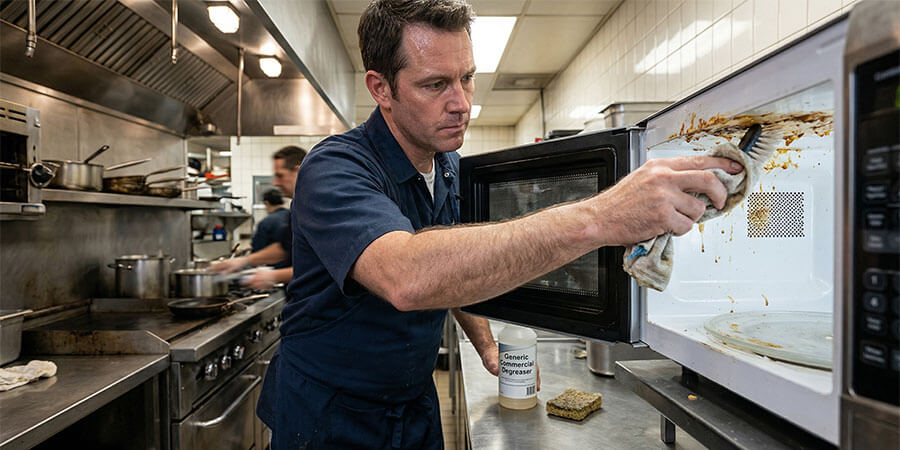
Table of Contents
Keep a commercial microwave cleaner, safer, and easier to maintain by removing buildup early and using a gentler cleaning routine that actually fits the unit
A commercial microwave is one of those pieces of equipment that can look fine from across the kitchen and still be getting dirtier in all the places that matter. Food splatter on the ceiling, grease around the door, dust near airflow openings, and crusted residue on the turntable or cavity walls all make the unit harder to clean later and harder to use confidently every day.
That is why a stronger microwave cleaning routine is not only about making the inside look better. It is also about keeping the unit easier to wipe down, reducing odor and residue buildup, and avoiding the kinds of cleaning mistakes that can damage sensitive surfaces or create staff-safety problems.
Start With The Kind Of Mess A Commercial Microwave Actually Gets
Commercial microwave cleaning is different from the casual home version because the unit often sees heavier daily use, more repeated splatter, more staff turnover, and less time between one person using it and the next person needing it immediately.
| Microwave Problem: | Why It Builds Up In Commercial Use: | What It Turns Into If Ignored: |
| Food splatter inside the cavity | Frequent reheating, uncovered food, rushed use | Hardened residue and odors |
| Grease on the exterior | Touchpoints and nearby fry or line activity | Sticky controls and dirt buildup |
| Dust or debris near vents | Busy kitchen air, nearby prep, poor wipe-down habits | Poor airflow and dirt accumulation |
| Crusted turntable or floor plate | Repeated spills left until later | More difficult deep cleaning |
This is why a commercial microwave does best when the cleaning routine is matched to the actual use pattern instead of waiting until the cavity looks bad enough to justify a “deep clean.”
Daily Cleaning Prevents Most Of The Hard Work Later
The simplest way to keep a microwave from becoming difficult is to stop residue from setting in place.
In practice, that means the daily routine should include:
- Wiping fresh splatter before it dries
- Emptying and cleaning any removable tray or interior support piece as needed
- Wiping the handle, controls, and exterior surfaces that collect grease and fingerprints
- Checking the cavity floor and corners for food pieces that harden quickly
The point is not to overcomplicate a basic task. It is to catch the easy dirt while it is still easy. The more often a microwave is wiped before buildup sets, the less likely staff are to start using aggressive tools or harsh chemistry later.
For the broader cleaning-system context, Restaurant Cleaning 101 is the strongest related read.
Use The Gentlest Effective Cleaning Approach First
General OSHA cleaning-chemical guidance is useful here because it reinforces a practical point: stronger chemistry is not automatically safer or better. Workers still need labels, training, and a basic awareness of what they are using.
For a commercial microwave, the safest general cleaning logic is usually:
- Remove loose food and crumbs first.
- Use warm water, dish soap, or another food-equipment-appropriate cleaner for normal residue.
- Let moisture soften stuck-on material before scrubbing harder.
- Use stronger approved cleaner only when the residue and equipment surface actually call for it.
That sequence matters because a lot of damage starts when staff jump straight to harsh products, rough tools, or improvised cleaning shortcuts before trying the least aggressive effective option.
| Cleaning Situation: | Better First Move: | What To Avoid: |
| Fresh splatter | Damp cloth and mild cleaner | Letting it bake on for later |
| Greasy interior film | Food-equipment cleaner with dwell time | Abrasive pads or scraping with hard tools |
| Stuck-on crusted food | Steam or moisture-softening first | Knives, metal edges, or scratching the cavity |
| Exterior grime | Mild cleaner and soft cloth | Over-spraying sensitive controls or vents |
Soften Buildup Before You Scrub It
The fastest way to make microwave cleaning harder is to attack dried-on residue while it is still hard and brittle.
In most kitchens, it is better to soften it first with controlled moisture and time. That can mean a damp cloth left on the area briefly, or a steam-softening approach using a microwave-safe container of water to loosen the film before wiping. The exact method should still respect the equipment instructions, but the general principle is simple: soften first, scrub second.
This works better because the microwave cavity usually needs gentle treatment. Scratching interior surfaces or gouging at food with hard tools is a much bigger risk than taking an extra few minutes to let heat and moisture do some of the work.
Exterior Cleaning Deserves More Attention Than It Usually Gets
Commercial microwave cleaning is not only about the cavity. The outside of the unit often tells you more about how well it is being maintained day to day.
Areas that usually need regular attention include:
- Door handle
- Control panel
- Top and side surfaces that collect grease film
- Areas where dust gathers near the back or sides
These touchpoints matter because they combine sanitation, equipment care, and appearance. A greasy or dusty exterior usually means the cleaning routine is already drifting.
For the broader cleaning-chemistry side, Food Equipment Cleaners, Descalers, and Degreasers are the most useful internal resource.
Vents, Airflow, And Filters Should Not Be Ignored
This is one area where public-facing cleaning advice often becomes too casual.
For everyday maintenance, the safest general instruction is not to poke into vents or try to open panels for cleaning. It is to keep external airflow areas clear of dust and grease buildup and to follow the manufacturer instructions for any filter or airflow-related maintenance the unit actually allows from the outside.
That is important because microwave airflow and ventilation are not just cosmetic. If external openings are coated in dust or kitchen grease, the unit is more likely to look neglected and perform under worse conditions over time.
The cleanest public-facing wording here is simple: keep airflow paths clear, clean the outside of the unit regularly, and leave internal service or repair work to qualified technicians.
What Not To Do Matters Just As Much As What To Do
Some of the highest-risk microwave cleaning mistakes are surprisingly common:
- Using metal tools to chip off food
- Spraying cleaner carelessly into sensitive controls or openings
- Mixing chemicals because a stronger combination “seems like it should work better”
- Opening the unit housing for cleaning or inspection without proper service training
General OSHA cleaning-chemical guidance makes the broader point clear: workers need safer handling practices, not more improvised chemistry. FDA safe food handling guidance also supports keeping food-contact and preparation equipment clean with simpler, safer cleaning practices rather than turning the process into a chemistry experiment.
This is another reason the daily routine matters. The more often residue is removed early, the less likely staff are to resort to unsafe shortcuts later.
Microwaves Need A Simple Cleaning Schedule, Not A Heroic Rescue
The strongest commercial microwave cleaning systems are boring in the best possible way. They rely on frequency more than on intensity.
| Frequency: | What To Do: | Why It Helps: |
| During the day as needed | Wipe fresh spills and remove loose food | Prevents hard crust buildup |
| Daily close | Clean interior surfaces, tray, handle, and exterior touchpoints | Keeps the unit stable and presentable |
| Weekly | Inspect harder-to-see corners, side surfaces, nearby wall film, and airflow openings | Catches drift before it turns into a bigger job |
| As needed | Address heavy grease or repeated odor issues with approved cleaner and longer dwell time | Prevents the unit from becoming a “deep-clean only” problem |
This is what makes a microwave easier to keep clean. Not a perfect once-a-month scrub, but a repeatable routine that never lets the mess get too far ahead.
That is also why a good microwave routine usually feels smaller than people expect. It is not a heroic rescue. It is a pattern that keeps the unit from ever becoming the dirtiest and most avoided piece of equipment in the station.
Food Safety And Microwave Cleaning Still Overlap
Microwaves are often used for reheating or quick service recovery, which means cleaning them is not separate from food safety. FDA safe-food handling guidance is useful here because it reinforces the broader idea that reheating and handling still require attention to cleanliness, safe temperatures, and thermometer use where appropriate.
That does not mean the microwave post needs to turn into a reheating guide. It means the equipment should stay clean enough that reheated food is not passing through a dirty cavity or onto a grimy support surface just because the cleaning routine drifted.
For the sanitation-side vocabulary, Cleaning vs Sanitizing vs Disinfecting is the strongest companion post.
Frequently Asked Questions
What is the best way to clean a commercial microwave oven?
The best approach is to remove fresh spills early, use the gentlest effective cleaner first, soften hardened residue before scrubbing, and keep the handle, controls, and airflow areas part of the routine. A repeatable daily and weekly schedule usually works better than waiting for a heavy deep-clean situation.
What cleaner is safe for a commercial microwave?
In general, mild dish soap, warm water, or a food-equipment-appropriate cleaner are the safest starting points for routine microwave cleaning. Stronger products should only be used when the residue and equipment surface actually call for them, and staff should follow the product label and site procedures.
Can I use a degreaser inside a commercial microwave?
Sometimes, but only if the product is appropriate for food equipment and used according to label directions and your kitchen's cleaning procedures. The safer approach is to start mild, soften residue first, and only move to stronger chemistry when it is actually necessary.
Should I clean the vents or open the microwave for cleaning?
External airflow areas should be kept clear of grease and dust, but internal service or opening the housing is not routine cleaning work. The safest public-facing rule is to follow the manufacturer instructions for allowed maintenance and leave internal repair or service tasks to qualified technicians.
How often should a commercial microwave be cleaned?
Fresh splatter should be wiped as it happens, and a more complete clean should happen daily. Weekly checks help catch corners, exterior buildup, and airflow-area grime before the unit turns into a bigger cleaning problem.
What is the biggest microwave cleaning mistake?
Letting residue harden until staff feel forced to use harsh tools or aggressive chemical shortcuts. Early, gentle cleaning is usually safer for both the equipment and the people cleaning it.
Related Resources
- Food Safety Guide - Broader foodservice sanitation and reheating context.
- Cleaning vs Sanitizing vs Disinfecting - Clarifies which cleaning language belongs where.
- Restaurant Cleaning 101 - Restaurant-wide cleaning routines that support equipment care.
- Best Commercial Kitchen Degreaser - Stronger degreasing logic when grease buildup is part of the problem.
- Food Equipment Cleaners, Descalers, and Degreasers - Product-side support for commercial equipment cleaning.
Share This!