Choosing the Right Food Warmer for Your Commercial Kitchen
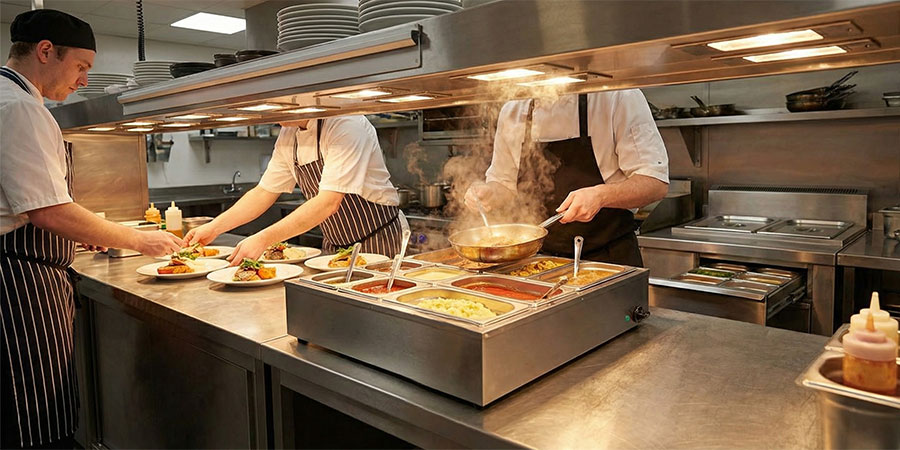
Table of Contents
Choose a warming setup that protects quality and keeps service fast, without turning holding into waste or refires
Food warmers are supposed to protect speed and consistency, but the wrong setup creates dried food, uneven holding, and wasted labor. These tips help you match the warmer to your menu, workflow, and hold time, and clarify when you actually need a rethermalizer instead.
Every kitchen eventually learns this lesson: a food warmer is not a magic box that makes food better. It is a station that either protects quality or exposes weak spots in your process.
When warmers are chosen well, they reduce refires, smooth out rushes, and make service more consistent across shifts. When they are chosen poorly, they turn into a daily argument about what can and cannot be held, why something dried out, and why the line is still behind.
The tips below are written for operators. They are intentionally practical, and they avoid turning into a buying guide. If you are comparing all holding equipment formats, the Commercial Heated Holding Equipment Guide goes deeper on configurations.
Start With the Job and the Hold Window
Tip 1: Start with the real job (hold, finish, or reheat). Hot holding means keeping already-hot food at serving temperature during a service window. Rethermalizing means reheating previously cooked, cooled food for service. Those are different jobs, and equipment is built differently for them.
In practice, the mistake looks like this: the kitchen chills product, then expects a holding warmer to "bring it back" during rush. What usually happens is uneven results - a hot exterior and a cold center - followed by longer holds that reduce quality.
If your workflow includes a reheat step, treat it as a deliberate step with clear rules: what can be reheated, how it is reheated, how it is verified, and what happens if the product misses the mark. Many jurisdictions base these rules on the FDA Food Code, which treats reheating for hot holding as a separate requirement from hot holding - so this is not a place to improvise.
If your operation regularly needs to reheat chilled product as part of service, look at Food Rethermalizers and Bain-Marie Heaters rather than assuming a warmer will do both jobs well.
Tip 2: Decide how long food will sit, then design around that. Short holds are forgiving. Longer holds reveal issues fast: drying, skinning, texture changes, and refire pressure. If a dish is only good for a short window, hold components instead of holding the finished plate.
One helpful way to think about hold time is to split the menu into "holds well" and "holds poorly." Foods that hold poorly often still work with warmers - you just hold them differently. For example, you might hold the sauce separately, hold proteins in smaller batches, or hold a base hot and finish to order.
When you design around the real hold window, you also get more realistic capacity decisions. A warmer that seems "too small" is often the right size if you plan to reload on rhythm instead of loading once and hoping.
Match the Format to the Service Moment
Tip 3: Match the warmer format to the moment that is breaking. "Food warmer" is a broad phrase, so translate it into a real service moment:
Line backup (prevent an out-of-stock) - countertop warmers and hot-well style stations can fit here. Browse Countertop Food Warmers.
If your issue is consistency across shifts, this is often the most effective first station to fix. It is easier to train a clear backup-pan routine than it is to train cooks to refire intelligently under pressure.
Pass support (protect plated food briefly) - strip warmers and heat lamps are designed for that moment. If your pass is the issue, the Commercial Heat Lamp and Strip Warmer Guide is the right deep dive.
The pass is also where operators accidentally over-hold food. If your bottleneck is servers and runners, solve the runner flow first. Pass heat should protect a short window, not become a hidden holding cabinet.
Space-efficient holding (keep holding close without losing counter space) - drawer warmers can be useful. See Drawer Warmers.
Drawer warmers are most useful when you want the line to be self-sufficient. They can reduce walking, reduce mid-shift clutter, and help station cooks keep backups close.
Tip 4: Use this table to avoid "wrong warmer" decisions.
| If Your Problem Is... | A Better Fit Is Usually... | Why: |
| Running out of hot sides during rush | A countertop warmer or hot-well style station | Quick access and predictable refills |
| Food drying out under the pass | A strip warmer or controlled pass-through heat | Protects plated food briefly without overcooking |
| Reheating chilled food as part of service | A rethermalizer | Designed for reheating, not just holding |
| Needing holding without losing counter space | A drawer warmer | Adds holding close to the line |
| Needing a mix of holding tools | Build a small station from a few formats | One unit rarely solves every menu problem |
If you want the broadest overview of hot holding formats, start with Food Holding and Warming Equipment.
This is also where you should watch for "one warmer solves everything" thinking. Many kitchens do better with a small station built from two or three formats than a single larger unit used for every menu item.
Build a Station Your Team Can Run
Tip 5: Controls matter, but only if staff can use them. Precise control is useful, but the "best" control is the one your staff can run consistently. If your menu is sensitive, you need finer adjustment. If staff rotates often, the station needs clear rules and training.
The station rule that helps most is simple: one person owns the warmer settings. If everyone adjusts temperatures throughout service, the unit becomes unpredictable. Pick a starting point, define what triggers an adjustment, and record the final setting that worked.
Tip 6: Design the station so reloading is fast. Warmers feel slow when staging is bad. Keep a simple home for tools, lids, and inserts, and keep a clear backup-pan rhythm so refills happen without searching.
This is also where pan strategy matters. A larger pan may feel efficient, but it can increase hold time and quality drift. Smaller pans often produce better quality because you reload more often.
If your warmer station lives near guests, the cleaner and calmer it looks, the more confidence it creates. A messy warmer station signals chaos.
Tip 7: Treat moisture like an ingredient. Dry heat can protect crisp items and punish moisture-dependent foods. Moist holding can protect sauces and proteins and soften crisp items. If your menu includes both, split your station by food behavior instead of forcing one approach.
The easiest way to make this decision is to ask one question: what is the texture you are trying to protect? Crisp foods usually do better with dry holding and short windows. Sauces and proteins often need moisture support and a clear stir or rotation routine.
Tip 8: Cleaning access is not optional. If a warmer is hard to clean, it will not be cleaned often enough. Choose equipment and layouts that a closing shift can reset without turning the end of the night into a project.
If you want the station to stay clean during service, build a micro-reset habit into the shift. A quick wipe, a quick re-face, and a quick check of what is nearing the end of its hold window will do more than any promise of a deep clean later.
| Warmer Station Habit: | When: | Why It Works: |
| Wipe edges and handles | Mid-shift | Prevents greasy buildup that makes the station feel neglected |
| Re-face pans and lids | Between rushes | Keeps service calm and prevents spills |
| Pull anything past its hold window | Per shift | Prevents "it looks tired" product from becoming the norm |
| Reset tools to their home | Per shift | Reduces searching and cross-contact mistakes |
Separate Safety From Quality (Then Set the Rules)
Tip 9: Separate "food safety" from "food quality" decisions. Food safety is about holding food within your local code requirements. Food quality is about texture and appearance. You need both, and you need a hold policy that staff can follow.
The fastest way to create trust in a warmer station is to make the rules visible. Label when product is loaded, label who loaded it, and define what happens when the hold window ends. Even a simple time-mark habit can reduce waste and reduce arguments.
Tip 10: When in doubt, test before you buy big. Run one menu item through your intended hold time and station routine during a realistic rush. Then decide what you actually need: gentler holding, faster reheat, a different pan strategy, or a different format.
Your test should include the human factor. A warmer that only works when the most experienced cook is on the station is not a good solution. The right setup should work on a normal shift, with normal staffing.
The best warming station is the one your team can run without hero effort.
Frequently Asked Questions
What is the difference between a rethermalizer and a food warmer?
A food warmer is primarily for holding already-hot food at serving temperature during service. A rethermalizer is designed to reheat previously cooked, cooled product quickly and evenly for service. Many operations need both, but they solve different problems.
What features should I look for in an electric food warmer?
Start with the job (hold vs reheat), then focus on usable control, cleaning access, and station fit. The best feature is the one your staff will use correctly every day, not the one with the longest spec list.
How do I choose the right size food warmer?
Choose based on your refill rhythm, not just your peak volume. If you can refill quickly, you can hold smaller batches more often and protect quality. If refills are slow, you need more holding capacity so the line does not run dry.
Is a pass-through warmer the same as a food warmer?
It depends on the design. Pass-through heat is often meant to protect plated food briefly while it is being run, not to hold food for a long time. If your goal is holding backup product, use a warmer designed for that job.
Should I use heat lamps instead of a warming station?
Heat lamps and strip warmers are useful at the pass for short holding, but they are not the same as a holding station for pans or product. Use them for the specific moment they are designed for.
Can I use a food warmer to reheat cold food?
Some equipment can, but hot holding and rethermalizing are different jobs. If you need to reheat chilled product as part of service, use equipment designed for rethermalizing or build a reheat step that meets your process requirements.
What is the most common mistake when choosing a food warmer?
Treating "food warmer" as one universal category. The best choice depends on the service moment: line backup, pass holding, rethermalizing, or space-efficient drawer holding.
Related Resources
- Commercial Heated Holding Equipment Guide - Broader holding equipment formats and use cases
- Food Holding and Warming Equipment - Category hub for hot holding equipment
- Countertop Food Warmers - Common warmer format for line backup and service stations
- Food Rethermalizers and Bain-Marie Heaters - When you need reheat, not just holding
- Commercial Heat Lamp and Strip Warmer Guide - Pass and plating heat support
Share This!