Beautiful Outdoor Kitchen Ideas
Table of Contents
Nine stunning backyard kitchen designs that show what is possible when you bring cooking, dining, and nature together
An outdoor kitchen transforms a backyard from a simple patio into a year-round living space where cooking, entertaining, and relaxing all happen in the open air. Whether you are working with a compact courtyard or a sprawling waterfront property, the right design turns an underused outdoor area into the most popular room of the house - even though it has no walls.
The nine kitchens featured here span climates from tropical Hawaii to urban New York, and styles from rustic Mediterranean stone to sleek contemporary steel. Each one offers practical takeaways you can adapt to your own space - from material choices that handle weather extremes to layouts that keep the cook connected to guests. Study what works in each design, borrow the ideas that fit your property, and build a backyard kitchen that feels like a natural extension of your home.
All Nine Kitchens at a Glance
| Kitchen: | Location: | Style: | Key Features: | Standout Element: |
| Mediterranean Outdoor Kitchen | Saratoga, CA | Mediterranean | Stone pizza oven, arched openings, natural stone | Rustic old-world charm with modern amenities |
| Traditional Outdoor Kitchen | Burt Lake, MI | Traditional | Lakeside setting, covered structure, full appliance suite | Seamless indoor-outdoor lake living |
| Tropical Outdoor Kitchen | Hawaii | Tropical | Open-air pavilion, volcanic stone, lush landscaping | Island materials with resort-level finishes |
| Contemporary Outdoor Kitchen | Sydney, Australia | Contemporary | Minimalist cabinetry, clean lines, integrated lighting | Architectural precision in an outdoor setting |
| Mediterranean Loggia Kitchen | Sacramento, CA | Mediterranean Loggia | Covered loggia, ceiling fans, tile accents | Shaded elegance with year-round comfort |
| Traditional Outdoor Kitchen | Vancouver, BC | Traditional | West Coast materials, rain-ready design, warm wood tones | Weather-smart design without sacrificing style |
| English Tudor Outdoor Kitchen | Dallas, TX | English Tudor | Brick and stone, arched details, formal dining area | Historic character adapted for outdoor cooking |
| Contemporary Rooftop Kitchen | New York, NY | Contemporary Rooftop | Urban rooftop, compact layout, city skyline views | Full kitchen function in a limited footprint |
| Beach Style Outdoor Kitchen | Brisbane, Australia | Beach/Coastal | Relaxed finishes, light color palette, open flow to yard | Casual coastal entertaining made effortless |
Mediterranean Outdoor Kitchen - Saratoga
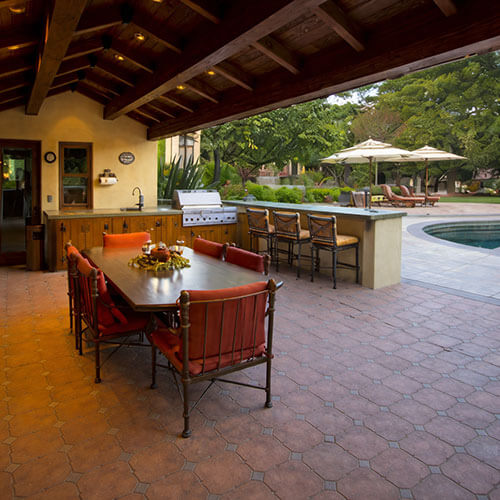
This Saratoga kitchen captures the warmth of Mediterranean design with natural stone walls, arched openings, and earth-toned finishes that feel like they belong in a Tuscan courtyard. The layout centers on a large built-in grill flanked by generous counter space - enough room for prep work on one side and plating on the other without the cook ever feeling cramped.
What makes this design stand out is the use of real stone rather than veneer. The weight and texture of natural stone give the space an authenticity that lighter materials cannot replicate, and the material handles California heat without fading or cracking. A wood-fired pizza oven sits adjacent to the main cooking station, adding versatility that goes far beyond standard grilling.
The seating area flows directly from the kitchen counter, keeping guests close to the action without crowding the cooking zone. Overhead, a pergola filters sunlight during afternoon gatherings while leaving the sky open for evening dining. This is a kitchen designed for long, unhurried meals where the cooking is part of the entertainment.
Traditional Outdoor Kitchen - Burt Lake, Michigan
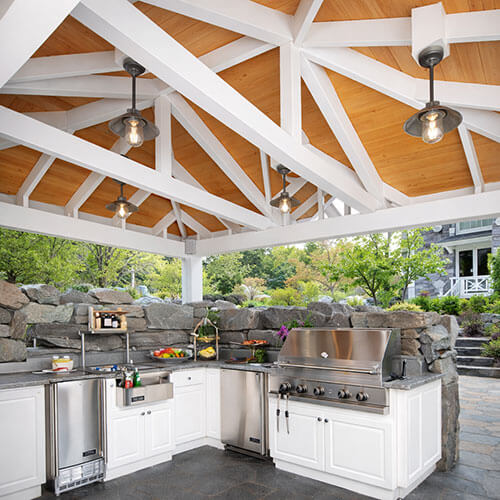
Set on the shores of Burt Lake, this traditional outdoor kitchen proves that lakeside living and serious cooking go hand in hand. The covered structure features a full roof with exposed beams, protecting the cooking area from Michigan's unpredictable weather while keeping the lake view completely open on three sides.
The appliance layout follows a classic work triangle - grill, sink, and refrigeration positioned within easy reach of each other. This arrangement minimizes unnecessary steps during meal prep, which matters when you are cooking for a crowd at the lake house. Stone base cabinets provide durable storage that stands up to humidity and temperature swings across all four seasons.
The design blends seamlessly with the surrounding landscape by using wood and stone finishes that echo the natural shoreline. A dedicated dining area sits under the same roofline, so the transition from cooking to eating happens in a single step. For anyone building near water, this kitchen demonstrates how to embrace the setting without compromising on function.
Tropical Outdoor Kitchen - Hawaii
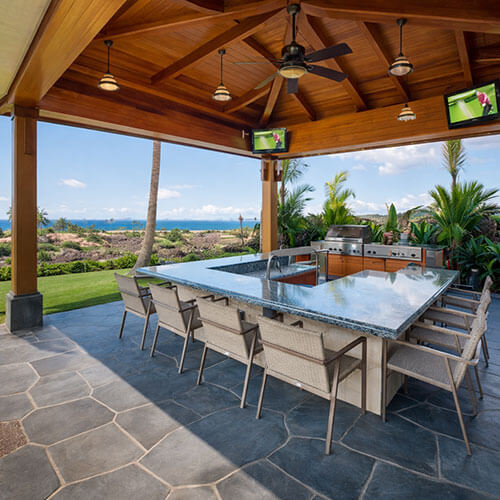
Hawaii's year-round warmth makes outdoor cooking a daily activity rather than a seasonal luxury, and this tropical kitchen is built for that lifestyle. The open-air pavilion design eliminates walls entirely, relying on a broad roof structure for rain and sun protection while allowing trade winds to flow through the cooking and dining areas.
Volcanic stone and rich tropical hardwoods give the space a grounding connection to the island landscape. These materials are not just decorative - they resist the moisture, salt air, and UV exposure that destroy less durable finishes within a few seasons. The cabinetry uses marine-grade hardware throughout, a detail that separates kitchens built for tropical climates from those simply decorated in a tropical style.
The cooking station includes a large-format grill and dedicated prep sink, with counter surfaces that stay cool even in direct sunlight. Lush landscaping wraps around the pavilion, creating a natural privacy screen that makes the space feel secluded even on properties with nearby neighbors. This kitchen shows that tropical design is not about palm-tree decor - it is about materials and layouts that thrive in heat and humidity.
Contemporary Outdoor Kitchen - Sydney
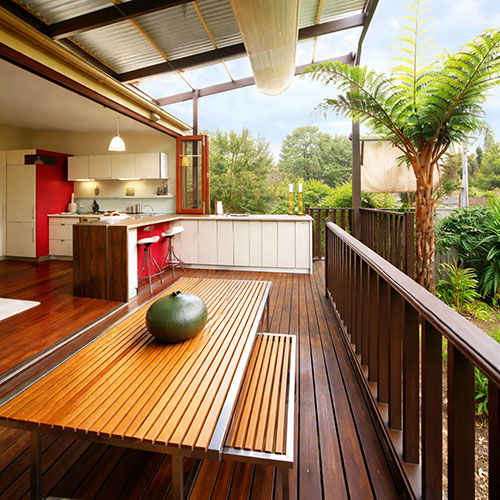
Clean lines, flat surfaces, and a restrained material palette define this contemporary outdoor kitchen in Sydney. The design strips away ornament and lets the quality of materials and precision of construction carry the visual weight. Smooth concrete countertops, powder-coated steel cabinetry, and frameless glass wind barriers create a space that looks as polished as any indoor kitchen.
The layout maximizes a relatively modest footprint by running the kitchen along a single wall, with all cooking equipment and storage accessible in a linear workflow. Integrated LED lighting beneath the counter edge and inside cabinet recesses extends usability well past sunset without the need for freestanding fixtures that clutter the space.
What elevates this kitchen above typical contemporary designs is the seamless transition between indoor and outdoor zones. Floor-to-ceiling sliding panels open the interior living area directly onto the kitchen terrace, effectively doubling the entertaining space when weather permits. The material finishes continue from inside to outside without a visible break, so the outdoor kitchen reads as another room of the house rather than a separate structure.
Mediterranean Loggia Kitchen - Sacramento
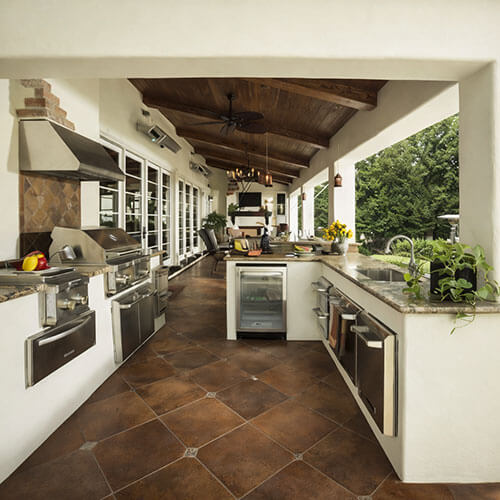
A loggia - a covered gallery open on one or more sides - gives this Sacramento kitchen the best of both worlds: full shade from the Central Valley sun and open-air ventilation that keeps the cooking area comfortable even in peak summer heat. The arched openings frame views of the surrounding garden while the solid roof overhead supports ceiling fans and pendant lighting for evening use.
Decorative tile accents on the backsplash and counter faces add visual interest without overwhelming the space. The color palette stays within warm earth tones - terracotta, sand, and aged cream - that complement the Mediterranean architecture of the main home. Outdoor furniture in the adjacent dining area matches the kitchen's style, creating a unified look across the entire outdoor living zone.
The cooking station is built into a masonry island that doubles as a buffet counter during large gatherings. A built-in grill, side burner, and undercounter refrigeration handle everything from weeknight dinners to large parties without requiring trips back to the indoor kitchen. The loggia format is worth studying for anyone in a hot climate - it delivers shade and airflow without the closed-in feeling of a fully enclosed patio.
Traditional Outdoor Kitchen - Vancouver
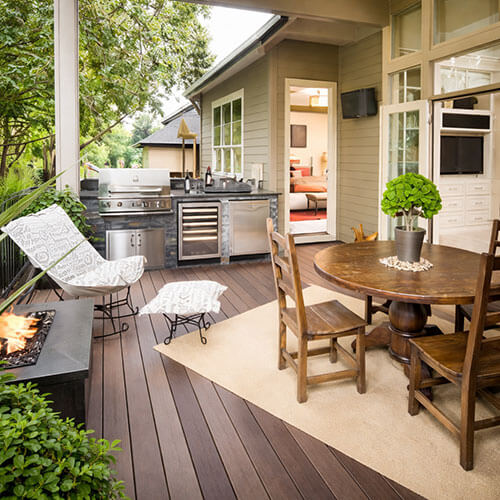
Rain is a fact of life in Vancouver, and this traditional outdoor kitchen embraces it rather than fighting it. A substantial covered structure with a pitched roof channels water away from the cooking and dining areas while allowing full use of the space during the city's frequent showers. The roof also traps warmth from a large stone fireplace, extending the usable season well into fall and early spring.
West Coast materials dominate the design - cedar beams, slate flooring, and locally sourced stone for the fireplace surround. These choices are practical as much as aesthetic. Cedar resists rot in damp conditions, slate handles freeze-thaw cycles without cracking, and natural stone weathers gracefully rather than deteriorating. The warm wood tones counterbalance Vancouver's gray skies, making the space feel inviting even on overcast days.
The kitchen layout places the grill and prep area under the deepest section of the roof overhang, keeping the cook dry regardless of wind direction. A separate bar counter faces the garden, creating a casual serving point for drinks and appetizers that keeps traffic away from the active cooking zone. This design is a masterclass in building for a wet climate without sacrificing style or comfort.
English Tudor Outdoor Kitchen - Dallas
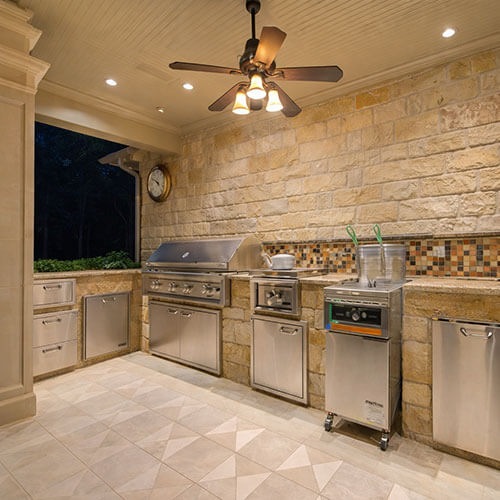
Dallas heat demands shade, and this English Tudor outdoor kitchen delivers it with a heavy timber-and-stone structure that channels the architectural grandeur of a Tudor estate. Brick walls with arched detailing, dark wood beams, and wrought-iron accents create a formal atmosphere that stands apart from the casual vibe of most outdoor kitchens.
The cooking area is generously sized, with a built-in grill, smoker, and a wood-burning fireplace that anchors the far end of the space. Counter surfaces use honed granite that stays cool to the touch even in Texas heat - an important practical detail when outdoor temperatures regularly exceed 100 degrees. The formal dining area sits under the same roof structure, with outdoor-grade furniture and a table large enough for seated dinners that rival any indoor dining room.
Landscape architecture plays a major role in this design. Mature trees provide additional shade canopy, stone pathways connect the kitchen to the main house and pool area, and layered plantings create defined zones without physical barriers. The Tudor style works especially well for properties with traditional architecture - it extends the character of the home into the landscape rather than introducing a competing aesthetic.
Contemporary Rooftop Kitchen - New York
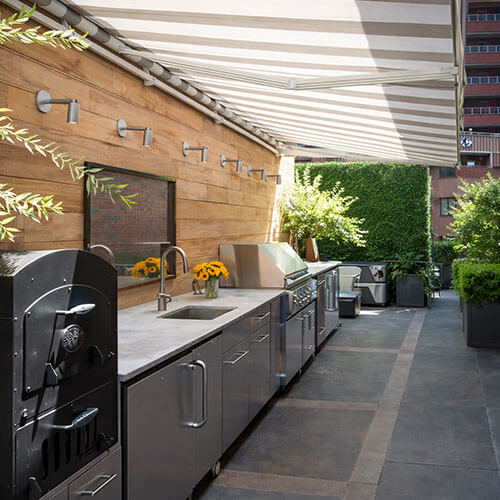
Space is the ultimate luxury in Manhattan, and this rooftop kitchen makes the most of every square foot. The compact layout packs a grill, prep counter, storage, and seating into a footprint that would feel impossibly tight at ground level but works perfectly when the skyline is your backdrop. Every element earns its place - there is no wasted space and no decorative filler.
The material palette is deliberately urban - composite decking, stainless steel, and weather-resistant composite cabinetry that can handle rooftop wind exposure and temperature extremes without maintenance headaches. The design uses built-in planters along the perimeter to soften the hardscape and create a sense of enclosure without blocking the city views that make the space special.
What makes this rooftop kitchen remarkable is the proof of concept it provides. You do not need a large property, a sprawling backyard, or a generous budget to build a functional outdoor kitchen. A well-planned layout on a modest rooftop delivers the same cooking-and-entertaining experience as a ground-level installation - just with a better view. For urban dwellers, this design opens up possibilities that a traditional backyard kitchen simply cannot match.
Beach Style Outdoor Kitchen - Brisbane
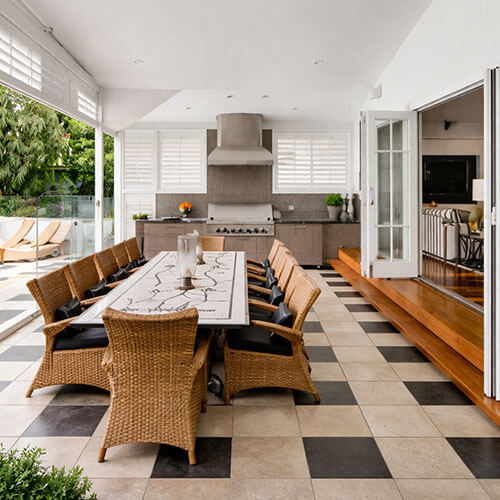
Brisbane's subtropical climate calls for outdoor spaces that feel effortless, and this beach-style kitchen delivers exactly that. A light color palette - white cabinetry, pale stone counters, and bleached timber accents - reflects sunlight and keeps surfaces cool while creating a relaxed coastal atmosphere that invites barefoot traffic.
The open layout flows directly from the kitchen into the yard without steps, barriers, or level changes. This ground-level accessibility makes the space feel larger than it is and allows easy movement between cooking, dining, and lounge areas during gatherings. The grill and prep station face the entertaining area rather than the house wall, keeping the cook engaged with guests rather than isolated.
Durable, low-maintenance materials are the backbone of this design. Marine-grade stainless steel hardware, composite cabinetry, and sealed stone surfaces handle salt air, humidity, and intense UV without the constant upkeep that painted or stained finishes demand. The beach style here is not decorative theming - it is a practical response to coastal conditions, executed with enough restraint to age gracefully rather than look dated in a few years.
Planning Your Outdoor Kitchen
Before selecting finishes and equipment, the practical foundations of an outdoor kitchen determine whether the space works well for years or becomes a maintenance headache after a single season. These planning considerations apply regardless of style or budget.
Layout and Workflow - The same work triangle that drives indoor kitchen design applies outdoors. Position your grill, prep area, and sink within a few steps of each other to minimize unnecessary movement during cooking. L-shaped and U-shaped layouts work best for dedicated outdoor kitchens, while a single linear counter suits smaller spaces or secondary cooking stations.
Weather Protection - Even in mild climates, some form of overhead cover extends usability dramatically. A pergola filters sun but does not stop rain. A solid roof with open sides handles both. Consider prevailing wind direction when positioning the grill - smoke that blows toward the dining area ruins the experience regardless of how good the food is.
Utility Connections - Gas lines, water supply, drainage, and electrical service all need to reach your outdoor kitchen location. Running utilities before construction begins is significantly cheaper than retrofitting them later. Plan for dedicated circuits for lighting, refrigeration, and any heated equipment.
Material Choices for Outdoor Use - Indoor materials fail outdoors. Wood swells and cracks, standard steel rusts, and porous stone stains. Outdoor kitchens need marine-grade stainless steel, sealed natural stone or porcelain, composite decking, and powder-coated or weather-rated cabinetry. The upfront cost of weather-appropriate materials pays for itself by eliminating replacement cycles.
| Planning Factor: | Indoor Kitchen: | Outdoor Kitchen: |
| Weather exposure | None | Rain, sun, wind, temperature extremes |
| Material requirements | Standard residential | Marine-grade, UV-resistant, sealed |
| Utility access | Existing in walls | Must be extended to outdoor location |
| Ventilation | Range hood required | Natural airflow (position grill for wind) |
| Pest control | Standard screens | Open-air exposure requires sealed storage |
| Lighting | Ceiling fixtures | Weather-rated, low-voltage, and solar options |
| Maintenance frequency | Weekly cleaning | Seasonal deep cleaning plus cover/storage protocol |
Essential Outdoor Kitchen Equipment
The right equipment turns an outdoor kitchen from a glorified grill station into a space capable of producing complete meals without a single trip inside. Here is what serious outdoor kitchens include and why each piece matters.
Grills and Cooking Surfaces - The grill is the centerpiece of most outdoor kitchens. Built-in models integrate with your cabinetry and countertops for a seamless look, and higher-end units offer multiple burner zones for simultaneous direct and indirect cooking. Commercial-grade outdoor grills deliver the BTU output and build quality needed for frequent, heavy use.
Smokers - Low-and-slow cooking requires a dedicated smoker that maintains consistent temperature over hours. Built-in smoker cabinets integrate with outdoor kitchen cabinetry, while freestanding models offer flexibility in placement. Either way, a smoker dramatically expands your outdoor cooking repertoire beyond what a grill alone can achieve.
Refrigeration - An undercounter refrigerator or beverage center eliminates the constant back-and-forth to the indoor kitchen for ingredients, drinks, and condiments. Outdoor-rated refrigeration units are designed with sealed compressors and weatherproof housings that standard indoor units lack.
Sinks and Cleanup - A prep sink with running water is the single most impactful convenience upgrade for any outdoor kitchen. It allows hand washing, produce rinsing, and utensil cleaning without leaving the cooking area. Plan for both hot and cold water supply if your budget allows.
Deep Fryers - Outdoor kitchens are the ideal location for frying because open air eliminates the grease smell and ventilation concerns that make indoor frying challenging. A built-in deep fryer alongside your grill opens up possibilities from fried fish and wings to hand-cut fries - dishes that get guests excited but are impractical to prepare indoors during a party.
Lighting - Task lighting over the grill and prep surfaces is essential for evening cooking. Ambient lighting in the dining and lounge areas sets the mood and extends usability after dark. Choose weather-rated LED fixtures that handle moisture and temperature swings.
Storage and Bar Setup - Weatherproof cabinetry keeps utensils, spices, and supplies within reach. A dedicated bar area with a countertop, ice storage, and glassware shelf transforms the outdoor kitchen into a full entertaining hub. Bar supplies and accessories complete the setup for cocktail service alongside the cooking station.
Frequently Asked Questions
What do you need for a basic backyard kitchen?
At minimum, a backyard kitchen needs a built-in or freestanding grill, a weather-resistant countertop for prep work, and some form of storage for utensils and supplies. Adding a sink with running water and an outdoor-rated refrigerator significantly improves functionality. Weather protection - even a simple pergola or umbrella - extends the usable season and protects equipment from the elements.
How much space do you need for an outdoor kitchen?
A functional outdoor kitchen fits in as little as 60 to 80 square feet for a single-wall layout with a grill, counter, and storage. An L-shaped kitchen with dining space typically needs 100 to 200 square feet. Larger U-shaped designs with multiple cooking stations, bars, and lounge areas can use 200 to 400 square feet or more. The key is matching the layout to your available space rather than forcing a design that crowds the yard.
What materials last longest in an outdoor kitchen?
Marine-grade stainless steel (316 grade), sealed granite or quartzite, porcelain tile, and composite cabinetry materials deliver the best longevity outdoors. Avoid porous natural stone that is not sealed, untreated wood, and standard indoor-grade stainless steel (304 grade). In coastal areas, salt air accelerates corrosion, making marine-grade materials especially important.
Do outdoor kitchens need a roof or cover?
A cover is not strictly required, but it dramatically improves usability and equipment longevity. A solid roof protects against rain and provides shade, extending cooking season in every climate. At minimum, use weatherproof covers on all equipment when not in use. In regions with heavy rain, snow, or intense sun, a permanent roof structure pays for itself by reducing equipment replacement and enabling year-round use.
What is the best layout for an outdoor kitchen design?
The best layout depends on your space and how you cook. An L-shaped layout works well for most properties - it creates a natural work triangle between grill, prep area, and sink while leaving one side open for guest interaction. U-shaped layouts suit larger spaces and offer the most counter and storage space. Linear single-wall designs are ideal for narrow patios, balconies, or rooftop installations where width is limited.
Can you build an outdoor kitchen on a budget?
Yes. Start with a quality built-in grill set into a simple concrete block or steel-frame island with a stone or tile veneer. Add a countertop and basic storage, then expand over time with a sink, refrigerator, and additional cooking stations as budget allows. Phased construction lets you spread costs across seasons while using the kitchen from day one.
How do you protect outdoor kitchen equipment in winter?
Disconnect and drain water lines before freezing temperatures arrive. Cover all equipment with fitted, breathable weatherproof covers - not plastic tarps, which trap moisture and promote corrosion. Remove or bring indoors any accessories that are not weather-rated, including cushions, electronics, and decorative items. Clean all cooking surfaces thoroughly before covering to prevent grease from attracting pests during the off-season.
Related Resources
- Commercial Outdoor Grills - Built-in and freestanding grills rated for heavy outdoor use across residential and commercial settings
- Outdoor Cooking Equipment - Full range of outdoor cooking appliances including griddles, burners, and accessories
- Outdoor Furniture - Weather-resistant dining and lounge furniture built for outdoor entertaining spaces
- Refrigeration Equipment - Outdoor-rated refrigerators, beverage centers, and cold storage solutions
- Smoker Ovens - Dedicated smokers for low-and-slow cooking in any outdoor kitchen setup
- Bar Supplies - Glassware, tools, and accessories for outdoor bar and cocktail service
Share This!