Kitchens with Butcher Block Countertops
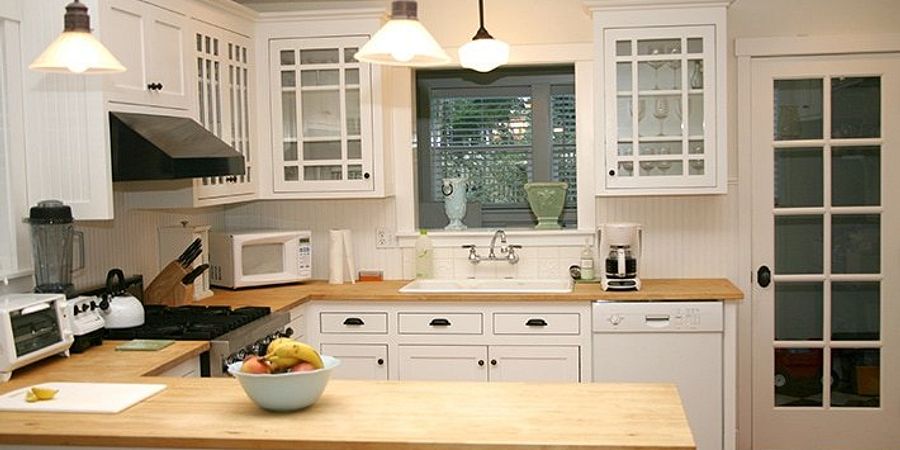
Table of Contents
Real kitchen designs that prove butcher block countertops bring warmth, character, and timeless style to any space
There is something about butcher block countertops that makes a kitchen feel alive. Unlike stone or engineered surfaces, wood has grain patterns that tell a story - each slab carries warmth, texture, and an organic beauty that no manufactured material can replicate. Whether your style leans toward coastal Hampton, urban contemporary, or rustic craftsman, butcher block countertops have a way of grounding a kitchen design while making the entire room feel inviting.
The kitchens featured here span cities, continents, and design philosophies. From a beachside home on Australia's Gold Coast to a sleek New York City apartment, these ten spaces show just how versatile butcher block countertops can be. Some pair them with crisp white cabinetry for a clean contrast. Others lean into dark tones and let the wood become a warm focal point. Every one of them offers ideas you can bring into your own renovation or remodel.
All 10 Kitchens at a Glance
| Kitchen: | Location: | Design Style: | Cabinet Color: | Wood Type: | Standout Feature: |
| Gold Coast Beach House | Brisbane, Australia | Hampton Traditional | White | Light Maple | Coastal elegance with clean lines |
| Black Contemporary | Portland, OR | Contemporary | Black | Light Birch | High contrast with dark cabinetry |
| Artisan Hilltop | Briarcliff, NY | Contemporary Artisan | White | Walnut | Open layout with natural light |
| Eclectic Vintage | Portland, OR | Eclectic Vintage | Green-Teal | Reclaimed Oak | Bold color and personality |
| Warm Contemporary | Seattle, WA | Warm Contemporary | White | Maple | Minimalist warmth and simplicity |
| Vintage Meets Modern | Munich, Germany | Eclectic Euro | Cream | Beech | Old-world charm with modern function |
| Walnut Countertop | Atlanta, GA | Contemporary | Gray | Walnut | Rich wood grain as centerpiece |
| Texture and Tradition | Portland, OR | Traditional | Cream | Cherry | Layered textures with classic form |
| Craftsman Classic | Los Angeles, CA | Craftsman | White | Oak | Period-authentic detailing |
| Contemporary Sleek | New York City, NY | Modern Minimalist | White | Maple | Urban sophistication with warmth |
Gold Coast Beach House Kitchen
This Hampton-style kitchen from Brisbane, Australia, captures the relaxed elegance of coastal living. The design balances bright white shaker-style cabinetry with light maple butcher block countertops, creating a space that feels both polished and approachable. Natural light pours through the windows and bounces off the white surfaces, while the wood countertops prevent the room from feeling sterile or clinical.
What makes the butcher block work here is how it softens the crispness of the all-white palette. The warm honey tones of the maple add just enough organic texture to break up the uniformity without competing with the clean lines of the cabinetry. The grain pattern runs in long, unbroken lines along the countertop surface, emphasizing the kitchen's spacious layout.
Design takeaway: If you want a Hampton or coastal kitchen that avoids the all-white coldness, butcher block countertops are one of the most effective ways to introduce warmth without adding visual clutter. Keep the wood light and the cabinetry white for maximum brightness.
Black Contemporary Kitchen, Portland
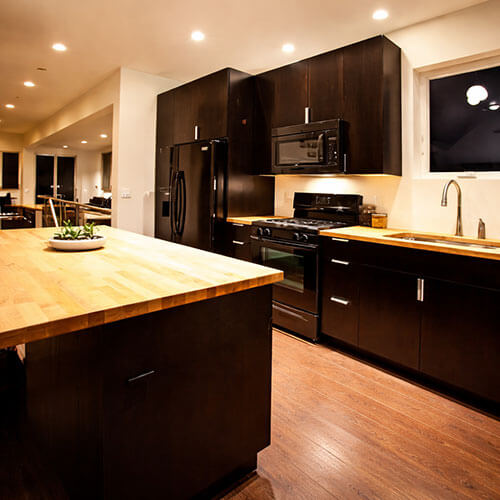
Bold and unapologetic, this Portland kitchen proves that butcher block countertops are not limited to farmhouse or traditional settings. Black cabinetry creates a dramatic backdrop, and the light birch butcher block countertop becomes the visual anchor that keeps the space from feeling too heavy. The contrast between dark and light is striking - the wood surface almost glows against the deep cabinet finish.
This kitchen demonstrates one of the most underused design strategies with butcher block: using it as a counterbalance to dark, moody palettes. Where an all-black kitchen with stone countertops might feel cave-like, the natural grain of the birch introduces movement and life. The result is a kitchen that feels contemporary, confident, and surprisingly warm despite the dark color scheme.
Design takeaway: Do not be afraid to pair butcher block with black or charcoal cabinetry. The natural wood grain provides enough visual warmth to prevent the space from feeling oppressive, and the contrast creates a genuinely modern look.
Artisan Kitchen, Upstate New York
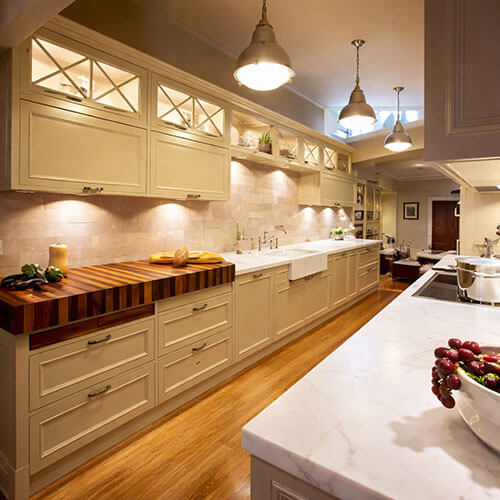
Set in a hilltop home in Briarcliff, New York, this artisan kitchen blends contemporary architecture with handcrafted warmth. The walnut butcher block countertops have a rich, deep chocolate tone that pairs beautifully with the white cabinetry and open-concept layout. Large windows frame views of the surrounding landscape, and the wood countertops echo the natural setting outside.
The walnut grain in this kitchen is especially striking. Unlike lighter woods that create subtle texture, walnut demands attention - its swirling patterns and tonal variation make each section of the countertop feel like a unique piece. Against the simple white cabinets, the wood becomes the design statement of the entire room. Professional kitchens rely on quality wood surfaces for their food preparation equipment setups, and the same appreciation for natural wood translates beautifully into residential design.
Design takeaway: Walnut butcher block works best when you let it be the star. Keep surrounding surfaces neutral and let the wood grain carry the visual weight of the kitchen.
Eclectic Vintage Kitchen, Portland
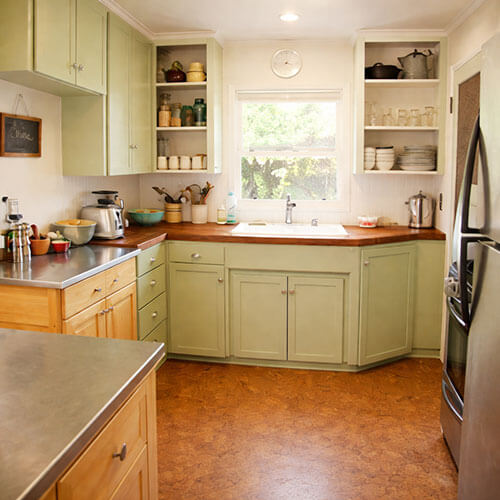
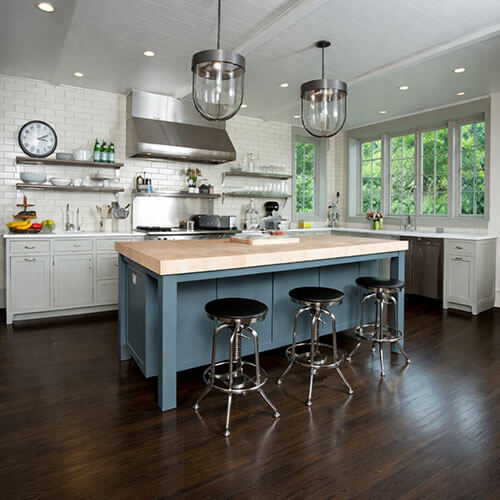
This compact Portland kitchen is proof that small spaces can have enormous personality. With green-teal painted cabinets, open shelving, and reclaimed oak butcher block countertops, the room feels like a curated collection rather than a cookie-cutter renovation. Every surface and object has been chosen with intention, and the butcher block countertop ties the eclectic mix together with its natural warmth.
What stands out here is how the aged patina of the reclaimed oak complements the vintage aesthetic. The wood has character - subtle variations in color, occasional knots, and a lived-in quality that brand-new materials simply cannot replicate. Against the bold green-teal cabinets, the warm wood creates a grounding effect that prevents the colorful palette from feeling chaotic.
Design takeaway: Butcher block is a natural fit for eclectic and vintage kitchens because it adds warmth without demanding a specific style. Reclaimed or distressed wood amplifies the character, especially when paired with bold cabinet colors.
Warm Contemporary Kitchen, Seattle
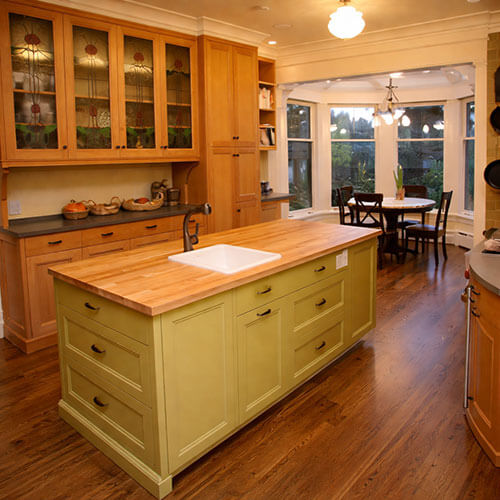
Clean, calm, and deliberately understated, this Seattle kitchen embodies the Pacific Northwest design ethos. White cabinetry meets maple butcher block countertops in a space that feels both modern and deeply comfortable. The design avoids unnecessary ornamentation - every element earns its place, and the result is a kitchen that feels spacious even in a modest footprint.
The maple countertops here serve a specific design purpose: they introduce just enough texture to keep the minimalist palette from feeling flat. The wood grain is tight and consistent, lending a sense of order that matches the kitchen's clean lines. This is not a rustic or farmhouse application of butcher block - it is a contemporary one, and it works because the wood species was chosen to complement rather than contrast with the overall aesthetic.
Design takeaway: For minimalist or Scandinavian-inspired kitchens, choose a tight-grained wood like maple. It delivers warmth without the visual busyness of more dramatic grain patterns.
Vintage Meets Modern Kitchen, Munich
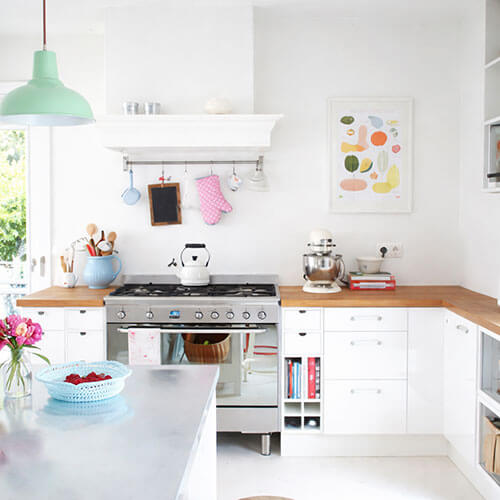
This Munich kitchen bridges generations. Vintage furniture pieces mingle with modern appliances, and a beech butcher block countertop serves as the connecting thread between old and new. The cream-colored cabinetry has a slightly aged quality, and the beech wood - a staple of European woodworking - adds a light, honey-toned warmth that feels distinctly continental.
Beech is an interesting choice for butcher block because of its fine, even grain and pale color. It reads as lighter than maple but warmer than birch, giving it a versatility that works across styles. In this kitchen, the beech surface supports both the vintage elements and the contemporary appliances without favoring either. The same kind of quality wood craftsmanship found in professional cutting boards carries over to residential countertop design - it is the natural material that makes a kitchen feel both functional and beautiful.
Design takeaway: Beech butcher block is an excellent choice for kitchens that blend eras. Its neutral warmth connects vintage and modern elements without creating visual tension.
Walnut Countertop Kitchen, Atlanta
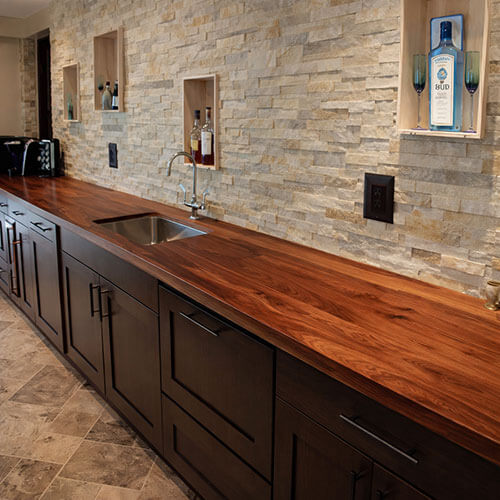
Rich, dramatic, and unapologetically luxurious, this Atlanta kitchen showcases walnut butcher block at its finest. The deep brown tones of the walnut pair with gray cabinetry to create a space that feels sophisticated without being fussy. An undermount sink integrates cleanly into the wood surface, demonstrating that butcher block can be just as functional as any engineered countertop material.
The gray cabinets in this kitchen deserve special attention. Gray is one of the most flattering colors to pair with walnut because it sits in the same tonal family - cool enough to provide contrast but not so stark that it competes with the wood. The result is a layered, harmonious palette where the walnut's warm undertones are amplified rather than muted.
Design takeaway: Gray cabinetry and walnut butcher block is one of the most sophisticated pairings in kitchen design. The combination feels elevated and modern while maintaining the warmth that wood naturally provides.
Texture and Tradition Kitchen, Portland
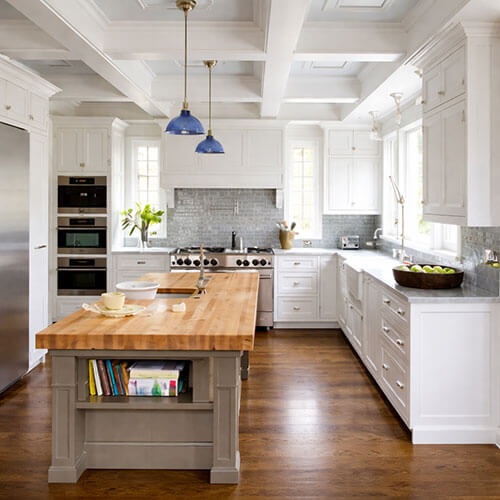
This West Hills, Portland kitchen layers textures to create a space that feels rich and inviting. Cherry butcher block countertops bring a reddish warmth that complements the cream-colored cabinetry, while traditional design elements - raised panel doors, crown molding, and classic hardware - give the room a timeless quality. The cherry wood deepens over time, developing a patina that makes the kitchen look even better with age.
What makes this kitchen instructive is the way the butcher block interacts with the traditional elements. Cherry has a warmth and depth that pairs naturally with classic cabinetry styles. Where lighter woods might look too casual in a formal traditional kitchen, cherry rises to the occasion with a richness that feels appropriate for the setting. Thoughtfully designed kitchens like this often extend the same attention to detail to their dining and serving areas, where the quality of surfaces and materials matters just as much.
Design takeaway: For traditional kitchens, cherry butcher block adds warmth and sophistication that matches the formality of the design. Pair it with cream or off-white cabinets to enhance the wood's natural reddish tones.
Craftsman Kitchen, Los Angeles
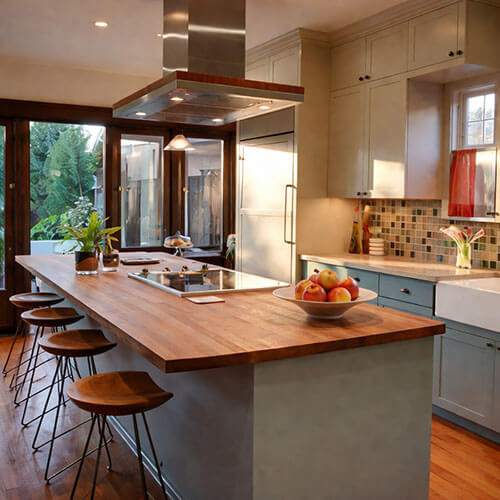
Los Angeles has a deep tradition of Craftsman-style homes, and this kitchen honors that legacy with period-appropriate details and an oak butcher block countertop. The white cabinetry keeps the room bright and open, while the oak's prominent grain pattern adds the handcrafted character that defines the Craftsman aesthetic. Every joint, profile, and surface feels intentional - this is a kitchen built with respect for the style's roots.
Oak is arguably the most classic choice for butcher block countertops. Its open grain pattern creates visual texture that feels inherently handmade, and its durability means it stands up to decades of daily use. In this Craftsman kitchen, the oak surface connects the modern renovation to the home's original character, creating continuity between old and new. Professional environments depend on similarly sturdy wood surfaces for work tables and prep stations, and oak's resilience is a key reason it remains a favorite across both residential and commercial settings.
Design takeaway: Oak butcher block is the natural choice for Craftsman, Arts and Crafts, or mission-style kitchens. Its prominent grain and golden tone complement period-appropriate design details perfectly.
Contemporary Sleek Kitchen, New York City
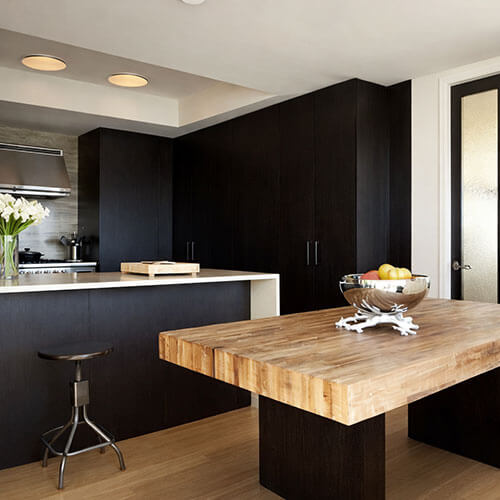
In a city where kitchens tend to be compact and utilitarian, this New York City apartment kitchen makes a statement with clean lines and thoughtful material choices. Maple butcher block countertops pair with white cabinetry in a layout that maximizes every square inch. The design is unmistakably modern - no fuss, no excess - yet the wood surface prevents the space from feeling cold or sterile.
This kitchen is a masterclass in restraint. The maple is light, tight-grained, and smooth, giving the countertop a refined quality that matches the sleek cabinetry. There are no competing materials or bold color statements - the wood and white work together to create a space that feels bigger than it is. In urban settings where space is a premium, butcher block countertops add warmth without the visual weight of darker materials.
Design takeaway: In small or urban kitchens, light maple butcher block countertops make the space feel warmer and larger. Keep the surrounding palette simple and let the wood's natural grain provide all the texture you need.
What Color Cabinets Work Best with Butcher Block Countertops
Choosing the right cabinet color is one of the most important decisions when designing a kitchen with butcher block countertops. The wood's natural warmth interacts differently with every color, and the pairing you choose sets the entire mood of the room.
| Cabinet Color: | Best Wood Pairings: | Mood / Vibe: | Design Style Fit: |
| White | Maple, Birch, Oak, Walnut | Bright, clean, airy | Coastal, Contemporary, Craftsman, Farmhouse |
| Gray | Walnut, Cherry | Sophisticated, layered | Modern, Transitional |
| Black | Birch, Maple, Light Oak | Bold, dramatic, high-contrast | Contemporary, Industrial |
| Green / Teal | Reclaimed Oak, Walnut | Eclectic, earthy, personality-driven | Eclectic, Vintage, Bohemian |
| Cream / Off-White | Beech, Cherry, Maple | Warm, inviting, timeless | Traditional, European, Farmhouse |
| Blue (Navy or Slate) | Walnut, Oak, Cherry | Coastal, grounded, distinguished | Coastal, Transitional, Traditional |
White cabinets are the most popular pairing with butcher block countertops, and for good reason. White provides maximum contrast with any wood species, keeps the kitchen bright, and lets the natural grain be the star. This combination works across almost every design style, from coastal to farmhouse to modern.
Gray cabinets create a more nuanced, sophisticated look. They work particularly well with darker woods like walnut and cherry, where the cool tones of the gray amplify the warmth of the wood without competing for attention. This pairing is ideal for kitchens that want to feel modern but not cold.
Black cabinets are the boldest choice, and they require a lighter wood species to balance the visual weight. Birch, maple, or light oak countertops glow against dark cabinetry, creating a high-contrast look that feels contemporary and confident.
Green and teal cabinets bring personality and work beautifully with reclaimed or character-rich woods. The earthiness of butcher block naturally complements green tones, creating a kitchen that feels organic and collected rather than designed from a catalog.
Cream and off-white cabinets offer a softer alternative to pure white. They pair well with warmer woods like cherry and beech, creating a tonal harmony that feels relaxed and timeless. This combination is especially effective in traditional and European-inspired kitchens.
Blue cabinets - whether navy, slate, or soft coastal blue - create a distinguished, grounded feel when paired with butcher block. The contrast between cool blue and warm wood is visually striking without being jarring, making this pairing a favorite for coastal and transitional kitchens.
Butcher Block Countertop Care and Maintenance
Butcher block countertops are a long-term investment that reward regular maintenance with decades of beauty. The good news is that caring for wood countertops is straightforward once you establish a routine.
Oiling: Apply food-grade mineral oil or a dedicated butcher block oil every two to four weeks, depending on use. Manufacturers like John Boos - one of the most respected names in commercial and residential butcher block - recommend oiling new surfaces frequently during the first few months as the wood acclimates to your kitchen's humidity levels. The oil penetrates the grain and prevents drying, cracking, and staining over time.
Cleaning: Wipe down butcher block surfaces daily with a damp cloth and mild dish soap. Avoid harsh chemical cleaners, bleach, or abrasive scrubbers that can strip the oil finish and damage the wood fibers. For deeper sanitization, a solution of white vinegar and water works well without harming the wood.
Sealing: Some homeowners choose to apply a polyurethane or wax finish for additional protection, especially in high-moisture areas around sinks. A sealed surface requires less frequent oiling but may need to be lightly sanded and resealed every few years as the finish wears.
Stain and scratch repair: One of the advantages of butcher block over stone or solid surface countertops is that minor damage can be sanded out. A fine-grit sandpaper smooths surface scratches, and a fresh coat of oil restores the finish. For deeper stains, a paste of baking soda and water can lift discoloration before you re-oil.
Frequently Asked Questions
Are butcher block countertops still in style?
Absolutely. Butcher block countertops have maintained steady popularity because they bridge so many design styles - from farmhouse and traditional to contemporary and minimalist. Unlike trend-driven materials that cycle in and out, wood countertops have a timeless quality rooted in natural beauty and craftsmanship. The current emphasis on warmth, sustainability, and natural materials in kitchen design has only increased their appeal.
What color cabinets go with butcher block countertops?
White cabinets are the most versatile pairing, but gray, black, green, cream, and blue all work beautifully depending on the wood species and your design goals. Lighter woods like maple and birch pair well with darker cabinets for high contrast, while darker woods like walnut and cherry complement gray or cream tones for a sophisticated, layered look.
What are the best types of wood for butcher block countertops?
Maple is the most common choice for its durability, tight grain, and neutral tone. Walnut offers rich, dark color and dramatic grain patterns. Oak provides a classic, textured look with excellent hardness. Cherry adds warmth that deepens beautifully over time. Beech is popular in European kitchens for its fine, even grain. The best choice depends on your design style - maple for modern, oak for craftsman, walnut for contemporary, and cherry for traditional. If you are shopping for a standalone butcher block surface, John Boos cutting boards and blocks are an industry standard known for quality craftsmanship across all of these wood species.
Can butcher block countertops be used near sinks?
Yes, with proper sealing and maintenance. The area around a sink gets the most water exposure, so it requires extra attention. Apply a marine-grade wood sealer or food-safe polyurethane around the sink cutout, and wipe up standing water promptly. Many of the kitchens featured in this article include undermount sinks integrated into the butcher block surface - it is a proven approach when maintained correctly.
How often should you oil butcher block countertops?
Every two to four weeks for countertops in regular use. New installations benefit from oiling every few days for the first week, then weekly for the first month, before settling into a bi-weekly or monthly schedule. Use food-grade mineral oil or a dedicated butcher block conditioner. The surface will tell you when it needs oil - if water stops beading and starts absorbing, it is time for a fresh coat.
Do butcher block countertops increase home value?
High-quality butcher block countertops can positively impact a kitchen's perceived value, especially when they are well-maintained and integrated into a cohesive design. Buyers respond to the warmth and craftsmanship of wood surfaces. While stone countertops often lead in raw resale value, butcher block installed in the right kitchen - particularly craftsman, farmhouse, or eclectic styles - can be a differentiating feature that makes a home memorable during showings.
Are butcher block countertops sanitary for food preparation?
Yes. Studies have shown that wood cutting surfaces actually have natural antibacterial properties - bacteria that penetrate the wood grain are trapped and die off, unlike plastic surfaces where knife-cut grooves can harbor bacteria indefinitely. With regular cleaning and oiling, butcher block countertops are a safe and hygienic choice for food preparation. The key is consistent maintenance and avoiding prolonged contact with raw meat juices.
Related Resources
- Butcher Blocks - Standalone butcher block surfaces in maple, walnut, and oak for prep islands and countertop additions
- Wood-Top Work Tables - Freestanding butcher block tables that work as portable prep stations in any kitchen - great for homes that want the butcher block look without a permanent installation
- Cutting Boards - Quality wood cutting boards that protect your butcher block countertops during heavy prep work
- Food Preparation Equipment - Tools and equipment that make any kitchen run smoothly alongside your countertop investment
- Commercial Work Tables and Stations - Professional prep stations that show how durable wood work surfaces anchor a functional kitchen layout
Share This!