Restaurant Printed Promotional Materials Guide
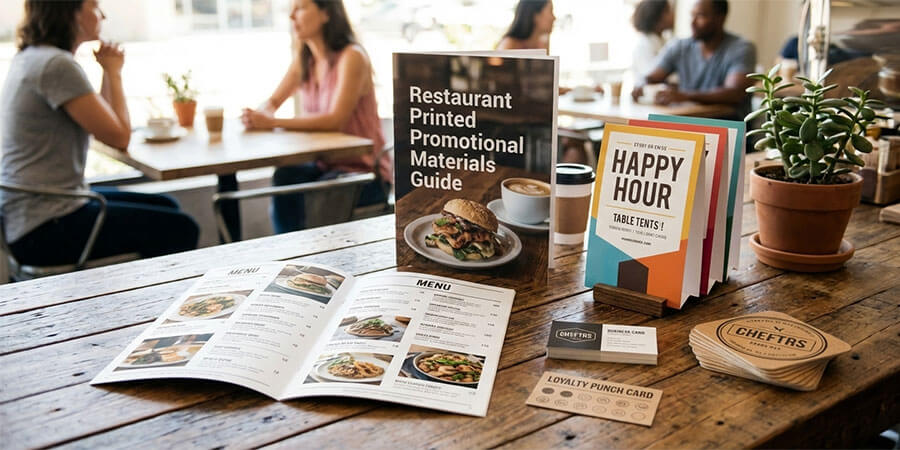
Table of Contents
Create effective print marketing that cuts through digital noise and brings diners to your door
Printed promotional materials remain one of the most effective ways to reach local customers. This guide covers essential print materials - from menus and table tents to direct mail and signage - along with design best practices, printing considerations, and strategies to measure your return on investment.
In an era dominated by digital marketing, printed promotional materials continue to deliver exceptional results for restaurants. While competitors focus exclusively on social media and online ads, smart operators recognize that physical marketing creates lasting impressions that digital simply cannot match.
The numbers tell a compelling story. Direct mail achieves an average response rate of 2.7 to 4.4 percent compared to just 0.12 percent for email according to the Data and Marketing Association - making print significantly more effective at generating responses. Even more striking, 84 percent of consumers read direct mail immediately or on the same day they receive it, and physical mail typically remains in homes for weeks compared to emails that are deleted within seconds.
This guide walks you through every type of printed promotional material your restaurant should consider, from the menus on your tables to the postcards in your neighbors' mailboxes. You will learn design principles that drive action, printing options that fit your budget, and tracking methods that prove your investment pays off.
Why Printed Materials Still Work
The effectiveness of print marketing comes down to psychology and market conditions. Understanding these factors helps you leverage print strategically rather than using it as an afterthought.
Digital Fatigue Is Real
Your potential customers receive an average of 605 emails every week but only about 17 pieces of physical mail. This imbalance creates opportunity. Research shows that 58 percent of consumers feel overwhelmed by digital brand messages, while 53 percent say direct mail feels more special, valuable, or exclusive than digital communications.
When everyone zigs toward digital, zagging toward print helps you stand out. Your postcard or flyer gets noticed precisely because the mailbox is no longer cluttered like the inbox.
Print Builds Trust and Credibility
Physical materials signal investment and permanence in ways digital cannot replicate. Studies show that 49 percent of consumers view brands that send direct mail as more credible than those relying solely on digital outreach. Additionally, 70 percent feel direct mail is more personal than online interactions.
For restaurants especially, this trust factor matters. Dining involves real money and real time - customers want reassurance that your establishment is legitimate and worth visiting. A well-designed printed menu or professional postcard provides that reassurance.
Memorability and Engagement
Direct mail is 49 percent more memorable and 33 percent more engaging than email marketing. Consumers spend 108 percent more time reading content in printed materials compared to digital alternatives. This extended engagement gives your message more time to resonate and influence decisions.
The tactile nature of print also aids memory. Holding a physical menu or flyer activates different cognitive processes than scrolling past a digital ad, creating stronger mental associations with your brand.
Younger Generations Embrace Print
Contrary to assumptions, younger consumers respond enthusiastically to print marketing. Research indicates that 85 percent of Gen Z and Millennials engage with direct mail, and 80 percent share direct mail pieces with others. Three-quarters of Millennials say direct mail makes them feel special or valued - a sentiment that translates directly into brand loyalty.
Print vs Digital Marketing Comparison
| Factor | Print Marketing | Digital Marketing |
| Response rate | 2.7 - 4.4% | 0.12% (email) |
| Consumer trust | 49% view as more credible | Lower perceived credibility |
| Memorability | 49% more memorable | Easily forgotten |
| Time spent | 108+ seconds average | Seconds before scrolling |
| Lifespan | Weeks in home | Deleted within seconds |
| Message clutter | ~17 pieces per week | 600+ emails per week |
| Tangible experience | Physical, tactile | Screen-based only |
Essential Printed Materials for Restaurants
Different printed materials serve different purposes in your marketing mix. The following sections cover each type in detail, including when to use them and how to maximize their impact.
Quick Reference: Print Material Types
| Material | Primary Purpose | Best For | Update Frequency |
| Menus | Drive orders and increase check size | All restaurants | Seasonally or when items change |
| Table tents | Promote specials and upsell | Dine-in restaurants | Monthly |
| Business cards | Networking and partnerships | Owners and managers | Annually |
| Loyalty cards | Drive repeat visits | Quick-service and casual dining | As program changes |
| Flyers | Local awareness campaigns | New locations, special events | Per campaign |
| Door hangers | Hyper-local targeting | Delivery areas, neighborhoods | Per campaign |
| Direct mail postcards | Targeted customer acquisition | All restaurants | Quarterly campaigns |
| Window signage | Attract foot traffic | High-pedestrian locations | Seasonally |
| A-frame signs | Promote daily specials | Street-level locations | Daily or weekly |
Menus and Menu Inserts
Your menu is your most important printed material - it directly influences what guests order and how much they spend. Strategic menu design and engineering can meaningfully increase both average check size and profit margins, making menu optimization one of the highest-return investments available.
Menu Psychology
Strategic menu design goes beyond listing dishes and prices. Eye-tracking studies reveal that diners scan menus in predictable patterns, with the top right corner receiving the most attention. Placing high-margin items in these prime positions increases their selection rate.
Descriptive language also drives sales. Research from the Cornell Food and Brand Lab found that renaming dishes with evocative, sensory language increased orders by 27 percent, with guests rating items as higher quality and better value. Instead of simply listing ingredients, paint a picture that activates taste memories and emotions.
Menu Formats
Choose your format based on your concept and operational needs:
- Single-page menus work well for focused concepts with limited offerings
- Bi-fold menus provide more space while remaining easy to handle
- Tri-fold menus suit restaurants with moderate variety across categories
- Multi-page booklets accommodate extensive offerings but risk overwhelming guests
- Menu inserts allow you to highlight specials without reprinting entire menus
Takeout and Delivery Menus
Printed menus for off-premise dining serve dual purposes - they facilitate orders and market your restaurant to new customers. Include your full contact information, online ordering details, and delivery zone information. Many restaurants find that menus left with delivery orders generate repeat business for months.
Browse menu boards and covers to find presentation options that protect your printed menus while enhancing your brand image.
Table Tents and Point-of-Purchase Displays
Table tents capture attention during the dining experience when customers are already engaged and ready to spend. This makes them ideal for promoting specific items, programs, or actions you want guests to take.
Effective Uses for Table Tents
- Daily specials and limited-time offers that create urgency
- Dessert and beverage promotions to increase check averages
- Loyalty program sign-ups when customers are most receptive
- Social media engagement requests with your handles and hashtags
- Event announcements for upcoming entertainment or special occasions
- App downloads for online ordering and rewards tracking
Design Considerations
Table tents compete with conversation and food for attention. Keep messaging concise with clear visual hierarchy. Use high-quality images that make items look irresistible. Include a single, specific call to action rather than multiple competing requests.
Rotate table tent content regularly - at minimum monthly - to keep the marketing fresh for repeat visitors. Seasonal themes and holiday tie-ins provide natural rotation opportunities.
Explore table tents and tabletop displayettes for display options that fit your table sizes and aesthetic.
Business Cards and Loyalty Cards
Business cards remain essential networking tools despite digital alternatives. For restaurant owners and managers, cards facilitate connections at industry events, community gatherings, and chance encounters that could lead to catering opportunities or partnerships.
Business Card Best Practices
Quality signals professionalism. Choose heavier cardstock with finishes that match your brand personality - glossy for modern concepts, matte or textured for rustic or upscale establishments. Include essential contact information, your website, and consider a QR code linking to your online menu or reservation system.
Make your card useful beyond contact information. Printing a brief menu highlight, signature dish image, or small map on the reverse gives recipients a reason to keep rather than discard the card.
Loyalty and Punch Cards
Physical loyalty cards drive repeat visits through tangible progress tracking. The psychology of partially completed punch cards is powerful - customers feel compelled to finish what they started. Research shows that loyalty programs can increase visit frequency by 20 percent or more.
Design loyalty cards that align with your brand while clearly communicating the reward structure. Ten punches for a free item is standard, but consider what interval works for your price points and margins. Track redemption rates to measure program effectiveness.
Flyers and Door Hangers
Flyers and door hangers enable hyper-local marketing with precise geographic targeting. Unlike digital ads that reach broad audiences with questionable local relevance, printed materials go directly to specific neighborhoods you want to reach.
Distribution Strategies
Effective distribution requires planning:
- Radius targeting reaches households within walking or short driving distance
- New mover campaigns welcome residents who have not yet established dining habits
- Complementary business partnerships place your materials where your target customers already shop
- Event tie-ins connect your restaurant to community happenings
Door hangers offer guaranteed visibility - they cannot be ignored like mail that goes directly to recycling. However, they require more labor-intensive distribution compared to direct mail.
Design for Action
Flyers and door hangers get seconds to capture attention. Lead with your strongest visual - typically an appetizing food image. Include a compelling offer that motivates immediate action, such as a percentage discount or free item with purchase. Always include expiration dates to create urgency.
Make contact information prominent. Include your address, phone number, website, and hours. A small map showing your location relative to the distribution area helps orient potential customers.
Direct Mail and Postcards
Direct mail combines the impact of printed materials with the precision of database marketing. You can target specific demographics, purchase histories, or geographic areas with personalized messaging that resonates with each recipient.
Campaign Types
- New mover campaigns reach people actively establishing new routines
- Reactivation campaigns bring back lapsed customers with compelling offers
- Birthday and anniversary mailings create personal connections and drive celebratory dining
- Seasonal promotions align your restaurant with holidays and local events
- Menu launch announcements generate excitement for new offerings
Personalization Impact
Personalization dramatically improves response rates. Adding the recipient's name increases responses by 135 percent. Beyond names, personalize based on past orders, preferences, or neighborhood-specific messaging. The more relevant the content, the higher the engagement.
Postcard Specifications
Postcards work well for restaurant marketing because they deliver your message without requiring recipients to open an envelope. Standard sizes include 4x6 inches for economy and 6x9 inches for maximum impact. Larger formats cost more to print and mail but generate higher response rates.
Window Displays and Signage
External signage serves as continuous marketing to everyone passing your location. Unlike other print materials, signage works around the clock without additional distribution costs.
Sidewalk Signs and A-Frames
A-frame signs placed on sidewalks capture foot traffic attention with daily specials, happy hour promotions, or welcoming messages. They are particularly effective in high-pedestrian areas where potential customers make spontaneous dining decisions.
Change A-frame content daily or at minimum weekly to give regular passersby fresh reasons to notice and engage. Chalkboard-style signs allow easy updates while conveying an artisanal, personal touch.
Browse A-frame sign boards for durable options that withstand weather and daily use.
Window Clings and Posters
Window displays transform unused glass into marketing space. Use clings and posters to promote:
- Operating hours and contact information
- Online ordering and delivery availability
- Current promotions and seasonal offerings
- Awards, reviews, and certifications
- Upcoming events and entertainment
Balance promotional content with visibility - customers inside want natural light, and passersby want to glimpse your interior atmosphere.
View menu signs for options that display your offerings to pedestrians and drive-by traffic.
Design Best Practices
Regardless of the specific printed material, certain design principles apply universally.
Visual Hierarchy
Guide the viewer's eye through your content in order of importance. Use size, color, and placement to emphasize key messages. The most important element - typically your main offer or call to action - should be immediately obvious without requiring study.
Brand Consistency
Every printed piece should be instantly recognizable as coming from your restaurant. Use consistent colors, fonts, logo placement, and photography style. This consistency builds brand recognition over time and reinforces professionalism.
Quality Photography
Food photography makes or breaks restaurant marketing materials. Professional images of your actual dishes dramatically outperform stock photography or amateur shots. Invest in a professional photo shoot and use those images across all materials.
Clear Calls to Action
Tell recipients exactly what you want them to do. Visit your website. Call for reservations. Present this postcard for a discount. Scan this QR code. Vague marketing generates vague results - specific requests generate specific actions.
White Space
Resist the temptation to fill every inch with content. White space - empty areas around text and images - improves readability and makes materials feel more premium. Crowded designs overwhelm viewers and reduce message retention.
Printing Considerations
Printing choices affect both the quality of your materials and your budget. Understanding options helps you make informed decisions.
Paper Stock
Heavier paper stocks feel more substantial and professional. For most restaurant materials, 14-point or 16-point cardstock strikes a good balance between quality perception and cost. Thinner stocks work for items distributed in high volumes where recipients expect disposability.
Finishes
- Gloss coating makes colors pop and works well for food photography
- Matte coating reduces glare and feels more sophisticated
- Soft-touch coating creates a velvety texture that recipients remember
- Spot UV highlights specific elements with selective gloss application
- Uncoated paper suits rustic or artisanal brand personalities
Quantity Planning
Printing costs decrease significantly per unit as quantities increase. However, ordering too many units risks waste if your offers, hours, or other details change. Balance economy of scale against flexibility by ordering amounts you can realistically distribute before needing updates.
Measuring Print Marketing Success
Unlike digital marketing with automatic tracking, print requires intentional measurement systems. Implement these methods to prove return on investment.
Unique Offer Codes
Assign different codes to different campaigns, geographic areas, or time periods. When customers redeem offers, the codes reveal which materials drove the response. This data informs future targeting and budget allocation.
Dedicated Phone Numbers or URLs
Tracking phone numbers route to your main line while recording call sources. Similarly, campaign-specific landing pages or shortened URLs track digital responses generated by print materials. QR codes work particularly well for bridging print to digital tracking.
Customer Surveys
Simply asking "How did you hear about us?" during ordering or checkout provides valuable attribution data. Train staff to ask consistently and record responses systematically.
Redemption Rate Tracking
Calculate the percentage of distributed materials that generate measurable responses. Compare rates across different offers, designs, and distribution methods to identify what works best for your market. Industry benchmarks suggest expecting 1 to 5 percent response rates for well-executed direct mail campaigns, with higher rates for offers distributed to existing customers.
Frequently Asked Questions
How much should restaurants budget for print marketing?
Most successful restaurants allocate 3 to 6 percent of revenue to total marketing, with print typically representing 20 to 40 percent of that budget depending on concept and location. Start with one or two materials and expand based on measured results.
How often should menus be reprinted?
Reprint menus when items or prices change significantly, when materials show visible wear, or at minimum annually. Many restaurants update seasonally - four times per year - to keep offerings fresh and materials in good condition.
Are QR codes effective on printed materials?
Yes, particularly with younger demographics. Research shows 60 percent of Millennials are comfortable using QR codes on direct mail. Ensure QR codes link to mobile-optimized pages and provide clear instructions for those unfamiliar with scanning.
What response rate should direct mail campaigns achieve?
Industry averages range from 2 to 5 percent for prospect lists and up to 9 percent for mailings to existing customers. Response rates vary significantly based on offer strength, targeting precision, and creative quality. Test different approaches and measure against your own benchmarks.
Is it worth paying more for premium paper and finishes?
Generally yes, especially for materials representing your brand long-term like menus and business cards. Premium materials cost more upfront but create stronger impressions and often last longer, reducing replacement frequency.
How do restaurants integrate print with digital marketing?
Effective integration includes QR codes linking to online ordering or social media, consistent branding across all channels, and using direct mail to drive website visits. Research shows combining print with digital increases conversion rates by 28 percent compared to either channel alone.
What size postcards work best for restaurant marketing?
Larger postcards (6x9 inches) generate higher response rates but cost more to print and mail. Standard 4x6 inch postcards offer good economy while still standing out in mailboxes. Test both sizes and track results to determine what works for your market.
How can small restaurants afford professional design?
Options include hiring freelance designers for specific projects, using design templates customized with your branding, or working with print vendors who offer design services. Many printers include basic design assistance with print orders.
Should print materials include social media handles?
Yes, include handles for platforms you actively maintain. Social media expands the relationship beyond the single printed piece. However, only promote accounts you update regularly - abandoned social profiles damage credibility.
How far in advance should seasonal materials be planned?
Begin planning seasonal campaigns 6 to 8 weeks before launch. This allows time for design, printing, and distribution while ensuring materials reach customers when seasonal interest peaks.
Related Resources
Continue developing your restaurant marketing strategy with these related guides:
- Restaurant Marketing Guide - Comprehensive overview of all marketing channels and strategies
- Restaurant Offline Marketing Guide - Local promotion strategies beyond print
- Restaurant Traditional Media Marketing Guide - Newspaper, magazine, radio, and television advertising
- Restaurant Menu Design Guide - Deep dive into menu psychology and layout optimization
Share This!