School Milk Cooler Guide
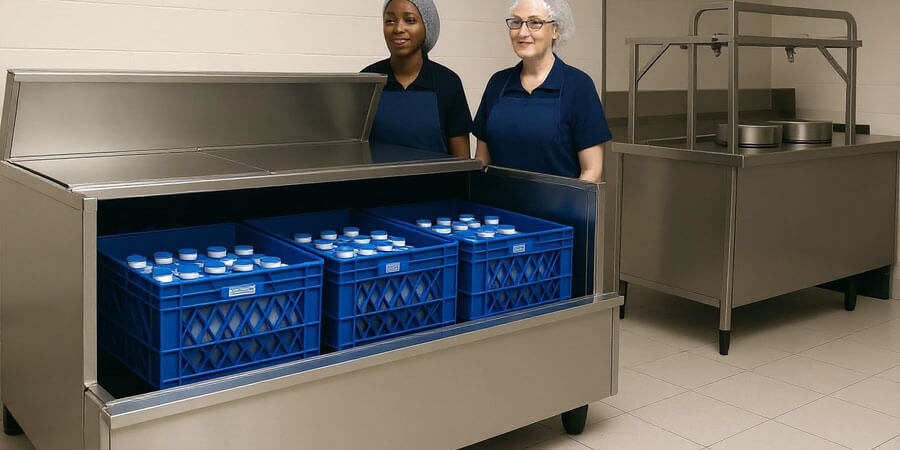
Table of Contents
The Business Case for Commercial Milk Coolers
Why Institutions Need Professional Milk Storage Equipment
Commercial milk coolers are essential investments for any institutional foodservice operation where milk storage, temperature control, and safety compliance are critical priorities. Unlike standard refrigerators, these specialized units maintain precise temperatures while handling high-volume storage requirements in demanding environments.
Operational Excellence Benefits:
- Temperature Precision: Maintains milk at optimal 4°C (39°F) to prevent spoilage and extend shelf life
- High-Volume Storage: Accommodates hundreds of milk cartons/crates in organized, accessible configurations
- Safety Compliance: Meets FDA, USDA, and local health department requirements for milk storage
- Waste Reduction: Proper temperature control minimizes spoilage and disposal costs
- Staff Efficiency: Streamlined access and organization improve service speed and accuracy
Efficiency Benefits & Time Savings
Institutional Milk Management Comparison:
| Task: | Manual Refrigeration: | Commercial Milk Cooler: | Time Savings: |
| Milk Retrieval (50 servings) | 12 minutes | 3 minutes | 75% faster |
| Temperature Verification | 5 minutes | 30 seconds | 90% faster |
| Inventory Organization | 20 minutes | 5 minutes | 80% faster |
| Cleaning & Maintenance | 45 minutes | 15 minutes | 67% faster |
| Compliance Documentation | 10 minutes | 2 minutes | 80% faster |
Institutional Productivity Impact:
- Service Speed: Process 200-500 milk servings per hour vs. 80-150 manually
- Labor Efficiency: $12,000-$22,000 annual savings per cooler in institutional settings
- Reduced Spoilage: Minimize milk waste by 40-60% through proper temperature control
- Staff Training: 1-2 days vs. 1-2 weeks for milk handling procedures
- Compliance Assurance: Automated temperature monitoring prevents regulatory violations
Cost Control & Waste Reduction Impact
Financial Impact of Professional Milk Coolers:
- Waste Reduction: 40-60% less milk spoilage through consistent temperature control
- Labor Savings: $15,000-$25,000 annual reduction in milk handling and service costs
- Inventory Efficiency: Better stock rotation reduces over-purchasing by 20-30%
- Regulatory Compliance: Avoid fines and liability from improper milk storage
- Quality Maintenance: Preserve nutritional value and taste for better customer satisfaction
ROI Analysis: Return on Milk Cooler Investment
| Investment Factor: | Annual Savings/Benefit: | 5-Year Value: |
| Waste Reduction | $8,000-$15,000 | $40,000-$75,000 |
| Labor Efficiency | $12,000-$20,000 | $60,000-$100,000 |
| Quality Consistency | $6,000-$12,000 | $30,000-$60,000 |
| Regulatory Compliance | $3,000-$8,000 | $15,000-$40,000 |
| Operational Efficiency | $4,000-$10,000 | $20,000-$50,000 |
Total Annual ROI: 100-150% return on investment within 1-2 years
Commercial Milk Cooler Types & Applications
GoFoodservice categorizes commercial milk coolers by access configuration and capacity, designed specifically for institutional milk storage requirements.
1. Single-Sided Milk Coolers

Single-sided milk coolers offer traditional front-access storage, making them ideal for smaller cafeterias, classrooms, and facilities with limited space or one-sided service requirements.
Institutional Applications:
- Small to medium school cafeterias serving 200-400 students
- Hospital ward kitchens and small nutrition stations
- Corporate break rooms and small institutional kitchens
- Facilities requiring compact, cost-effective milk storage solutions
Key Performance Features:
- Front-access design with single or double doors for easy milk retrieval
- Capacity ranging from 8-16 milk crates (192-384 cartons)
- Stainless steel construction with durable floor racks
- Digital temperature controls and monitoring systems
- Self-closing doors to maintain consistent internal temperatures
Operational Benefits:
- Space Efficiency: Compact footprint fits in smaller institutional spaces
- Cost Effectiveness: Lower initial investment for budget-conscious facilities
- Ease of Access: Simple front-loading design familiar to kitchen staff
- Reliable Performance: Proven technology for consistent milk storage
2. Dual-Sided Milk Coolers

Dual-sided milk coolers provide access from both sides, enabling efficient service in high-traffic cafeterias where milk needs to be accessible from multiple serving lines or preparation areas.
Institutional Applications:
- Large school cafeterias serving 400+ students with multiple serving lines
- Hospital cafeterias with separate patient and staff service areas
- University dining halls and large institutional foodservice operations
- Facilities requiring simultaneous access from different preparation zones
Key Performance Features:
- Dual-access design allowing milk retrieval from both sides simultaneously
- Larger capacity ranging from 12-24 milk crates (288-576 cartons)
- Reinforced stainless steel construction for heavy-duty institutional use
- Advanced temperature monitoring with digital displays
- Multiple door configurations for optimal workflow
Operational Benefits:
- High-Volume Service: Support multiple serving lines simultaneously
- Staff Efficiency: Reduced walking and improved service flow
- Peak Period Management: Handle rush hours with minimal bottlenecks
- Flexible Configuration: Adaptable to different cafeteria layouts and service models
Investment Scenarios by Institutional Operation Type
School Cafeteria (200-500 students/day):
- Equipment Investment: $2,000-$6,000
- Annual Savings/Benefits: $10,000-$18,000
- Payback Period: 4-8 months
- 5-Year Net Benefit: $40,000-$75,000
- Best Fit: Single-sided or dual-sided milk coolers for efficient student service
Hospital Nutrition Program (300-800 patients/day):
- Equipment Investment: $4,000-$12,000
- Annual Savings/Benefits: $15,000-$28,000
- Payback Period: 5-10 months
- 5-Year Net Benefit: $60,000-$120,000
- Best Fit: Dual-sided milk coolers with precise temperature monitoring
Large Institutional Cafeteria (500+ meals/day):
- Equipment Investment: $8,000-$25,000+
- Annual Savings/Benefits: $25,000-$50,000+
- Payback Period: 6-12 months
- 5-Year Net Benefit: $100,000-$200,000+
- Best Fit: Multiple dual-sided milk coolers for maximum capacity
Selection Framework
Capacity Planning Calculator
Match milk cooler capacity to institutional consumption patterns and facility requirements. Consider peak usage periods, facility size, and service model when selecting capacity.
Institutional Capacity Requirements by Facility Size:
| Facility Type: | Daily Milk Volume: | Recommended Capacity: | Cooler Type: |
| Small School (200 students) | 40-80 cartons | 192-288 cartons | Single-sided |
| Medium School (400 students) | 80-160 cartons | 288-384 cartons | Dual-sided |
| Large School (600+ students) | 120-240 cartons | 384-576 cartons | Dual-sided |
| Hospital Cafeteria | 100-300 cartons | 384-768 cartons | Dual-sided |
| University Dining | 200-500+ cartons | 576-1,152+ cartons | Multiple dual-sided |
Institutional Planning Considerations:
- Peak Usage: Plan for 60-80% of daily volume occurring during 2-3 hour peak periods
- Multiple Locations: Consider distributed storage vs. centralized refrigeration solutions
- Seasonal Variations: Account for higher summer consumption in school settings
- Backup Capacity: Include 20-30% buffer for unexpected demand or equipment issues
Application-Specific Considerations
School Cafeteria Environment:
- Focus on student accessibility and safety compliance
- Consider USDA meal program requirements and portion control
- Prioritize durable construction for heavy student traffic
- Plan for integration with existing cafeteria equipment and workflow
Hospital Nutrition Programs:
- Emphasize infection control and medication storage compatibility
- Meet Joint Commission and health department standards
- Consider specialized access controls for different user groups
- Plan for integration with dietary department protocols
Large Institutional Operations:
- Focus on bulk purchasing efficiency and inventory management
- Consider integration with existing refrigeration systems
- Plan for staff training and maintenance accessibility
- Evaluate energy efficiency for large-scale operations
- Backup Storage Solutions: Large institutions often supplement milk coolers with walk-in refrigeration units for bulk milk storage and emergency backup. These walk-ins provide additional capacity during peak seasons or special events, ensuring uninterrupted milk availability while maintaining proper temperature control for extended storage periods.
Key Features & Specifications
Essential Selection Features
Capacity & Configuration:
- Match crate/cartons capacity to daily consumption requirements
- Choose single-sided or dual-sided based on service model and facility layout
- Consider door configuration for optimal workflow and accessibility
- Evaluate floor space requirements and institutional traffic patterns
Construction & Durability:
- Stainless steel construction for corrosion resistance and easy cleaning
- Heavy-duty floor racks rated for 30+ lbs per crate
- Reinforced doors and frames for institutional traffic
- NSF certification for food equipment safety standards
Temperature Control & Monitoring:
- Precise 4°C (39°F) temperature maintenance for optimal milk storage
- Digital temperature displays and monitoring systems
- Automatic defrost cycles and condensate management
- Temperature alarms and logging capabilities for compliance
Refrigeration System Options:
- Cold Wall Refrigeration: Evaporator coils are mounted around the interior walls, providing gentle, even cooling without fans. Ideal for maintaining consistent temperatures without affecting milk quality.
- Forced Air Refrigeration: Uses fans to circulate cold air throughout the cabinet, providing faster cooling and recovery times. Better for high-traffic environments requiring quick temperature recovery after door openings.
Essential Accessories for Institutional Operation
- Milk Crates & Racks: Compatible crate sizes and reinforced storage systems
- Temperature Monitoring: Digital thermometers and data logging devices
- Cleaning Supplies: Food-safe sanitizers and stainless steel cleaners
- Maintenance Tools: Calibration equipment and replacement filters
- Safety Equipment: Door locks, access controls, and emergency release mechanisms
Installation & Maintenance
Professional Installation Requirements
Commercial milk coolers require professional installation to ensure proper temperature control, electrical safety, and structural integrity in institutional environments.
Installation Checklist:
- Professional electrical connection with dedicated circuit and proper voltage
- Level installation on reinforced flooring to support full weight capacity
- Proper ventilation and clearance for heat dissipation and service access
- Water drainage connection for condensate and cleaning purposes
- Temperature calibration and performance verification
- Staff training on operation, safety procedures, and emergency protocols
- Documentation of warranties, service schedules, and compliance certifications
Installation Cost Factors:
- Basic Setup: $300-$800 for electrical and basic connections
- Complex Electrical: $800-$1,500 for upgraded service or special requirements
- Structural Modifications: $500-$2,000 for reinforced flooring or facility modifications
- Professional Calibration: $200-$500 for initial setup and certification
Maintenance Schedules & Best Practices
Regular maintenance ensures consistent performance, temperature control, and compliance with health department standards in busy institutional settings.
Daily Maintenance Procedures:
- Clean exterior surfaces and door handles with food-safe sanitizers
- Verify temperature readings and alarm functionality
- Inspect door seals and self-closing mechanisms
- Check for proper crate alignment and rack stability
- Empty and clean condensate drains as needed
- Document temperature readings for compliance records
Weekly Maintenance Tasks:
- Deep clean interior surfaces and floor racks
- Calibrate temperature controls and verify accuracy
- Inspect door gaskets and replace if worn
- Clean condenser coils and verify proper airflow
- Test door switches and lighting systems
- Rotate milk inventory using FIFO (First In, First Out) principles
Monthly Professional Service:
- Complete system diagnostics and performance testing
- Clean and maintain refrigeration components
- Calibrate temperature sensors and monitoring systems
- Inspect electrical connections and safety systems
- Update software and firmware as manufacturer recommends
- Comprehensive cleaning of hard-to-reach components
Troubleshooting
Common Issues & Solutions
Temperature Control Problems:
- Temperature Too High: Check door seals, clean condenser coils, verify thermostat calibration
- Temperature Fluctuations: Ensure proper leveling, check door usage patterns, clean air vents
- Inconsistent Readings: Calibrate sensors, check electrical connections, replace faulty components
Performance & Maintenance Issues:
- Excessive Frost Buildup: Clean door gaskets, check defrost cycle, ensure proper ventilation
- Unusual Noises: Inspect fan motors, check crate alignment, tighten loose components
- Door Problems: Clean tracks and hinges, adjust self-closing mechanisms, replace worn parts
Operational Challenges:
- High Traffic Management: Implement usage schedules, train staff on proper access procedures
- Inventory Organization: Establish crate labeling systems, implement regular inventory checks
- Peak Period Efficiency: Pre-position frequently used items, establish service protocols
Frequently Asked Questions
What temperature should milk be stored at in commercial coolers?
Milk should be stored at 4°C (39°F) or below to prevent bacterial growth and maintain safety. Commercial milk coolers are designed to maintain this precise temperature consistently, with monitoring systems to ensure compliance with FDA and health department standards.
How often should commercial milk coolers be cleaned?
Daily surface cleaning and weekly deep cleaning are essential. Monthly professional servicing should include condenser cleaning, temperature calibration, and system diagnostics. Regular cleaning prevents bacterial growth and ensures optimal performance.
What's the difference between single-sided and dual-sided milk coolers?
Single-sided coolers have front access only, making them suitable for smaller operations. Dual-sided coolers allow access from both sides simultaneously, making them ideal for large cafeterias with multiple serving lines or high-traffic areas where efficiency is critical.
How much does a commercial milk cooler cost?
Single-sided models range from $2,000-$6,000, dual-sided models cost $4,000-$12,000, and large-capacity institutional models can exceed $15,000. Costs vary based on capacity, construction quality, and features. Consider total cost of ownership including installation and maintenance.
What size milk cooler do I need for my school cafeteria?
For 200 students, plan for 192-288 carton capacity. For 400 students, consider 288-384 cartons. For 600+ students, 384-576 cartons or more. Factor in peak usage periods and consider 20-30% buffer capacity for special events or unexpected demand.
Are milk coolers energy efficient?
Modern commercial milk coolers include energy-efficient compressors, improved insulation, and programmable features. Many models meet ENERGY STAR requirements and include sleep modes to reduce energy consumption during off-peak hours.
What certifications should I look for in milk coolers?
Look for NSF certification for food equipment safety, UL listing for electrical safety, and ENERGY STAR for energy efficiency. Some regions require specific certifications for institutional use in schools and hospitals.
How do I maintain proper milk inventory rotation?
Use FIFO (First In, First Out) principles with date labeling on crates. Position newer deliveries at the back and older stock at the front. Regular inventory checks and temperature monitoring ensure milk quality and minimize waste.
Can milk coolers be used for other beverages?
While designed specifically for milk, many commercial milk coolers can store other dairy products, juices, and beverages requiring refrigeration. However, check manufacturer specifications and local health regulations before storing non-milk items.
What warranty coverage should I expect?
Most commercial milk coolers offer 1-3 year parts and labor warranties, with compressors often covered for 5-7 years. Extended warranty options may be available. Always register equipment and keep service records for warranty claims.
Shop Related Products:
Related Guides:
- Commercial Kitchen Steam Equipment Guide
- Commercial Cooking Equipment Guide
- The Ultimate Commercial Kitchen Equipment Checklist
Share This!