Keeping Your Commercial Kitchen Pest-Free
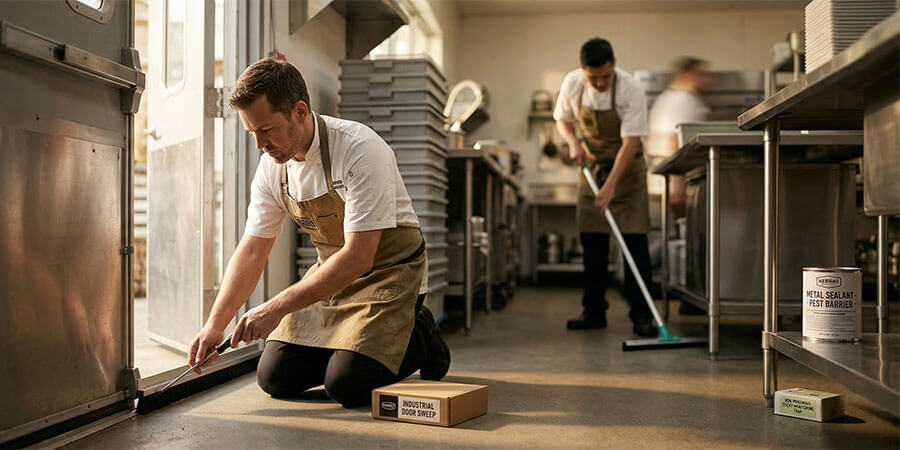
Table of Contents
Prevent pests in a commercial kitchen by tightening sanitation, sealing entry points, and building a monitoring routine instead of reacting late
Pest problems in restaurants rarely come from a single dramatic mistake. They usually come from a set of conditions that became easy to ignore: food residue left too long in hidden areas, damp utility zones, weak dumpster discipline, storage clutter, or openings that make the building easy to enter after close.
That is why the best commercial-kitchen pest-control strategy looks more like an operating system than a one-time treatment. EPA's integrated pest management guidance supports that same approach: monitor carefully, identify the problem correctly, focus on prevention first, and use control measures as part of the system instead of treating pesticides as the system itself.
Pest Prevention Starts With Conditions, Not With Products
Integrated pest management is useful in restaurants because it asks a better first question. Not "What should we spray?" but "What conditions are supporting this pest problem?"
In a commercial kitchen, those conditions usually include food, water, shelter, and access. When any of those are left unmanaged, pest pressure rises quickly.
| Pest Pressure Source: | Why It Matters: | First Operational Fix: |
| Food residue | Creates a steady food source | Tighten closeout cleaning and hidden-area cleaning |
| Standing water or dampness | Supports survival and nesting | Fix leaks and dry wet zones faster |
| Clutter and cardboard | Creates hiding and breeding zones | Remove buildup and organize storage |
| Gaps and openings | Makes entry easier | Seal, protect, and inspect likely entry points |
That is why pest control should never be isolated from cleaning, maintenance, and building inspection.
Sanitation Still Does Most Of The Heavy Lifting
Pests do not need ideal conditions. They only need enough food and moisture to keep returning.
This is where restaurant operators often underestimate the small things that matter most. A little grease under equipment, a little standing liquid in a mop area, or a little food debris around storage can be enough to support recurring pest pressure even when the visible line looks acceptable from a distance.
The strongest sanitation habits for pest prevention are usually very basic:
- Clean spills immediately
- Remove trash before it sits too long indoors
- Keep cardboard from building up in prep and storage areas
- Clean under and behind equipment on a schedule
- Treat drains, utility areas, and mop zones as recurring risk areas instead of background clutter
That is also why pest control and food safety overlap so heavily. If the sanitation rhythm is weak, both contamination risk and pest pressure rise at the same time.
For the broader cleaning framework, Restaurant Cleaning 101 and Your Complete Restaurant Kitchen Cleaning Checklist are the best related reads.
Trash And Dumpster Habits Often Decide The Whole Program
One of the easiest ways to make a kitchen more attractive to pests is to be inconsistent about waste.
Food Code logic and good pest-prevention practice both point in the same direction: waste should be removed, contained, and managed so it does not become a steady attractant near foodservice operations. A good indoor line can still have a bad pest problem if the waste route and dumpster condition are poorly managed.
Inside the building, the goal is frequency and containment. Bins should be emptied on a routine that matches the operation's volume, and the splash zones around them should not be allowed to stay sticky or damp.
Outside the building, the goal is access control. Overflowing dumpsters, broken lids, pooled liquid, or loose debris near the waste area can attract pests even when the kitchen itself feels relatively clean.
| Waste-Control Area: | What Stronger Practice Looks Like: |
| Indoor bins | Emptied on schedule, kept away from food handling, cleaned regularly |
| Trash route | Clear, fast, and not allowed to create drip or debris trails |
| Dumpster area | Lids managed, overflow avoided, surrounding surface kept cleaner |
| Cardboard handling | Removed quickly instead of piling up in storage corners |
If the trash area is always wet, sticky, or open, the building is advertising itself to pests.
Exclusion Is Just As Important As Cleaning
Pest prevention is not only about taking food away. It is also about making the building harder to enter.
The FDA Food Code includes provisions around protecting outer openings and maintaining the premises so pests do not gain easy access. In practical restaurant terms, that means more than glancing at the back door once a month. It means checking whether the building is quietly giving pests the entry points they need.
Common trouble spots include:
- Door sweeps and gaps at receiving or back doors
- Window and screen condition where relevant
- Utility penetrations that were never sealed properly
- Damaged wall-floor transitions in storage and utility spaces
- Drain and plumbing areas that create access and moisture at the same time
This is where pest prevention becomes a facilities issue as much as a sanitation issue.
Storage And Receiving Habits Quietly Drive Pest Pressure
Many pest problems are not created during service. They are created during receiving and storage, then discovered during service.
That happens when deliveries sit too long before put-away, packaging gets left on the floor, older stock gets buried behind newer stock, or storage areas become so cluttered that no one can inspect them properly. Pests benefit when product flow is messy because messy storage creates hiding places, trapped debris, and blind spots.
The stronger approach is simple. Receiving should move quickly into defined storage homes, backup stock should not become random overflow, and cardboard should not be allowed to live in corners just because the shift got busy. A cleaner storage system is not only more organized - it is also easier to inspect, easier to clean, and harder for pests to use.
Drains, Damp Utility Areas, And Mop Zones Deserve More Attention
Roaches, flies, and smaller recurring pest issues often follow the same conditions that also make a kitchen feel neglected: dampness, debris, and hidden buildup in utility-heavy areas.
That means kitchens do best when they stop treating the drain area as a purely janitorial detail and start treating it like a recurring risk zone. The same goes for mop storage, floor-edge buildup, utility sinks, and damp corners behind or beside equipment.
If the utility side of the kitchen always stays wet after service, the building is doing some of the pest's work for it.
Rodent Prevention Usually Starts Outside The Main Line
Queries about rats and rodents often sound like they are about the kitchen line, but the real issue is usually broader.
Rodent prevention typically depends on exterior waste control, sealed openings, better receiving habits, less cardboard accumulation, and tighter storage discipline. In other words, the visible prep line may not be the main problem at all. The receiving area, mop corner, dry storage, or dumpster path may be where the pressure is really building.
That is one reason a restaurant can look busy and respectable while still being vulnerable. The visible service zone gets attention. The support zones drift.
Monitoring Beats Guessing Every Time
EPA's IPM guidance emphasizes monitoring and identification before action, and that is one of the most useful principles a kitchen can borrow.
You do not want a pest-control routine built entirely on assumptions or memory. You want one built on observation:
- Where evidence appears
- When it appears
- Whether the pressure is isolated or spreading
- Which sanitation or maintenance gaps keep repeating
- Whether the same area is being "treated" without the condition improving
That is what allows a restaurant to correct the real problem instead of running the same response over and over.
Use Products As Part Of The System, Not As The Whole Strategy
Pest-control products absolutely have a place. But they work best when they support a broader prevention plan instead of replacing it.
EPA's IPM approach is useful here too: prevention and monitoring come first, and control methods should be chosen deliberately based on the actual issue. That means it is better to think in terms of a pest-control program than a quick fix.
If you need the product-side category, Restaurant Pest Control Products is the most natural internal resource. Just make sure the products sit inside a stronger routine built around exclusion, sanitation, and evidence-based response.
Documentation And Vendor Follow-Through Keep The Program Honest
Pest prevention gets much stronger when the restaurant can answer a few simple questions without guessing:
- Where did staff see evidence?
- What condition was corrected?
- Did the same issue come back in the same place?
- Was the response sanitation, maintenance, vendor follow-up, or all three?
That kind of documentation matters because it stops recurring problems from disappearing into memory. It also gives managers and pest-control partners something more useful than vague complaints. A report that says "flies again" is weak. A report that says "recurring fly activity near the drain and utility sink after close despite cleaning" is actionable.
The best programs do not only react fast. They learn fast.
That also makes manager handoff much easier. When the next shift can see what was noticed, what was cleaned, and what still needs follow-up, the program becomes much more consistent than one built on memory and verbal reminders alone.
A Better Commercial-Kitchen Pest-Control Routine
The strongest pest-prevention routine is not the one with the longest checklist. It is the one that gets repeated consistently enough to keep conditions from drifting.
| Frequency: | What To Check: | Why It Helps: |
| Every shift | Spills, visible food debris, trash buildup, standing water | Removes the easiest pest support conditions |
| Daily close | Under-equipment debris, cardboard, drain areas, waste handling | Reduces overnight pest pressure |
| Weekly | Door gaps, storage clutter, utility areas, dumpster condition | Catches the building issues routine wiping misses |
| As needed | Pest evidence, repeated sightings, recurring dampness or access trouble | Supports targeted response instead of guessing |
This is the version of commercial kitchen pest control that actually holds up under real operating pressure.
Frequently Asked Questions
What is the best way to keep a commercial kitchen pest-free?
Build a prevention system instead of waiting for an infestation. That means strong sanitation, fast waste removal, moisture control, tighter exclusion around doors and gaps, and routine monitoring so you know where the real pressure points are.
What causes pest problems in a commercial kitchen?
The biggest causes are usually food residue, standing water, weak trash handling, cluttered storage, and easy entry points. Pests tend to follow conditions, so the strongest fix is usually correcting those conditions rather than relying only on products.
How do you prevent rats in a commercial kitchen?
Focus on exclusion and waste control first. Seal likely entry points, keep receiving and storage areas clean, remove cardboard buildup, control exterior dumpster conditions, and avoid leaving food or trash accessible overnight.
Is pest control mainly a cleaning issue or a maintenance issue?
It is both. Cleaning removes food and moisture sources, while maintenance deals with the leaks, gaps, damaged sweeps, and building openings that let pests survive or enter easily. Strong programs treat both parts as connected.
Should a restaurant rely on sprays and traps alone?
No. Those tools can be useful, but EPA's integrated pest management approach supports prevention, monitoring, and targeted response first. Products work best when they support a real sanitation and exclusion program.
What should staff report right away in a pest-control program?
Pest sightings, droppings, gnawing, unexplained food damage, repeated fly activity, moisture problems, damaged door sweeps, and recurring trash-area issues should all be reported quickly so the response is based on evidence instead of assumptions.
Related Resources
- Restaurant Cleaning 101 - Restaurant-wide cleaning routines that support pest prevention.
- Your Complete Restaurant Kitchen Cleaning Checklist - Kitchen cleaning rhythm that helps remove debris, dampness, and clutter.
- Food Safety Guide - Broader sanitation and compliance framework for foodservice operations.
- Restaurant Pest Control Products - Product category for insect control, air curtains, and related support items.
- Cleaning Supplies & Tools - Cleaning tools that support daily prevention work.
Share This!