Simple Ways to Make Your Restaurant More Eco Friendly
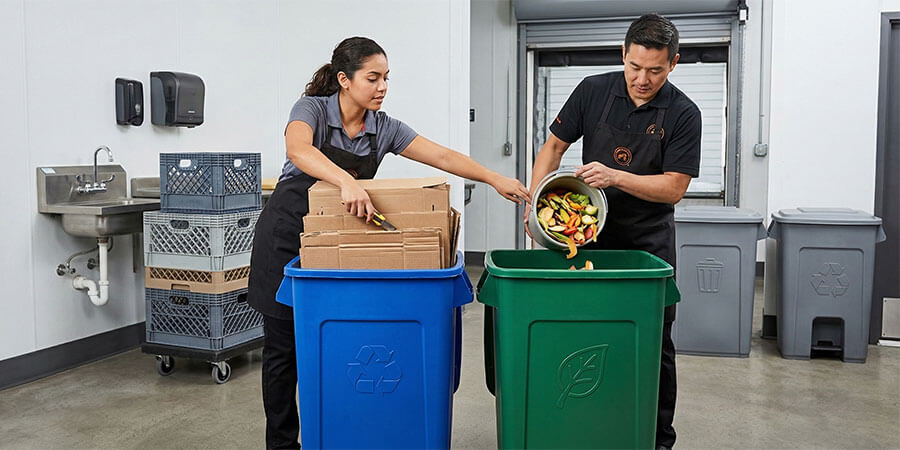
Table of Contents
Cut Waste, Use Resources More Efficiently, And Build A More Sustainable Restaurant Without Making The Operation Harder To Run
Restaurants often talk about sustainability as if it requires a full rebrand or a major capital project. In reality, the biggest improvements usually come from smaller systems that compound over time: buying better, wasting less, using energy more intentionally, and making the correct habit easier than the wasteful one.
That matters because eco-friendly operations are not just about image. They are about cost control, resilience, and guest trust. EPA and DOE guidance both reinforce the operational value of reducing waste and improving efficiency, and the same principle holds in restaurants: kitchens that measure and manage waste usually improve faster than kitchens that only talk about sustainability.
If you want your restaurant to become more eco friendly, start by making sustainability operational.
Start With Food Waste Before You Buy New "Green" Products
The fastest sustainability win in most restaurants is not packaging. It is food waste.
Food waste shows up in familiar places:
- Over-ordering and weak inventory rotation
- Over-prep before demand is clear
- Inconsistent portioning
- Poor storage habits
- Trim and scrap that could be used more intentionally
That is why a restaurant that wants to become more eco friendly should usually start with waste tracking before shopping for new supplies. A prevention-first approach almost always does more good than trying to offset waste after it has already been created.
| Food Waste Problem: | What It Looks Like: | Better Habit: |
| Overstocking | Product expires before use | Tighter ordering and first-in, first-out rotation |
| Over-prep | End-of-day leftovers that cannot be reused safely | Prep closer to forecasted demand |
| Weak portion control | Plate waste and cost drift | Standardized tools and line training |
| Poor storage | Produce or proteins break down early | Better labeling, dating, and storage discipline |
| No tracking | Waste happens but nobody sees the pattern | Simple waste log reviewed weekly |
If you want a deeper operational breakdown, 5 Ways Your Restaurant Can Reduce Food Waste is a strong companion piece.
Cut Energy Use With Better Habits Before Big Equipment Changes
Energy savings often start with behavior, not equipment replacement.
Examples:
- Turning on hot equipment only when it is actually needed
- Avoiding long idle periods for ovens, fryers, and holding equipment
- Keeping refrigeration door openings short and deliberate
- Cleaning coils, gaskets, and vents so equipment can run efficiently
- Matching lighting and small equipment use to open hours and prep windows
These changes are not flashy, but they are repeatable. And repeatable is what matters.
The U.S. Department of Energy and ENERGY STAR continue to emphasize efficiency planning and equipment performance, but the lesson for operators is simple: inefficient habits can erase the value of efficient equipment.
That is also why energy planning has to connect directly to daily routines. Energy Saving Tips for Restaurants: Cut Costs Without Cutting Corners is a useful related resource.
Choose Packaging And Disposables More Intentionally
Packaging is where many restaurants want to start because it is visible to guests. That can be a good move, but only if the decision is thoughtful.
Ask:
- Do we actually need disposable service here?
- Is takeout volume high enough that packaging changes matter?
- Can we simplify the packaging mix to reduce waste and confusion?
- Are we solving a real operational need or just buying something labeled "eco-friendly"?
| Packaging Decision: | Helps When: | Can Backfire When: |
| Compostable disposables | Appropriate collection options and hauler acceptance exist | Local disposal options are unclear or unavailable |
| Reusable containers | You have a repeat-use program or closed-loop workflow | Tracking and return logistics are weak |
| Streamlined packaging mix | Staff need speed and fewer SKU decisions | Unique menu items require more variety |
| Smaller packaging footprint | Orders are simple and predictable | Items travel poorly without proper containment |
For deeper packaging guidance, use The Complete Guide to Eco-Friendly Food Packaging & Disposables for Restaurants, Disposables, and Reusable To-Go Containers.
Reduce Water Waste By Looking At Process, Not Just Fixtures
Water waste is often treated as a plumbing issue, but in restaurants it is frequently a process issue.
Look for:
- Sink habits that leave water running longer than needed
- Dish systems that create repeat washes because of poor scraping or rack loading
- Ice, beverage, or prep processes with avoidable waste
- Leaks that stay "small" long enough to become normal
Water use improves when the staff understands where the waste actually happens. If the dish area keeps re-washing, if prep stations leave spray nozzles running, or if a leak sits unreported for weeks, that is a systems issue, not just a utility bill issue.
Make Purchasing Decisions That Reduce Waste Before Service Starts
Restaurants often think about sustainability after product arrives. A more eco-friendly operation thinks about it during purchasing.
That includes:
- Ordering pack sizes that fit actual turnover
- Favoring ingredients that can be used across multiple dishes
- Reducing low-volume SKUs that expire before they earn their shelf space
- Choosing service supplies that match the restaurant's actual takeout and catering patterns
This is where sustainability overlaps with menu management and inventory control. When the purchasing mix becomes cleaner, the kitchen usually sees less spoilage, less storage chaos, and fewer rushed decisions about what to use up first.
The same principle applies to disposables and support items. Fewer unnecessary SKUs often means less waste, less confusion, and easier staff compliance.
This is also where sustainability becomes easier to scale. Once purchasing is aligned with realistic usage, the kitchen is no longer trying to "fix" waste after the fact as often. The operation starts cleaner instead of correcting itself later.
Turn Cleaning And Maintenance Into Part Of The Sustainability Plan
Eco-friendly operations are not only about what gets used. They are also about how well equipment and workspaces are maintained.
Poor maintenance creates waste in subtle ways:
- Refrigeration runs harder than it should
- Gaskets, seals, and doors leak conditioned air
- Dirty equipment loses efficiency
- Repeat cleaning caused by weak process uses more water and chemicals
That makes maintenance one of the most underrated sustainability habits in a restaurant. A kitchen that cleans thoroughly, catches small failures early, and keeps equipment working as designed usually wastes less energy, less water, and less product.
This is another reason sustainability should be treated as operations work. The greener restaurant is usually the one with better habits, not the one with the most marketing language.
Restaurants that stay with the process long enough usually notice that these maintenance habits improve more than environmental performance. They also support cleaner stations, more dependable equipment life, and fewer preventable surprises during service.
Get The Team Involved Or The Plan Will Stall
Sustainability programs fail when they live entirely in management language.
The team needs to know:
- What the restaurant is trying to improve
- Which daily habits actually matter
- What gets tracked and reviewed
- Who owns each process
This is one reason eco-friendly efforts pair well with short checklists and visible station standards. A line cook or dishwasher does not need a sustainability manifesto. They need to know what to do differently today.
If you want more restaurant-wide process thinking, Extra Tips for Reducing Your Commercial Kitchen's Carbon Footprint is a useful related read.
Replace "Good Intentions" With Measurable Routines
The best eco-friendly restaurant plan is the one you can actually verify.
Track a few simple indicators:
- Weekly food waste volume or loss notes
- Utility spikes or unusual usage patterns
- Packaging consumption by type
- Equipment idle-time or maintenance flags
You do not need a giant dashboard to begin. A weekly review with 3-5 useful metrics is better than a long list nobody checks.
This is also where sustainability becomes easier to defend financially. When the team can see that better prep discipline reduced waste or that a packaging change reduced SKU clutter, the effort stops feeling abstract.
Invest In Equipment Only After You Understand The Process Problem
Sometimes equipment is part of the solution. But it should match the actual issue.
Examples:
- If the main problem is food waste, the fix may be storage, prep planning, or disposition workflow - not a new machine.
- If the problem is high energy use, the fix may be idle-time behavior, maintenance, or targeted replacement.
- If the problem is takeout packaging waste, the fix may be better package selection and fewer SKUs.
That does not mean equipment never matters. It means the best eco-friendly investment is the one solving a known operational pain point.
The same logic applies across restaurant sustainability work: energy efficiency, food waste reduction, and packaging choices all matter most when they are tied to how the operation actually runs.
Build An Eco-Friendly Position Guests Can Actually Understand
Guests do not need a long sustainability lecture. They need to see that your choices are real.
That might look like:
- Better packaging choices for takeout
- Cleaner waste separation and visible back-of-house discipline
- Consistent language about reducing waste and saving resources
- A menu or service flow that avoids obvious excess
The point is not to signal virtue. The point is to make the restaurant run better in a way guests can trust.
If your sustainability efforts also affect marketing, make sure the claims stay grounded. Talk about the practices you actually use, not vague "green" language. The more specific the action, the more credible the message.
That credibility matters. Guests are much more likely to trust visible, understandable practices than broad promises that sound good but are hard to verify.
Frequently Asked Questions
What is the easiest way to make a restaurant more eco friendly?
Start with food waste reduction and energy-use habits. Those two areas usually create the fastest operational gains because they affect daily prep, storage, cooking, and cleanup.
Do eco-friendly restaurant changes always require expensive new equipment?
No. Many of the highest-impact changes are process changes: better ordering, portion control, maintenance, waste tracking, and more intentional equipment use.
What should restaurants track if they want to be more sustainable?
Start with a few useful metrics such as food waste, utility spikes, packaging consumption, and equipment performance notes. The goal is to track what actually helps decision-making.
Are reusable takeout containers always better than disposables?
Not automatically. Reusables help most when the return, cleaning, and reuse system is realistic. If the logistics are weak, a simpler packaging improvement may be the better first step.
How can staff help a restaurant become more eco friendly?
Staff drive the day-to-day results through prep discipline, storage habits, cleaning routines, and waste awareness. Clear station-level expectations matter more than broad slogans.
What is the biggest sustainability mistake restaurants make?
Treating sustainability like a branding project instead of an operations project. If the process never changes, the environmental impact rarely changes either.
Related Resources
- The Complete Guide to Eco-Friendly Food Packaging & Disposables for Restaurants - Packaging and disposables strategy for more sustainable service
- 5 Ways Your Restaurant Can Reduce Food Waste - Practical food waste reduction steps
- Energy Saving Tips for Restaurants: Cut Costs Without Cutting Corners - Energy efficiency ideas that fit restaurant operations
- Reusable To-Go Containers - A category overview for reusable takeout programs
- Extra Tips for Reducing Your Commercial Kitchen's Carbon Footprint - Additional sustainability ideas for commercial kitchens
Share This!