Restaurant Meal Kits as Alternative Dining
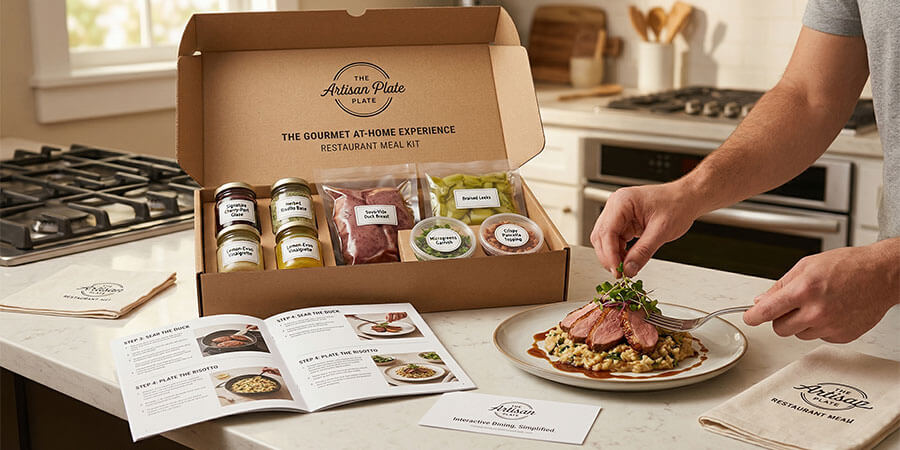
Table of Contents
Extend off-premises dining more intelligently by treating meal kits as an operational product, not just a repackaged takeout order
Restaurant meal kits make the most sense when they are treated as their own product category. They are not the same as ordinary takeout, and they are not the same as catering. They sit somewhere in between: part prepared food, part home finishing experience, and part brand extension for guests who want more involvement than a normal pickup order gives them.
That is why meal kits can work well for some restaurants and flop badly for others. The restaurants that succeed with them usually know exactly what experience they are selling, what dishes travel and finish well, and how much operational complexity they are really adding.
Meal Kits Are Not Just Takeout In Different Packaging
Takeout is built to be eaten soon after pickup or delivery. Meal kits are built to be assembled, finished, or heated later by the guest. That difference changes everything.
| Format: | What The Guest Receives: | What The Restaurant Has To Solve: |
| Takeout | Finished meal ready to eat soon | Holding quality, transport, speed |
| Catering | Larger prepared quantities for groups | Volume, staging, service coordination |
| Meal kit | Portioned or partly prepared components with instructions | Packaging, clarity, finishing steps, brand consistency |
This is why a strong meal-kit program needs more than a good recipe. It needs good instructions, reliable packaging, realistic finishing steps, and a menu format that still feels satisfying once it is reheated or assembled outside the restaurant.
Why Meal Kits Still Matter To Restaurants
Restaurants do not need a pandemic-era reason to think about meal kits anymore. The stronger modern case is simpler: off-premises dining is still important, and some concepts benefit from an at-home product that feels more distinctive than standard takeout.
Meal kits can make sense when a restaurant wants to:
- Extend brand presence beyond the dining room
- Offer a more interactive at-home version of a recognizable dish
- Create seasonal, holiday, or family-style bundles
- Use limited-run offers without overloading the dine-in menu
- Give repeat customers a different way to buy from the brand
The key is that the kit should do something ordinary takeout does not do well enough on its own.
For the broader off-premises planning side, How to Start a Food Delivery Business and Restaurant Online Ordering Guide are the strongest related resources.
The Best Restaurant Meal Kits Usually Start With A Narrow Menu
Meal kits work best when the dish structure is tight and the finishing steps are realistic.
That usually means the strongest candidates are:
- Signature dishes customers already know
- Family-style or shareable formats
- Components that reheat or finish predictably
- Menu items that still feel like your brand even outside the dining room
The weaker candidates are usually delicate plated dishes, very fast-degrading fried items, or recipes that become confusing once the kitchen is no longer there to finish them.
This is why meal kits often succeed when they are narrow. A smaller lineup is easier to package, explain, and repeat well.
Packaging And Instructions Decide Whether The Kit Feels Premium Or Annoying
The guest experience with a meal kit is shaped as much by packaging and instructions as by the food itself.
If the kit arrives with vague labeling, unclear reheating steps, or components that are hard to identify, the restaurant has already lost part of the experience. The food might still be good, but the kit stops feeling polished.
Useful operational questions include:
- Are components labeled clearly?
- Do the instructions assume too much kitchen confidence from the guest?
- Can the kit be finished with tools most households already have?
- Is the order of the steps obvious?
- Does the packaging protect the parts that need the most protection?
The best kits feel easy to use without making the guest work to decode them.
That is also why the assembly burden should stay realistic. A guest who buys a restaurant meal kit is usually willing to do some finishing work, but that does not mean they want a restaurant-level prep project in their home kitchen. The best kits make the guest feel involved, not overassigned.
The Best Meal Kits Usually Have Clear Assembly Tiers
Not every meal kit needs the same level of guest effort. In practice, the strongest programs often fall into a few clear levels:
| Kit Style: | What The Guest Does: | Best Fit: |
| Heat-and-finish | Reheat, plate, and finish a few small elements | Busy households and repeat buyers |
| Assemble-and-finish | Build a dish from prepared components | Signature items with some guest interaction |
| Cook-with-guidance | Complete a fuller home cooking experience | Occasional premium or event-style kits |
This matters because the promise should match the guest's effort. If the kit sounds easy but turns out to be labor-heavy, the restaurant risks disappointing exactly the customer who wanted convenience plus brand connection.
Meal Kits Need Their Own Food-Safety Logic
This is one of the biggest differences between a fun idea and a reliable product.
If a restaurant offers a meal kit, it still has to think clearly about:
- Temperature control before pickup or delivery
- Packaging that separates components appropriately
- Reheating or finishing instructions that are realistic
- Safe holding expectations once the kit leaves the restaurant
- Which products should be fully cooked, par-cooked, chilled, or ready to assemble
That is why meal kits should be designed with food safety and clarity together, not as a last-minute bundle of whatever is already on the line.
For the broader systems side, Food Safety Guide and Food Safety Tips for Commercial Kitchens are the best related resources.
Operationally, Meal Kits Work Best When They Do Not Fight The Kitchen
Restaurants get in trouble when they add meal kits in a way that competes badly with the rest of the operation.
Common pressure points include:
- Prep overlap with normal service
- Packaging labor during rush periods
- Inventory complexity for kit-only components
- Order timing confusion across dine-in, takeout, and kit pickup
- Staff training gaps around instructions and guest questions
That does not mean meal kits are too hard. It means they need their own workflow. If the kit is built like an afterthought, the line will feel it immediately.
This is one reason some restaurants stage kits outside peak service or limit them to defined pickup windows. A kit that is operationally smart at 2 p.m. may be a bad idea at 7 p.m. if the same cooks, stations, and packaging steps are already fully committed to dine-in and takeout.
Testing The Kit Before Launch Usually Reveals The Real Problems
Restaurants often know whether a dish tastes good before they know whether it works as a kit.
Those are different questions.
The stronger test is to walk through the guest experience start to finish:
- Pack the kit
- Label the components
- Hand the instructions to someone who did not help build them
- See how the dish finishes at home temperature and pacing
- Check whether the result still feels like your restaurant
This is usually where the friction shows up. Maybe the reheating order is confusing. Maybe one component degrades too fast. Maybe the sauce portion is wrong. Maybe the instructions assume more kitchen confidence than most guests have. It is much cheaper to learn those things in testing than in customer feedback.
Some Restaurants Should Use Meal Kits Seasonally, Not Constantly
Meal kits do not have to be a permanent all-week product to be worthwhile.
In many cases they work better as:
- Holiday packages
- Weekend specials
- Family meal bundles
- Event-driven offers
- Limited-time brand collaborations or themed menus
This is one of the easiest ways to keep the concept useful without forcing it into the restaurant's everyday service rhythm. A seasonal or occasional kit can still strengthen the brand if it is executed well.
It can also reduce operational fatigue. A restaurant that only runs kits when the product and staffing line up cleanly is often in a much better position than one that forces the format onto every week of the calendar just because it sounds modern.
The Best Meal Kits Still Feel Like The Restaurant
This is the real test. A meal kit should not feel like a random grocery box with your logo on it.
It should still reflect the restaurant's identity through the dish choice, the portion logic, the instructions, and the finishing experience. If the guest cannot recognize why the kit belongs to your brand, it is much harder for the product to justify itself.
That is why the strongest meal kits usually begin with a signature format the restaurant already owns well. They extend the brand instead of imitating a generic subscription-box product.
This is also why some restaurants are better served by one great meal kit than by six mediocre ones. A smaller, cleaner lineup is easier to fulfill, easier to explain, and easier for guests to remember.
When Restaurant Meal Kits Make Sense - And When They Do Not
Meal kits often make sense when:
- The restaurant already has strong off-premises demand
- The dish lineup includes items that finish well at home
- Packaging and instruction quality can be controlled well
- The kitchen can support the extra prep and assembly path
They are a weaker fit when:
- The menu depends on delicate plating or immediate service
- The restaurant cannot support instruction-heavy fulfillment cleanly
- The line is already overloaded during normal demand
- The restaurant is trying to use meal kits to solve a more basic operations problem
Meal kits are strongest as an extension of a stable operation, not as a substitute for one.
Frequently Asked Questions
What is the difference between a restaurant meal kit and takeout?
Takeout is usually finished and ready to eat soon after pickup or delivery. A meal kit is designed to be assembled, heated, or finished later by the guest. That means meal kits depend much more on packaging, instructions, and home-use practicality than ordinary takeout does.
Why would a restaurant offer meal kits?
Meal kits can extend the brand beyond the dining room, create off-premises revenue, support seasonal or family-style offers, and give regular guests a more interactive at-home product. They work best when they do something more distinctive than a normal pickup order.
What kinds of dishes work best as restaurant meal kits?
Signature items, family-style meals, and dishes with clear finishing steps usually work best. The weakest fits are often delicate plated dishes, fast-degrading fried items, or recipes that depend too heavily on last-second restaurant execution.
Do meal kits create extra kitchen complexity?
Yes, they can. The strongest programs account for prep overlap, packaging labor, inventory differences, timing, and guest instructions before launching the kit. If the workflow is not defined, the line will feel the strain quickly.
Should meal kits be a full-time menu category?
Not always. Many restaurants are better served by seasonal, holiday, weekend, or family-style kits rather than a constant year-round program. The right answer depends on whether the concept fits the restaurant's normal workflow.
What makes a restaurant meal kit feel premium?
Clear labeling, realistic instructions, strong packaging, and a dish that still feels like the restaurant's identity once the guest finishes it at home. The best kits feel polished, not improvised.
Related Resources
- How to Start a Food Delivery Business - Useful if off-premises strategy is part of the bigger business plan.
- Restaurant Online Ordering Guide - Helps when meal kits depend on online ordering and pickup flow.
- Restaurant Technology Guide - Stronger systems help when you add new off-premises formats.
- Ghost Kitchen Food Trucks: What They Are and Why They Matter - Related off-premises and alternative-format thinking.
Share This!