Commercial Microwave Tips for Foodservice Operations
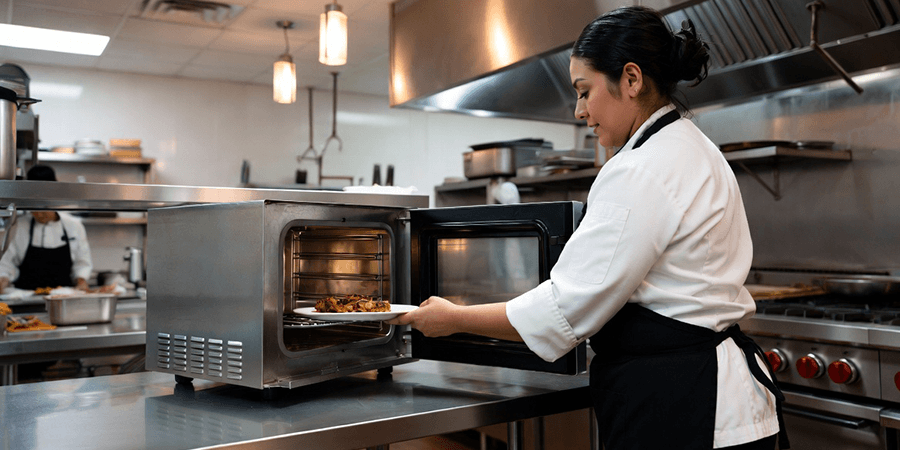
Table of Contents
Practical techniques and strategies to help foodservice operators maximize speed, safety, and consistency with commercial microwaves
Commercial microwaves are one of the most underutilized pieces of equipment in foodservice kitchens. Most operators think of them as reheating stations - a place to warm up leftovers or melt butter - but a commercial microwave is capable of far more than that. In high-volume environments where every second counts, knowing how to use this equipment strategically can shave minutes off ticket times and reduce the load on your primary cooking line.
The difference between a commercial microwave and the one sitting on your break room counter is significant. Commercial units are built for continuous use, deliver higher and more consistent wattage, and are constructed to withstand the demands of a busy kitchen. But even operators who invest in quality commercial equipment often fail to use it to its full potential.
This guide covers everything from choosing the right wattage for your operation to time-saving cooking techniques, food safety requirements, cleaning protocols, and the most common mistakes that shorten equipment life or compromise food quality.
Why Commercial Microwaves Matter in Foodservice
Speed is the most obvious advantage, but it is far from the only reason commercial microwaves deserve a central role in your kitchen workflow.
Consistent output under pressure. During a lunch rush, your line cooks are managing multiple tickets simultaneously. A commercial microwave handles tasks like melting cheese, warming sauces, or steaming vegetables in seconds rather than minutes - without occupying a burner or oven rack that is needed for primary cooking.
Space efficiency. A countertop commercial microwave takes up a fraction of the footprint of a convection oven or steamer. For kitchens where square footage is limited - food trucks, small cafes, concession stands, hospital kitchens - a microwave can perform several functions that would otherwise require dedicated equipment.
Versatility beyond reheating. Commercial microwaves handle par-cooking, thawing, proofing dough, softening ingredients for baking prep, and finishing dishes that were partially prepared using other methods. Operators who treat the microwave as a single-purpose reheating tool are leaving capacity on the table.
Energy efficiency. Microwaves heat food directly rather than heating the surrounding air, which means they use less energy than conventional ovens or stovetop methods for many tasks. For operations focused on reducing utility costs, shifting appropriate tasks to the microwave makes a measurable difference. For more strategies on reducing kitchen energy consumption, see energy conservation tips for restaurants.
Lower kitchen heat output. Every piece of cooking equipment contributes to ambient kitchen temperature. Microwaves generate significantly less heat than ovens, grills, or stovetops, which matters for staff comfort and HVAC costs - especially during summer months.
Types of Commercial Microwaves and Their Applications
Not all commercial microwaves are built for the same workload. Choosing the wrong duty level for your operation leads to either underpowered performance or unnecessary expense. Here is how the three main categories break down.
| Duty Level: | Wattage Range: | Cycle Capacity: | Best For: | Typical Use Cases: |
| Light-duty | 1,000 - 1,200W | Up to 50 cycles per day | Convenience stores, break rooms, small cafes | Warming pre-packaged items, melting butter, occasional reheating |
| Medium-duty | 1,200 - 1,800W | 50 - 150 cycles per day | Delis, cafeterias, casual restaurants | Reheating soups and entrees, thawing, steaming vegetables |
| Heavy-duty | 1,800 - 3,200W | 150+ cycles per day | High-volume restaurants, QSR, hotels | Continuous reheating, rapid thawing, high-speed finishing |
Light-duty units are designed for low-volume operations where the microwave is used intermittently throughout the day. They work well for convenience stores heating packaged snacks, office break rooms, or small coffee shops warming pastries. Running a light-duty unit at heavy-duty volume will burn out the magnetron prematurely and leave you with inconsistent results.
Medium-duty units handle the demands of most sit-down restaurants, cafeterias, and delis. They deliver enough wattage to heat food quickly and are built to withstand moderate daily use. If your kitchen runs 50 to 150 microwave cycles per day, this is typically the right category.
Heavy-duty units are engineered for high-volume environments where the microwave runs almost continuously during service. Quick-service restaurants, hotel banquet kitchens, and hospital foodservice operations that process hundreds of plates per shift need this level of durability and power. For a detailed breakdown of what to consider when purchasing, the commercial microwave buying guide covers specifications, features, and selection criteria in depth.
Time-Saving Techniques for Commercial Kitchens
These are practical methods that experienced kitchen operators use to speed up service without sacrificing food quality.
Par-cooking and microwave finishing. One of the most effective strategies is preparing items partially using conventional methods, then finishing them in the microwave during service. Rice, pasta, and grains can be par-cooked in bulk during prep, portioned, and then brought to serving temperature in the microwave in under a minute. This eliminates the wait time of cooking these items to order while keeping them fresh.
Rapid protein thawing. Commercial microwaves with defrost settings can thaw proteins in minutes rather than hours. This is not a replacement for overnight refrigerator thawing as your primary method, but it is a critical backup when you run out of a protein during service or need to adjust prep quantities on the fly. The key is using the defrost setting rather than full power, which prevents the exterior from cooking while the interior remains frozen.
Softening butter and chocolate for baking prep. Pastry and baking operations benefit enormously from the microwave's ability to bring butter to room temperature or soften chocolate for tempering in controlled, short intervals. This replaces the common practice of leaving butter out for hours or using a double boiler, saving both time and counter space.
Warming sauces and soups to order. Instead of keeping sauces on a steam table where they can break down, dry out, or develop a skin over long holding periods, portion them into microwave-safe containers during prep and heat them to order. This preserves quality and reduces waste from sauces that sit too long on the line.
Quick vegetable steaming. Placing vegetables in a covered microwave-safe container with a small amount of water produces steamed results in a fraction of the time a conventional steamer requires. This technique works particularly well for side dishes and garnishes that need to be produced quickly during service.
Melting cheese on finished dishes. For items like open-faced sandwiches, nachos, or French onion soup, a few seconds in the microwave melts cheese evenly without the wait time of a salamander or the risk of overcooking the dish underneath. This is especially useful during high-volume periods when your broiler or salamander is backed up.
Food Safety With Commercial Microwaves
Microwaves heat food differently than conventional methods, and understanding the safety implications is essential for any foodservice operation that follows HACCP protocols.
The cold spot problem. Microwaves do not heat food uniformly. They create hot and cold spots based on how microwave energy interacts with the food's shape, density, and moisture content. This is not just a quality issue - it is a food safety concern. A reheated chicken breast that registers 180 degrees on the surface may still have cold spots in the center that have not reached safe temperatures.
Stirring and rotating are not optional. The FDA Food Code specifically addresses microwave reheating of TCS (Time/Temperature Control for Safety) foods. When reheating TCS foods in a microwave, the food must be rotated or stirred throughout the heating process to distribute heat evenly. Covering the container during microwaving also helps trap steam and promote more even heating.
The 165 degrees F rule for reheating. The FDA Food Code requires that TCS foods reheated in a microwave must reach an internal temperature of 165 degrees F in all parts of the food. Additionally, after the food reaches this temperature, it must stand covered for two minutes to allow the temperature to equalize throughout the product. This standing time is critical because it allows heat from the hotter areas to transfer to the cooler areas, eliminating cold spots.
The two-hour reheating window. When reheating TCS foods for hot holding, the food must reach 165 degrees F within two hours. If the food does not reach this temperature within that window, it must be discarded. This is particularly relevant for operations that reheat large quantities using microwaves - small batch reheating is both faster and safer.
Always verify with a thermometer. A microwave does not have a built-in way to verify that food has reached safe internal temperatures. Foodservice operators must use a calibrated food thermometer to check internal temperatures after microwaving, inserting the probe into multiple locations to confirm there are no cold spots. For a comprehensive overview of kitchen food safety practices, see food safety tips for commercial kitchens.
Commercial Microwave Vs. Other Reheating Methods
Every reheating method has strengths and weaknesses. The chart below helps you decide which method suits each situation in your kitchen.
| Method: | Speed: | Food Quality: | Volume Capacity: | Energy Use: | Best For: |
| Commercial microwave | Very fast (seconds to minutes) | Good for liquids and moist foods; can dry out proteins | Single portions | Low | Individual portions, sauces, soups, quick finishing |
| Steam table | Continuous (hold temp) | Maintains moisture well; can overcook over time | High - multiple items simultaneously | Moderate | Buffets, cafeterias, long holding periods |
| Salamander / broiler | Fast (1-3 minutes) | Excellent - adds browning and crust | Low - small surface area | High | Melting cheese, browning tops, finishing gratins |
| Convection oven | Moderate (5-15 minutes) | Excellent - even heating, maintains texture | High - multiple trays | Moderate to high | Large batch reheating, casseroles, baked items |
| High-speed oven | Fast (1-5 minutes) | Very good - combines microwave and convection | Low to moderate | Moderate | QSR, items needing both speed and browning |
When the microwave wins: Individual portion reheating, liquid-based items like soups and sauces, quick thawing, and tasks where speed matters more than browning. The microwave excels when you need one portion heated and plated in under a minute.
When to use something else: Items that need a crispy exterior, large batch reheating, proteins that dry out easily, and dishes where presentation depends on browning or caramelization. A high-speed oven combines microwave technology with convection and impingement heating, delivering both speed and browning for operations that need the best of both worlds. For high-volume steaming applications, a dedicated commercial steamer delivers better consistency than microwave steaming.
Cleaning and Maintenance
Commercial microwaves require regular maintenance to perform consistently and avoid costly repairs. The good news is that maintenance is straightforward if you build it into your daily routine.
Daily interior wipe-down. At the end of every shift, wipe the interior walls, ceiling, floor, and turntable (if equipped) with a damp cloth and food-safe sanitizer. Food splatter left inside the cavity absorbs microwave energy during the next use, which reduces heating efficiency and can cause burn spots or arcing.
Clean the door seal regularly. The gasket around the microwave door is critical for both safety and performance. Food debris that accumulates in the door seal prevents the door from closing properly, which can cause microwave energy leakage and reduce heating efficiency. Inspect and clean the seal daily, and replace it immediately if you notice cracks, tears, or deformation.
Keep the exterior vents clear. Commercial microwaves generate heat during operation and rely on ventilation to stay cool. Blocked vents cause the unit to overheat, which shortens the life of the magnetron and other internal components. Make sure nothing is stacked on top of or pushed against the sides of the unit, and clean the vent areas weekly with a brush or compressed air.
Never run the microwave empty. Operating a commercial microwave with nothing inside is one of the fastest ways to damage the magnetron. When there is no food or liquid to absorb the microwave energy, it reflects back into the magnetron and can cause it to overheat or burn out. Make sure all staff understand this rule.
Schedule professional inspections. Even with proper daily maintenance, commercial microwaves should be inspected by a qualified technician annually - or more frequently in heavy-duty operations. A technician can test for microwave energy leakage, check the magnetron output, inspect electrical connections, and identify wear before it becomes a failure. Keeping your food preparation equipment in proper working order prevents mid-service breakdowns that disrupt your operation.
Common Mistakes That Cost You Time and Money
These are the errors that kitchen staff and operators make most frequently with commercial microwaves, along with how to avoid them.
Overcrowding the cavity. Placing too many containers or too large a portion inside the microwave results in uneven heating. Microwave energy needs space to circulate around the food. When the cavity is packed, the center items receive far less energy than the items near the walls. Heat smaller portions individually for better results.
Using the wrong wattage for the operation. A light-duty microwave in a high-volume kitchen will underperform and fail prematurely. Conversely, a heavy-duty unit in a low-volume cafe is an unnecessary expense. Match the duty level to your actual daily cycle count.
Not covering food during heating. Uncovered food splatters the interior, creates cleaning headaches, and loses moisture during heating. Use microwave-safe lids or vented covers on all items. This also helps trap steam, which improves heating consistency and reduces cold spots.
Using non-microwave-safe containers. In commercial settings, this goes beyond avoiding metal. Some plastic containers that are fine for cold storage release chemicals or warp when microwaved. Use only containers that are explicitly rated for microwave use, and replace any containers that show signs of warping, discoloration, or cracking. Stock your kitchen with dedicated microwave-safe food storage containers to avoid this issue entirely.
Skipping the standing time. After microwaving, food continues to heat internally as temperatures equalize. Cutting into or serving food immediately after the microwave stops means you are serving it before it has reached its final temperature - which can mean cold spots that are both a quality and safety problem. Allow the recommended standing time, especially for dense items like casseroles and thick proteins.
Ignoring wattage differences when following recipes or timing charts. A recipe developed for a 1,800-watt microwave will overcook in a 3,200-watt unit and undercook in a 1,000-watt unit. Always adjust times based on your specific equipment's wattage. Post a timing reference chart near the microwave so all staff use consistent settings.
Choosing the Right Wattage for Your Operation
Wattage is the single most important specification when selecting a commercial microwave. It determines how quickly the unit heats food, what types of tasks it can handle, and how many cycles per day it can sustain without premature wear.
| Wattage Range: | Daily Cycle Capacity: | Heating Speed: | Best Applications: | Operation Type: |
| 1,000 - 1,200W | Up to 50 | Moderate | Warming packaged items, melting butter, light reheating | Convenience stores, break rooms, small cafes |
| 1,200 - 1,500W | 50 - 100 | Moderate to fast | Reheating soups, thawing small portions, steaming vegetables | Coffee shops, delis, small restaurants |
| 1,500 - 1,800W | 100 - 150 | Fast | Rapid reheating, thawing proteins, finishing par-cooked items | Casual restaurants, cafeterias, catering |
| 1,800 - 2,200W | 150 - 200 | Very fast | High-volume reheating, rapid thawing, continuous use | Full-service restaurants, hotel kitchens |
| 2,200 - 3,200W | 200+ | Extremely fast | Nonstop service, large portions, rapid throughput | QSR chains, hospital foodservice, banquet operations |
Underpowered is worse than overpowered. A microwave that cannot keep up with your volume creates bottlenecks during service, takes longer to heat food (which affects ticket times), and wears out faster because it is constantly running at maximum capacity. It is better to size up slightly than to find yourself waiting on the microwave during a rush.
Consider your peak volume, not your average. A cafe that does 30 microwave cycles on a quiet Tuesday but 120 during a Friday lunch rush needs a unit rated for the peak, not the average. Equipment that handles your busiest day comfortably will last longer and perform more consistently.
Factor in menu changes. If you plan to add items that require microwave preparation - a soup program, a grab-and-go heated foods section, or par-cook-and-finish entrees - account for the additional volume before it arrives. Upgrading a microwave mid-season is disruptive and more expensive than buying the right unit upfront. Browse commercial microwave ovens to compare specifications across different wattage ranges and duty levels.
Frequently Asked Questions
Can a commercial microwave replace a convection oven or steamer in a small kitchen?
A commercial microwave can handle some tasks that a convection oven or steamer performs - reheating, steaming small portions of vegetables, and warming sauces - but it cannot fully replace either one. Microwaves do not brown, crisp, or caramelize food, and they are not designed for large-batch cooking. In a very small kitchen, a microwave is an excellent complement to your primary cooking equipment, picking up tasks that would otherwise tie up an oven or burner. For the best of both worlds in tight spaces, high-speed ovens combine microwave energy with convection heating.
How often should a commercial microwave be replaced?
A well-maintained commercial microwave typically lasts five to ten years depending on duty level and daily cycle count. Heavy-duty units in high-volume operations may need replacement sooner, while light-duty units in low-volume settings can last longer. Signs that replacement is approaching include noticeably longer heating times (indicating magnetron wear), inconsistent heating even after servicing, door seal failures that recur despite replacement, and repair costs that approach the price of a new unit.
Is it safe to thaw frozen proteins in a commercial microwave?
Yes, microwave thawing is recognized as a safe method by the FDA Food Code, provided the food is cooked immediately after thawing. When you thaw food in a microwave, parts of the food may begin to cook during the process, which means the food enters the temperature danger zone. For this reason, microwave-thawed food must go directly into the cooking process - it cannot be stored or held for later use. Use the defrost setting rather than full power to minimize partial cooking.
What is the difference between a commercial microwave and a residential one?
Commercial microwaves differ from residential models in several important ways. They deliver higher wattage (typically 1,000 to 3,200 watts versus 600 to 1,200 watts for residential units), are built with heavier-duty components designed for continuous use, feature stainless steel construction for durability and sanitation, and have simpler controls designed for speed in a multi-user environment. Residential microwaves used in a commercial setting will fail quickly under the volume demands and may violate health department equipment requirements.
Do commercial microwaves require a special electrical hookup?
It depends on the wattage. Light-duty commercial microwaves (1,000 to 1,200 watts) typically run on a standard 120-volt, 20-amp circuit. Higher-wattage units may require a dedicated 20-amp or 30-amp circuit to prevent tripping breakers, especially if other equipment shares the circuit. Some heavy-duty models require 208/230-volt power. Always check the manufacturer's electrical requirements before installation and have a licensed electrician verify that your kitchen's electrical system can support the unit.
Can you put metal in a commercial microwave?
No. The same rule applies to commercial and residential microwaves - metal objects cause arcing (electrical sparks) inside the cavity, which can damage the magnetron, the interior walls, and create a fire hazard. This includes aluminum foil, metal utensils, containers with metal trim, and twist ties. Some commercial operations accidentally introduce metal through foil-lined containers, metal-rimmed plates, or stainless steel prep containers. Train all kitchen staff to use only microwave-safe containers and to inspect items before placing them in the unit.
How do you prevent food from drying out in a commercial microwave?
The most effective method is covering food with a microwave-safe lid or vented plastic wrap during heating. This traps steam and keeps moisture in contact with the food surface. Adding a small amount of water or broth to the container before heating also helps - a tablespoon or two is usually sufficient. Avoid overheating by using the correct power level and time for the portion size. Heating in shorter intervals and checking between rounds gives you more control than running a single long cycle.
Related Resources
- Commercial Microwave Buying Guide - Detailed guidance on selecting the right commercial microwave for your operation, including specifications and features to consider
- Commercial Microwave Ovens - Browse commercial microwave ovens across all duty levels and wattage ranges
- Food Safety Tips for Commercial Kitchens - Essential food safety practices every foodservice operation should follow
- Energy Conservation Tips for Restaurants - Strategies for reducing energy costs across your kitchen equipment
- Food Preparation Equipment - Commercial food preparation equipment for professional kitchens
Share This!