Coffee Lovers Rejoice! 38 Ways to Make a Perfect Coffee
Table of Contents
All 38 coffee drinks from the infographic explained - ingredients, ratios, and what makes each one distinct
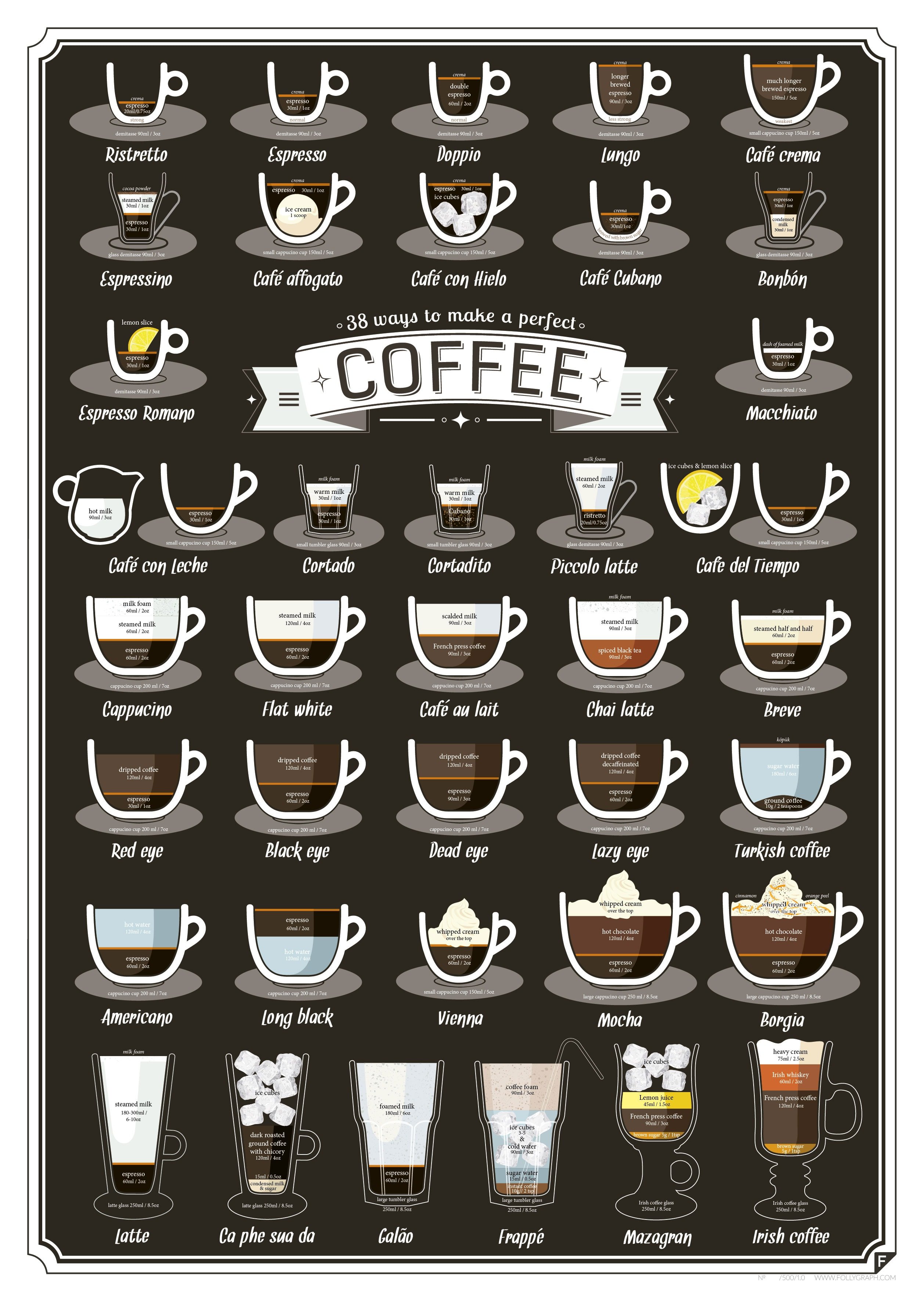
There are 38 widely recognized coffee drinks in the world, and most people can name maybe ten. This post covers all of them - what goes in each one, where it comes from, and what makes it different from the drinks around it. Whether you're a curious coffee drinker or a foodservice operator building out a beverage menu, this is your complete reference.
What's the difference between a cortado and a piccolo latte? Why does a long black taste different from an Americano if they're both espresso and water? What even is a Borgia? Most coffee menus list drinks without explaining them, and most diagrams show ingredients without context.
This post fills that gap. Every drink gets a plain-language breakdown - what's in it, how it's made, and what sets it apart. The sections are grouped by family (espresso shots, milk drinks, drip variations, and more), so you can jump straight to whatever caught your eye.
All 38 Coffee Types at a Glance
| # | Name: | Base: | Key Ingredients: | What Sets It Apart: |
| 1 | Ristretto | Espresso | ~15-20 ml water | Short pull, sweeter and more concentrated than espresso |
| 2 | Espresso | Espresso | ~25-30 ml water | The baseline single shot, pressurized extraction |
| 3 | Doppio | Espresso | Double shot (~60 ml) | Two espresso shots pulled together in one cup |
| 4 | Lungo | Espresso | ~60-90 ml water | Long pull, more water, weaker and more bitter |
| 5 | Caffè Crema | Espresso | ~180-240 ml water | Extended pull with thick persistent crema |
| 6 | Espressino | Espresso | Cocoa powder or chocolate | Small Italian bar drink with chocolate |
| 7 | Affogato | Espresso | Vanilla gelato or ice cream | Dessert-coffee hybrid, shot poured over gelato |
| 8 | Café con Hielo | Espresso | Ice | Spanish iced espresso, shot poured over ice |
| 9 | Café Cubano | Espresso | Demerara or brown sugar | Sugar whipped with first drops to create espumita foam |
| 10 | Bombón | Espresso | Sweetened condensed milk | Layered drink, visually striking, Spanish origin |
| 11 | Espresso Romano | Espresso | Lemon slice or rind | Citrus cuts bitterness, served alongside the shot |
| 12 | Macchiato | Espresso | Small dollop of milk foam | "Stained" with just a spot of foam |
| 13 | Café con Leche | Espresso | Hot milk (~50/50) | Spanish staple, equal parts espresso and hot milk |
| 14 | Cortado | Espresso | Steamed milk (~50/50) | "Cuts" acidity, Spanish, small and balanced |
| 15 | Cortadito | Espresso | Steamed milk + foam | Cubano-style sweetened espresso with steamed milk |
| 16 | Piccolo Latte | Ristretto | Steamed milk (~100 ml glass) | Australian, ristretto base in a small glass |
| 17 | Café del Tiempo | Espresso | Ice + lemon slice | Valencian specialty, espresso over ice with lemon |
| 18 | Cappuccino | Espresso | Steamed milk + thick foam | Classic Italian, equal thirds espresso/milk/foam |
| 19 | Flat White | Double espresso | Steamed microfoam | Higher coffee-to-milk ratio, thin foam, Australian/NZ |
| 20 | Café au Lait | French press | Scalded milk (~50/50) | French tradition, brewed coffee not espresso |
| 21 | Dirty Chai Latte | Espresso | Steamed milk + spiced chai | Espresso "dirties" the chai concentrate |
| 22 | Breve | Espresso | Steamed half-and-half + foam | American, richer and creamier than a latte |
| 23 | Red Eye | Drip coffee | 1 espresso shot | One shot added to a full cup of drip coffee |
| 24 | Black Eye | Drip coffee | 2 espresso shots | Two shots, significantly stronger than Red Eye |
| 25 | Dead Eye | Drip coffee | 3 espresso shots | Three shots, maximum caffeine in one cup |
| 26 | Lazy Eye | Decaf drip | Espresso | Decaf base with a regular espresso shot |
| 27 | Turkish Coffee | Finely ground coffee | Water + sugar, unfiltered | Boiled in a cezve, grounds settle in the cup |
| 28 | Americano | Espresso | Hot water (~180 ml) | Water added after espresso, crema disperses |
| 29 | Long Black | Espresso | Hot water (espresso poured over) | Water first, then espresso - preserves crema |
| 30 | Vienna | Double espresso | Whipped cream | No milk, cream replaces it entirely |
| 31 | Mocha | Espresso | Hot chocolate + steamed milk + whipped cream | Chocolate-forward espresso drink |
| 32 | Borgia | Espresso | Hot chocolate + whipped cream + orange zest | Mocha with orange, chocolate-orange-coffee combo |
| 33 | Caffè Latte | Espresso | Steamed milk + thin foam (tall glass) | More milk than cappuccino, served tall |
| 34 | Cà Phê Sữa Đá | Strong coffee | Condensed milk + ice | Vietnamese iced coffee, slow-drip and sweet |
| 35 | Galão | Espresso | Steamed milk + foam (tall glass) | Portuguese, served tall with a light foam top |
| 36 | Frappé | Instant or French press coffee | Ice + sugar, shaken | Greek, frothy and cold, shaken not blended |
| 37 | Mazagran | Coffee | Ice + lemon | Algerian/Portuguese, one of the first iced coffees |
| 38 | Irish Coffee | French press coffee | Irish whiskey + brown sugar + heavy cream | Cream floated on top, not stirred in |
Espresso Shots - The Foundation
These five drinks are all espresso with nothing added. The only variable is how much water passes through the grounds during extraction - and that single change produces dramatically different results.
Ristretto is the shortest pull of the group, stopping extraction at around 15-20 ml. Less water means less bitterness and more of the sweeter, more concentrated compounds from the coffee. It's intense but not harsh.
Espresso is the baseline - a single shot pulled to about 25-30 ml under 9 bars of pressure. Everything else in this infographic either builds on it or uses it as a starting point.
Doppio is simply two espresso shots pulled together into one cup, giving you roughly 60 ml. It's the standard for most espresso-based drinks in North America, where "espresso" often means a double by default.
Lungo extends the pull to 60-90 ml, letting more water through the grounds. The result is weaker in concentration but more bitter, since the longer extraction pulls out compounds that a standard shot leaves behind.
Caffè Crema goes even further - around 180 to 240 ml - and is common in Northern Italy and Switzerland. The extended extraction produces a thick, persistent crema that sits on top of a milder, less concentrated shot. It's not a lungo with cream; the crema is a natural byproduct of the extraction method.
For operations running high espresso volume, the right commercial espresso machine makes a real difference in consistency across all five of these formats.
Espresso With a Twist - One Ingredient Changes Everything
Each of these drinks takes a standard espresso shot and adds a single unexpected element. The result is something that feels completely different from the base drink.
Espressino is a small Italian bar drink - espresso with cocoa powder or a touch of chocolate. It's not a mocha; it's much smaller and simpler, closer to a macchiato with a chocolate note.
Affogato is the dessert-coffee crossover. A shot of espresso poured directly over a scoop of vanilla gelato or ice cream. The hot coffee melts the edges of the gelato and the two mix into something that's neither fully dessert nor fully coffee.
Café con Hielo is the Spanish approach to iced espresso - a shot pulled hot and poured straight over ice. Simple, but the rapid chilling changes the flavor profile noticeably compared to a cold brew or a room-temperature shot.
Café Cubano is espresso with demerara or brown sugar, but the technique is what defines it. A small amount of sugar is whipped with the first drops of espresso to create espumita - a thick, sweet foam - before the rest of the shot is added. The result is sweeter and richer than just stirring sugar into coffee.
Bombón layers sweetened condensed milk under a shot of espresso in a small glass. The visual contrast between the dark coffee and the white milk is part of the appeal. It originated in Spain and is popular across Southeast Asia in various forms.
Espresso Meets Citrus and Foam
Two drinks that sit at the edge of the espresso family, each adding something unexpected to the shot.
Espresso Romano pairs a shot of espresso with a slice or twist of lemon rind. The citrus doesn't go into the coffee - it's served alongside and rubbed on the rim of the cup. The acidity cuts through bitterness and brightens the flavor. Whether it's authentically Italian or an American invention is still debated, but it works.
Macchiato means "stained" in Italian, and that's exactly what it is - an espresso stained with a small dollop of milk foam. Not a latte macchiato (which is milk stained with espresso), not a flavored drink from a chain. Just a shot with a spot of foam to soften the edge.
Small Milk Drinks - Espresso and Milk in Tight Ratios
These five drinks all combine espresso with milk, but in small volumes and tight ratios. The milk is there to balance, not to dominate.
Café con Leche is a Spanish staple - equal parts espresso and hot milk, typically served at breakfast. It's stronger than a latte and less foamy than a cappuccino. The milk is usually scalded, not steamed to microfoam.
Cortado is also Spanish, also roughly 50/50 espresso to steamed milk, but the milk is steamed rather than scalded and the drink is served in a small glass. The name comes from the Spanish verb "cortar" - to cut - because the milk cuts the acidity of the espresso.
Cortadito is the Cuban variation. It starts with a Café Cubano base (espresso with whipped sugar espumita) and adds steamed milk and a small amount of foam. Sweeter than a cortado, with that distinctive Cuban espresso character.
Piccolo Latte is an Australian invention - a ristretto pulled into a small (~100 ml) glass, topped with steamed milk. The ristretto base gives it a sweeter, more concentrated coffee flavor than a standard latte, even though the drink is small.
Café del Tiempo is a Valencian specialty that combines espresso, ice, and a slice of lemon in a glass. The espresso is pulled hot and poured over the ice, and the lemon adds a citrus note similar to the Romano but in a cold format. It's closely related to Café con Hielo but with the lemon as a defining element.
A quality milk frother or beverage steamer is essential for getting the texture right on cortados, piccolo lattes, and anything else where the milk-to-espresso ratio is tight enough that foam quality is obvious.
Classic Milk Drinks - The Familiar Five
These are the drinks most people order by name without thinking twice. They're familiar, but the differences between them are worth understanding.
Cappuccino is the Italian classic - equal thirds espresso, steamed milk, and thick foam. The foam is denser and drier than what you'd find in a latte, and the drink is served in a smaller cup. A proper cappuccino is about 150-180 ml total.
Flat White originated in Australia and New Zealand and has a higher coffee-to-milk ratio than a cappuccino. It uses a double shot and steamed microfoam - very thin, velvety foam that integrates with the milk rather than sitting on top. The result is a stronger, silkier drink than a latte.
Café au Lait is the French version of a milk coffee, but it's not espresso-based. It uses brewed coffee - traditionally French press - combined with scalded milk in roughly equal parts. The flavor is gentler and less intense than any espresso-milk combination.
Dirty Chai Latte takes a spiced chai concentrate, adds steamed milk, and then "dirties" it with a shot of espresso. The espresso cuts through the sweetness of the chai and adds a coffee backbone to the spiced tea flavor. It's a genuinely different drink from either a chai latte or a latte.
Breve is the American take on a latte, but with steamed half-and-half instead of whole milk. The higher fat content makes it richer and creamier, with a thicker foam. It's more indulgent than a standard latte and noticeably heavier.
For operations adding flavored variations - vanilla breves, hazelnut lattes, spiced chai - beverage flavoring syrups and sauces are the practical way to keep those drinks consistent across shifts.
Drip Coffee Variations - When Espresso Meets Brewed Coffee
Four of these five drinks combine drip coffee with espresso shots. The fifth - Turkish coffee - stands apart as one of the oldest brewing methods in the world.
Red Eye is a full cup of drip coffee with one espresso shot added. The name comes from overnight flights - the drink for people who need to stay awake. It's stronger than either component alone.
Black Eye doubles the espresso to two shots in the same cup of drip coffee. The caffeine content is substantial and the flavor is noticeably more intense than a Red Eye.
Dead Eye adds three espresso shots to drip coffee. It's the maximum caffeine version of this format and not something most people drink for pleasure - it's functional.
Lazy Eye is the ironic twist on the series - decaf drip coffee with a regular espresso shot. The name plays on the contradiction. It's for people who want the ritual and flavor without the full caffeine load.
Turkish Coffee is in a different category entirely. Finely ground coffee - much finer than espresso - is combined with water and sugar in a small copper or brass pot called a cezve, then brought to a near-boil. The coffee is unfiltered; the grounds settle to the bottom of the cup. It's one of the oldest coffee preparation methods still in common use, and the ritual of preparation is as important as the drink itself.
A consistent grind is critical for Turkish coffee - the grounds need to be almost powder-fine. For operations serving it regularly, a dedicated commercial coffee grinder with fine grind settings makes the difference between a good cup and a muddy one.
Espresso With Water or Chocolate - Five Distinct Directions
These five drinks all start with espresso and add either water or chocolate - but the results are completely different from each other.
Americano is espresso with hot water added after the shot is pulled. The water dilutes the crema and disperses it through the drink. The result is similar in strength to drip coffee but with a different flavor profile - the espresso extraction method produces different compounds than drip brewing.
Long Black looks like an Americano but is made in reverse - hot water goes into the cup first, then the espresso is poured over it. That order preserves the crema on top of the drink. It's the standard in Australia and New Zealand and produces a slightly different texture and appearance than an Americano.
Vienna is a double espresso topped with whipped cream instead of milk. No steamed milk, no foam - just espresso and cream. It's richer than an Americano and completely different from a latte. The cream melts slowly into the coffee as you drink it.
Mocha combines espresso with hot chocolate, steamed milk, and whipped cream. It's the most dessert-like of the espresso drinks that aren't actually desserts. The chocolate can be a sauce, a powder, or a syrup - the method varies by operation.
Borgia is a mocha with orange zest added. The combination of chocolate, coffee, and orange is a classic flavor pairing, and the Borgia makes it into a drink. It's less common than a mocha but worth knowing if you're building a specialty coffee menu.
For a deeper look at selecting the right equipment for an espresso program, the commercial espresso machine buying guide covers machine types, group configurations, and what to match to your volume.
World Specialty Drinks - Coffee Across Cultures
The final six drinks in the infographic come from six different countries and represent some of the most distinct coffee traditions outside of Italy.
Caffè Latte is the tall version of the milk-and-espresso family. More milk than a cappuccino, thinner foam, served in a larger glass or cup. It's the most approachable of the espresso drinks for people who find straight espresso too intense.
Cà Phê Sữa Đá is Vietnamese iced coffee - strong coffee (traditionally brewed through a small metal drip filter called a phin) combined with sweetened condensed milk and poured over ice. The condensed milk is thick and sweet, and the coffee is strong enough to hold its own against it. It's slow to make but distinctive in flavor.
Galão is Portuguese - espresso combined with steamed milk and foam, served in a tall glass. It's similar to a latte but with a higher milk-to-espresso ratio, and the foam is lighter. It's a common breakfast drink in Portugal.
Frappé is Greek in origin and uses instant coffee or French press coffee shaken with ice and sugar until frothy. It's not blended - the shaking creates the foam. The result is cold, frothy, and sweet. It was invented in Greece in 1957 at the Thessaloniki International Fair and remains a national staple.
Mazagran is one of the oldest iced coffee drinks, originating in Algeria in the 1840s and later adopted in Portugal. It combines coffee with ice and lemon - sometimes with a splash of rum in the Portuguese version. It's a direct ancestor of many modern iced coffee drinks.
Irish Coffee closes out the infographic with the most famous coffee cocktail. French press coffee, Irish whiskey, brown sugar, and heavy cream floated on top. The cream is not stirred in - it sits on the surface and you drink the hot coffee through it. The contrast between the cold cream and the hot, whiskey-spiked coffee underneath is the point.
For operations adding cold coffee drinks to the menu, cold brew and iced coffee dispensers handle the volume and consistency that iced drinks require during peak service.
Frequently Asked Questions
What's the difference between a cortado and a flat white?
Both are espresso with steamed milk in a tight ratio, but they're not the same drink. A cortado is Spanish, uses a single shot, and is served in a small glass with roughly equal parts espresso and milk. A flat white is Australian/New Zealand, uses a double shot, and has a higher coffee-to-milk ratio with very thin microfoam. The flat white is stronger and silkier; the cortado is smaller and more balanced.
Why does a long black taste different from an Americano if they're both espresso and water?
The order of operations matters. An Americano adds water to espresso, which disperses the crema through the drink. A long black adds espresso to water, which preserves the crema on top. The crema affects both flavor and texture, so the two drinks taste noticeably different even with identical ingredients.
What is espumita and why does it matter for Café Cubano?
Espumita is the thick, sweet foam created by whipping demerara sugar with the first few drops of espresso before the rest of the shot is added. It's not just sweetened coffee - the whipping process creates a foam that sits on top of the drink and changes the texture and sweetness distribution. Without the espumita technique, you just have sweet espresso, not a Café Cubano.
Is an affogato a coffee drink or a dessert?
Both, depending on context. In Italy it's typically served as a dessert course. In coffee shops it often appears on the coffee menu. The drink itself - espresso poured over gelato - doesn't fit neatly into either category, which is part of its appeal. For foodservice operators, it works well as a dessert add-on that requires minimal prep.
What makes Turkish coffee different from other unfiltered coffees like French press?
The grind size and preparation method. Turkish coffee uses an extremely fine grind - much finer than espresso - and is brought to a near-boil in a cezve with water and sugar already added. French press uses a coarse grind and steeps in hot water. Turkish coffee is also served with the grounds in the cup, which settle to the bottom. The flavor is more intense and the texture is thicker than French press.
Which of the 38 drinks are easiest to add to a restaurant coffee menu?
Drinks that require no additional equipment beyond an espresso machine are the easiest starting points - Americano, long black, macchiato, doppio, and Café con Hielo all require just espresso and basic technique. Affogato requires gelato but no additional equipment. Mocha and Borgia require chocolate sauce or syrup. The drinks that require specialized equipment or technique - Turkish coffee, Cà Phê Sữa Đá, Irish Coffee - take more setup but can be strong menu differentiators.
Where did the original infographic come from?
The infographic was created by a Polish design studio in 2014. It's been widely shared and reproduced since then and remains one of the most comprehensive single-image references for coffee drink types.
Related Resources
- Commercial Espresso Machine Buying Guide - How to choose the right machine type, group count, and configuration for your operation
- Commercial Coffee Grinder Guide - Every brew method on this list needs its own grind, and how to pick a grinder that delivers it
- Espresso & Cappuccino Machines - Full selection of automatic, semi-automatic, and super-automatic commercial espresso machines
- Milk Frothers & Beverage Steamers - Dedicated steamers for high-volume milk-based drink programs
- 5 Tips for Cleaning an Espresso Machine - Daily and weekly maintenance to keep espresso equipment running well
- Coffee & Espresso Equipment & Accessories - Grinders, brewers, dispensers, and everything else for a complete coffee program
Share This!