Cleaning a Commercial Fryer
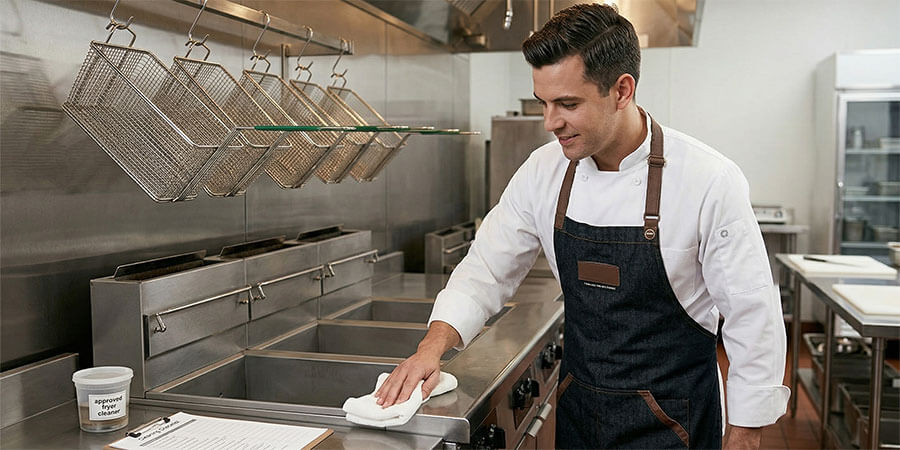
Table of Contents
Clean a commercial fryer more safely by using a better drain, boil-out, basket, and reset routine instead of relying on improvised shortcuts
Commercial fryer cleaning is one of those jobs that looks simple until the hot oil, residue, drain line, and boil-out process all have to be managed at once. That is why fryer cleaning should never be treated like a casual afterthought. It sits at the intersection of sanitation, maintenance, oil handling, and worker safety.
The strongest fryer-cleaning routine is not the most aggressive one. It is the one that removes residue early, uses a proper boil-out process when needed, handles oil safely, and avoids improvised chemistry or shortcuts that make the fryer harder - or more dangerous - to clean later.
Start By Separating Daily Cleaning From Full Boil-Out Cleaning
A fryer should not be treated as if every cleaning task is the same.
| Cleaning Level: | What It Usually Includes: | Why It Matters: |
| Routine daily cleaning | Exterior wipe-down, crumb removal, basket cleaning, surrounding surface cleaning | Prevents steady grease buildup |
| Oil handling and filtering | Draining, filtering, and safer disposal workflow | Extends oil life and keeps the vat cleaner |
| Boil-out / deep cleaning | Water-and-cleaner cycle after the oil is removed | Removes deeper residue and hardened buildup |
This distinction matters because a fryer that is wiped down every day still may need a deeper cleaning schedule, while a fryer that only gets “deep cleaned” occasionally can become much more difficult to maintain between those major cleanings.
The First Safety Rule Is To Respect The Oil
Fryer cleaning starts with safer handling of hot oil and hot equipment.
That means:
- Do not rush the cooling and draining step
- Do not treat hot oil like sink water
- Do not improvise containers, transport, or splash-prone draining habits
- Do not add water or cleaning solution until the oil has been removed according to the fryer's cleaning procedure
This is where fryer cleaning becomes different from ordinary line cleaning. The hazard is not only grease. It is grease plus heat plus volume plus awkward transfer if the process is weak.
For the broader fryer-maintenance side, 6 Important Maintenance Tips for Your Restaurant Deep Fryer is the best internal companion post.
Drain And Debris Removal Are Part Of Cleaning, Not Separate Chores
Many fryers become harder to clean because debris is allowed to accumulate where it is hardest to remove later.
That usually means operators need to pay attention to:
- Loose crumbs in the vat after draining
- Residue near the drain path
- Basket debris and built-up particles
- Exterior grease film around the unit and nearby surfaces
The more residue that remains after oil handling, the more likely staff are to over-scrub, overuse cleaner, or turn a routine cleaning into a bigger job than it needed to be.
Boil-Out Should Be Treated As A Defined Procedure, Not A Folk Remedy
This is one of the most important corrections compared with many older fryer-cleaning articles online.
A commercial fryer boil-out is a deeper vat-cleaning process that generally happens after the oil is drained, using water plus a fryer-appropriate cleaning compound according to the fryer's manual and the cleaner's label or SDS guidance.
The practical point is not the chemistry trivia. It is the discipline:
- Use a fryer-appropriate cleaner
- Follow the manufacturer's instructions
- Follow the cleaner's label and SDS guidance
- Rinse and dry properly before refilling
That is much safer than turning the fryer into a test site for improvised vinegar, dish soap, or whatever someone saw in a home-cleaning video.
If you need product-side support, Food Equipment Cleaners, Descalers, and Degreasers is the right internal category.
That is one reason fryer cleaning should stay tied to approved products and approved procedures. The more the team improvises the chemistry, the harder it becomes to keep the process safe and repeatable.
A Better Commercial Fryer Boil-Out Sequence
Webstaurant's boil-out overview is not a primary regulatory source, but it is a clear operational reference for a sequence many kitchens recognize: drain the oil, remove residue, add water and the correct boil-out cleaner, heat or simmer according to instructions, drain, scrub, rinse, dry, and then refill with fresh oil.
That sequence matters because the order is designed to reduce avoidable risk to both the equipment and the staff.
| Boil-Out Stage: | Why It Exists: |
| Drain oil fully | Prevents dangerous mixing of oil and cleaning water |
| Remove loose debris | Keeps residue from floating and re-coating surfaces |
| Add approved cleaner and water | Lets the vat cleaning happen the way the cleaner is designed to work |
| Follow the boil/simmer instructions | Prevents under-cleaning or overdoing the process |
| Drain, scrub, rinse, and dry | Keeps residue and cleaner from carrying into new oil |
This is why boil-out works best as a standard operating procedure, not an improvised rescue mission.
Do Not Let Vinegar Queries Turn Into Bad Advice
The safest answer is not to endorse improvised fryer-vinegar routines for commercial equipment.
The better answer is that commercial fryer cleaning should follow:
- The fryer's manual
- The boil-out product's instructions
- The kitchen's safer chemical-handling practices
That keeps the advice consistent with real equipment care and basic workplace chemical-safety logic instead of turning the post into a collection of household cleaning hacks.
For the chemical-handling side, the cleaner label and the fryer's own procedure should always stay ahead of improvised shortcut advice.
Basket Cleaning And Exterior Reset Still Matter
Some kitchens focus so heavily on the vat that they ignore the rest of the fryer station.
But fryer baskets, handles, splash zones, knobs, nearby surfaces, and the floor area around the fryer all affect how clean and usable the station feels. If the baskets stay coated, the front ledge stays greasy, or the side surfaces are never reset properly, the fryer still feels dirty even after the vat was technically cleaned.
That is why fryer cleaning should always include:
- Basket cleaning
- Exterior wipe-down
- Nearby counter or landing-surface degreasing
- Floor or splash-zone attention around the unit
This is one reason the fryer usually belongs inside the larger kitchen cleaning system instead of being treated like a sealed-off special task.
It also keeps the station from becoming visually “clean enough” while still carrying too much grease or residue in the places the team touches most often every shift.
For the broader schedule side, Your Complete Restaurant Kitchen Cleaning Checklist is the strongest internal companion.
Oil Handling And Filtering Change How Dirty The Fryer Gets
One of the best ways to make fryer cleaning easier is to reduce how dirty the oil and vat become in the first place.
That is why oil filtration and debris management matter so much. The better the oil handling routine is, the less the fryer has to be “rescued” later.
This is also why fryer cleaning and fryer oil management should not be treated as separate topics. The cleaner the oil flow and crumb control, the more manageable the cleaning process becomes.
For that side, Commercial Fryer Oil Filtration Guide is the strongest internal next step.
The Best Fryer Cleaning Routine Is Predictable, Not Heroic
The strongest fryer-cleaning systems usually have three things in common:
- A repeatable routine for daily residue control
- A safer and clearly defined oil-drain and handling process
- A scheduled boil-out when the fryer actually needs it
That is what keeps fryer cleaning from turning into a dramatic once-in-a-while job that everyone dreads. A predictable routine makes the unit safer, cleaner, and easier to keep in service.
It also helps the operation avoid false efficiency. A fryer that is “saved” only in occasional major cleanings often costs more labor, creates more risk, and performs less reliably than a fryer kept under a calmer, more regular maintenance rhythm.
That is why a good fryer-cleaning system usually looks less dramatic and more disciplined. The team knows when to wipe, when to drain, when to boil out, and when to stop improvising and follow the actual procedure.
That also makes the station easier to manage across shifts. When one team leaves the fryer in a predictable state for the next team, the unit is less likely to accumulate the kind of hidden grease and residue that turns basic upkeep into a much larger cleanup problem later.
This is one more reason fryer cleaning should be treated as part of the line's normal operating discipline instead of as a once-in-a-while emergency. The calmer the routine is, the more consistent the fryer tends to be in actual service.
That consistency is what usually protects both the equipment and the team over time.
It is also what keeps fryer cleaning from becoming a morale problem. When the process is clear and repeatable, the station stays manageable instead of turning into the kind of job everyone tries to avoid.
Frequently Asked Questions
How do you clean a commercial fryer?
A strong commercial fryer cleaning routine usually includes draining oil safely, removing debris, cleaning baskets and exterior surfaces, and using a proper boil-out procedure when deeper vat cleaning is needed. The safest approach is to follow the fryer manual and the cleaner's label or SDS instructions rather than improvising with household shortcuts.
What is a fryer boil-out?
A fryer boil-out is a deeper vat-cleaning process performed after the oil has been drained. It typically uses water plus a fryer-appropriate cleaning compound to loosen and remove built-up residue inside the vat before rinsing, drying, and refilling.
Can I clean a commercial fryer with vinegar?
The safest answer is not to rely on improvised vinegar cleaning methods for commercial fryers. It is better to use fryer-appropriate cleaning products and follow the fryer's manual and the cleaner's instructions so the process stays consistent with real equipment care.
How often should a commercial fryer be deep cleaned?
That depends on usage, menu load, filtration habits, and how quickly residue builds up. Daily cleaning and oil handling reduce the burden, but the fryer still needs a deeper cleaning schedule that matches how heavily it is used.
Why is fryer cleaning a safety issue and not just a cleaning issue?
Because the job combines hot oil, hot metal, residue, chemicals, and draining or transfer steps. The stronger the routine is, the less likely the team is to rush, improvise, or create avoidable risk during cleaning.
What is the biggest fryer-cleaning mistake?
One of the biggest mistakes is letting residue and oil-management problems build up until the fryer needs a dramatic rescue instead of a routine cleaning. The better system is a predictable one.
Related Resources
- 6 Important Maintenance Tips for Your Restaurant Deep Fryer - Better fryer upkeep beyond cleaning alone.
- Commercial Fryer Oil Filtration Guide - Stronger oil handling and filtration logic for cleaner vats and longer oil life.
- Your Complete Restaurant Kitchen Cleaning Checklist - Useful when fryer cleaning needs to fit a wider kitchen SOP.
- Food Equipment Cleaners, Descalers, and Degreasers - Product-side support for fryer-safe cleaners and degreasers.
Share This!