Undercounter Ice Machine Guide
Table of Contents
Essential undercounter ice makers for restaurants, bars, and commercial kitchens
Undercounter ice machines provide compact, efficient ice production for space-constrained commercial operations. These self-contained units fit beneath counters while producing various ice types for different applications. From air-cooled models for standard installations to water-cooled systems for specialized environments, this guide helps operators select the right undercounter ice machine for their specific needs. These self-contained systems combine ice production, storage, and dispensing in a single unit, making them ideal for bars, restaurants, cafes, hospitals, and other commercial settings where ice is frequently needed but floor space is at a premium.
Popular commercial applications include:
- Bars and cocktail lounges - Quick access to ice for drink service
- Restaurants and cafes - Ice for beverages, food display, and customer service
- Hospitals and healthcare facilities - Clean, consistent ice for patient care
- Coffee shops and quick-service operations - Ice for cold drinks and smoothies
The machines produce various ice types including cube, nugget, and flake ice, with production rates from 50 to over 400 pounds per day. While professional installation is recommended for optimal performance and warranty coverage, knowledgeable operators can perform installation if they have experience with plumbing, electrical work, and refrigeration systems.
Types of Undercounter Ice Machines
Undercounter ice machines are categorized by intended application and cooling method. Each type offers specific advantages for different operational environments and ice production needs.
Commercial Undercounter Ice Machines
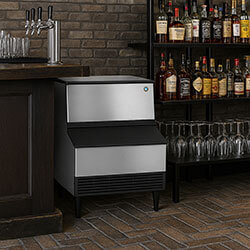
Designed for heavy-duty use in professional foodservice environments, commercial models feature durable construction, high production rates, and advanced features for demanding operations. These units are built to withstand constant use and frequent cleaning cycles.
- Best Uses: Restaurants, bars, hotels, catering operations, hospitals
- Key Features: Stainless steel construction, high production capacity, built-in storage bins, antimicrobial protection
- Production Rates: 100-400+ pounds per day
- Storage Capacity: 25-100 pounds of ice storage
- Compliance: NSF certification, meets health department standards
Home/Office Undercounter Ice Machines
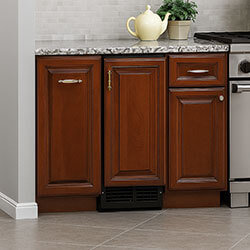
Compact models designed for lighter use in residential or small office settings, these machines offer basic ice production with simpler features and lower capacity than commercial units.
- Best Uses: Small cafes, office break rooms, residential kitchens, small retail operations
- Key Features: Smaller footprint, basic controls, lower production rates
- Production Rates: 50-150 pounds per day
- Storage Capacity: 25-50 pounds
- Design: Residential-style finishes, simpler maintenance
Outdoor Undercounter Ice Machines
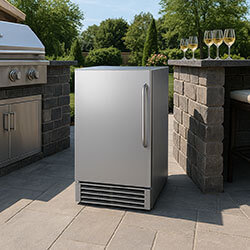
Weather-resistant models designed for outdoor or semi-outdoor installations, featuring sealed components and corrosion-resistant materials to withstand exposure to weather elements.
- Best Uses: Outdoor bars, patios, poolside service, food trucks, seasonal outdoor venues
- Key Features: Weatherproof construction, corrosion-resistant materials, enhanced drainage
- Production Rates: 50-200 pounds per day
- Environmental Rating: Suitable for temperatures down to 45°F
- Design: Reinforced exteriors, sealed electrical components
Air Cooled Undercounter Ice Machines
Air cooled models use fans to circulate air over the condenser coils, making them the most common choice for standard commercial installations. These units draw in room air, cool it through the refrigeration system, and exhaust warm air, requiring adequate ventilation clearance around the unit.
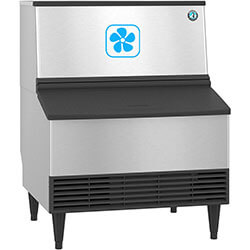
- Best Uses: Standard restaurant kitchens, bars, cafes, and office break rooms with good ventilation
- Key Features: No water connection needed for cooling, easier installation, lower operating costs in most environments
- Production Rates: 50-400+ pounds per day depending on model size
- Ventilation Requirements: 6 inches of clearance around air intake and exhaust areas
- Pros: Lower water usage, simpler installation, good for most commercial applications
- Cons: Requires proper ventilation, may be less efficient in very hot or dusty environments
Water Cooled Undercounter Ice Machines
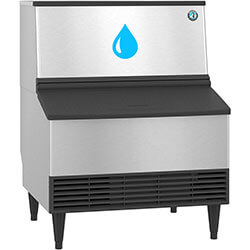
Water cooled systems circulate water through the condenser instead of air, providing efficient cooling in environments where air circulation is poor or ambient temperatures are high. These models connect to a water supply and drain, using water to absorb heat from the refrigeration process.
- Best Uses: Kitchens with poor ventilation, high-temperature environments, areas with grease-laden air
- Key Features: Superior cooling efficiency, works well in challenging conditions, quieter operation
- Production Rates: 50-400+ pounds per day, often higher efficiency than air cooled in extreme conditions
- Water Requirements: Dedicated water line and drain connection within 10 feet
- Pros: Better performance in hot/dusty environments, more efficient cooling, quieter operation
- Cons: Higher water usage and costs, requires water connections, potential municipal restrictions
Ice Types Comparison Table
| Ice Type: | Characteristics: | Best Applications: | Production Notes: |
| Cube Ice | Hard, clear cubes in full, half, or gourmet sizes | Mixed drinks, soft drinks, general use | Most common, slow melting, regulates consumption |
| Nugget Ice | Soft, chewable pellets | Healthcare facilities, smoothies, blended drinks | Easy to chew, melts slowly, popular for beverages |
| Flake Ice | Soft, fluffy crystals | Food displays, salad bars, blended drinks | Cools rapidly, molds to shapes, good for presentations |
| Bullet Ice | Cylindrical pellets | Specialty drinks, displays | Unique shape, slow melting, distinctive appearance |
| Pebble Ice | Small, rounded pieces | Specialty cocktails, displays | Attractive appearance, good for clear drinks |
| Sphere Ice | Large, clear spheres | Premium cocktails, presentations | Slow melting, elegant appearance, premium positioning |
Features & Accessories
Water Filtration Systems
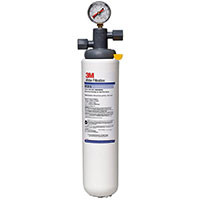
Built-in or compatible water filtration removes impurities and contaminants from the water supply, ensuring clean, clear ice production and protecting internal components from mineral buildup.
- Sediment Filters: Remove particles and debris from incoming water
- Carbon Filters: Eliminate odors, tastes, and chlorine
- Scale Inhibitors: Prevent mineral deposits and limescale formation
- UV Sterilization: Optional ultraviolet systems for enhanced water purity
Design and Style Options
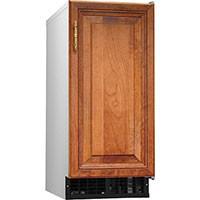
Modern undercounter ice machines offer various aesthetic and functional design elements to match different kitchen environments and operational needs.
- Finish Options: Stainless steel, black, white, or wood-grain panels
- Door Styles: Solid doors, glass doors, or ADA-compliant lowered panels
- Control Panels: Digital displays with programmable settings and diagnostic indicators
- Dimensions: Widths from 15-30 inches, depths from 22-29 inches, heights from 32-39 inches
Drain Options
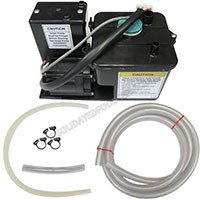
Proper drainage is essential for ice machine operation, with options for gravity-fed or pump-assisted systems depending on installation location.
- Gravity Drain: Requires drain line within 2 feet of unit, uses natural gravity flow
- Drain Pump: Built-in or external pump for installations where gravity drain isn't feasible
- Drain Hose Length: Typically 6-10 feet included, extensions available
- Backflow Prevention: Built-in check valves prevent contaminated water backup
Maintenance Features
Advanced maintenance features simplify cleaning and servicing, reducing downtime and extending equipment life.
- Removable Components: Easy-access panels and removable parts for thorough cleaning
- Self-Cleaning Cycles: Automated cleaning programs with sanitizing solutions
- Filter Indicators: Visual or electronic alerts for filter replacement
- Diagnostic Systems: Built-in error codes and performance monitoring
Selecting the Right Undercounter Ice Machine
Production & Capacity
Match ice production and storage capacity to your operational needs, considering peak demand periods and usage patterns.
- Daily Production: Calculate based on maximum ice usage during busiest periods
- Storage Capacity: Ensure adequate bin capacity to meet demand between production cycles
- Peak Load: Consider special events or seasonal variations in ice requirements
- Buffer Capacity: Plan for 20-30% extra capacity to handle unexpected demand
Space & Utilities
Evaluate installation requirements and utility connections to ensure proper fit and operation.
- Dimensions: Measure available undercounter space including ventilation clearances
- Electrical: Verify voltage and amperage requirements (110-120V or 208-230V)
- Plumbing: Water supply line (if water cooled) and drain connections
- Ventilation: Air cooled models need 6" clearance around intake/exhaust areas
- Floor Load: Consider weight of full unit (200-400+ pounds) on supporting surface
Budget & Total Cost of Ownership
Factor in initial purchase price plus ongoing operating costs for a complete financial picture.
- Purchase Price: $1,500-$8,000 depending on capacity and features
- Energy Costs: $2-$8 per day depending on model and local rates
- Water Costs: $1-$5 per day for water cooled models
- Maintenance: Annual service contracts $200-$500, filter replacements $50-$200 quarterly
- ROI Timeline: 1-3 years depending on usage and efficiency improvements
Compliance & Safety
Ensure equipment meets health, safety, and regulatory requirements for your operation.
- NSF Certification: Required for commercial foodservice equipment
- UL/ETL Listing: Electrical safety certification
- ADA Compliance: Accessible controls and service areas for disabled users
- Local Codes: Building, plumbing, and health department regulations
Installation & Maintenance
Installation Checklist
While professional installation is recommended, follow these steps for proper setup:
- Verify electrical requirements and install dedicated circuit
- Connect water supply (cold water, 40-100 PSI) if water cooled
- Install drain line with proper slope and backflow prevention
- Ensure proper ventilation clearances for air cooled models
- Level the unit front-to-back and side-to-side
- Test all connections and run initial ice production cycle
- Verify ice quality and production rate before putting into service
Care Schedule
Regular maintenance prevents issues and extends equipment life.
| Task: | Frequency: | Details: |
| Clean exterior | Daily | Wipe down with mild detergent and water |
| Sanitize ice bin | Daily | Use food-safe sanitizer, rinse thoroughly |
| Check water filters | Weekly | Replace or clean as indicated |
| Clean condenser | Monthly | Vacuum dust from air cooled coils |
| Deep clean system | Quarterly | Use commercial ice machine cleaner |
| Professional service | Annually | Complete inspection and calibration |
Troubleshooting Highlights
Common issues and quick solutions for undercounter ice machines.
- Low ice production: Check water supply pressure, clean filters, verify ventilation
- Cloudy ice: Replace water filters, check for hard water issues, sanitize system
- Strange noises: Check for loose components, clean condenser coils, level unit properly
- Leaking water: Inspect drain connections, check for clogs, verify unit is level
- Unit not starting: Check power connection, reset breaker, verify control settings
Frequently Asked Questions
What's the difference between air cooled and water cooled undercounter ice machines?
Air cooled models use fans to circulate room air over condenser coils, requiring good ventilation but no water connection. Water cooled models circulate water through the condenser for more efficient cooling, ideal for poor ventilation or high-temperature environments, but they require water supply and drain connections.
How much ice can an undercounter ice machine produce daily?
Production rates range from 50-400+ pounds per day depending on model size and conditions. Commercial models typically produce 100-300 pounds daily, while smaller units make 50-150 pounds for lighter applications.
What size undercounter ice machine do I need for my restaurant?
Calculate based on peak ice usage: bars may need 200-400 pounds daily, restaurants 100-300 pounds, cafes 50-150 pounds. Consider storage capacity (25-100 pounds) and ensure the unit fits your available space.
Do undercounter ice machines require professional installation?
Professional installation is recommended for warranty coverage and optimal performance, but knowledgeable operators with plumbing, electrical, and refrigeration experience can install them. Always follow local codes and manufacturer guidelines.
How often should I clean my undercounter ice machine?
Daily exterior cleaning and sanitizing of the ice bin is essential. Weekly filter checks, monthly condenser cleaning, and quarterly deep cleaning with commercial cleaners. Annual professional service ensures peak performance.
What types of ice do undercounter machines produce?
Common types include cube ice (full, half, or gourmet), nugget ice (soft and chewable), and flake ice (for displays and drinks). Some models offer multiple ice shapes or specialized options like sphere or pebble ice.
How much does it cost to operate an undercounter ice machine?
Daily operating costs range from $3-$15 depending on model, local utility rates, and usage. Energy costs $2-$8 daily, water costs $1-$5 for water cooled models, plus periodic filter and maintenance expenses.
Can undercounter ice machines be installed outdoors?
Yes, outdoor-rated models are designed for weather exposure with corrosion-resistant materials and sealed components. They operate in temperatures down to 45°F and include enhanced drainage and weatherproof construction.
What maintenance is required for undercounter ice machines?
Daily cleaning, weekly filter replacement, monthly condenser cleaning, and quarterly deep sanitizing. Regular maintenance prevents mineral buildup, ensures ice quality, and extends equipment life.
How long do undercounter ice machines last?
With proper maintenance, commercial models typically last 8-12 years. Regular cleaning, filter replacement, and professional servicing are essential for maximum lifespan and consistent performance.
Shop Undercounter Ice Machines
- [Undercounter Ice Machines] - Complete selection of air and water cooled models for commercial applications
- [Air Cooled Ice Machines] - Energy-efficient models for standard installations
- [Water Cooled Ice Machines] - High-performance units for challenging environments
Related Guides & Resources
- [Commercial Ice Machine Guide] - Comprehensive overview of ice machines and storage solutions
- [Commercial Refrigeration Guide] - Cold storage solutions for restaurants and foodservice
Share This!