Commercial Slushie Machine Guide
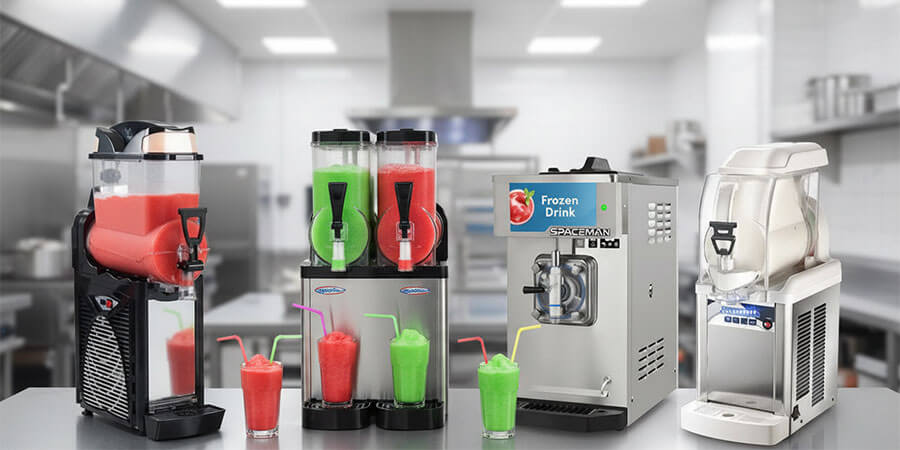
Table of Contents
High-profit frozen beverage equipment that transforms any foodservice operation into a refreshment destination
Commercial slushy machines generate consistent frozen beverages that appeal to customers of all ages while delivering profit margins of 60-80% per serving. This guide covers granita machines, frozen drink machines for cocktails, and cold cream units; comparing fill styles, bowl configurations, capacities from 1-12 gallons, and placement options to match your volume and menu goals.
What is a Commercial Slushie Machine?
A commercial slushie machine, also called a slush machine, slushy machine, frozen drink machine, or margarita machine - is a specialized frozen beverage dispenser that continuously churns flavored liquid mixes into semi-frozen, ice-crystal beverages with a smooth, sippable consistency. Unlike ice-based drinks made in blenders, these machines maintain product at a consistent temperature (typically 26-28°F) using internal refrigeration cylinders and rotating augers or paddles that prevent the mixture from freezing solid.
These machines serve multiple beverage categories - from kid-friendly fruit slushies and Italian-style granitas to adult frozen cocktails like margaritas and daiquiris. The best commercial slushy machines feature transparent bowls that showcase the colorful, swirling product to attract impulse purchases, making them both functional equipment and effective point-of-sale merchandisers.
Commercial slush machines represent one of the highest-margin additions to any beverage program, with ingredient costs typically running $0.15-0.40 per serving against retail prices of $3-7. Beyond profitability, frozen beverages require minimal labor, once the frozen drink machine is loaded with mix, it operates autonomously, dispensing consistent product throughout service hours.
Key Applications
- Quick-service restaurants: Add-on beverages for combo meals
- Bars and nightclubs: Frozen cocktails and margaritas
- Convenience stores: Self-serve slushie stations
- Concession stands: High-volume event beverage sales
- Cafes and coffee shops: Seasonal frozen specialty drinks
- Movie theaters: Premium frozen treat upsells
The equipment landscape includes three primary frozen drink machine types aligned with product output, plus variations in fill method, bowl count, and placement to match operational scale and menu complexity.
Types of Commercial Slushie Machines
Commercial frozen beverage equipment divides into three categories based on product type and intended application. Understanding these distinctions helps operators choose the best slushie machine for their menu, whether serving kid-friendly slushies or searching for the best slushie machine for alcohol-based cocktails.
Granita / Slushy Machines
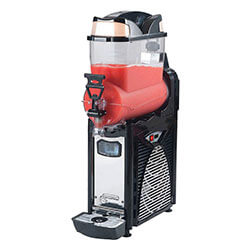
Standard granita machines designed for non-alcoholic frozen beverages with the classic ice-crystal texture.
- Best Uses: Fruit-flavored slushies, Italian granitas, frozen lemonades, kid-friendly drinks
- Key Features: Transparent display bowls, rotating augers for consistent texture, adjustable freeze settings
- Pros: Lower cost than cocktail machines, simple operation, high visual appeal for impulse sales
- Cons: Not optimized for alcohol-based products, limited to standard slush consistency
Cocktail Machines
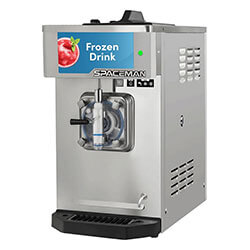
For bars seeking the best slushie machine for alcohol, cocktail machines are heavy-duty frozen drink machines engineered to handle alcohol's lower freezing point while maintaining smooth, pourable consistency.
- Best Uses: Frozen margaritas, daiquiris, piña coladas, mudslides, adult frozen drinks
- Key Features: Enhanced refrigeration systems, higher torque motors, alcohol-resistant seals and components
- Pros: Handles high-proof spirits without over-freezing, produces smoother texture, built for bar environments
- Cons: Higher purchase price, slower freeze times with alcohol content, typically larger footprint
Cold Cream Dispensers
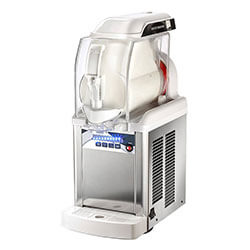
Specialized units that produce a denser, creamier frozen product closer to soft-serve consistency.
- Best Uses: Frozen yogurt-style beverages, cream-based frozen drinks, thick smoothie-style slushes
- Key Features: Lower operating temperatures, different auger designs for thicker product, often dairy-compatible
- Pros: Unique texture differentiator, premium product positioning, versatile for frozen desserts
- Cons: Limited product range compared to standard slushy machines, requires specific mixes
Dairy-Safe Certification: If serving dairy-based products like blended milkshakes or frappes, verify the machine is dairy-certified. Dairy products require more rigorous daily cleaning to prevent contamination and buildup. Units must be emptied, cleaned, and sanitized at the end of each day rather than weekly.
| Type: | Product Style: | Best Environment: | Typical Price Range: |
| Granita/Slushy | Ice-crystal slush | QSR, convenience, concessions | $1,200-$4,000 |
| Cocktail | Smooth frozen drinks | Bars, restaurants, nightclubs | $4,000-$16,000 |
| Cold Cream | Dense frozen cream | Specialty dessert shops | $2,000-$4,000 |
Specialized Configurations
Beyond machine type, several configuration options affect operational fit and performance when selecting a commercial slush machine.
Fill Styles
Standard Pourover (Most Common)
The operator manually pours prepared liquid mix into the hopper, where the slush machine freezes and churns it. Most commercial units use this simple, flexible approach.
- Advantages: No plumbing required, easy flavor changes, lower equipment cost
- Considerations: Requires staff attention to refill, limited by hopper capacity
Liquid Auto-Fill
Connected to bulk mix containers via pumps, these machines automatically draw product as levels drop, maintaining consistent supply during high-volume periods.
- Advantages: Reduces labor, prevents run-outs during rushes, ideal for self-serve stations
- Considerations: Requires pump installation, limits flavor change flexibility, higher equipment cost
Bowl Configurations
Bowl count directly impacts flavor variety and hourly output capacity.
1 Compartment
Single-flavor operation suited for focused menus or limited counter space. Most economical entry point for testing frozen beverage programs with a slushy machine.
2 Compartment
The most popular configuration, offering dual flavors or a base flavor plus a specialty option. Balances variety with manageable maintenance.
3 Compartment
Maximum flavor variety for high-traffic locations. Requires more counter space and cleaning time but maximizes sales opportunities.
| Configuration: | Typical Capacity: | Hourly Output (12 oz cups): | Best For: |
| 1 Compartment | 1.5-6 gallons | 24-77 cups | Single-focus venues |
| 2 Compartment | 2.6-6.4 gallons total | 48-102 cups | Most operations |
| 3 Compartment | 4.8-9.6 gallons total | 72-128 cups | High-volume venues |
Capacity Ranges
1-4 Gallons
Compact units for low-to-moderate volume. Ideal for cafes, small restaurants, or operations testing frozen beverage programs.
5-8 Gallons
Mid-range capacity covering most commercial applications. Balances output with counter space requirements.
9-12 Gallons
High-volume units for convenience stores, large concession operations, and busy bars requiring extended run times between refills.
Placement Options
Countertop (Most Common)
Standard placement for customer-facing display. Countertop slushy machines range from compact single-bowl units to three-bowl configurations, typically 16-30 inches wide and 20-32 inches deep.
Floor Models
High-capacity units with integrated stands for self-serve stations or back-of-house production. Larger footprint but higher output and storage capacity.
Features & Accessories
Key specifications and accessories affect performance, maintenance, and total cost of ownership for any granita machine or frozen drink machine.
Core Specifications
- Wattage: Ranges from 320W for compact single-bowl units to 5,400W for high-capacity cocktail machines. Higher wattage enables faster freeze recovery during peak demand.
- Refrigeration: Most units are air-cooled with hermetic compressors using R-134a or R-290 refrigerant. Water-cooled models are available for environments exceeding 80°F where air cooling is less effective. Cocktail machines typically feature more powerful cooling systems to handle alcohol content.
- Auger/Paddle Design: Rotating mechanisms maintain consistent texture and prevent ice buildup. Horizontal augers pull product across the cold plate while mixing for more consistent density; vertical augers are common in compact units. Speed and design vary by product type, faster for slushies, slower for creamy products.
- Temperature Controls: Adjustable settings (typically 26-32°F) let operators fine-tune consistency for different mix formulations.
- Bowl Materials: Food-grade polycarbonate for transparency and durability. Most are removable for cleaning.
- Brix Level Compatibility: Sugar content (measured in brix) affects freezing behavior. Most machines are calibrated for standard commercial mixes (13-15 brix). Too little sugar creates coarse ice crystals and potential freeze-ups; too much sugar slows freezing. Check manufacturer specs for compatible brix ranges.
Advanced Features
Some models include features that enhance operation and reduce maintenance:
- Overnight Holding/Chill Mode: Maintains product at safe refrigerated temperatures overnight without full freeze cycle, reducing morning prep time
- Self-Diagnostics: Alerts for temperature fluctuations, motor issues, or maintenance needs
- Low-Product Warnings: Indicators when hopper levels drop, preventing auger exposure
- Reversing Augers: Automatically reverse direction to prevent ice buildup and ensure consistent texture
- Programmable Controls: Digital settings for freeze intensity, defrost cycles, and dispensing
- Seal-less Drive Shafts: Reduces maintenance by eliminating leak-prone seals
Display Features
- LED Lighting: Illuminates product for visual merchandising; available in various colors
- Transparent Bowls: Standard on most models for impulse-purchase appeal
- Branded Panels: Many manufacturers offer customizable graphics
- Drip Trays: Capture overflow; some include drainage connections
Accessories & Supplies
- Slushy Mixes: Concentrated syrups (liquid or powder) in various flavors; typically mixed 5:1 with water
- Cleaning Kits: Brushes, sanitizers, and lubricants for maintenance
- Replacement Augers: Wear items requiring periodic replacement
- Gaskets and Seals: O-rings and seals that degrade over time
- Cups, Lids, and Straws: Disposable serviceware for frozen beverages
Selecting the Right Slushy Machine
Production & Capacity
Match machine output to expected demand:
Low Volume (Under 50 cups/day)
Single-compartment units with 1.5-3 gallon capacity. Suitable for cafes, small restaurants adding a single frozen option.
Medium Volume (50-150 cups/day)
Two-compartment machines with 5-6 gallon total capacity. Covers most restaurant and bar applications.
High Volume (150+ cups/day)
Three-compartment or multiple two-compartment units. Convenience stores, stadiums, and high-traffic concessions require maximum output.
Space & Utilities
- Counter Space: Allow 2-4 inches clearance on sides for ventilation; rear clearance varies by model
- Electrical: Most countertop units run on standard 115V/120V outlets (15-20 amp); larger cocktail machines may require 208V/230V circuits. Higher voltage machines offer faster recovery times—a 230V unit restores freeze consistency more quickly than 120V after heavy dispensing, important for high-traffic periods
- Cooling Type: Most machines are air-cooled, requiring adequate ventilation clearance. For locations exceeding 80°F ambient temperature, consider water-cooled models that perform more consistently in warm environments
- Plumbing: Only required for auto-fill models; most pourover units need no water connection
- Drainage: Drip tray drainage optional but recommended for self-serve installations
- Ambient Temperature: Air-cooled machines perform optimally in environments below 80°F; higher temps reduce efficiency and slow freeze times
Budget & Total Cost of Ownership
Cost & ROI Snapshot
- Entry Range: $1,200-$2,500 (single-bowl granita machines)
- Mid Range: $2,500-$5,000 (dual-bowl granita or entry cocktail machines)
- Premium: $5,000-$16,000 (high-capacity cocktail machines, floor models)
- Operating Costs: $30-100/month electricity; $50-200/month mix supplies (varies by volume)
- Break-Even Insight: At 60% margins, a $3,000 machine selling 20 drinks/day at $4 each generates $1,752/month gross profit, typical payback within 2-4 months
Cost Per Serving Breakdown
| Serving Size: | Cup: | Syrup/Mix: | Lid: | Straw: | Total Unit Cost: |
| 12 oz | $0.05 | $0.12 | $0.03 | $0.01 | $0.21 |
| 16 oz | $0.06 | $0.16 | $0.03 | $0.01 | $0.26 |
| 20 oz | $0.07 | $0.20 | $0.03 | $0.01 | $0.31 |
| 24 oz | $0.08 | $0.24 | $0.03 | $0.01 | $0.36 |
Costs based on bulk purchasing of commercial supplies. Actual costs vary by supplier and volume.
Compliance & Safety
- NSF Certification: Required for most health department approvals; ensures food-contact surfaces meet sanitation standards
- ETL/UL Listing: Electrical safety certification for commercial use
- Alcohol Licensing: Verify local regulations for frozen cocktail service; some jurisdictions require specific permits
- ADA Compliance: Self-serve installations must meet accessibility requirements for dispenser height and controls
Installation & Maintenance
Proper setup and care ensure your slush machine or granita machine delivers consistent performance for years.
Installation Checklist
- Verify electrical requirements match available circuits (voltage, amperage, outlet type)
- Position on level, stable surface with adequate ventilation clearance
- Allow machine to stabilize 2-4 hours before initial use (per manufacturer guidelines)
- Prime with water and run cleaning cycle before first product batch
- Calibrate temperature settings for specific mix being used
- Test dispenser operation and check for leaks around seals
Operational Best Practices
Follow these tips to maximize product quality and equipment longevity:
- Keep product above the auger: Never let hopper levels drop low enough to expose the auger. Running with exposed augers damages components and produces inconsistent, aerated product
- Don't overfill hoppers: Frozen product occupies more volume than liquid mix. Fill to the maximum line only. Overfilling causes overflow and potential motor strain
- Pre-chill mix before adding: Refrigerate liquid mix before pouring into the hopper. Pre-chilled mix reaches serving consistency 15-30 minutes faster than room-temperature product
- Use freeze vs. chill modes appropriately: Switch to chill/hold mode at closing to maintain product overnight at safe temperatures without full freeze. This reduces morning prep time and prevents quality degradation
- Monitor ambient temperature: Position machines away from heat sources (ovens, direct sunlight, HVAC vents). High ambient temps force compressors to work harder and slow freeze times
- Match mix to machine specs: Verify your syrup's brix level is compatible with your machine's calibration to prevent texture issues or freeze-ups
Care Schedule
| Task: | Frequency: | Notes: |
| Drain and rinse bowls | Daily | Prevents flavor contamination and buildup |
| Wipe exterior and drip tray | Daily | Maintains appearance and hygiene |
| Deep clean and sanitize | Weekly | Full disassembly per manufacturer instructions |
| Inspect auger and seals | Weekly | Check for wear, replace if damaged |
| Lubricate seals | Monthly | Use food-grade lubricant only |
| Professional service | Annually | Refrigeration check, motor inspection, deep cleaning |
Troubleshooting Highlights
| Symptom: | Likely Cause: | Quick Fix: |
| Product too soft/liquid | Temperature set too high | Lower thermostat; check ambient temp |
| Product frozen solid | Temperature set too low | Raise thermostat; verify mix ratio |
| Auger not turning | Motor issue or ice jam | Power cycle; check for blockage |
| Excessive noise | Worn auger bushing | Replace auger components |
| Leaking around bowl | Damaged seal or gasket | Replace seal; check proper assembly |
| Machine not cooling | Compressor issue | Check ventilation; call service |
Frequently Asked Questions
What's the difference between a slushie machine and a granita machine?
The terms slushie machine, slushy machine, slush machine, and granita machine are often used interchangeably for the same equipment. "Granita" typically refers to the Italian-style product with slightly larger ice crystals, while "slushie" describes the smoother American-style frozen drink. Most commercial frozen drink machines can produce either texture with mix and temperature adjustments.
Can I make frozen cocktails in a standard slushie machine?
Standard granita machines work for low-proof cocktails, but alcohol's lower freezing point prevents proper texture in standard units. For spirits-based frozen drinks, the best slushie machine for alcohol is a dedicated cocktail machine with enhanced refrigeration systems that produce better results and faster recovery times.
How long does it take to freeze a batch?
Initial freeze time varies from 45 minutes to 2 hours depending on machine size, ambient temperature, and mix type. Alcohol-based products take longer. Once frozen, machines maintain product consistency continuously with minimal recovery time between servings.
What type of mix should I use?
Commercial slushie mixes come in concentrated liquid or powder forms, typically mixed 5:1 or 6:1 with water. Pre-mixed ready-to-use options are available but cost more. For cocktail machines, use mixes specifically formulated for alcohol content.
How many cups can I serve per gallon?
One gallon yields approximately 10-12 servings at 12 oz or 8-10 servings at 16 oz. A 3-gallon single-bowl machine can serve 24-38 cups per hour; a 6-gallon dual-bowl unit handles 48-77 cups per hour.
Do slush machines require special electrical outlets?
Most countertop granita machines run on standard 115V/120V, 15-20 amp circuits. Larger frozen drink machines and floor models may require dedicated 208V/230V circuits. Always verify electrical requirements before purchase.
How often should I clean the machine?
Daily rinsing and draining prevents flavor contamination. Full disassembly and sanitization should occur weekly at minimum, or more frequently in high-volume operations. Follow manufacturer guidelines for specific cleaning procedures.
What's the typical lifespan of a commercial slushy machine?
With proper maintenance, the best commercial slushy machines last 7-12 years. Augers, seals, and gaskets are wear items requiring periodic replacement. Refrigeration components typically outlast mechanical parts.
Can I leave the machine running overnight?
Many machines offer a chill/hold mode that maintains product at safe refrigerated temperatures overnight without full freezing, this is the preferred method for operations that want product ready quickly in the morning. Alternatively, some manufacturers recommend draining product at close and running a water cycle. Check your specific model's capabilities; machines with overnight holding features reduce morning prep time significantly.
What's the profit margin on frozen beverages?
Typical margins range from 60-80%. A 16 oz drink costing $0.30-0.50 in mix and cup sells for $3-5, yielding $2.50-4.50 gross profit per serving. High-traffic locations can generate $500-1,500+ daily in frozen beverage revenue.
Shop Frozen Beverage Machines
- All Frozen Slushy & Granita Machines - Complete selection of commercial slush machines and frozen drink machines
- Granita / Slushy Machines - Standard slushie and granita dispensers for non-alcoholic beverages
- Cocktail Machines - The best slushie machines for alcohol and frozen cocktails
- Slushy & Snow Cone Syrups - Mixes and flavorings for slushy machines
Related Guides & Resources
- Ice Machine Buying Guide - Ice production equipment for complete beverage service
- Soda Fountain and Beverage Dispenser Guide - The carbonated and cold dispenser side of the same beverage program
- Water Filter Buying Guide - Water quality systems that extend equipment life and improve beverage taste
- Commercial Refrigeration Guide - Walk-ins and reach-ins for ingredient storage
Share This!