Restaurant Sports Sponsorship Guide
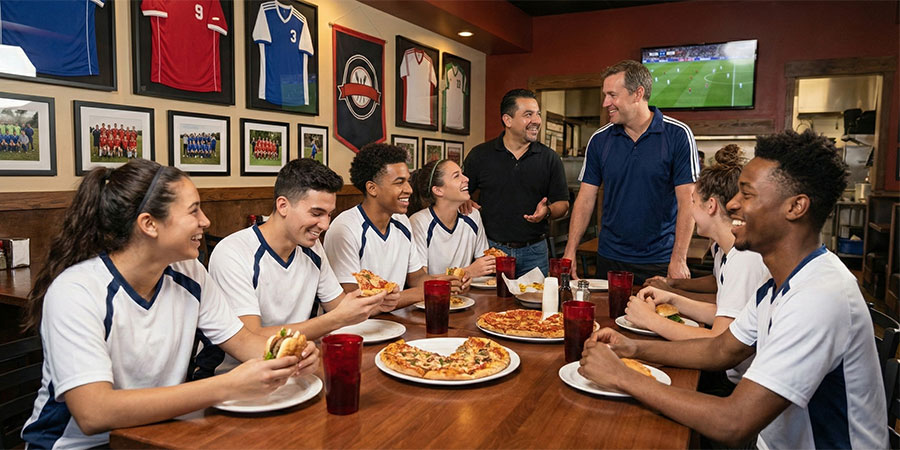
Table of Contents
How local sports sponsorships turn community visibility into lasting customer loyalty for your restaurant
Sports sponsorships are one of the most effective ways for restaurants to build local awareness and earn repeat customers. Research shows that 66% of consumers are more likely to purchase from a business that sponsors local sports, 28% recommend sponsors to friends and family, and 92% of people trust personal recommendations over any form of advertising. This guide covers how to find sponsorship opportunities, structure agreements, maximize visibility beyond a jersey logo, measure your return, and handle the tax side - so your restaurant becomes a recognized part of the local sports community.
Restaurants thrive on local customers - the families, coaches, players, and fans who live nearby and can become regulars. Sports sponsorships put your restaurant name in front of these people repeatedly, in a context that builds goodwill rather than interrupting their day.
The opportunity is significant. More than 27 million children ages 6 to 17 participate in organized youth sports according to the National Survey of Children's Health, with families spending an average of over a thousand dollars per year on their child's primary sport - a figure that has risen roughly 46% since 2019 according to the Aspen Institute's 2025 State of Play report. Adult recreational leagues, school athletics, and charity sporting events expand that number further. Every one of those participants has parents, teammates, friends, and fans who see sponsor names on jerseys, banners, and event programs week after week.
Unlike a social media ad that disappears after a scroll, a sponsorship creates sustained, repeated exposure in a community setting where people feel positive emotions - cheering for their kids, exercising with friends, supporting a good cause. That emotional association transfers to your restaurant, making sports sponsorship one of the highest-goodwill marketing channels available to local businesses.
Why Sports Sponsorships Work for Restaurants
The effectiveness of sports sponsorships is well documented. A 2024 survey of over 5,000 U.S. adults conducted by Elevent found that two-thirds of respondents were more likely to purchase from a business that sponsors sports they follow - up from 59% in 2022. The same survey found that 20% of respondents had specifically chosen a business because of its sports sponsorship, and 28% had recommended a sponsor to friends or family.
For restaurants, these numbers are especially meaningful because the marketing happens locally. You are not paying for national impressions that mostly reach people who will never visit your location. Every impression from a local sports sponsorship reaches someone who lives, works, or plays in your community - someone who could realistically walk through your door.
Community trust amplifies the effect. Nielsen's Global Trust in Advertising study found that 92% of consumers trust recommendations from friends and family over all other forms of advertising - a finding that has held consistent across follow-up surveys. When a parent tells another parent at a game, "That's the restaurant that sponsors our team - the food is great," that recommendation carries far more weight than any paid ad. Sports sponsorships generate exactly these kinds of organic, trust-based conversations.
Small businesses are expected to show up. According to the National Federation of Independent Business, the vast majority of small businesses financially support community groups, youth sports, or schools, and roughly two out of three direct that support toward sports-related activities. Customers notice which businesses invest locally. Public trust in small businesses stands at 70% according to Gallup's 2025 Confidence in Institutions survey - significantly higher than trust in large corporations - and community involvement reinforces that advantage.
| Metric: | Finding: | Source: |
| More likely to purchase from a sports sponsor | 66% of consumers (up from 59% in 2022) | Elevent Sponsorship Performance Survey 2024 |
| Chose a business because of its sponsorship | 20% of consumers | Elevent Sponsorship Performance Survey 2024 |
| Recommended a sponsor to friends or family | 28% of consumers | Elevent Sponsorship Performance Survey 2024 |
| Positive sentiment toward youth sports sponsors | 84% of parents | YouGov/Priority Partnerships 2026 |
| Trust friend and family recommendations | 92% of consumers | Nielsen Global Trust in Advertising (28,000+ respondents, 56 countries) |
| Public trust in small businesses | 70% of Americans | Gallup Confidence in Institutions 2025 |
| Small businesses supporting community sports | Roughly 2 in 3 direct giving to sports | NFIB |
Types of Sponsorship Opportunities
Not all sponsorships are the same. The right choice depends on your restaurant's location, target audience, and marketing goals. Understanding the options helps you invest where you will get the best return.
Youth team sponsorships are the most common entry point. Your restaurant name appears on jerseys, banners at practice fields, and in tournament programs. Parents - often your most valuable repeat customers - see your branding every practice and game day for an entire season. Youth sports participation remains robust, with about 55% of children ages 6-17 playing organized sports according to National Survey of Children's Health data, and flag football alone growing 14% in regular participation among youth between 2019 and 2024 per SFIA data reported in the Aspen Institute's State of Play 2025.
Adult recreational leagues reach a different demographic - working professionals who play in after-work softball, basketball, volleyball, or soccer leagues. These players often gather socially after games, making restaurants near league facilities natural post-game destinations. The sponsorship exposure plus geographic convenience creates a direct pipeline to your dining room.
School and booster club partnerships connect you with families through an institution they already trust. Sponsoring a school's athletic program, contributing to booster club fundraisers, or providing food for team events puts your restaurant in front of the school community. Parent networks at schools are tight-knit, and word-of-mouth spreads quickly within them.
Charity athletic events - fun runs, golf tournaments, walkathons, and benefit games - combine sports sponsorship with cause marketing. Participants in these events have chosen to support a cause, and they appreciate businesses that do the same. Your sponsorship reaches a self-selected audience of community-minded people who are predisposed to support businesses that share their values.
| Sponsorship Type: | Primary Audience: | Typical Duration: | Visibility Channels: |
| Youth team | Parents, families, other local businesses | Seasonal (3-5 months) | Jerseys, field banners, tournament programs, team communications |
| Adult recreational league | Working professionals, social groups | Seasonal (2-4 months) | Team shirts, league schedules, facility signage, post-game gatherings |
| School or booster club | School families, faculty, alumni | Academic year or seasonal | Program materials, event signage, school communications, fundraiser promotions |
| Charity athletic event | Community-minded adults, cause supporters | Single event or series | Event signage, race bibs, promotional materials, social media mentions |
How to Find Sponsorship Opportunities
Finding the right sponsorship is less about waiting for someone to ask and more about proactively connecting with local sports organizations. Here are six practical steps:
1. Start with what's nearby. Identify sports facilities, parks, and schools within a reasonable radius of your restaurant. Teams that practice and play near your location are far more valuable as sponsors because players and families can easily visit after games or practices.
2. Contact local parks and recreation departments. Municipal recreation programs run youth and adult leagues across dozens of sports. A single phone call or email to your city's parks and recreation office can reveal multiple sponsorship opportunities with established programs that have large participant bases.
3. Reach out to school athletic directors. Middle schools and high schools have athletic programs that often seek community sponsors. Athletic directors can connect you with booster clubs, which are typically the organizations that manage sponsorship relationships and fundraising.
4. Check community bulletin boards and social media groups. Local parent groups, neighborhood forums, and community pages frequently post sponsorship requests. Teams and leagues actively looking for sponsors often post in these channels, making it easy to identify opportunities.
5. Ask your existing customers. Your current regulars likely include parents, coaches, and players who can connect you directly with teams looking for sponsors. A simple sign at the register or a mention from your staff can surface opportunities you would never find through cold outreach.
6. Contact league organizers directly. Most recreational leagues have coordinators who manage sponsorship programs. Whether it is a youth basketball league, an adult softball league, or a charity running club, the league organizer is usually the fastest path to a sponsorship conversation.
Structuring a Sponsorship Agreement
A clear agreement protects both your restaurant and the team or organization. Even informal sponsorships benefit from putting expectations in writing. Here are seven points every sponsorship agreement should address:
1. Duration and renewal terms. Specify whether the sponsorship covers one season, one year, or a specific event. Include options for renewal so both parties know what to expect going forward.
2. Exactly what your restaurant receives. List every visibility element: jersey placement, banner dimensions and locations, mentions in team communications, program advertisements, social media mentions, and any other promotional benefits. Be specific - "logo on jerseys" is vague; "logo on front left chest of all team jerseys" is clear.
3. Exclusivity provisions. Determine whether your sponsorship is exclusive within the restaurant category. If a competing restaurant can also sponsor the same team, your visibility is diluted. Many leagues offer category exclusivity at a higher sponsorship tier.
4. What the organization provides. Beyond branding, some sponsorships include perks like tickets to games, booth space at tournaments, or access to team mailing lists for promotional offers. Clarify what is included and what is optional.
5. Your restaurant's obligations. Spell out exactly what you are providing - whether financial support, in-kind contributions like food for team events, or a combination. Include a payment schedule if applicable.
6. Use of names and logos. Both parties should agree on how each other's names and logos will be used. You want the right to use the team's name in your marketing ("Proud sponsor of..."), and the team needs your logo files in the correct format for their materials.
7. Cancellation and dispute terms. Include provisions for what happens if either party needs to exit the agreement early. Simple, fair terms prevent awkward situations.
Maximizing Your Investment Beyond the Jersey
A jersey logo or field banner creates awareness, but the most successful restaurant sponsors go further. These seven tactics turn passive branding into active customer acquisition:
1. Post-game meal deals. Offer a team discount or special menu for players and families after games. This converts sponsorship visibility into immediate foot traffic. Families leaving a game are hungry and looking for convenient options - make your restaurant the obvious choice.
2. Team celebration hosting. Offer your restaurant as the venue for end-of-season parties, award ceremonies, and team dinners. These events bring large groups through your door and introduce your food to people who might not otherwise visit.
3. Coupon distribution through teams. Provide exclusive offers that coaches or team managers can distribute to players and families. Track redemption with unique codes to measure which teams drive the most business.
4. Presence at games and events. When possible, show up. Set up a table at tournaments with menus and promotional materials. Bring samples if regulations allow. Your physical presence reinforces the sponsorship and creates personal connections.
5. Social media cross-promotion. Share team photos, game results, and season highlights on your restaurant's social channels - with the team's permission. Tag the team's accounts. This extends your sponsorship visibility into the digital space at no additional cost.
6. Recognition inside your restaurant. Display team photos, schedules, or a "proud sponsor" sign in your dining area. Players and families who see their team represented in your restaurant feel a personal connection that encourages loyalty.
7. Fundraiser nights. Host evenings where a portion of sales goes to the team's program. These events bring team families through your door in large numbers while supporting the organization - a genuine win for both sides.
Measuring Sponsorship Results
Marketing you cannot measure is marketing you cannot improve. Use these methods to track whether your sponsorships are generating the return you expect.
Unique coupon codes assigned to each sponsored team let you track exactly how many redemptions each sponsorship generates. This is the most direct measurement of sponsorship-driven revenue.
"How did you hear about us?" training for your staff captures attribution data at the point of sale. A simple question during ordering or checkout reveals which customers came in because of a sponsorship. Track responses weekly during sponsored seasons.
Social media monitoring tracks mentions, tags, and engagement related to your sponsored teams. Increases in followers, mentions, or engagement during sponsorship periods indicate growing awareness.
Seasonal sales comparison between sponsored and non-sponsored periods reveals whether sponsorships drive measurable revenue increases. Compare same-day-of-week sales during active sponsorship seasons versus off-seasons, controlling for other variables like holidays or menu changes.
Loyalty program enrollment spikes during sponsorship periods indicate new customer acquisition. If your restaurant has a loyalty program, track whether enrollment increases correlate with sponsorship activity.
Referral tracking captures how many new customers mention a sponsored team or player as their reason for visiting. This measures the word-of-mouth effect that makes sponsorships particularly powerful.
| Measurement Method: | What It Tracks: | Difficulty: |
| Unique coupon codes per team | Direct revenue from sponsorship | Low - assign codes at sponsorship start |
| Staff "how did you hear" question | Customer attribution | Low - train staff, track weekly |
| Social media monitoring | Brand awareness and engagement | Low - use built-in platform analytics |
| Seasonal sales comparison | Revenue impact over time | Medium - requires baseline data |
| Loyalty program enrollment tracking | New customer acquisition | Medium - requires loyalty system |
| Referral and word-of-mouth tracking | Organic recommendation effect | Medium - combine staff feedback and surveys |
Tax Considerations
Sports sponsorships can provide tax benefits, but the treatment depends on how the sponsorship is structured. This section provides general guidance - consult a qualified tax professional for advice specific to your situation.
Sponsorships with advertising benefit - where your restaurant receives tangible promotion like jersey logos, banners, or program ads - are generally deductible as ordinary business advertising expenses. The IRS treats these the same as any other advertising cost because you receive a commercial benefit in return.
Sponsorships without advertising benefit - pure donations to a qualifying nonprofit sports organization with no promotional return - may qualify as charitable contributions. Corporate charitable deductions are generally limited to 10% of taxable income, and the organization must hold tax-exempt status.
In-kind contributions like food for team events are also potentially deductible, typically at the cost of the goods provided rather than retail value. Keep detailed records of what you provide, including dates, quantities, and costs.
Documentation matters. Regardless of how your sponsorship is structured, maintain written agreements, receipts, and records of all contributions. Good documentation protects you during tax filing and in the event of an audit.
Frequently Asked Questions
How do I find local teams that need sponsors?
Start with your city's parks and recreation department, which runs youth and adult leagues. Contact school athletic directors and booster clubs. Ask your existing customers - many are parents or players who can connect you directly with teams. Check local community groups on social media for sponsorship requests.
What should a sponsorship agreement include?
At minimum: duration, what visibility your restaurant receives (jersey placement, banners, program ads), exclusivity within the restaurant category, what you provide (financial support, food, or both), how logos and names will be used, and cancellation terms. Put everything in writing, even for casual arrangements.
How do I measure the return on a sports sponsorship?
Use unique coupon codes for each team, train staff to ask "how did you hear about us," compare sales during sponsored seasons versus off-seasons, track social media mentions, and monitor loyalty program enrollment spikes during sponsorship periods. No single metric tells the full story - use several together.
Can I sponsor multiple teams at once?
Yes, and many restaurants do. Sponsoring teams across different sports and age groups broadens your reach within the community. The key is ensuring each sponsorship receives enough attention to maximize its value - spreading too thin across too many teams may dilute your impact.
What types of restaurants benefit most from sports sponsorships?
Family-friendly restaurants, casual dining establishments, and pizza or quick-service restaurants see the most direct benefit because families are the primary audience at youth sporting events. However, bars and sports-focused establishments benefit from adult league sponsorships, and any restaurant near sports facilities benefits from the proximity advantage.
How long should a sponsorship commitment last?
Start with a single season to test results before committing long-term. Most youth sports seasons run three to five months. If the first season generates measurable results, renew for a full year or multiple seasons - longer commitments often come with better rates and deeper community recognition.
Are sports sponsorships tax deductible?
Generally, yes. Sponsorships where you receive advertising benefits (logos, banners, program ads) are deductible as business advertising expenses. Pure donations to qualifying nonprofit sports organizations may qualify as charitable contributions. Consult a tax professional for your specific situation, as rules vary based on the organization's tax status and what you receive in return.
What if the team has a losing season?
It does not matter. Sponsorship value comes from community visibility and goodwill, not the team's win-loss record. Parents still attend every game, banners still hang at every practice, and your restaurant is still associated with supporting local youth. In fact, loyal support during tough seasons can generate even more community appreciation.
Should I sponsor youth leagues or adult leagues?
It depends on your target customer. Youth leagues reach families - typically the highest lifetime-value restaurant customers because they visit frequently with multiple family members. Adult leagues reach working professionals who often socialize after games. Many restaurants sponsor both to cover different customer segments.
How can I get more value beyond just a logo on a jersey?
Offer post-game meal deals for the team, host end-of-season celebrations, distribute exclusive coupons through coaches, attend games with promotional materials, cross-promote on social media, display team photos in your restaurant, and host fundraiser nights where a portion of sales supports the program. The jersey logo creates awareness - these tactics convert that awareness into visits.
Related Resources
- Restaurant Marketing Guide - Foundational marketing strategies for restaurant owners
- Restaurant Offline Marketing Guide - Broader offline marketing tactics including events, direct mail, and partnerships
- Restaurant Guerilla Marketing Guide - Creative, unconventional marketing approaches
- Restaurant Email Marketing Guide - Build digital follow-up campaigns for sponsorship-acquired customers
- How to Make a Restaurant Business Plan - Include marketing budget planning in your business strategy
Share This!