Restaurant Guerrilla Marketing Guide
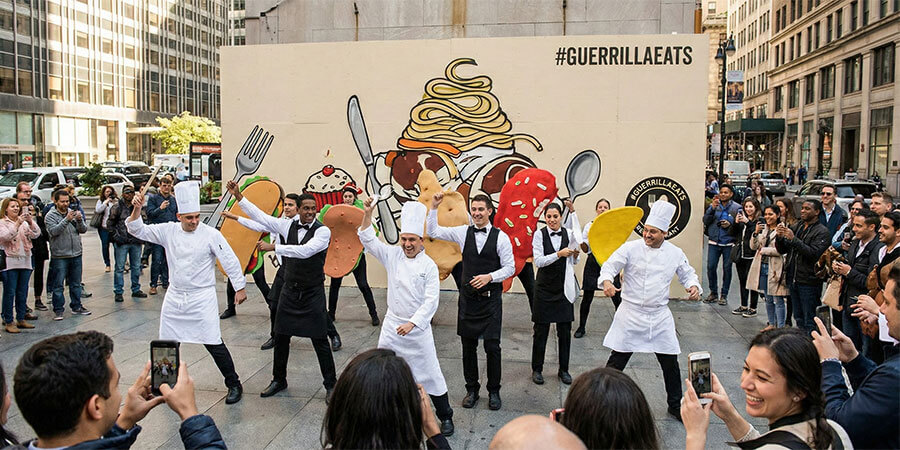
Table of Contents
Unconventional marketing tactics that create buzz, build brand awareness, and attract diners on any budget
Guerrilla marketing uses creative, unconventional tactics to promote your restaurant without requiring a large advertising budget. This guide covers proven guerrilla strategies - from street performances and sidewalk art to food challenges and pop-up events - along with planning considerations, legal requirements, and methods to measure your success. Research shows that word-of-mouth remains the most trusted form of marketing, and guerrilla tactics excel at creating the shareable moments that spark those conversations.
When traditional advertising feels out of reach or ineffective, guerrilla marketing offers restaurants an alternative path to visibility. The term was coined by Jay Conrad Levinson in his 1984 book and draws from guerrilla warfare tactics that rely on surprise and unconventional approaches rather than brute force. In marketing terms, this means achieving outsized results through creativity rather than budget size.
For restaurants operating on thin margins, this approach holds particular appeal. Studies consistently show that 92 percent of consumers trust recommendations from friends and family over any form of advertising. A well-executed guerrilla campaign creates exactly the kind of memorable experiences that people naturally want to share - transforming a modest marketing investment into ongoing word-of-mouth promotion that money cannot buy directly.
The most successful restaurant guerrilla campaigns share common traits: they surprise and delight rather than interrupt, they create moments worth photographing and sharing, and they reflect the personality of the restaurant in authentic ways. This guide walks you through everything you need to plan and execute campaigns that achieve these goals while staying within legal boundaries and measuring your results.
Why Guerrilla Marketing Works for Restaurants
Restaurant success depends heavily on local customers - the people who live and work nearby and can become regulars. While digital marketing helps with initial discovery, guerrilla marketing excels at creating the memorable impressions and community connections that turn first-time visitors into loyal advocates.
The psychology behind guerrilla marketing effectiveness is straightforward. Traditional advertising interrupts people during their daily activities - a commercial breaks into their show, a banner ad blocks their reading. Guerrilla marketing instead integrates into the environment in unexpected ways that feel like discovery rather than intrusion. When someone encounters a creative sidewalk chalk display or stumbles upon a surprise performance at lunch hour, the experience creates positive emotions rather than the irritation associated with typical advertising.
This surprise factor triggers stronger memory formation. Neuroscience research demonstrates that emotionally charged experiences create more durable memories than neutral ones. When your marketing makes someone laugh, gasp, or reach for their phone to capture the moment, you have created a mental association far stronger than any traditional advertisement could achieve.
The economics favor guerrilla approaches for local businesses. While a television commercial might cost tens of thousands of dollars to produce and place, a well-planned guerrilla campaign can achieve similar or greater local visibility for a fraction of that investment. The primary resources required are creativity and planning time rather than advertising dollars. This makes guerrilla marketing particularly attractive for independent restaurants competing against better-funded chain competitors with massive national advertising budgets.
Social media has amplified guerrilla marketing effectiveness dramatically. A single compelling photo or video from a creative campaign can reach thousands of people within hours, each share adding credibility through the personal endorsement of whoever posts it. Research indicates that content shared by friends and family generates significantly higher engagement and trust than branded content. When your campaign gives someone an interesting story to tell or image to share, you have essentially recruited unpaid brand ambassadors.
Surprisingly, younger consumers respond particularly well to physical marketing experiences. Studies show that 85 percent of Gen Z and Millennials engage with experiential marketing - a generation often assumed to be digital-only. This reflects broader digital fatigue: consumers overwhelmed by online ads are increasingly receptive to tangible experiences that feel personal rather than algorithmic.
Types of Guerrilla Marketing Tactics
Guerrilla marketing encompasses several distinct approaches, each suited to different situations, budgets, and restaurant concepts. Understanding these categories helps you identify which tactics align with your brand personality and target audience.
Outdoor guerrilla marketing uses public spaces as your canvas. This includes street art, sidewalk chalk displays, creative use of urban fixtures like benches and crosswalks, and temporary installations in high-traffic areas. These tactics work best in pedestrian-heavy locations where your target customers naturally gather. The visual nature of outdoor guerrilla marketing makes it particularly shareable on social media platforms. Restaurants have successfully used sidewalk chalk to create elaborate menu displays, installed eye-catching sculptures near their entrances, and transformed mundane urban elements into attention-grabbing brand statements. The key is creating something genuinely interesting enough that passersby stop, notice, and ideally photograph the installation.
Experiential marketing creates interactive experiences that engage your audience directly rather than simply displaying a message. Food sampling in unexpected locations, cooking demonstrations, eating contests, treasure hunts, and immersive pop-up events all fall into this category. The hands-on nature creates stronger emotional connections and more memorable impressions than passive advertising. For restaurants, experiential marketing offers the significant advantage of letting potential customers actually taste your food - the most persuasive sales tool available to any food business.
Ambush marketing capitalizes on audiences gathered for events you have not officially sponsored - concerts, sporting events, festivals, or community gatherings. Rather than paying premium sponsorship fees, you position your marketing to capture attention from attendees through creative means. This might involve sampling near venue exits, hosting watch parties for major events, or creating themed promotions tied to local happenings. Ambush marketing requires careful execution to remain legal and appropriate while still achieving visibility without antagonizing event organizers or official sponsors.
Buzz marketing focuses specifically on generating word-of-mouth through remarkable actions or offerings. This might include creating an outrageous food challenge, offering something unexpectedly free, or staging a publicity stunt designed primarily to generate conversation and media coverage. The goal is creating something so interesting that people cannot help but talk about it with friends, family, and social media followers.
| Tactic Category: | Examples: | Best For: | Typical Investment: |
| Outdoor/Street | Sidewalk chalk, street art, creative signage, installations | High foot traffic areas, visual brands | Low to medium |
| Experiential | Sampling, demonstrations, pop-ups, food challenges | Restaurants confident in their product | Medium |
| Ambush | Event proximity marketing, themed promotions | Locations near venues, sports bars | Low to medium |
| Buzz/Publicity | Stunts, challenges, record attempts, giveaways | Brands seeking media coverage | Varies widely |
Proven Tactics for Restaurant Guerrilla Marketing
The following tactics have demonstrated success for restaurants across various concepts and market conditions. Select approaches that align with your brand personality, target audience, and available resources.
Sidewalk chalk art and street displays transform the pavement outside your restaurant or nearby high-traffic areas into attention-grabbing marketing. The temporary nature creates urgency - people photograph chalk art knowing rain will wash it away. Restaurants have successfully used this tactic to create elaborate menus, playful scenes featuring their food, optical illusions that invite interaction, or directional art leading passersby to their entrance. The investment is minimal - quality chalk, an artistic team member or hired local artist, and a few hours of creation time. Position the art where foot traffic naturally slows: near crosswalks, bus stops, park benches, or popular gathering spots. Include your restaurant name and a clear indication of where to find you. Refresh the design regularly so repeat passersby encounter something new each time.
Food challenges and eating contests create ongoing marketing that becomes part of your restaurant's identity. Whether the challenge involves quantity, spice tolerance, speed, or unusual combinations, a well-designed competition attracts participants, spectators, and social media attention. Display a wall of fame featuring successful challengers and document attempts on your social channels. The spectacle draws crowds, the challenge creates stories people share, and the ongoing competition gives customers reasons to return and bring friends. Design challenges that are achievable but genuinely difficult - approximately 10 to 20 percent success rate maintains credibility while ensuring plenty of entertaining content from unsuccessful attempts. The food cost of challenge meals is your marketing investment, often far less than equivalent advertising exposure.
Pop-up events and temporary experiences generate buzz through exclusivity and novelty. Create temporary dining experiences in unexpected locations - a rooftop, park, abandoned building, or unusual venue that matches your brand personality. The limited-time nature generates urgency, while the unusual setting creates Instagram-worthy moments that participants eagerly share. Pop-ups let you test new menu concepts, reach different neighborhoods, or simply generate excitement through the novelty factor. Partner with complementary businesses, local artists, or community organizations to expand your reach and share promotion responsibilities. Announce pop-ups primarily through social media to reward your existing followers while creating fear-of-missing-out among those who learn about events after they occur.
Sampling in unexpected locations brings your food directly to potential customers where they would not expect it. Set up sampling stations in office building lobbies during lunch hour, at transit hubs during rush hour, near competitor restaurants, or at community events. The surprise of encountering delicious free food creates positive associations and memorable impressions that traditional advertising cannot replicate. Focus sampling efforts on signature items that represent your concept well and travel easily. Ensure samples look as appetizing as food served in your restaurant - presentation matters even for free tastes. Include information about your location and a compelling offer to visit. Track which sampling locations generate the most redemptions to optimize future efforts.
Flash mobs and street performances create viral moments through apparently spontaneous entertainment that surprises passersby. Organize dancers, musicians, or performers who suddenly begin an entertaining routine in a public space, with your restaurant branding revealed at the climax. Flash mobs require significant planning despite their appearance of spontaneity - coordinating performers, securing permits, arranging documentation, and promoting the resulting content. Partner with local performance groups, dance studios, or music programs who benefit from the exposure. The investment is primarily time and coordination rather than dollars, though professional performers may require payment. The resulting video content can generate social media engagement for weeks or months after the event.
Treasure hunts and scavenger hunts combine physical exploration with social media engagement. Hide prizes throughout your neighborhood and release clues on social platforms. Prizes might include gift cards, free meals, exclusive menu items, or branded merchandise. Each clue drives participants to different locations, building anticipation throughout the hunt. Require participants to follow your accounts and use specific hashtags to receive clues, directly building your social media following. The competitive element encourages sharing as participants recruit friends to help solve puzzles. Design hunts that showcase interesting aspects of your neighborhood, creating positive associations between your restaurant and the surrounding community.
Community event integration makes your restaurant visible at local gatherings without requiring official sponsorship. Food festivals, farmers markets, charity events, and neighborhood celebrations draw crowds already in a spending and discovery mindset. Your presence at these events - whether through sampling, food sales, or creative brand activations - puts your restaurant in front of people actively looking for dining options. Build relationships with event organizers for early notification of opportunities. Train staff attending events to be enthusiastic ambassadors who can speak knowledgeably about your restaurant and invite attendees to visit.
Planning and Executing Your Campaign
Successful guerrilla marketing requires thorough planning despite its appearance of spontaneity. Following a structured approach maximizes your chances of achieving meaningful results while avoiding common pitfalls.
Start by defining clear objectives that will determine whether your campaign succeeds. Are you launching a new location and need immediate awareness? Introducing a menu item? Building social media following? Driving traffic during slow periods? Reaching a specific demographic? Your objectives shape which tactics make sense and how you will measure results. Vague goals like "get more customers" make it impossible to evaluate performance - instead, set specific targets such as "gain 500 new Instagram followers" or "drive 50 redemptions of our sampling offer."
Research your target audience's habits and preferences before selecting tactics. Understand where your ideal customers spend time, what content they share on social media, and what experiences resonate with them. A tactic that delights one demographic might confuse or annoy another. College students respond differently than young professionals, families differently than couples. Match your approach to the preferences and behaviors of the specific people you want to reach. If you do not know your target audience well, spend time observing and talking with your best current customers before investing in campaigns.
Scout potential locations at the times you plan to execute. Visit candidate spots during the hours your campaign would run. Observe foot traffic patterns, identify sight lines and any obstacles, note lighting conditions for photography, and assess ambient noise levels. The best locations combine high visibility to your target audience with practical considerations like space for setup and proximity to your restaurant. Consider weather backup plans for outdoor activations.
Plan documentation as carefully as you plan the activation itself. Guerrilla campaigns live far beyond their initial execution through photos and videos. Assign team members specifically to capture high-quality content rather than hoping participants will do so. Plan camera angles in advance, ensure adequate lighting, and coordinate timing so documentation captures the best moments. This content fuels your social media presence and marketing materials for weeks after the event ends. Consider hiring a professional photographer or videographer for major campaigns - the content value often exceeds the cost.
Prepare operationally to capitalize on success. Update your online presence with current information before campaigns launch. Brief all staff on any promotions mentioned so they can answer questions and process offers. Ensure your restaurant can handle potential traffic spikes - nothing undermines a successful guerrilla campaign faster than turning away customers who arrived because of your marketing. Have systems ready to capture contact information from interested participants for future marketing.
Campaign execution timeline:
- 4-6 weeks before: Define objectives, select tactics, begin permit applications
- 2-4 weeks before: Finalize logistics, recruit partners or performers, create promotional materials
- 1-2 weeks before: Confirm all arrangements, brief staff, prepare documentation equipment
- Day of: Execute with flexibility, capture content, engage with participants
- Week after: Post content, respond to social mentions, measure initial results
- Month after: Evaluate full results, document learnings, plan follow-up
Budget Planning for Guerrilla Campaigns
One of guerrilla marketing's primary advantages is flexibility across budget levels. Creativity and planning time often matter more than dollars spent.
| Budget Level: | Typical Tactics: | Expected Reach: | Planning Time: |
| Micro (under five hundred) | Sidewalk chalk, stickers, social challenges, reverse graffiti | Neighborhood scale, hundreds of impressions | 1-2 weeks |
| Small (five hundred to twenty-five hundred) | Pop-up sampling, small flash mobs, treasure hunts, themed events | Community scale, thousands of impressions | 2-4 weeks |
| Medium (twenty-five hundred to ten thousand) | Professional performances, food truck tours, multi-location campaigns, influencer partnerships | Regional scale, tens of thousands of impressions | 4-8 weeks |
Allocate budget across three categories: creation, execution, and amplification. Creation costs include materials, props, signage, and any professional services for design or artistic work. Execution costs cover permits, location fees, performer payments, food for sampling, and staff time. Amplification costs fund social media promotion of campaign content to extend reach beyond organic sharing. Many successful campaigns invest minimally in creation and execution but allocate meaningful budget to amplifying the resulting content through targeted social advertising.
Social Media Integration
Modern guerrilla marketing and social media are inseparable. Your physical campaign creates content for digital channels, while social media amplifies reach far beyond anyone who witnessed the event directly.
Design campaign elements specifically for social sharing from the beginning. Consider how scenes will photograph, what makes a compelling video clip, and what caption or hashtag participants might use. Create designated photo opportunities with good lighting and interesting backdrops. The most successful guerrilla campaigns essentially become content generation engines - every participant creates and shares marketing materials on your behalf.
Establish a unique, memorable hashtag for your campaign and display it prominently at the activation. The hashtag lets you track organic mentions, encourages participation, and aggregates all related content in one searchable location. Choose something short, easy to spell, and clearly connected to your brand. Avoid hashtags that could be confused with unrelated content or that are already in wide use.
Monitor social media actively during and after your campaign. Respond to posts mentioning your restaurant, share user-generated content (with permission), and keep conversation active. This engagement extends the campaign's lifespan, demonstrates that you value community participation, and strengthens relationships with customers who took time to post about their experience.
Short-form video platforms offer ideal channels for guerrilla marketing documentation. A well-edited clip showing your flash mob, food challenge, or creative installation can reach audiences far larger than those who witnessed the original event. Optimize content for each platform's specifications and audience expectations. Vertical video performs best on most mobile platforms. Keep clips under 60 seconds for maximum engagement. Add captions since many viewers watch without sound.
Legal Considerations and Permits
Guerrilla marketing operates in legal areas that require careful navigation. Protecting your business means understanding relevant regulations and obtaining appropriate permissions before executing campaigns.
Most jurisdictions require permits for activities in public spaces. Street performances, food sampling, temporary structures, and amplified sound typically require advance approval. Contact your local permitting office well before planned campaigns - processing times vary from days to weeks. Fees are usually modest, and compliance protects you from fines, forced shutdown during your campaign, or negative publicity from confrontations with authorities.
For activities on private property - sidewalks in front of other businesses, shopping center common areas, or event venues - obtain written permission from property owners or managers. Verbal agreements can be disputed or forgotten. Document all permissions to avoid problems during execution. Many property owners are receptive to creative activations that bring positive attention to their locations.
Food sampling must comply with health department regulations regardless of whether you charge for the food. Requirements typically include preparing food in a licensed kitchen, maintaining proper temperatures during transport and service, and following safe handling procedures. Contact your local health department for specific guidance. The consequences of food safety violations extend far beyond fines - negative publicity from making people sick would devastate any restaurant.
When photographing or recording people for commercial purposes, understand consent requirements in your jurisdiction. For large public events where individual releases are impractical, post clear signage informing participants that photography is occurring and that participation implies consent. For featured participants in promotional content, obtain written releases before using their images.
Understand restrictions that could affect specific tactics. Chalking sidewalks may be restricted in some areas. Posting flyers or stickers on public property is often prohibited. Noise ordinances limit amplified sound. Health codes govern food handling. Building owners must consent to projections on their structures. Research requirements for your specific planned activities rather than assuming permission.
Measuring Campaign Success
Track campaign performance to understand what works, justify continued investment, and refine future efforts.
Immediate metrics capture direct response. Count redemptions of offers distributed during the campaign. Track contest entries, social media follows gained, email signups collected, and any other direct actions participants took. Compare restaurant traffic and sales during and immediately after the campaign to baseline periods. While attribution can be imprecise, significant deviations suggest campaign impact.
Social media analytics reveal amplification effectiveness. Track hashtag mentions, shares, comments, and engagement across platforms. Note which content performs best and which platforms drive the most interaction. Monitor sentiment - are people talking positively about your campaign, or did something generate criticism? This data informs both current campaign optimization and future planning.
Long-term brand metrics matter more than immediate sales for many guerrilla campaigns. Survey customer awareness and perception before and after major campaigns. Track whether guerrilla marketing correlates with improvements in recognition, reputation, and recommendation likelihood among your target audience. These brand-building effects often prove more valuable than immediate traffic bumps - awareness and positive sentiment compound over time into sustainable competitive advantage.
Document qualitative learnings alongside quantitative metrics. What worked well operationally? What would you change? How did participants react? What unexpected challenges arose? This institutional knowledge improves future campaign execution and helps train team members who will lead subsequent efforts.
Frequently Asked Questions
Is guerrilla marketing legal for restaurants?
Most guerrilla marketing tactics are legal when properly executed with appropriate permits and permissions. The key is researching requirements in your jurisdiction, obtaining necessary approvals, and avoiding tactics that could constitute vandalism, trespassing, or public nuisance. Food sampling requires health department compliance. Street performances typically need permits. Property owners must consent to activities on their premises. When in doubt, consult local authorities or a business attorney before executing campaigns. Notable incidents like the 2007 Boston "Mooninite" scare - where LED promotional signs caused a bomb scare and cost the company millions in fines - demonstrate the potential consequences of poorly planned guerrilla campaigns.
How much should restaurants budget for guerrilla marketing?
Guerrilla marketing can be executed effectively at virtually any budget level. Simple tactics like sidewalk chalk art or social media challenges require minimal investment beyond time. More elaborate flash mobs or pop-up events might require several thousand dollars. Start small with tactics that match your resources, measure results carefully, and scale approaches that demonstrate success. Many restaurants find guerrilla marketing delivers stronger return on investment than equivalent spending on traditional advertising.
Does guerrilla marketing still work in the digital age?
Social media has actually amplified guerrilla marketing effectiveness rather than diminishing it. Physical campaigns create content that spreads digitally far beyond the original audience. The combination of real-world surprise and digital amplification makes guerrilla marketing potentially more powerful than ever. Younger consumers particularly respond to experiential marketing that offers something beyond the screen-based content that dominates their daily lives.
How do you measure guerrilla marketing return on investment?
Track multiple metrics including social media engagement, hashtag mentions, website traffic spikes, offer redemptions, and sales during and after campaigns. Compare results to campaign costs including staff time. Also monitor qualitative factors like brand mention sentiment and media coverage. Attribution is inherently imprecise - some impact appears immediately while brand-building effects emerge over months. Establish baseline metrics before campaigns launch to enable meaningful comparison.
What permits are typically needed for guerrilla marketing?
Requirements vary by jurisdiction and tactic but commonly include street performance permits, food sampling approval from health departments, temporary structure permits for installations, amplified sound permits, and filming permits for commercial video in public spaces. Contact your local permitting office to understand specific requirements. Application processing takes days to weeks, so begin early. Property owners must separately consent to activities on private property.
How far in advance should guerrilla campaigns be planned?
Simple tactics like sidewalk chalk art can be executed within days. Complex campaigns involving flash mobs, multiple locations, or significant coordination may require six to eight weeks of planning. Allow time for permitting, partner coordination, content creation, staff training, and promotion. Build buffer time for unexpected complications - weather, permit delays, or coordination challenges are common.
Can guerrilla marketing work for upscale or fine dining restaurants?
Yes, though tactics should align with brand sophistication. Exclusive pop-up dining experiences, artistically sophisticated installations, and refined experiential events work well for upscale concepts. The key is maintaining brand alignment while still creating surprise and shareability. An elegant rooftop dinner under the stars or an invitation-only preview event creates excitement without compromising positioning. Avoid tactics that might seem undignified or desperate for attention.
What are the biggest risks of guerrilla marketing?
Primary risks include negative public reaction if campaigns seem intrusive, annoying, or inappropriate for the context; legal issues from unpermitted activities or property damage; wasted resources on campaigns that fail to gain traction; and operational challenges if success creates demand you cannot fulfill. Careful planning, audience research, legal compliance, and operational preparation mitigate these risks. Test concepts with small groups before major investments.
How do you create content that might go viral?
Viral content typically combines genuine surprise, emotional resonance, and easy shareability. Design campaigns that photograph and video well, create moments people want to share with friends, and tap into emotions like delight, amazement, humor, or inspiration. However, virality cannot be manufactured or guaranteed - even the best campaigns may not achieve massive reach. Focus on creating genuinely compelling experiences for participants rather than engineering for metrics. Authentic moments tend to perform better than calculated attempts at virality.
Should guerrilla marketing replace traditional advertising?
Guerrilla marketing works best as part of a broader marketing mix rather than a complete replacement for traditional methods. It excels at generating buzz, building brand personality, and creating shareable moments but may not provide the consistent, measurable reach of paid advertising for specific promotions. Use guerrilla tactics to complement and amplify other marketing efforts. A social media-driven guerrilla campaign that builds followers creates an audience for future promotional announcements through conventional channels.
Related Resources
Continue developing your restaurant marketing strategy with these related guides:
- Restaurant Marketing Guide - Comprehensive overview of all marketing channels and strategies for restaurant success
- Restaurant Offline Marketing Guide - Local promotion strategies including signage, events, and community engagement
- Restaurant Traditional Media Marketing Guide - Newspaper, magazine, radio, and television advertising approaches
- Restaurant Printed Promotional Materials Guide - Menus, flyers, direct mail, and signage best practices
Share This!