How to Open a Ghost Kitchen
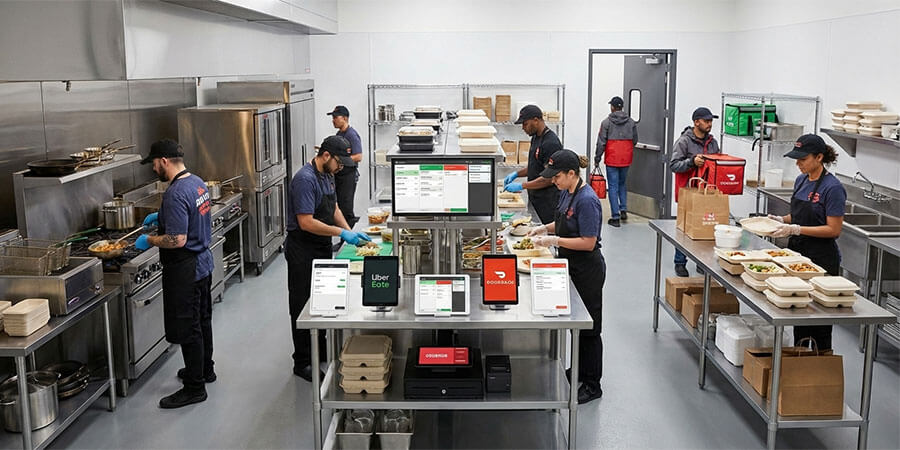
Table of Contents
Launch a delivery-only kitchen in 5 steps, from business planning to first orders
Opening a ghost kitchen costs between $20,000 and $60,000 for most operators, with some reaching $100,000+ depending on location and equipment needs. Unlike traditional restaurants that take 12-18 months to open, ghost kitchens can launch in 30-60 days. This guide walks through the complete process in 5 steps: business planning, securing kitchen space and permits, equipment setup, technology and team building, and launching your operation.
A ghost kitchen (also called a virtual kitchen, dark kitchen, or cloud kitchen) is a foodservice operation designed exclusively for delivery and takeout. There is no dining room, no front-of-house staff, and no walk-in customers. Orders come in through apps and websites, food goes out through delivery drivers.
The model has exploded since 2020. Lower startup costs, faster launch timelines, and the continued growth of food delivery apps make ghost kitchens an attractive option for first-time operators and established restaurateurs looking to expand without the overhead of a full-service location.
This guide covers everything you need to open a ghost kitchen in 5 steps.
Ghost Kitchen Startup Costs: What to Expect
Ghost kitchen startup costs vary widely based on your approach. Here is a realistic breakdown:
Cost Comparison by Setup Type
| Setup Type: | Total Startup Cost: | Monthly Rent: | Best For: |
| Shared commissary kitchen | $20,000 - $40,000 | $1,500 - $4,000 | First-time operators, testing concepts |
| Dedicated rental space | $40,000 - $80,000 | $3,000 - $8,000 | Established brands, higher volume |
| Build-out your own space | $100,000 - $300,000 | $5,000 - $15,000 | Multi-brand operations, long-term investment |
Startup Cost Breakdown
| Expense Category: | Low Estimate: | High Estimate: |
| Kitchen space deposit (first/last month) | $3,000 | $16,000 |
| Equipment (if not included) | $10,000 | $50,000 |
| Licenses and permits | $500 | $3,000 |
| Technology (POS, tablets, software) | $1,500 | $5,000 |
| Initial inventory | $2,000 | $8,000 |
| Marketing and branding | $1,000 | $5,000 |
| Insurance | $500 | $2,000 |
| Working capital (first 3 months) | $5,000 | $20,000 |
| Total | $23,500 | $109,000 |
Most operators land in the $30,000 - $60,000 range for a commissary or shared kitchen setup with basic equipment included.
Step 1: Create Your Business Plan (Weeks 1-2)
Before signing any lease or buying equipment, build a solid business plan. Ghost kitchens fail for the same reasons other restaurants fail: poor planning, undercapitalization, and weak unit economics.
Define Your Concept
Questions to answer:
- What cuisine will you serve?
- Who is your target customer?
- What is your average ticket price?
- How does your menu travel? (Food that arrives soggy or cold kills repeat business)
- What makes you different from the 50 other delivery options in your area?
Validate Delivery Demand
Check delivery app activity in your target area:
- Open DoorDash, Uber Eats, and Grubhub in your target delivery zone
- Search for your cuisine type
- Count how many competitors exist
- Read reviews to identify gaps (slow delivery, limited hours, missing menu items)
- Note price points and delivery fees
If the market is saturated with your concept, consider a different cuisine or a niche angle (late-night only, health-focused, family meal packs).
Calculate Unit Economics
Target metrics for ghost kitchen profitability:
| Metric: | Target Range: |
| Food cost | 28% - 35% of revenue |
| Labor cost | 25% - 35% of revenue |
| Delivery platform fees | 15% - 30% of revenue |
| Rent and utilities | 8% - 15% of revenue |
| Net profit margin | 5% - 15% |
Delivery platform fees eat into margins significantly. A $30 order with a 30% platform fee leaves you $21 before food and labor costs. Price your menu accordingly.
Secure Funding
Common funding sources:
- Personal savings (most common for sub-$50K launches)
- Small business loans (SBA microloans up to $50,000)
- Equipment financing (spread payments over 12-60 months with credit decisions in under 2 hours)
- Investors (for multi-location or franchise concepts)
Equipment financing allows you to preserve cash while getting new equipment with warranties. Many financing options accept credit scores as low as 500-600, offer same-day funding, and provide Section 179 tax deductions. This is often smarter than draining savings or buying used equipment without warranties.
Have at least 3-6 months of operating expenses in reserve. Ghost kitchens take time to build order volume, and you need runway to survive the ramp-up period.
Step 2: Secure Kitchen Space and Permits (Weeks 2-5)
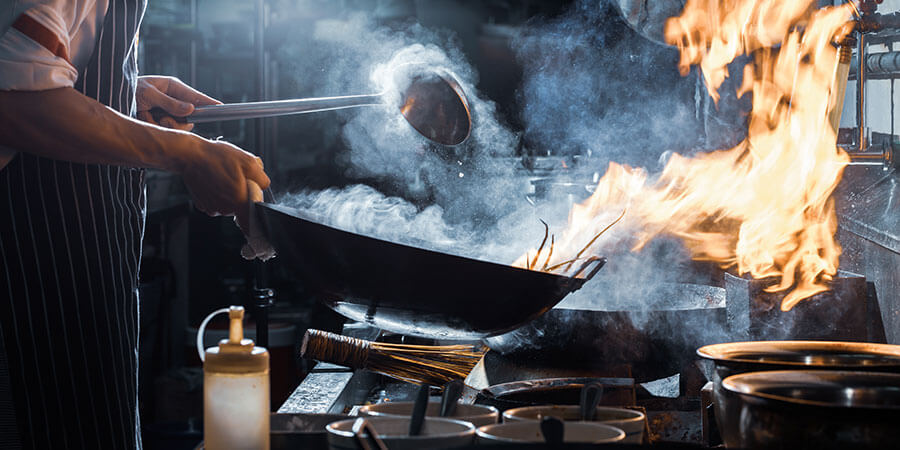
Your kitchen space determines your startup costs, operational constraints, and delivery radius. Permits and licenses must align with your chosen space.
Kitchen Space Options
Option 1: Commissary or Shared Kitchen
Commissary kitchens are licensed commercial kitchens available for rent by the hour, day, or month. Most come fully equipped.
- Pros: Lowest startup cost, flexible terms, equipment included, shared maintenance
- Cons: Limited hours, shared space with other operators, less control
- Cost: $15 - $50 per hour, or $1,500 - $4,000 per month for dedicated time blocks
- Best for: Testing concepts, low-volume operations, operators without capital for build-out
Option 2: Ghost Kitchen Facility
Purpose-built facilities with multiple private kitchen suites, often run by companies like CloudKitchens, Kitchen United, or REEF.
- Pros: Turnkey setup, prime delivery locations, built-in infrastructure
- Cons: Higher monthly costs, long-term contracts, less flexibility
- Cost: $3,000 - $10,000 per month depending on market
- Best for: Operators ready to scale, brands entering new markets
Option 3: Your Own Commercial Space
Lease a commercial space and build out your own kitchen.
- Pros: Full control, no shared equipment, customizable layout
- Cons: Highest cost, longest timeline, responsible for all permits and maintenance
- Cost: $50,000 - $300,000+ for build-out, plus $3,000 - $15,000 monthly rent
- Best for: Multi-brand operators, high-volume concepts, long-term investment
Location Considerations
- Delivery radius: Most platforms default to 3-5 miles. Locate near dense residential areas or office districts.
- Parking for drivers: Delivery drivers need easy access. Difficult parking means slower pickups and frustrated drivers.
- Zoning: Verify the space is zoned for food production. Not all commercial spaces allow cooking.
- Utilities: Confirm adequate electrical capacity, gas lines (if needed), and ventilation.
Questions to Ask Before Signing a Lease
- What equipment is included?
- What are the shared space rules and schedules?
- Who handles maintenance and repairs?
- What permits and licenses are already in place?
- What is the minimum lease term?
- Are there restrictions on cuisine type or operating hours?
- How is trash and grease disposal handled?
Required Licenses and Permits
Ghost kitchens require the same food safety permits as traditional restaurants. Requirements vary by city and state, but expect the following:
| License/Permit: | Issuing Authority: | Typical Cost: | Timeline: |
| Business license | City/County | $50 - $400 | 1-2 weeks |
| Food service permit | Health department | $100 - $1,000 | 2-4 weeks |
| Food handler certifications | State/County | $10 - $30 per person | 1-2 days |
| Fire department permit | Fire marshal | $50 - $500 | 1-3 weeks |
| Seller's permit (sales tax) | State | Free - $50 | 1-2 weeks |
| Liquor license (if applicable) | State ABC | $300 - $14,000 | 4-12 weeks |
Health Department Requirements
Your kitchen must pass a health inspection before opening. Common requirements include:
- Adequate handwashing sinks
- Proper food storage (temperature-controlled)
- Pest control measures
- Grease trap (if cooking with oil)
- Ventilation and fire suppression (for cooking equipment)
- Food safety plan (HACCP or similar)
If you are renting space in an existing commissary, most permits may already be in place. Confirm what is covered by the landlord and what you must obtain yourself.
Insurance Requirements
Minimum coverage for ghost kitchens:
- General liability insurance: $1 million per occurrence (most landlords require this)
- Workers' compensation: Required if you have employees
- Product liability: Covers claims from foodborne illness
- Commercial auto (if you do your own delivery): Required for delivery vehicles
Budget $2,000 - $5,000 annually for basic coverage.
Step 3: Set Up Equipment and Kitchen Layout (Weeks 4-6)
If your kitchen space does not include equipment, or you need additional pieces, plan your layout and purchases carefully.
Essential Ghost Kitchen Equipment
| Category: | Equipment: | Purpose: |
| Cooking | Range, griddle, or fryer | Core cooking (menu-dependent) |
| Refrigeration | Reach-in refrigerator and freezer | Ingredient storage |
| Prep | Work tables, cutting boards, smallwares | Food preparation |
| Holding | Heat lamps or holding cabinets | Keeping food hot for pickup |
| Packaging | Shelving for containers, bags | Order staging |
| Sanitation | Three-compartment sink, handwash sink | Health code compliance |
Equipment Considerations for Delivery
Ghost kitchen menus should prioritize food that travels well. This affects equipment choices:
- Fryers: Fried food can get soggy. Invest in quality packaging or consider baked alternatives.
- Grills and griddles: Grilled items travel better than fried in most cases.
- Holding equipment: Orders may sit 5-15 minutes waiting for drivers. Holding cabinets maintain quality.
Equipment Purchasing Options
| Approach: | Pros: | Cons: |
| Buy new (premium brands) | Best warranty, longest lifespan, latest features | Highest upfront cost |
| Buy new (economy brands) | Full warranty, reliable, affordable pricing | Fewer features than premium |
| Finance new equipment | Low upfront cost, preserve cash, tax deductible | Interest adds to total cost |
Why new equipment makes sense: Today's economy brands offer reliable commercial equipment at price points that compete with used equipment, but with full manufacturer warranties. When a used fryer fails during your first month of operation, the repair costs and lost revenue quickly exceed what you saved. New equipment with a warranty protects your investment.
Equipment financing spreads payments over 12-60 months, making new equipment accessible without large upfront capital. Many lenders approve credit scores as low as 500-600 and provide same-day funding. Explore financing options to preserve your working capital.
For first-time operators testing a concept, a fully equipped commissary eliminates equipment purchases entirely and reduces risk.
Shop equipment:
Step 4: Configure Technology and Build Your Team (Weeks 5-7)
Technology is the front door of a ghost kitchen. Your ordering systems, kitchen display, and delivery integrations must work seamlessly. You also need the right people to execute.
Delivery Platform Options
Most ghost kitchens operate on multiple platforms to maximize order volume:
| Platform: | Commission Rate: | Pros: | Cons: |
| DoorDash | 15% - 30% | Largest market share in US | High fees, driver quality varies |
| Uber Eats | 15% - 30% | Strong brand recognition | Competitive market |
| Grubhub | 15% - 30% | Established in urban markets | Smaller user base |
| Direct ordering (your website) | 0% - 3% (payment processing only) | Highest margin, own customer data | Requires marketing to drive traffic |
Strategy: Start with 1-2 major platforms to build volume, then add direct ordering once you have repeat customers.
Required Technology
- Tablet for each platform: DoorDash, Uber Eats, and Grubhub each require their own tablets
- POS system: Centralizes orders from all platforms (Toast, Square, Clover)
- Kitchen display system (optional): Shows orders to kitchen staff
- Inventory management: Tracks ingredients and food costs
- Packaging supplies: Branded bags, containers, labels, utensils
Tips for Platform Success
- Photography matters: Invest in professional menu photos. Poor images kill conversion rates.
- Menu engineering: Keep menus tight (15-25 items). Too many options slow down kitchen operations.
- Pricing strategy: Account for platform fees in your pricing. Many operators charge 10-15% more on delivery apps than direct orders.
- Response time: Aim to accept orders within 1-2 minutes. Slow acceptance hurts your platform ranking.
Typical Ghost Kitchen Staffing
Ghost kitchens require fewer staff than traditional restaurants, but the roles are different.
| Role: | Responsibilities: | Typical Wage: |
| Kitchen manager | Oversees operations, inventory, quality | $45,000 - $65,000/year |
| Line cooks | Prepare orders, maintain stations | $14 - $20/hour |
| Expeditor/Packer | Packages orders, coordinates with drivers | $12 - $16/hour |
A small ghost kitchen (50-100 orders/day) can operate with 2-3 people during peak hours.
Training Priorities
- Platform operations: Accepting orders, adjusting availability, handling modifications
- Packaging standards: Consistent packaging that travels well
- Speed and accuracy: Delivery customers have less tolerance for errors than dine-in
- Food safety: Standard food handling plus delivery-specific concerns (temperature maintenance)
Step 5: Launch and Optimize Operations (Week 8+)
Soft Launch (Week 1-2 of Operations)
Do not go live on all platforms at once. Start with a soft launch:
- Launch on one platform only
- Limit hours or order capacity initially
- Work out operational kinks (ticket flow, packaging, driver coordination)
- Collect feedback and adjust
- Gradually increase capacity and add platforms
Ongoing Operational Focus
Daily:
- Monitor platform ratings and reviews
- Track order accuracy and delivery times
- Manage inventory levels
Weekly:
- Review food costs and adjust purchasing
- Analyze best and worst selling items
- Respond to customer feedback
Monthly:
- Calculate actual profit margins
- Evaluate platform performance (which drives the most profitable orders?)
- Adjust menu based on data
Frequently Asked Questions
How much does it cost to start a ghost kitchen?
Most ghost kitchens cost between $20,000 and $60,000 to start when using a commissary or shared kitchen space. Costs include deposits, equipment (if not provided), permits, technology, initial inventory, and working capital. Building out your own dedicated space can cost $100,000 to $300,000 or more.
How do I start a ghost kitchen on DoorDash?
To start a ghost kitchen on DoorDash, you need a licensed commercial kitchen, food service permits, and a business license. Apply through the DoorDash Merchant Portal, submit required documentation (business license, menu, photos), and complete onboarding. The process typically takes 1-3 weeks after you have your kitchen and permits in place.
What equipment do I need for a ghost kitchen?
Essential ghost kitchen equipment includes cooking equipment (range, griddle, or fryer depending on your menu), refrigeration, prep tables, holding equipment for completed orders, and packaging stations. Many commissary kitchens include basic equipment. Budget $10,000 to $50,000 if purchasing your own equipment.
How much do ghost kitchens make?
Ghost kitchen revenue varies widely based on order volume, ticket size, and costs. A small operation doing 50 orders per day at a $25 average ticket generates roughly $37,500 per month in gross revenue. After food costs (30%), labor (30%), platform fees (25%), and rent (10%), net profit margins typically range from 5% to 15%.
Is a ghost kitchen profitable?
Ghost kitchens can be profitable, but margins are tight due to delivery platform fees (15-30% per order). Successful ghost kitchens focus on menu items with strong food cost margins, efficient operations, and building direct ordering channels to reduce platform dependency. Most operators need 50+ orders per day to reach profitability.
What is the difference between a ghost kitchen and a commissary kitchen?
A commissary kitchen is a licensed commercial kitchen space available for rent, often shared among multiple food businesses. A ghost kitchen is a business model focused on delivery-only food service. Ghost kitchens often operate out of commissary spaces, but the terms describe different things: one is a space type, the other is a business model.
Do ghost kitchens need a health permit?
Yes. Ghost kitchens require the same food service permits and health department inspections as traditional restaurants. You need a food service permit, business license, food handler certifications, and must pass health inspections. If operating in a commissary, verify which permits the landlord holds and which you must obtain.
How do ghost kitchens handle delivery?
Ghost kitchens typically use third-party delivery platforms (DoorDash, Uber Eats, Grubhub) where drivers pick up orders from the kitchen. Some operators hire their own delivery drivers for direct orders, which improves margins but requires vehicles, insurance, and driver management. Most ghost kitchens start with third-party platforms and add direct delivery later.
Can I run a ghost kitchen from home?
In most jurisdictions, no. Commercial food production typically requires a licensed commercial kitchen that meets health department standards. Some states have cottage food laws allowing limited home-based food production, but these usually exclude delivery through third-party apps and have significant restrictions on what you can sell.
How long does it take to open a ghost kitchen?
Ghost kitchens can open in 30-60 days when using an existing commissary or shared kitchen. This includes business registration, permits, platform onboarding, and initial setup. Building out your own space takes 3-6 months or longer depending on construction, permitting, and equipment lead times.
Related Guides and Resources
- Pros and Cons of Ghost Kitchens - Evaluate if the model is right for you
- Commercial Kitchen Equipment Checklist - Complete equipment list by category
- New Restaurant Kitchen Equipment Guide - Equipment purchasing strategies
Shop Restaurant Equipment
Ready to outfit your ghost kitchen? Browse our commercial kitchen equipment:
- Restaurant Equipment - Full commercial kitchen equipment
- Cooking Equipment - Ranges, griddles, fryers, ovens
- Food Holding and Warming - Heat lamps, holding cabinets
- Smallwares - Prep tools, utensils, containers
Share This!