Tandoor Ovens
Create authentic naan and tandoori dishes with our selection of commercial tandoor and clay ovens!
Depth
Opening Diameter
Width
Helpful Resources

Best Tandoor Ovens for Indian & Middle Eastern Kitchens
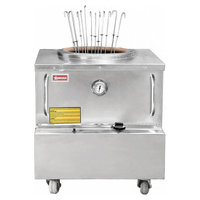
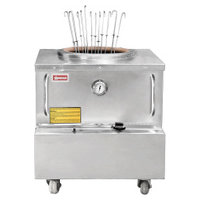
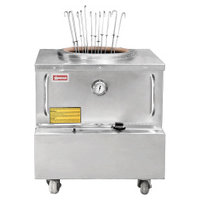
Commercial tandoor ovens bring the ancient clay-chamber cooking method to professional kitchens, delivering the extreme radiant heat that defines authentic Indian, Pakistani, Middle Eastern, and fusion cuisine. A tandoor oven uses a thick clay or ceramic interior chamber that retains and radiates heat at temperatures exceeding 700 degrees F, cooking naan bread directly on the clay walls, charring tandoori meats on vertical skewers, and finishing kebabs in minutes. For restaurants, catering operations, and hotel kitchens that serve South Asian or Middle Eastern menus, a commercial tandoor is the one piece of equipment that cannot be replicated by a conventional oven.
Tandoori clay ovens are available in a range of opening diameters to fit different service volumes, from compact units suited to specialty menus up to larger-opening models built for high-volume naan and protein production. The clay chamber is typically housed in a stainless steel exterior that withstands the demands of a busy commercial kitchen, and natural gas or propane connections deliver the consistent BTU output needed to maintain cooking temperatures through a full service run.
We offer tandoor ovens from Omcan USA, a trusted manufacturer of commercial cooking equipment, and strive to provide the most competitive prices available.
Benefits of Commercial Tandoor Ovens
The clay chamber of a tandoori oven does something no metal oven can replicate: it surrounds food with even, radiant heat from all sides while simultaneously absorbing and redistributing moisture at the walls. Naan pressed against the interior walls bakes in roughly 90 seconds, developing the blistered, charred surface and chewy crumb that customers expect. Tandoori chicken, seekh kebab, and other skewered proteins pick up direct-flame char and smoky depth that are the defining flavor signatures of the cuisine - results that are impossible to achieve in a convection or combi oven.
From a service standpoint, the speed of a commercial tandoor oven directly supports fast ticket times. A tandoor that has been properly preheated holds its temperature throughout service, so naan and proteins come out in consistent windows without the fluctuating recovery times that plague other high-heat cooking methods. That reliability is critical when a table orders multiple rounds of bread or a catering event calls for hundreds of pieces in sequence.
An open-top tandoor also functions as a live cooking theater. The visible clay chamber, the flicker of the flame, and the theater of pulling naan from the walls with a cushioned pad are a front-of-house draw that reinforces the authenticity of the menu and distinguishes the dining experience. For Indian and Middle Eastern restaurants, the tandoor oven is as much a brand statement as it is a cooking tool.
What to Look for in a Tandoor Oven
Commercial tandoor ovens vary in opening size, BTU output, chamber construction, and fuel type. Use these criteria to match the unit to your kitchen and menu volume:
- Opening diameter: the internal opening determines how much naan you can bake simultaneously and how large a skewered protein can fit; common commercial openings range from 14 inches to 18 inches or wider for high-volume operations.
- Overall dimensions and footprint: tandoor ovens are substantial pieces of equipment; confirm the unit fits your kitchen layout and that there is adequate clearance above and around it for safe operation and ventilation.
- BTU output: higher BTU ratings allow faster preheat times and better temperature recovery between loads; look for output appropriate to your expected service volume and the number of covers you turn per shift.
- Clay or ceramic chamber construction: the interior chamber material directly affects heat retention and cooking character; a thicker, high-quality clay lining holds temperature more evenly and delivers the authentic surface contact that defines tandoori cooking.
- Stainless steel exterior: a stainless housing is easier to clean, resists corrosion, and meets NSF standards expected in commercial kitchen environments.
- Gas connection type: confirm whether the unit is configured for natural gas or liquid propane, and verify that your kitchen supply matches before ordering; some models can be converted but this should be confirmed with the manufacturer.
- Skewer capacity: for tandoori meats and kebabs, count how many skewers the unit can hold simultaneously; this determines your throughput per cook cycle and is a direct driver of table turn speed during a rush.
- Naan and bread accessibility: the opening height and overall chamber depth determine how easily staff can press dough to the walls and retrieve bread with a roti pad; ergonomics matter when a single cook is managing multiple pieces at once during a service peak.
Shop Tandoor Ovens Today
Whether you are equipping a new Indian restaurant, expanding a Middle Eastern catering operation, or adding an authentic tandoor station to a fusion menu, a commercial tandoor or tandoori clay oven delivers the radiant heat and clay-contact flavor that no substitute can match. Browse the full selection and find the opening size and BTU output that fits your kitchen and your covers.
For related commercial cooking equipment, explore our commercial ovens for conventional and convection baking needs, and our rice cookers for the staple accompaniment to every tandoori menu.