What’s Trending in Food Service Equipment
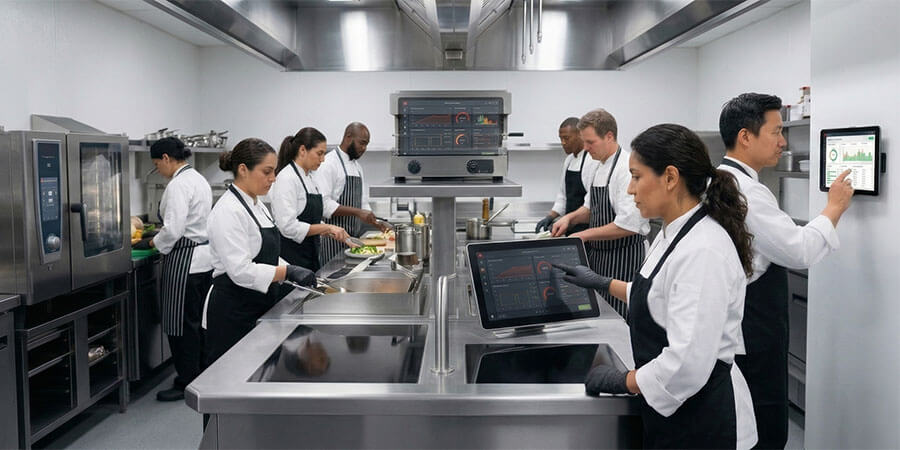
Table of Contents
Focus On The Equipment Trends That Improve Flexibility, Efficiency, And Guest Experience - Not Just The Ones That Sound New
Restaurant equipment trends can be expensive to misunderstand. Operators are constantly hearing about "what's next," but not every trend deserves a place on the line, in the budget, or on the menu.
The better question is not "What is trending?" It is "Which trends solve a real operating problem for my kind of restaurant?" If a trend improves labor efficiency, menu flexibility, energy performance, or guest experience in a meaningful way, it deserves a look. If it only looks modern in a showroom, it probably does not.
That is especially important right now. Recent industry coverage continues to emphasize the same broad pressures: operators need to improve efficiency while still meeting shifting guest expectations.
Trend #1: Multi-Use Equipment Beats Single-Purpose Clutter
The strongest equipment trend is not flashy at all. It is flexibility.
Operators want equipment that can support more than one menu need, reduce station congestion, or create a more adaptable line.
Examples include:
- Cooking platforms that support more than one service style
- Beverage systems that reduce the number of separate units required
- Prep tools that make small spaces work harder
This trend matters because restaurants need room to test menu changes without rebuilding the kitchen every season.
| Trend: | Why Operators Like It: | Risk If You Overdo It: |
| Multi-use cooking equipment | More flexibility in a smaller footprint | Jack-of-all-trades equipment that is not great at the core job |
| Flexible beverage systems | Better menu adaptability and service options | Added complexity if guest demand is weak |
| Modular prep / line support | Easier station adjustment over time | Buying around edge cases instead of the main menu |
If you are evaluating broad equipment direction, the Commercial Cooking Equipment Guide and The Ultimate Commercial Kitchen Equipment Checklist are useful reference points.
Trend #2: Energy Efficiency Is Moving From Nice-To-Have To Standard Expectation
Energy efficiency is not a niche talking point anymore. For many operators, it is part of the basic buying conversation.
ENERGY STAR continues to frame commercial foodservice equipment in terms of reduced utility and maintenance burden, while restaurant-focused energy guidance keeps emphasizing that efficient equipment only works well when paired with efficient habits.
What this means in practice:
- Operators are paying closer attention to energy-intensive categories
- Lineup decisions are increasingly tied to lifetime operating impact, not just purchase convenience
- Equipment choices are being evaluated in the context of the whole kitchen system
This is one reason food service equipment trends should not be treated as isolated gadgets. They are often responses to labor, utility, and throughput pressure all at once.
For more context on efficiency-related decisions, see Energy Saving Tips for Restaurants: Cut Costs Without Cutting Corners and Commercial Induction Range Buying Guide.
Trend #3: Automation And Programmability Are Growing, But Context Matters
Automation is one of the easiest trends to misread.
Automation helps most when it supports:
- Repeatability
- Labor efficiency
- Simpler training
- Better consistency in high-volume or repetitive work
Automation helps least when it adds complexity that the staff does not need or does not trust.
Recent equipment coverage suggests that operators are still interested in automation and programmable systems, but the most useful version is practical automation - not novelty for its own sake.
That distinction matters. A restaurant does not benefit from "smart" equipment if it is still hard to use, hard to maintain, or poorly matched to the menu.
Trend #4: Technology Is Becoming Part Of Equipment Buying, Not A Separate Conversation
In many restaurants, technology used to feel like a separate budget line from equipment. That divide is fading.
Operators now look at equipment and technology together in areas like:
- Monitoring and data visibility
- Programmed controls
- Integration with wider kitchen systems
- Better forecasting and operational consistency
That does not mean every restaurant needs a highly connected kitchen. It means buyers should at least understand how data and controls are changing the evaluation process.
If your operation is weighing these questions more broadly, Restaurant Technology offers a useful broader framework.
Trend #5: Equipment Trends Follow Labor Pressure More Than Fashion
One of the easiest ways to spot a durable trend is to ask whether it helps a kitchen run with less friction.
That is why trends around:
- Easier cleanup
- Simpler controls
- Faster recovery
- Reduced maintenance burden
- Smaller training burden
often last longer than trends that are mainly aesthetic.
The same pattern shows up in many operator reports. Equipment becomes attractive when it helps an operation move faster, train more easily, or reduce avoidable waste. That is a much stronger reason to invest than "everyone seems to be talking about it."
How To Tell A Real Trend From A Distraction
Use a simple filter before chasing a trend:
| Question: | If The Answer Is Yes: | If The Answer Is No: |
| Does it solve a clear problem in this kitchen? | Worth serious evaluation | Probably not urgent |
| Does it improve throughput, flexibility, or consistency? | Stronger trend candidate | More likely a novelty |
| Can the staff use and maintain it confidently? | Operationally realistic | Adoption risk is high |
| Does it fit the room, utilities, and menu? | Possible real upgrade | Likely wrong for this operation |
| Will the benefit still matter in 2-3 years? | Durable trend | Short-term noise |
This is the filter many buyers skip. It is also the filter that protects you from buying the wrong version of "future-ready" equipment.
Equipment Trends Still Have To Fit The Concept
The same trend can be smart for one operation and pointless for another.
Examples:
- A high-volume fast casual concept may prioritize speed, programmability, and tight footprint.
- A chef-driven restaurant may prioritize flexibility and cooking identity.
- A bar-heavy concept may lean more into beverage and guest-facing efficiency.
- A smaller independent restaurant may care most about multi-use value and low training burden.
This is why concept fit matters as much as trend awareness. The best buying decisions come from knowing the kitchen, not from trying to imitate the whole market.
Utilities, Ventilation, And Space Still Decide What Is Practical
One reason equipment-trend content goes wrong is that it treats every trend like a menu of equal options. In a real restaurant, utilities and layout narrow the field quickly.
Before chasing a trend, ask:
- Does the room actually support the equipment?
- Will ventilation, electrical load, gas supply, or water access limit the upgrade?
- Is there enough clearance and workflow space for the new setup to improve the line instead of crowding it?
This is where trend awareness has to meet operational discipline. A more efficient or more programmable piece of equipment is only useful if it fits the room and the service pattern. Otherwise the "trend" becomes a complicated way to create installation friction.
That is also why the best trend-aligned buyers think in systems. They do not just ask whether the unit itself is attractive. They ask whether the kitchen can support it, whether the staff can use it, and whether the surrounding station still works once the equipment is in place.
That system view is especially important in older kitchens. A trend may look highly practical on paper and still create more disruption than value if the surrounding room has to be reworked first. Trend-aware buyers stay realistic about that tradeoff.
Use Trend Awareness To Build A Smarter Replacement Roadmap
Restaurants rarely modernize everything at once. Most kitchens evolve one replacement cycle at a time.
That is exactly where trend awareness becomes useful. Instead of treating trends like a reason to start over, use them as criteria for the next upgrade. When aging equipment needs replacement anyway, ask whether the newer option improves flexibility, efficiency, training, or control in a meaningful way.
This approach is stronger for three reasons:
- It keeps spending tied to actual replacement timing
- It reduces the risk of buying around hype
- It helps the kitchen modernize without forcing a disruptive full reset
That is the practical version of following trends. Not copying the market - choosing the next upgrade more intelligently because you understand where the market is heading and why.
For most operators, that mindset is far more valuable than any annual "top five trends" list.
It also creates a cleaner conversation with managers, chefs, and ownership. Instead of debating whether a trend is exciting, the team can ask whether the next replacement should solve a known bottleneck in a way that still looks smart several years from now. That is a much stronger standard.
Use Trends To Shape The Next Upgrade, Not To Rewrite The Whole Kitchen
Most restaurants do not need to rebuild around every new equipment conversation. They need to identify which trend overlaps with the next real decision.
That might mean:
- Choosing a more efficient replacement when old equipment ages out
- Prioritizing flexible equipment for a menu expansion
- Upgrading a high-friction station before the rest of the line
- Using technology where it supports control, not complexity
When you treat trends as tools for the next smart upgrade - instead of a reason to panic-buy - they become much more useful.
That is the real operational value of following equipment trends. They help you ask better questions at the moment a decision already has to be made.
For most restaurants, that is the difference between useful trend awareness and expensive distraction.
The goal is not to predict every shift in the market. It is to make calmer, better buying decisions when the next real equipment decision arrives.
Frequently Asked Questions
What are the biggest food service equipment trends right now?
The strongest trends center on flexibility, energy efficiency, practical automation, better controls, and equipment choices that reduce friction for staff and guests.
Should restaurants follow every new equipment trend?
No. Trends only matter if they solve a real operational problem. Equipment should be evaluated through menu fit, labor impact, utility fit, and long-term usefulness.
Why is energy efficiency such an important equipment trend?
Because operators are under constant pressure to manage utility costs and reduce waste. Efficient equipment has become part of the practical buying conversation, not just a sustainability talking point.
Is automation always a good investment in restaurant equipment?
No. Automation helps most when it reduces repetitive labor and improves consistency. It helps least when it adds complexity the team does not need or cannot maintain well.
How can a small restaurant use equipment trends wisely?
Focus on the next real decision - a replacement, a bottleneck, or a menu change - and choose the trend that helps that problem directly instead of trying to modernize everything at once.
What makes a trend durable instead of temporary?
Durable trends usually reduce friction, improve flexibility, or save resources in ways that still matter a few years later. Short-lived trends tend to be mostly aesthetic or hype-driven.
Related Resources
- Commercial Cooking Equipment Guide - A broader framework for equipment decisions across cooking categories
- Restaurant Technology - Understand where data and controls fit into restaurant operations
- Commercial Induction Range Buying Guide - One of the clearest examples of efficiency and flexibility trends
- Energy Saving Tips for Restaurants: Cut Costs Without Cutting Corners - Operational context for energy-related trends
- Commercial Restaurant Equipment - Broad category view to compare major equipment groups
Share This!