Restaurant Mystery Shopping
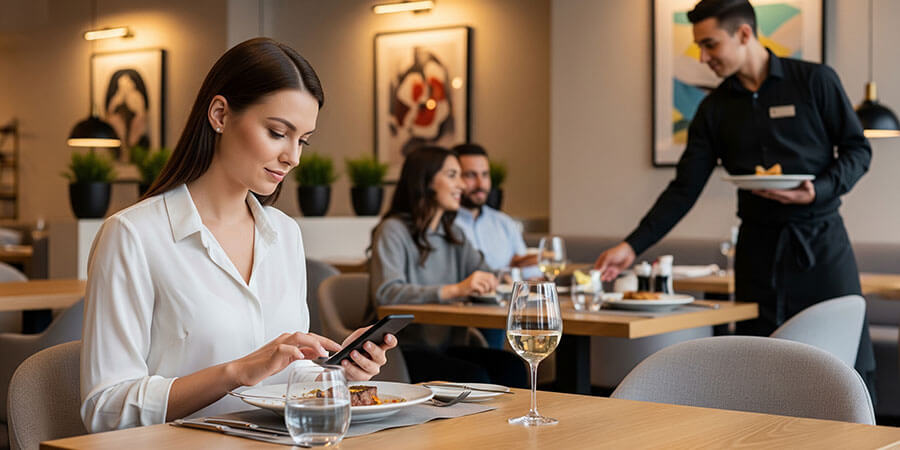
Table of Contents
How to use mystery shopping to uncover the service problems your guests never tell you about - and fix them before they cost you
Most unhappy restaurant guests never complain - they just leave and never come back. PwC research found that 32% of customers will walk away from a business they love after just one bad experience, and Olo data shows 60% of restaurant revenue comes from repeat guests. Mystery shopping gives you an objective, structured way to see your restaurant the way a guest actually experiences it. This post covers how to build a mystery shopping program that works - what to evaluate, how to run it, and how to turn the results into better training and stronger operations.
Restaurant mystery shopping exists because of a simple truth: you cannot fix what you cannot see. Operators spend their days in the kitchen, at the host stand, or in the back office - and the restaurant they experience is fundamentally different from the one their guests experience.
The data on this gap is striking. PwC research found that 32% of customers will stop doing business with a brand they love after just one bad experience - and most of them never explain why. According to Olo data from over 100 million guest records, 60% of restaurant revenue comes from repeat guests. Losing those guests silently, without ever knowing what went wrong, is one of the most expensive problems a restaurant can have.
Mystery shopping closes that gap. A trained evaluator visits your restaurant as a regular guest, follows a structured checklist, and reports back on every aspect of the experience - from the parking lot to the farewell. The result is an honest, detailed picture of what your guests actually see, hear, taste, and feel when they walk through your door.
Why You Cannot Rely on Complaints Alone
The instinct for most operators is to assume that if something is wrong, they will hear about it. The data says otherwise.
Most unhappy guests never say a word. They do not ask for a manager. They do not fill out a comment card. They pay their check, walk out, and never come back. PwC research found that 32% of customers will stop visiting a business they love after just one bad experience. In restaurants, where the competition is a block away, that threshold is unforgiving.
The damage extends beyond lost visits. Some unhappy guests leave a negative review - and according to ReviewTrackers, 94% of consumers say a bad review has convinced them to avoid a business entirely. One bad experience becomes a public warning that steers away dozens of future guests.
Your own observations are biased. When the owner walks the floor, the staff performs differently. Mystery shopping removes that bias by evaluating the restaurant as a real guest experiences it - unannounced, unrecognized, and with no special treatment.
| The Silent Customer Problem: | Data: |
| Customers who leave after one bad experience | 32% (PwC) |
| Consumers who avoid businesses due to a bad review | 94% (ReviewTrackers 2022) |
| Restaurant revenue driven by repeat guests | 60% (Olo, 100M+ guest records) |
What to Evaluate in a Restaurant Mystery Shop
A good mystery shopping program evaluates the entire guest journey - not just the food and the server. The restaurant customer journey has seven major stages, according to Yelp for Business research, and each one shapes the guest's overall impression.
First impressions start before the front door. Evaluate the parking lot, exterior signage, entrance cleanliness, and the first 30 seconds after a guest walks in. Is someone there to greet them? How long do they wait? What is their impression of the space?
Service interactions are the core. Evaluate greeting quality, menu knowledge, attentiveness, timing between courses, drink refill cadence, check-in frequency, upselling technique, and how problems are handled. This is where customer service training either shows or doesn't.
Food and beverage quality matters beyond taste. Evaluate presentation, temperature, portion consistency, and whether the dish matches the menu description. Consistency is what separates restaurants that build repeat business from those that rely on new guests to replace the ones they lose.
The physical environment communicates quality. Evaluate the dining room, restrooms, noise level, lighting, temperature, and furniture condition. Guests judge your restaurant before a server ever approaches their table.
The departure experience is often overlooked. Evaluate the check presentation, payment process, farewell interaction, and whether anyone thanked the guest or invited them to return. The last impression is what guests carry out the door.
A Practical Evaluation Framework
| Category: | What to Evaluate: |
| Arrival and first impression | Parking, exterior, signage, greeting within 30 seconds, wait time communication |
| Host and seating | Friendliness, table readiness, menu presentation, initial drink offer |
| Server performance | Menu knowledge, attentiveness, timing, upselling, personality |
| Food and beverage | Taste, temperature, presentation, portion consistency, accuracy |
| Dining environment | Cleanliness, noise, lighting, furniture condition, restroom state |
| Problem handling | Response time, empathy, resolution quality, manager involvement |
| Payment and departure | Check accuracy, payment speed, farewell quality, invitation to return |
How to Run a Mystery Shopping Program
You do not need to hire a national firm to get value from mystery shopping. Independent restaurants can build effective programs at any scale.
Option One - Do It Yourself
Recruit trusted friends, family members of staff at other locations, or members of your personal network who understand food and hospitality. Give them a structured checklist (use the framework above) and ask them to visit at different times on different days. The key requirements: they must be unknown to your current staff, they must follow the checklist, and they must document their experience in writing within 24 hours while details are fresh.
The limitation of DIY mystery shopping is objectivity. Friends tend to be generous. Compensate for this by asking them to score each item numerically (1-5) rather than giving open-ended opinions, and emphasize that critical feedback is more valuable than compliments.
Option Two - Hire a Professional Service
The mystery shopping industry is a multibillion-dollar global market according to Fortune Business Insights, with established providers certified by the Mystery Shopping Providers Association. Professional services provide trained evaluators, standardized scoring, benchmarking data, and detailed reports. This is the better option for multi-location operators, restaurants preparing for franchise expansion, or any operation that needs consistent, comparable data over time.
Frequency Matters
Industry best practice is at least one mystery shop per month per location. More frequent evaluations - weekly or biweekly - provide faster feedback loops and catch problems before they become patterns. Vary the day, daypart, and evaluator to get a representative picture across different shifts.
Turning Results into Action
A mystery shopping report that sits in a drawer is worthless. The value of the program depends entirely on what you do with the results.
Share results with your team - constructively. Use positive findings for public recognition and negative findings for private coaching. Never use mystery shopping as a punishment tool. The goal is improvement, not blame. If staff fear the program, they will resent it, and the culture impact will outweigh any operational gains.
Identify patterns, not incidents. A single low score on drink refill timing is an incident. Three consecutive months of low scores on drink refill timing is a pattern that requires a systemic fix - a process change, a staffing adjustment, or additional training. Focus your energy on patterns.
Connect findings to your training program. Mystery shopping results should directly inform what you train on. If evaluations consistently show weak upselling, add upselling practice to your pre-shift meetings. If greeting scores are low, revisit your service standards and wait staff productivity expectations. The cycle of evaluate, identify, train, and re-evaluate is what drives continuous improvement.
Track scores over time. Create a simple scorecard that tracks your overall mystery shopping score month over month. Look for trends - improving, declining, or flat. Flat scores after several months mean your program is identifying issues but your response is not effective enough.
Your broader marketing strategy depends on the guest experience being strong. Mystery shopping is the feedback mechanism that keeps you honest about whether your reality matches your brand promise.
Common Mistakes That Undermine Mystery Shopping Programs
- Telling staff when shops will happen. The entire point is to evaluate normal operations. If staff know a mystery shopper is coming this week, the data is useless.
- Evaluating too infrequently. Once a quarter is not enough to identify patterns or drive change. Monthly is the minimum.
- Focusing only on negatives. Effective programs celebrate what is going well, not just what is broken. Recognition reinforces good behavior.
- Not acting on results. If staff see that mystery shopping reports lead to no changes, they stop caring about the program. Close the loop every time.
- Using one evaluator repeatedly. Staff will recognize the same person. Rotate evaluators regularly.
- Skipping back-of-house. While mystery shoppers cannot enter the kitchen, they can evaluate food quality, timing, and accuracy - all of which reflect back-of-house operations. Pair mystery shopping with internal kitchen audits for a complete picture.
Effective restaurant management means building systems that work when you are not watching. Mystery shopping is the tool that tells you whether they do.
Frequently Asked Questions
How often should we mystery shop our restaurant?
At least once a month per location. More frequent evaluations - biweekly or weekly - give you faster data and catch problems sooner. Vary the day of the week and time of day so you are evaluating different shifts and staffing configurations.
Can we run a mystery shopping program ourselves?
Yes. Independent restaurants can recruit trusted individuals who are unknown to staff, provide them with a structured checklist, and have them report their findings within 24 hours. The key is using a standardized scoring system rather than open-ended opinions so results are comparable over time.
What is the difference between mystery shopping and customer surveys?
Customer surveys capture the opinions of people who choose to respond - typically the very happy or very unhappy. Mystery shopping uses trained evaluators following a standardized checklist, which provides consistent, comparable data across visits. Surveys tell you how guests feel. Mystery shopping tells you what actually happened.
How do we share mystery shopping results with staff without creating resentment?
Use positive findings for public recognition and negative findings for private, constructive coaching. Never use results as punishment. Frame the program as a tool for the whole team to improve - not surveillance. When staff see that the program leads to recognition, better training, and operational improvements, buy-in increases naturally.
What should a restaurant mystery shopping checklist include?
Cover the full guest journey: arrival and first impressions, host interaction, server performance, food and beverage quality, dining environment and cleanliness, problem handling, and payment and departure. Score each item numerically (1-5) and include space for written notes. See the evaluation framework table in this post for a complete breakdown.
How do mystery shopping scores connect to online reviews?
There is a direct relationship. The same service gaps that mystery shoppers identify are the ones guests write about in online reviews. Improving your mystery shopping scores proactively means fewer negative reviews appearing publicly. Since 94% of consumers say a bad review has convinced them to avoid a business, fixing problems before they become reviews is significantly more valuable than responding to them after.
Is mystery shopping worth it for a single-location restaurant?
Yes. Single-location restaurants are often more vulnerable to service inconsistency because the owner cannot be present at all times. Even a simple, self-run program with monthly evaluations provides data that creates repeat customers and catches problems before they drive guests away silently.
Related Resources
- Restaurant Customer Service Training - Build the training program that mystery shopping results should inform
- Restaurant Marketing Guide - How guest experience connects to your overall marketing strategy
- Restaurant Technology Guide - POS and feedback systems that support service evaluation
- Improving Wait Staff Productivity - Strengthen the front-of-house performance that mystery shoppers evaluate
- How to Create Repeat Customers - The outcome of consistently strong service
Share This!